


Achieving a radiant, even complexion often hinges on the strategic use of active ingredients in your daily regimen. Among the most potent tools in modern dermatology, vitamin C stands out for its ability to brighten, protect, and rejuvenate the skin. However, knowing exactly when to apply vitamin C serum within your routine is just as important as the product you choose.
Because this ingredient is highly reactive and sensitive to its environment, the timing and order of your application can significantly dictate whether you see a transformative glow or merely experience irritation. By understanding the chemistry behind this topical antioxidant, you can ensure that your skin reaps the full rewards of its potent properties.
The Case for Morning Application

Most dermatologists and skincare experts agree that the ideal time to apply vitamin C serum is during your morning skincare routine. The primary reason for this timing is the ingredient’s unique role as a shield against environmental stressors.
Throughout the day, your skin is bombarded by invisible aggressors, specifically free radicals generated by pollution, smoke, and infrared radiation. When you apply a high-quality serum, you are effectively providing your skin with a defensive layer that neutralizes these unstable molecules before they can cause oxidative stress.
Beyond simple protection, vitamin C works synergistically with your broad-spectrum sunscreen. While SPF provides a physical or chemical barrier against UVA and UVB rays, it cannot block 100% of UV-induced damage. Vitamin C acts as an internal support system, enhancing your skin’s natural photoprotection.
By neutralizing the damage that slips through your sunscreen, it helps prevent the long-term degradation of skin cells and reduces the likelihood of premature aging. Integrating this step after your morning cleanse but before your moisturizer ensures that the active molecules are absorbed directly into the epidermis where they are most effective.
Understanding the Role of Ph Levels and Absorption
The efficacy of vitamin C, particularly in the form of l-ascorbic acid, is highly dependent on the pH levels of the formulation. Most stable, high-potency serums are designed with a low pH (typically below 3.5) to ensure the molecule can penetrate the skin barrier effectively.
Because your skin’s natural pH is slightly acidic, applying the serum directly to clean, dry skin is often recommended. If you apply it over a heavy layer of toner or a moisturizer with a neutral or alkaline pH, you may inadvertently buffer the serum, rendering it less effective.
To maximize absorption, follow a specific order of operations: start with facial cleansing to remove overnight impurities, pat your skin dry, and then apply the vitamin C serum. Wait a few minutes to allow the product to fully absorb and “set” before moving on to your next step.
This brief waiting period is crucial; it allows the active ingredients to stabilize on the skin’s surface without being diluted by subsequent layers of hydration. If you have particularly dry skin, you might feel the urge to layer products quickly, but patience here is a virtue that pays off in visible brightness and improved texture.
Layering with Other Active Ingredients
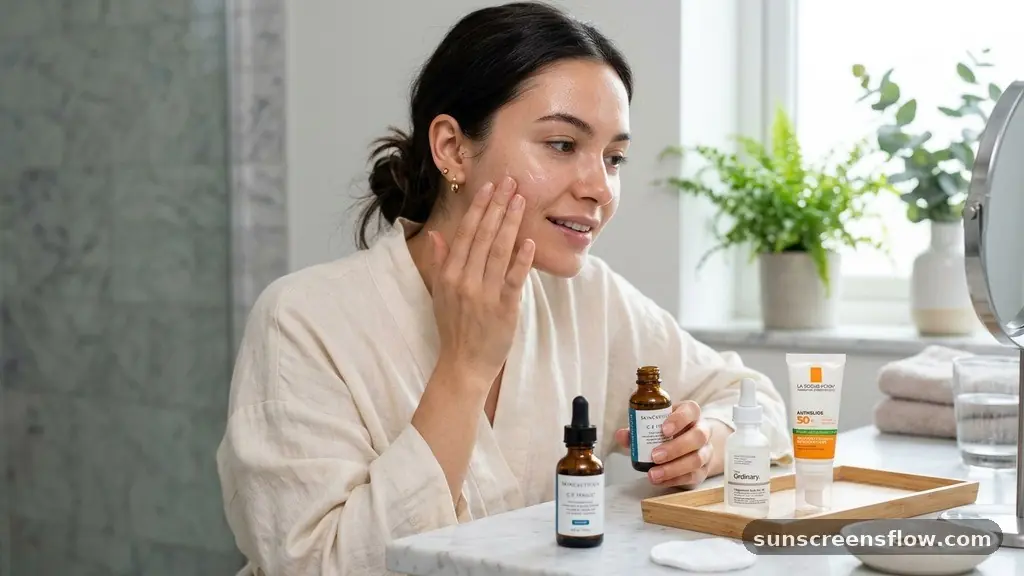
One of the most common points of confusion for skincare enthusiasts is how vitamin C interacts with other popular actives like niacinamide, hyaluronic acid, and retinol. Historically, there was a belief that vitamin C and niacinamide could not be used together because they might cause flushing or neutralize each other.
Modern cosmetic chemistry has largely debunked this, noting that most modern formulations are stable enough to coexist. However, if you are prone to sensitivity, it is often safer to use vitamin C in the morning and reserve niacinamide or other potentially irritating actives for the evening.
Hyaluronic acid, conversely, is an excellent partner for vitamin C. Because vitamin C can sometimes be drying or slightly stinging on sensitive skin, layering a humectant like hyaluronic acid afterward provides a surge of hydration that calms the skin and locks in moisture.
This combination is often referred to as a “power duo” in clinical settings, as the vitamin C works on brightening and collagen production, while the hyaluronic acid maintains the integrity of the skin barrier. By layering these correctly—serum first, then hydrator—you create a balanced environment that promotes long-term skin health.
Addressing Potential Oxidation and Shelf Life
A critical factor that often goes overlooked is the shelf life and stability of the product. Vitamin C is notoriously unstable and prone to oxidation when exposed to light, air, or heat.
If you notice your serum has turned from a clear or light straw color to a dark orange or brown, it has likely oxidized and lost its potency. Oxidation not only renders the product ineffective but can sometimes result in the formation of compounds that may cause mild irritation or staining on the skin.
To combat this, look for products that use stabilized vitamin C derivatives or those packaged in airless, opaque pumps. Regardless of the packaging, storage is key. Keep your bottle in a cool, dark place—such as a drawer or cupboard—rather than on a sunny bathroom vanity.
Some enthusiasts choose to store their serums in the refrigerator to slow down the chemical breakdown, though this is generally unnecessary if you use the product consistently within three to six months. If your serum has changed color significantly, it is time to discard it, as applying oxidized product provides no benefit and may even introduce unnecessary stress to your skin.
The Impact on Collagen Synthesis and Hyperpigmentation
Beyond its role as an antioxidant, vitamin C is a vital cofactor in collagen synthesis. Collagen is the structural protein that keeps skin looking firm and youthful, and its production naturally declines as we age.
By providing your skin with a steady supply of this nutrient, you are essentially signaling your fibroblasts to produce more collagen. This doesn’t happen overnight; it is a cumulative process that requires consistent daily application over several months.
Furthermore, vitamin C is a powerhouse when it comes to treating hyperpigmentation. It works by inhibiting tyrosinase, the enzyme responsible for melanin production.
Whether you are dealing with post-inflammatory hyperpigmentation from acne or sunspots caused by long-term uv damage, regular use of a well-formulated serum can gradually fade these spots and even out skin tone. Because this process involves cellular turnover and pigment inhibition, the timing of application remains consistent: morning use ensures that the skin is protected while it works on these structural repairs throughout the day.
Comparing Morning vs. Evening Application

While the morning is generally considered the “gold standard” for vitamin C application, there are specific scenarios where evening use might be considered, though it is less common. The table below outlines the primary considerations for choosing your timing.
| Factor | Morning Application | Evening Application |
|---|---|---|
| Primary Goal | Environmental protection & brightening | Repair & collagen synthesis |
| Synergy | Works with SPF to boost protection | Can be paired with nocturnal repair creams |
| Risk | Potential for mild oxidation if not covered by SPF | Lower risk, but misses the daytime protection window |
| Best For | Preventing future damage and daily glow | Those who prefer retinol in the morning (rare) |
As indicated in the table, the morning window is superior because it aligns with the time of day when your skin most needs the antioxidant support. If you choose to apply it at night, you are essentially using it for its reparative benefits, but you are losing out on the crucial protective benefits that occur during peak daylight hours. For most people, the best strategy is to stick to the morning for vitamin C and save your heavier, more intensive treatments—like retinol or chemical exfoliants—for the evening.
Common Mistakes to Avoid
Even with the best intentions, many people make simple errors that undermine the effectiveness of their serum. One of the most frequent mistakes is failing to allow enough time for the product to absorb before applying a moisturizer.
If you rush, you risk diluting the pH or smearing the serum around rather than allowing it to penetrate the skin. Another mistake is ignoring the concentration level; high concentrations (above 15-20%) are not always better and can often lead to unnecessary irritation, especially for those with sensitive skin.
Additionally, avoid the temptation to layer too many actives at once. If you are using a vitamin C serum, a chemical exfoliant (like AHA/BHA), and a peptide serum all at once, you may overwhelm your skin barrier. A simplified routine is almost always more effective.
Focus on a high-quality vitamin C serum, a hydrating moisturizer, and a reliable sunscreen. The following list summarizes the essential steps for an effective morning routine:
- Cleanse your face thoroughly to remove sweat and oils from the night.
- Apply a gentle, non-stripping toner if your skin feels tight or dry.
- Dispense 3-4 drops of vitamin C serum into your palms and press gently into the skin.
- Wait at least 2-3 minutes for the serum to fully dry and absorb.
- Apply a moisturizer to seal in the hydration and protect the skin barrier.
- Finish with a broad-spectrum sunscreen with an appropriate sun protection factor.
Addressing Topical Gaps and Misconceptions
A common question that arises in dermatological advice circles is whether one needs to use vitamin C if they already use a high-quality moisturizer with antioxidants. While many modern moisturizers contain trace amounts of antioxidants, they rarely contain the stable, high-potency concentrations found in dedicated serums.
A serum is designed specifically for delivery; its serum consistency allows it to penetrate deeper than a thick cream. Therefore, a separate serum is usually necessary if your primary goal is to address deep-seated hyperpigmentation or provide a meaningful boost in collagen production.
Another topical gap is the concern regarding “tingling.” A slight tingle upon application is normal due to the low pH of the formula, but burning or persistent redness is not. If you experience significant discomfort, it may indicate that your skin barrier is compromised or that the specific formulation is too acidic for your skin type.
In such cases, look for derivatives like magnesium ascorbyl phosphate, which are gentler and more stable, even if they are slightly less potent than pure l-ascorbic acid. Always listen to your skin rather than forcing a product that causes consistent distress, as a healthy, intact barrier is the foundation of effective skincare.
Frequently Asked Questions
Should I apply moisturizer immediately after my vitamin C serum?
It is best to wait at least two to three minutes after applying your vitamin C serum before layering your moisturizer. This waiting period allows the serum to absorb into the skin and stabilize, ensuring the pH levels do not interfere with the absorption process.
Is it better to use vitamin C serum in the morning or at night?
Morning is the preferred time for vitamin C serum application. As a potent antioxidant, it provides essential protection against environmental pollutants and UV radiation throughout the day. Using it in the morning maximizes its ability to neutralize free radicals before they can damage your skin cells.
Can I use vitamin C serum every day?
Yes, most people can and should use vitamin C serum every day for best results. Consistency is key for achieving visible improvements in skin brightness and texture. If you have sensitive skin, start by using it every other day to allow your skin to adjust to the acidity.
What should I avoid mixing with vitamin C?
While many ingredients now play well together, it is generally recommended to avoid applying high-strength AHAs, BHAs, or retinol at the exact same time as your vitamin C serum. These ingredients can potentially increase irritation or destabilize the vitamin C, so it is better to alternate them between morning and night.
Conclusion
Integrating a vitamin C serum into your daily routine is one of the most effective ways to invest in your skin’s long-term health. By applying it during your morning skincare routine, you provide your face with the necessary tools to combat environmental damage, stimulate collagen production, and brighten your overall complexion. Remember to prioritize high-quality, stable formulations, store your products away from light and heat to prevent oxidation, and always follow up with a broad-spectrum sunscreen to ensure the maximum benefit of your photoprotection efforts.
By being mindful of the order of application and the interaction with other skincare ingredients, you can transform your routine from a simple habit into a targeted treatment that yields visible, lasting results. Consistency, patience, and the right timing are the true secrets to unlocking the radiant skin that vitamin C is famous for providing.


