

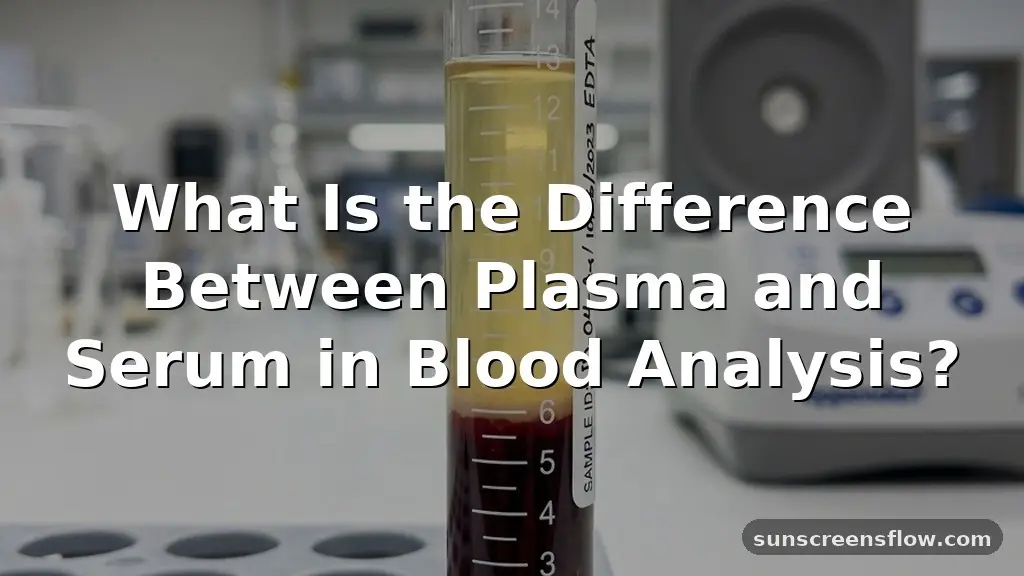
When you look at a vial of blood drawn during a routine medical checkup, it often appears as a uniform, dark red liquid. However, once that sample undergoes processing in a clinical laboratory, it separates into distinct layers. At the heart of this separation lie two primary liquid components: blood plasma and serum.
While these terms are frequently used interchangeably by the layperson, they represent fundamentally different states of the blood’s composition. Understanding what is the difference between plasma and serum is essential for anyone interested in laboratory medicine, as the choice between these two samples dictates the accuracy and nature of the diagnostic testing performed on a patient. At their core, both represent the liquid fraction of blood, but their chemical makeup varies drastically based on whether the blood has been allowed to clot.
The Biological Composition of Blood Components
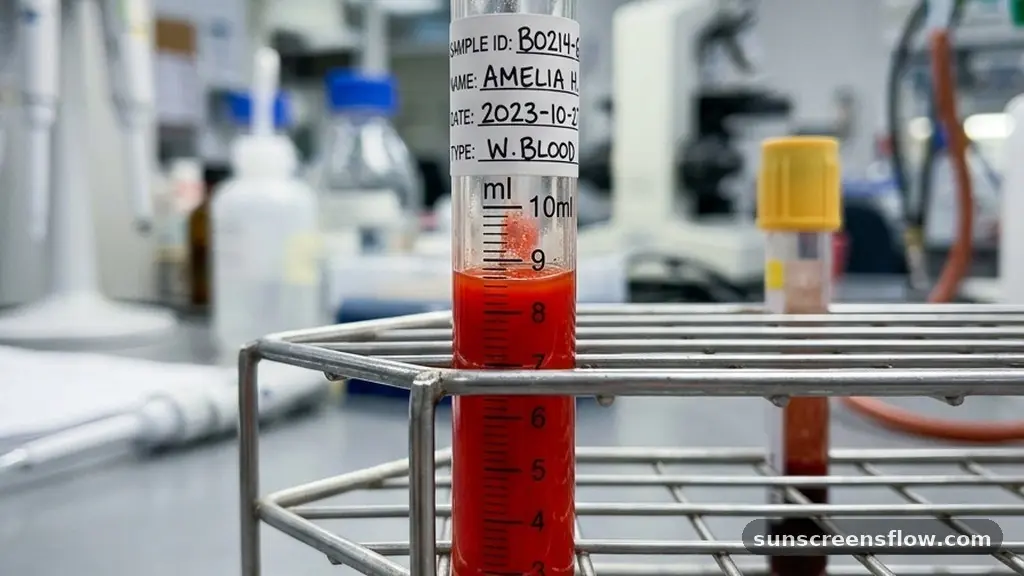
To grasp the distinction between these two fluids, one must first look at the whole blood. Whole blood is a complex connective tissue comprised of formed elements—red blood cells, white blood cells, and platelets—suspended in a liquid matrix. When we isolate the liquid portion, we are looking at the medium that transports nutrients, hormones, waste products, and immune cells throughout the circulatory system. Blood plasma is the liquid portion of blood before any coagulation occurs.
It is essentially an extracellular fluid that contains water, electrolytes, glucose, dissolved gases, and a vast array of proteins. Among these proteins are the essential clotting factors, including fibrinogen, which plays a critical role in stopping bleeding by forming a mesh-like structure.
Conversely, serum is the liquid portion of blood remaining after the blood has been allowed to clot. During the process of coagulation, the soluble protein fibrinogen is converted into insoluble fibrin strands, which trap blood cells and platelets to form a solid clot. Because the clotting process consumes these specific proteins, serum is essentially plasma minus the clotting factors.
This fundamental chemical difference—the presence or absence of fibrinogen—is the primary reason why clinical laboratories must choose one over the other depending on the specific biochemical analysis required. If a test requires the observation of coagulation potential, plasma is necessary. If a test requires a clean look at the baseline chemical environment of the blood, serum is often preferred.
The Role of Centrifugation in Sample Preparation
The separation of these components relies heavily on centrifugation, a process that uses centrifugal force to separate substances of different densities. In a clinical setting, blood is collected into blood collection tubes and placed into a centrifuge, which spins the samples at high speeds.
The heavier components, such as red blood cells, are pushed to the bottom of the tube, while the lighter liquid fraction—whether it is plasma or serum—rises to the top as a supernatant. The way the sample is treated prior to this spin is what determines the final product.
If the goal is to obtain plasma, the medical professional uses a tube that contains anticoagulants. These chemical additives prevent the blood from clotting, ensuring that the clotting factors remain suspended in the liquid portion. Once the tube is centrifuged, the resulting supernatant is plasma.
If the goal is to obtain serum, the blood is collected in a plain tube or a serum separator tube (SST) without anticoagulants. The blood is allowed to sit and clot naturally for a period, typically 30 to 60 minutes, before being centrifuged.
The resulting liquid above the clotted mass is serum. This simple procedural difference is the most common point of confusion in clinical pathology, yet it is the most critical step in ensuring the test results are reliable.
Common Anticoagulants and Their Impact on Testing
The use of specific anticoagulants is a defining feature of plasma-based testing. These additives are carefully selected based on the type of analysis being performed, as they can interfere with different chemical reactions. The most common anticoagulants used in hematology and chemistry include EDTA, heparin, and sodium citrate.
EDTA is widely used for complete blood counts because it preserves the morphology of blood cells exceptionally well. However, it works by chelating calcium, which means it can interfere with certain enzymatic assays that rely on calcium ions for their activity.
Heparin, on the other hand, is a common choice for chemistry panels because it does not interfere with many of the electrolytes or enzymes being measured. It works by activating antithrombin III, which inhibits the coagulation cascade at multiple stages. Sodium citrate is uniquely suited for coagulation studies because it is a reversible anticoagulant. By adding calcium back to the sample in a controlled laboratory environment, scientists can restart the clotting process to measure how quickly a patient’s blood clots.
Understanding these interactions is vital for lab technicians. Using the wrong tube for a specific test can lead to false results, such as falsely low calcium levels in an EDTA-treated sample or inaccurate coagulation times if the wrong ratio of blood to citrate is used.
Serum Separator Tubes and the Clotting Process
When a physician orders a metabolic panel or a lipid profile, they are usually looking for results derived from serum. To speed up the processing of these samples, laboratories utilize serum separator tubes (SST). These tubes contain a gel-like substance with a density between that of the clotted cells and the serum.
During centrifugation, this gel moves to form a physical barrier between the clotted blood and the serum. This barrier is incredibly important because it prevents the serum from interacting with the cells below, which could otherwise alter the chemical composition of the sample over time.
Without this barrier, the serum might continue to exchange ions and metabolites with the trapped blood cells. For example, potassium can leak from red blood cells into the serum if the clot is not separated promptly, leading to artificially high potassium results. This is known as hemolysis, and it is a common pre-analytical error in laboratory medicine.
By using an SST, the laboratory ensures that the serum remains stable and representative of the patient’s condition at the exact moment of the blood draw. This high level of precision is why serum is often considered the “gold standard” for many routine chemistry tests, providing a stable, platelet-free sample that is free from the interference of anticoagulants.
Comparing the Biochemical Content
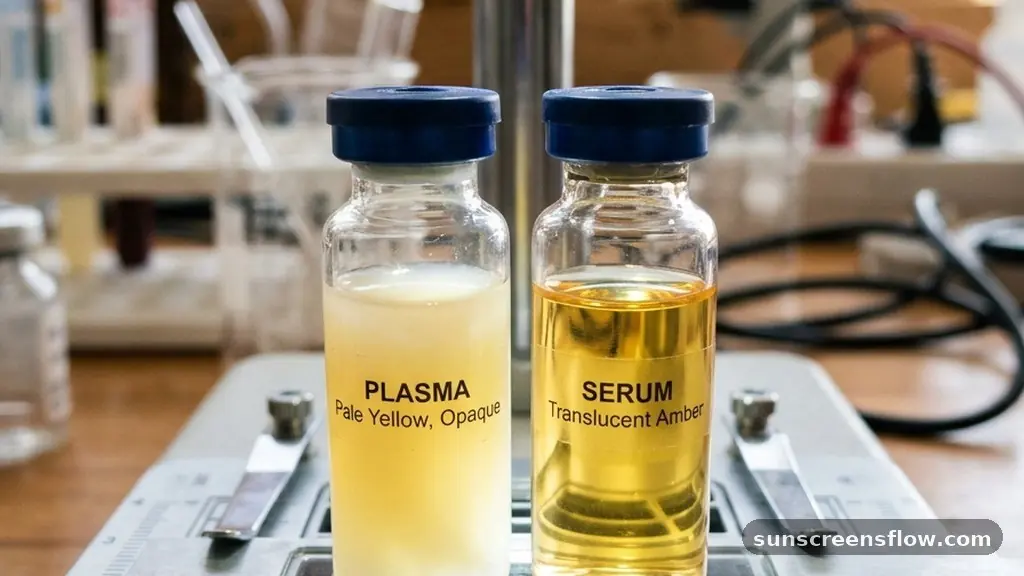
The chemical difference between these two fluids is significant enough that it can affect the sensitivity of a test. Because plasma contains fibrinogen and other factors involved in the coagulation cascade, it is a more “natural” representation of the blood circulating in the body. However, the presence of these proteins can sometimes interfere with analytical equipment.
Serum, by definition, has had these proteins removed. This makes serum a clearer, more predictable medium for testing certain proteins and antibodies.
One of the most important components found in both fluids is immunoglobulin. These are the antibodies that form the backbone of our immune response. When testing for infections or autoimmune conditions, clinicians look at the levels of various immunoglobulins.
Whether the lab uses serum or plasma can sometimes influence the measured concentration of these proteins. Furthermore, the protein content of plasma is naturally higher than that of serum due to the presence of fibrinogen.
While this difference is small, it is accounted for in rigorous clinical standards. The following table summarizes the key physical and chemical differences between the two:
| Feature | Plasma | Serum |
|---|---|---|
| Clotting Factors | Present | Absent (consumed) |
| Fibrinogen | Yes | No |
| Preparation | Requires anticoagulants | Requires clotting time |
| Centrifugation | Immediately after collection | After clot formation |
| Primary Use | Coagulation, emergency labs | Biochemistry, immunology |
Diagnostic Testing and Clinical Significance
In the world of clinical pathology, the decision to use plasma versus serum is rarely arbitrary. It is a calculated choice designed to minimize interference and maximize the accuracy of the data. For instance, in an emergency setting where time is of the essence, plasma is almost always preferred.
Because plasma does not require a waiting period for the blood to clot, it can be centrifuged and analyzed immediately. This allows for rapid turnaround times for critical tests like troponin levels during a heart attack or electrolyte monitoring in a trauma patient.
Serum requires the blood to sit for a significant amount of time to ensure a complete clot. While this is acceptable for routine checkups, it is inefficient for urgent care. Furthermore, certain tests simply do not work in the presence of anticoagulants.
For instance, many protein electrophoresis tests, which help identify specific immune disorders, are better suited for serum because the presence of fibrinogen in plasma can create a “fibrinogen peak” on the resulting graph, potentially masking the presence of other proteins. By understanding these nuances, medical professionals ensure that the venous blood drawn from a patient is processed in the most efficient and accurate manner possible.
Addressing Topical Gaps: Why Misconceptions Persist
A common gap in public knowledge regarding this topic is the assumption that the two fluids are interchangeable for all tests. This misconception often leads to confusion when a patient asks why they need multiple tubes of blood drawn for a single visit. The truth is that the chemical environment required for a glucose test might be perfectly fine in a plasma tube, but a specialized hormone test might require serum to avoid interference from the anticoagulant.
Another gap is the understanding of what happens to the clotting factors themselves. Many people assume they are just “filtered out,” but they are actually chemically transformed into a solid matrix.
Furthermore, there is a lack of awareness regarding the “pre-analytical phase” of laboratory work. The vast majority of laboratory errors occur before the sample even reaches the analyzer, often due to improper tube selection or handling. If a nurse uses a tube containing EDTA for a test that requires a calcium measurement, the result will be invalid.
This is why the distinction between plasma and serum is not merely an academic exercise; it is a vital safety protocol. Every blood collection tube is color-coded to indicate the presence of specific additives, and the strict adherence to these protocols is what keeps diagnostic results reliable. Addressing these gaps helps patients understand that the “extra” vials are not redundant, but are necessary for the specific chemistry of the tests ordered.
The Future of Blood Analysis and Micro-sampling
As we look toward the future of laboratory medicine, the lines between plasma and serum analysis are becoming increasingly refined through technology. We are moving toward micro-sampling techniques that require only a few drops of blood.
In these environments, the ability to rapidly separate components is more important than ever. Researchers are developing “lab-on-a-chip” devices that can perform centrifugation at a micro-scale, allowing for the near-instantaneous separation of serum or plasma from whole blood at the point of care.
This evolution is particularly exciting for the field of proteomics, where the study of the protein content of blood can reveal early markers for diseases like cancer or Alzheimer’s. By refining how we handle these samples, we can detect lower concentrations of biomarkers that were previously obscured by the complexity of the blood matrix.
Whether we are dealing with the traditional venous draw or these emerging micro-technologies, the fundamental difference between plasma and serum remains the cornerstone of our ability to interpret the chemical signals our blood provides. By continuing to optimize these processes, we ensure that the bridge between a patient’s biological state and a clinical diagnosis remains as short and as accurate as possible.
Frequently Asked Questions
Which is better for testing, serum or plasma?
Neither is inherently “better”; the choice depends entirely on the specific diagnostic test required. Plasma is faster because it does not require clotting, making it ideal for emergencies. Serum is preferred for many biochemical and immunological tests because it is free of anticoagulants and clotting factors that could interfere with results.
Why would a doctor order a serum test?
Doctors order serum tests when they need a clean, stable sample for chemistry panels, such as liver function tests, lipid profiles, or hormone assays. Because serum lacks fibrinogen and anticoagulants, it provides a highly stable environment that minimizes the risk of interference with the sensitive analytical instruments used in laboratories.
Is serum the same as plasma?
No, they are not the same. While both are the liquid portion of blood, the key difference is the presence of clotting factors. Plasma is the liquid obtained when blood is prevented from clotting, whereas serum is the liquid that remains after blood has been allowed to clot naturally.
How do you remove serum from plasma?
You do not remove serum from plasma because they are two different states of the same liquid fraction. You either obtain plasma by using an anticoagulant and centrifuging immediately, or you obtain serum by allowing the blood to clot and then centrifuging to separate the liquid from the solid clot.
Conclusion
The distinction between plasma and serum is a fundamental concept in clinical pathology that bridges the gap between raw biological samples and actionable medical data. By understanding that plasma is the liquid fraction containing clotting factors and serum is the remaining fluid after coagulation has occurred, we can appreciate the complexity involved in modern diagnostic testing. Whether it is the rapid processing facilitated by plasma for emergency care or the high-precision stability provided by serum for biochemical analysis, each plays a specialized role in healthcare.
As laboratory medicine continues to advance, the careful management of these blood components—from the selection of the correct blood collection tubes to the precise application of centrifugation—will remain essential for ensuring accurate diagnosis and patient safety. Recognizing these differences allows for a deeper appreciation of the rigorous science that supports every medical report.


