


Achieving an even complexion is a common goal in skincare, and many individuals often ask, does vitamin C serum help with dark spots? The short answer is yes, as this potent ingredient serves as a cornerstone for addressing various forms of skin discoloration.
By understanding how this antioxidant interacts with the skin, you can better navigate the journey toward a brighter, more uniform appearance. Whether you are dealing with sun-induced patches or remnants of past breakouts, vitamin C acts as a versatile tool in your arsenal, working at the cellular level to intercept the processes that lead to visible unevenness.
The Biological Mechanism Behind Vitamin C and Pigmentation
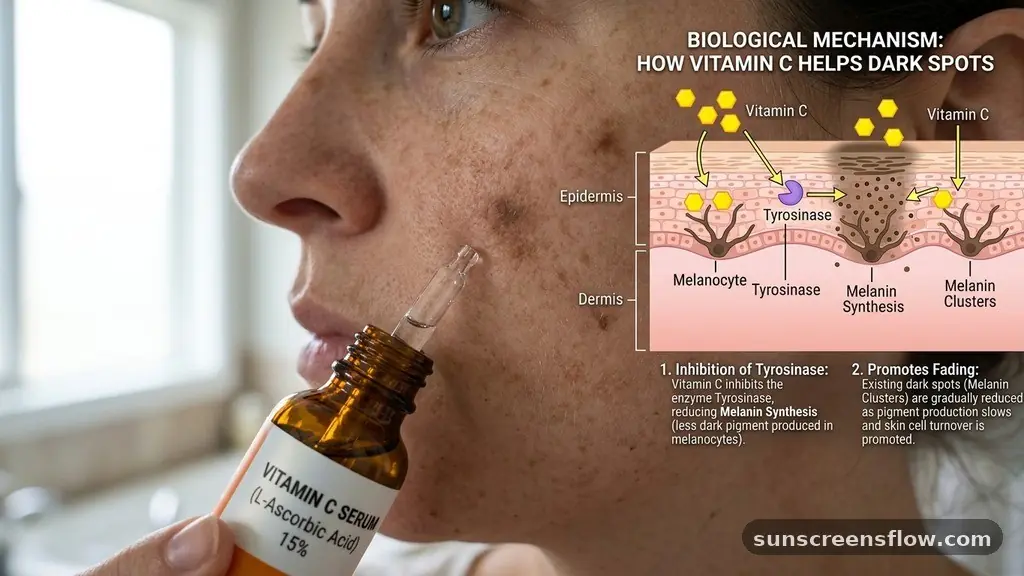
To understand how vitamin C functions, we must look at the biological process of melanin production. Melanin is the pigment responsible for our skin, hair, and eye color. When the skin is triggered by UV exposure, inflammation, or hormonal shifts, melanocytes become hyperactive, producing an excess of pigment that manifests as dark spots, also known as hyperpigmentation.
Vitamin C, specifically in its most potent form, L-ascorbic acid, functions primarily through tyrosinase inhibition. Tyrosinase is the key enzyme required for the synthesis of melanin. By inhibiting this enzyme, vitamin C effectively slows down the production of new pigment at the source.
It does not bleach the skin; rather, it regulates the pathway that causes excess color to accumulate. This makes it a highly effective treatment for post-inflammatory hyperpigmentation—the dark marks left behind after a pimple heals—as well as more complex conditions like melasma. Because it works by preventing the darkening process, consistent application is essential to see long-term results in your overall skin brightening efforts.
Combatting Oxidative Stress and Free Radical Damage
Beyond its role in inhibiting pigment production, vitamin C is one of the most powerful topical antioxidants available. Throughout the day, our skin is bombarded by environmental aggressors such as UV radiation, pollution, and smoke, all of which generate free radicals.
These unstable molecules cause oxidative stress, which damages healthy skin cells and triggers an inflammatory response. Inflammation is a major culprit in the development of dark spots because it signals the skin to produce more melanin as a protective mechanism.
By neutralizing free radicals, vitamin C acts as a shield, preventing the chain reaction of damage that leads to premature aging and uneven tone. When applied topically, it provides a layer of photoprotection that complements your sunscreen.
While it is not a substitute for your daily sun protection factor (SPF), it acts as a secondary defense system. If you spend significant time outdoors, incorporating a stable vitamin C serum into your morning routine helps mitigate the damage that typically leads to new dark spots forming, effectively stopping the cycle of pigment accumulation before it even begins.
Comparing Different Forms of Vitamin C
Not all vitamin C serums are created equal, and the type of derivative used can significantly impact efficacy and stability. When shopping for products, you will likely encounter several variations, each with unique properties regarding skin penetration and irritation potential.
- L-ascorbic acid: The gold standard for potency. It is highly effective but can be unstable and irritating for sensitive skin types.
- Sodium ascorbyl phosphate: A water-soluble, more stable derivative. It is generally gentler and often preferred for those prone to acne, as it may offer some antimicrobial benefits.
- Tetrahexyldecyl ascorbate: An oil-soluble form that penetrates the skin deeply and is significantly more stable than L-ascorbic acid. It is excellent for dry or aging skin.
- Magnesium ascorbyl phosphate: A very stable, non-irritating option that is ideal for individuals who find pure L-ascorbic acid too harsh for daily use.
Choosing the right derivative depends on your specific skin type and the severity of your pigmentary disorders. If you have resilient skin, you might lean toward L-ascorbic acid for faster results. However, if your skin is reactive, opting for a more stable, oil-soluble form ensures you can reap the benefits of skin brightening without the risk of redness or barrier disruption.
Synergistic Ingredients for Maximum Efficacy
While vitamin C is a powerhouse on its own, it often performs better when paired with other active ingredients that enhance its stability and effectiveness. The most famous pairing is with ferulic acid and vitamin E.
Ferulic acid acts as a stabilizer for L-ascorbic acid, extending its shelf life and doubling its photoprotective capabilities. Vitamin E, meanwhile, works in tandem with vitamin C to quench free radicals, as both antioxidants regenerate one another to keep the skin protected for longer periods.
Beyond these classic pairings, many modern serums incorporate niacinamide to further tackle uneven skin tone. Niacinamide is excellent for calming inflammation and inhibiting the transfer of pigment to the skin’s surface, making it the perfect partner for vitamin C.
When these ingredients are formulated correctly, they address dark spots from multiple angles: vitamin C inhibits production, niacinamide prevents pigment transfer, and ferulic acid ensures the formula remains active throughout the day. This multi-pronged approach is often more effective than relying on a single active ingredient, especially when dealing with stubborn, long-standing patches of discoloration.
The Role of Skin Cell Turnover

A common misconception is that vitamin C alone will exfoliate away dark spots. In reality, vitamin C works primarily on the production side. To effectively fade existing discoloration, you must also encourage skin cell turnover.
This is where active ingredients like retinol come into play. Retinol accelerates the rate at which dead skin cells are shed, effectively “pushing” the pigmented cells to the surface and off the skin more quickly.
When you combine a vitamin C serum in the morning with a retinol treatment at night, you create a comprehensive regimen. The vitamin C protects the skin and inhibits new melanin, while the retinol ensures that the old, damaged cells containing excess pigment are exfoliated away.
It is vital to note that this combination can be intense, so it is often recommended to introduce these products slowly. Using them in separate routines—vitamin C during the day and retinol at night—is the safest way to ensure you are treating the dermal layer effectively while maintaining the health of your moisture barrier.
Addressing Topical Gaps: Common Misconceptions
Many users wonder if vitamin C can remove dark spots permanently. It is important to clarify that pigmentary concerns are often chronic. If you stop using your treatment and continue to expose your skin to UV rays without adequate sun protection factor, the hyperpigmentation will likely return.
Vitamin C is not a permanent cure; it is a maintenance tool. Another common gap in understanding is the relationship between vitamin C and acne. Some believe it causes breakouts, but in most cases, it is the formulation (such as heavy oils or fragrances) rather than the vitamin itself.
| Feature | L-Ascorbic Acid | Tetrahexyldecyl Ascorbate |
|---|---|---|
| Stability | Low (oxidizes quickly) | High |
| Penetration | Good (water-soluble) | Excellent (oil-soluble) |
| Irritation Level | High | Low |
| Best For | Fast results, oily skin | Sensitive skin, dry skin |
By understanding these nuances, you can avoid the frustration of “it didn’t work” when the issue was actually the choice of derivative or the lack of consistent sun protection. Always remember that skincare is a marathon, not a sprint. Results regarding dark spots typically require at least 8 to 12 weeks of dedicated, daily use before significant changes become visible.
Integrating Vitamin C Into Your Daily Routine
To see the best results, consistency is the single most important factor. Start by cleansing your skin, then apply your vitamin C serum to dry skin.
Allowing the serum to absorb fully—usually for about one to two minutes—before applying your moisturizer and sunscreen is crucial for optimal results. Because vitamin C is an acid, its pH level matters; applying it to damp skin can sometimes increase the risk of stinging or irritation.
If you are new to using potent actives, start by using your serum every other day. Once your skin has built up a tolerance, you can move to daily application. Always store your vitamin C serum in a cool, dark place, as exposure to light and air can cause it to oxidize.
You will know your serum has oxidized if it turns a dark yellow or orange color; once it reaches this state, it is likely no longer effective and may even contribute to further oxidative stress. Investing in high-quality, air-tight packaging is worth the extra cost, as it ensures the integrity of the product until the very last drop.
The Impact of Lifestyle on Pigment Management
While topical treatments are essential, they cannot compensate for a lifestyle that promotes inflammation. Factors such as diet, sleep, and stress levels play a significant role in skin health.
High levels of sugar and processed foods can lead to glycation, which damages collagen and can exacerbate the appearance of dark spots. Furthermore, chronic stress triggers hormonal shifts that can worsen conditions like melasma.
Pairing your serum with a diet rich in antioxidants—such as berries, leafy greens, and nuts—supports your skin from the inside out. This systemic approach to reducing oxidative stress helps the body repair itself more efficiently. When you combine internal health with a targeted external routine, your skin becomes more resilient to the environmental factors that cause uneven skin tone.
Remember that the skin is the body’s largest organ, and it reflects your overall health. Treating it with care, both through professional-grade ingredients and mindful daily habits, is the most sustainable way to keep your complexion clear and radiant.
Frequently Asked Questions
How long does it take for vitamin C to fade dark spots?
Visible improvement usually takes between 8 to 12 weeks of consistent, daily application. Because skin cells cycle roughly every 28 days, it takes multiple cycles for the pigment to fade significantly. Patience and daily sun protection are critical to seeing these results.
Can I use vitamin C and retinol at the same time?
It is generally recommended to use them at different times of the day to avoid irritation. Use your vitamin C serum in the morning to provide antioxidant protection, and save your retinol for your evening routine to promote cell turnover while you sleep.
Does vitamin C serum help with dark circles under the eyes?
Yes, it can help. Vitamin C promotes collagen synthesis and brightens the skin, which can improve the appearance of dark circles caused by thin skin or pigment issues. However, if your circles are caused by deep-set bone structure or shadows, topical treatments will have limited impact.
Should I use vitamin C every day?
Yes, for the best results, you should use a vitamin C serum every morning. Regular use keeps the antioxidant levels in your skin high, providing continuous protection against free radicals and maintaining the inhibition of melanin production throughout the day.
Conclusion
The question of does vitamin C serum help with dark spots is answered by its proven ability to inhibit tyrosinase, neutralize damaging free radicals, and support overall skin health. By acting as a multifaceted agent against hyperpigmentation, it serves as a vital component in any brightening regimen. While it is not a “magic eraser” that works overnight, its consistent use provides the necessary support to fade existing discoloration and prevent the formation of new spots.
When you combine this powerful antioxidant with a robust routine involving sun protection, gentle exfoliation, and other complementary ingredients, you create a sustainable path toward a clearer, more luminous complexion. Stay consistent, store your products properly, and always prioritize your daily SPF to ensure your skin remains protected and vibrant for years to come.


