


Achieving a radiant complexion often feels like a balancing act, but figuring out how much vitamin C serum to use is a foundational step that many skincare enthusiasts overlook. Using the correct amount is not just about avoiding product waste; it is about ensuring your skin receives the precise concentration of this potent topical antioxidant required to neutralize free radicals and boost your glow.
If you apply too little, you may fail to reap the full protective benefits, while over-application can sometimes lead to unnecessary surface residue or sensitivity. Mastering the application process involves understanding the texture of your specific formula, the needs of your facial skin barrier, and how to integrate it seamlessly into your daily regimen.
The Science of Dosage and Skin Absorption
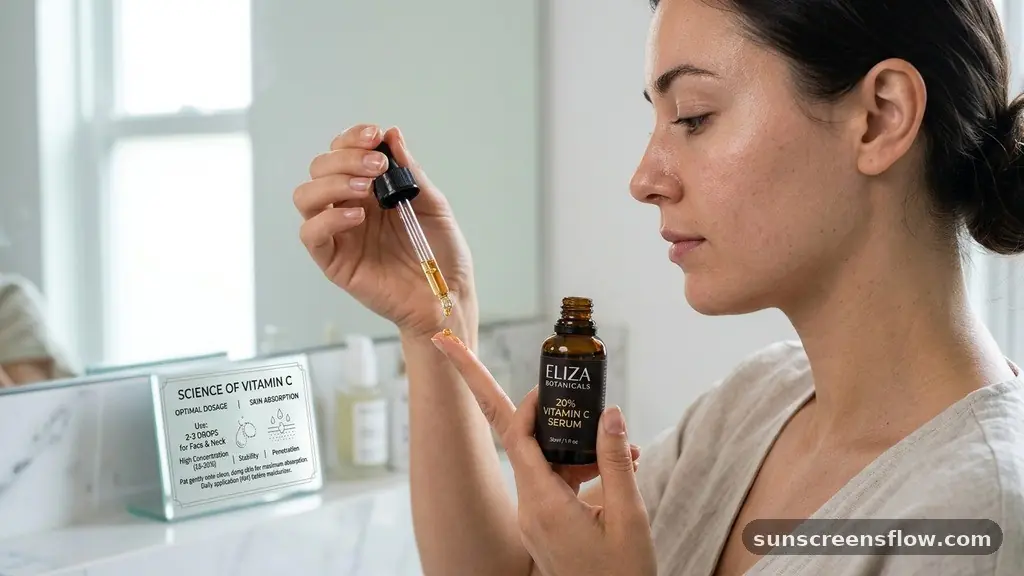
When considering how much vitamin C serum to use, it is helpful to first understand how your skin interacts with active ingredients. The primary goal of applying a serum is to deliver high concentrations of active molecules, such as L-ascorbic acid, directly into the epidermis. Unlike heavy creams, serums are formulated with smaller molecular weights to facilitate deep penetration.
Because the skin has a finite capacity for absorption, applying excessive amounts does not lead to better results. In fact, once the surface is saturated, any additional product simply sits on top of the skin, potentially causing pilling when you apply your moisturizer or sun protection factor (SPF) afterward.
The ideal dosage generally aligns with a pea-sized amount or roughly three to four drops from a standard dropper application. This volume is typically sufficient to cover the face, neck, and décolletage without creating a sticky film. If you find yourself using an entire dropper full for just your cheeks, you are likely over-applying.
Dermatologists often emphasize that consistency is far more important than quantity. By applying a thin, even layer daily, you maintain a steady supply of antioxidants that help mitigate the damage caused by reactive oxygen species generated by environmental stressors like pollution and blue light.
Understanding Concentration and Product Potency
The effectiveness of your serum is heavily influenced by its concentration percentage. Most clinical-grade formulas range between 10% and 20% L-ascorbic acid. While it might be tempting to think that higher percentages yield faster results, they also increase the likelihood of skin irritation, especially for those with sensitive complexions.
When you are determining how much vitamin C serum to use, consider the strength of your product. If you are using a high-concentration formula (20% or above), a smaller amount is often safer to prevent stinging or redness.
Furthermore, the pH balance of the product plays a critical role in how well your skin handles the application. L-ascorbic acid is most stable and effective at a low pH, which can be inherently irritating to some. If you notice a tingling sensation, it is usually a sign that the product is active, but it should not be painful.
If you experience significant burning, you may be using too much, or your skin barrier may be compromised. Always start with a smaller amount—perhaps just two drops—and gradually increase as your skin builds tolerance. This methodical approach ensures that you achieve the benefits of collagen synthesis and brightening without overwhelming your delicate moisture barrier.
Strategic Application in Your Morning Skincare Routine
The most effective time to utilize a vitamin C serum is during your morning skincare routine. This is because your skin faces the highest level of environmental assault during daylight hours.
By applying the serum in the morning, you are essentially “pre-loading” your skin with armor against UV radiation and free radical damage. When deciding how much vitamin C serum to use at the start of your day, focus on an even distribution across the entire surface of the face.
| Application Area | Recommended Amount | Key Benefit |
|---|---|---|
| Face Only | 2-3 Drops | Targeted brightening |
| Face, Neck & Décolletage | 4-5 Drops | Uniform anti-aging protection |
| Sensitive Skin/Beginner | 1-2 Drops | Reduces risk of irritation |
Start by cleaning your face thoroughly, then apply the serum to slightly damp or dry skin. If you wait until your skin is completely bone-dry, the product may absorb faster than you can spread it, leading to uneven application.
If you have a larger surface area to cover, such as the neck and upper chest, you might need an extra drop or two. Remember that the serum should be the first active treatment applied after cleansing and toning, as it needs direct contact with the skin to function optimally.
Preventing Oxidation and Maintaining Shelf Life
One of the most common mistakes users make is ignoring the product shelf life. Vitamin C is notoriously unstable and prone to oxidation when exposed to air, light, or heat.
If you use too much serum per application, you are not only wasting expensive product but also increasing the speed at which the remaining serum in the bottle degrades. An oxidized serum typically turns from a clear or light straw color to a dark amber or brown hue.
To ensure you are getting the most out of every drop, keep your bottle tightly sealed and stored in a cool, dark place, such as a bathroom cabinet or a drawer. If you find that you are reaching the end of the bottle and the serum has significantly changed color, it is likely no longer effective and may even be irritating.
Using the correct amount ensures that you finish the product within its recommended window—usually three to six months after opening. By being mindful of your daily usage, you maintain the potency of the formula from the first drop to the last.
Navigating Layering Serums and Ingredient Compatibility
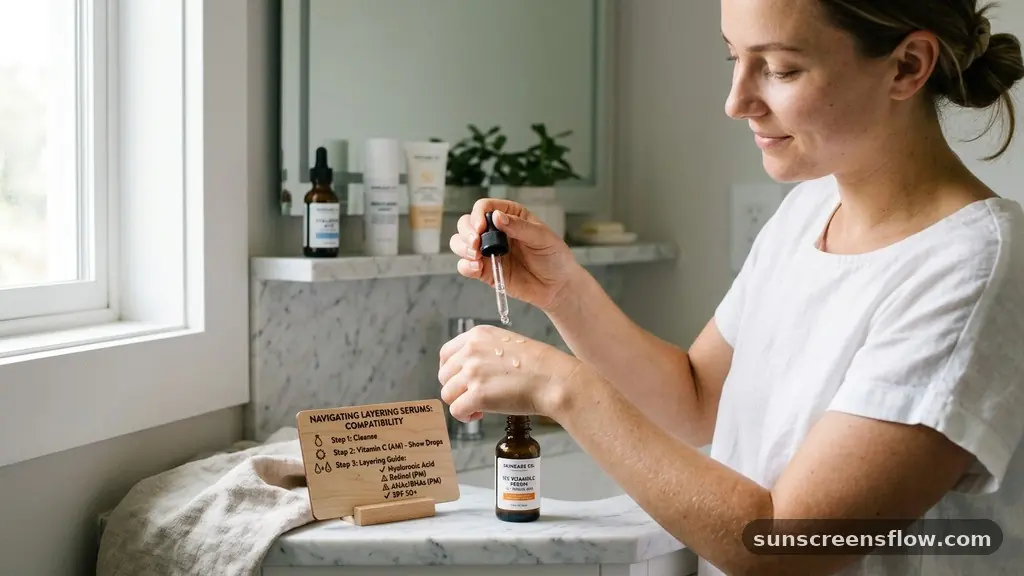
Integrating vitamin C with other actives requires a strategic approach to layering serums. Many people worry about mixing ingredients, but with the right timing, you can safely include multiple powerhouses in your regimen.
For example, using niacinamide alongside vitamin C is a common point of confusion. While older skincare myths suggested they shouldn’t be mixed, modern research shows that when formulated correctly, they work beautifully together to brighten and smooth skin texture.
When layering, always apply your thinnest, most watery products first. If you are using a hyaluronic acid serum, it can be applied either before or after your vitamin C, depending on the thickness of the formulas. If your vitamin C serum has a more watery serum consistency, apply it first.
If it is more viscous, apply your hyaluronic acid first. The most important rule regarding how much vitamin C serum to use when layering is to avoid oversaturating the skin.
If you apply too many layers of different products, you increase the risk of trans-epidermal water loss or product pilling. Keep your routine simple, effective, and focused on targeted treatment.
Addressing Topical Gaps: Why Less is Often More
A common topical gap in skincare advice is the failure to address the “why” behind the dosage recommendations. Many users assume that if a little is good, more must be better. However, the skin has a specific threshold for active ingredients.
Once the receptors are saturated, the excess serum provides no additional benefit. In fact, using too much vitamin C serum can lead to an accumulation of acidic residue on the skin’s surface, which can disrupt the natural protective layer and lead to unwanted breakouts or dryness.
Another gap is the lack of emphasis on patch testing. Before you decide how much vitamin C serum to use on your entire face, it is vital to test a small amount on your inner forearm or behind your ear. This helps you determine if your specific skin type reacts negatively to the concentration.
By conducting a patch test, you can gauge how your skin “drinks” the product. If your skin feels tight or itchy after a small amount, you know to adjust your dosage downward or switch to a lower-percentage formula. Never assume that a “standard” recommendation fits every skin type perfectly.
The Role of Vitamin C in Hyperpigmentation and Collagen Synthesis
Vitamin C is a powerhouse ingredient primarily because of its dual role in hyperpigmentation correction and collagen synthesis. By inhibiting the enzyme tyrosinase, it helps fade dark spots and even out skin tone over time. To achieve these results, you don’t need to bathe your face in the serum; you need consistent, daily delivery of the antioxidant to the affected areas.
When applying, pay extra attention to areas with sun damage or uneven tone. You can gently pat the serum into these spots rather than rubbing it vigorously. This technique encourages better absorption and ensures that the active ingredients stay concentrated where they are needed most.
Because collagen production is a slow, cumulative process, you won’t see results overnight. Sticking to the recommended pea-sized amount every single morning for at least twelve weeks is the best way to see a noticeable improvement in skin firmness and brightness.
Avoiding Common Mistakes: What to Avoid Mixing
While vitamin C is highly effective, it is also sensitive to its environment. One major mistake is mixing it with retinol in the same application step.
Because retinol often works best at a different pH and can be inherently irritating, using them at the same time can cause severe redness and sensitivity. Instead, save your vitamin C for the morning and your retinol for the evening.
Furthermore, be cautious about the order of application. If you apply your serum over a heavy oil or a thick occlusive moisturizer, the serum will not be able to penetrate the skin barrier effectively. Always apply your vitamin C on clean, dry or slightly damp skin before any heavier products.
If you are using a chemical exfoliant like AHA or BHA, it is often best to space these out from your vitamin C application to avoid over-exfoliation. Understanding how much vitamin C serum to use is only half the battle; knowing when and with what to use it is the other half.
Dermatologist Recommendations for Beginners
If you are just starting out, dermatologist recommendations often lean toward the “start low and go slow” philosophy. Many experts suggest beginning with a lower concentration, such as 5% or 10%, to allow your skin to adjust. Regarding how much vitamin C serum to use, beginners should start with just a few drops and observe how their skin reacts over the first two weeks.
If you find that your skin tolerates it well, you can gradually increase to the full pea-sized amount and eventually experiment with higher concentrations if desired. It is also essential to remember that vitamin C does not replace your sunscreen.
In fact, it works synergistically with your sun protection factor to provide superior defense against UV-induced damage. By following these professional guidelines, you can safely incorporate this potent ingredient into your routine and enjoy the long-term benefits of a healthier, more radiant complexion.
FAQ
How much vitamin C serum should I use on my face?
Most dermatologists recommend using a pea-sized amount, which is typically three to four drops from a standard dropper. This amount is sufficient to cover your entire face, neck, and chest. Using more than this can lead to product waste, pilling, or potential skin irritation.
Can applying too much vitamin C serum cause side effects?
Yes, applying an excessive amount can lead to surface residue, which may cause pilling when you apply moisturizer or makeup. Furthermore, because vitamin C is acidic, using too much may cause stinging, redness, or sensitivity, especially if you have a compromised skin barrier or sensitive complexion.
Should I use vitamin C serum in the morning or at night?
It is generally recommended to use vitamin C serum in your morning skincare routine. Applying it in the morning provides your skin with a layer of antioxidant protection against environmental stressors like UV radiation and pollution throughout the day, which helps prevent premature aging and skin damage.
What should I avoid mixing with my vitamin C serum?
You should generally avoid applying high-strength retinoids or harsh chemical exfoliants (like AHAs or BHAs) at the same time as your vitamin C serum. These combinations can lead to severe skin irritation and sensitivity. It is best to use vitamin C in the morning and retinoids at night.
In conclusion, determining how much vitamin C serum to use is a simple yet vital aspect of an effective skincare routine. By sticking to a pea-sized amount, applying it during your morning regimen, and being mindful of product storage and ingredient compatibility, you can maximize the benefits of this powerful antioxidant. Whether your goal is to brighten your skin tone, stimulate collagen synthesis, or protect against environmental damage, consistency is the key to success.
Remember that your skin is unique; always listen to its signals, start with a lower frequency if you are a beginner, and always prioritize the health of your skin barrier. With the right approach, vitamin C can become the cornerstone of a radiant and resilient complexion.


