


A body serum acts as a concentrated treatment for the skin below the neck, functioning much like the targeted serums used in facial skincare. While many people are accustomed to applying a standard body lotion or cream, these products often prioritize surface-level moisture.
In contrast, a body serum is engineered with a lower molecular weight, allowing it to penetrate deeper into the skin layers to deliver potent active ingredients directly where they are needed most. By focusing on specific skin concerns—such as uneven tone, loss of firmness, or persistent dryness—these lightweight formulations bridge the gap between simple hydration and intensive dermatological care.
Defining the Role of Body Serum in Modern Skincare
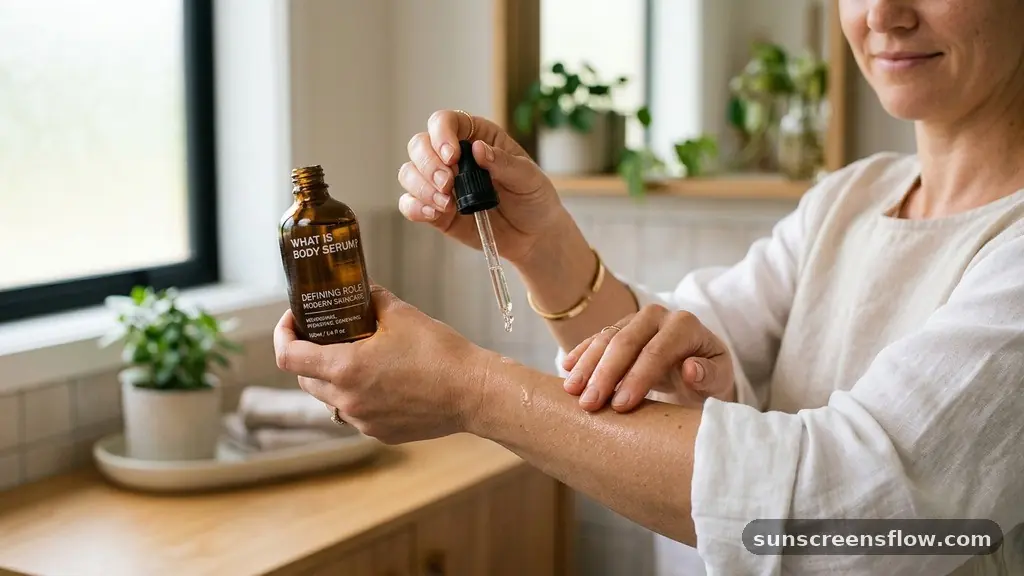
At its core, a body serum is a high-potency fluid designed to enhance the health of the skin on your limbs, torso, and back. Unlike traditional moisturizers that primarily sit on the surface, a serum is formulated for rapid skin absorption.
Because the stratum corneum—the outermost layer of the skin—can be quite thick on parts of the body like the legs and elbows, heavier creams often struggle to deliver benefits beyond simple softening. A serum utilizes a thinner, often water-based delivery system that carries beneficial compounds deep into the tissues.
These products are rarely intended to stand alone as a total moisture solution. Instead, they function as an essential step in a comprehensive skincare routine that prepares the skin to receive further treatment. By incorporating ingredients that focus on epidermal hydration and cellular turnover, a body serum addresses the root causes of skin issues rather than masking them.
When you understand the difference between surface-level coating and deep-tissue nourishment, it becomes clear why these serums have moved from niche luxury items to staples in modern dermatological practices. They allow for a more personalized approach to body care, letting you layer products based on the specific needs of different skin zones.
Understanding Molecular Weight and Skin Penetration
The effectiveness of any topical treatment is largely dictated by its molecular weight. In the context of skincare, smaller molecules are generally more capable of crossing the skin barrier.
A body serum is intentionally formulated with smaller-sized molecules compared to thick body butters or heavy oils. This structural advantage ensures that ingredients like hyaluronic acid can reach deeper into the dermis, where they effectively bind water to the skin cells.
When a product has a high molecular weight, it acts primarily as an occlusive, meaning it seals moisture in from the top down. While this is helpful for preventing trans-epidermal water loss, it does little to “recharge” the skin from within. A serum, conversely, acts as a humectant-heavy vehicle.
It pulls moisture into the skin, making it more plump, supple, and receptive to the subsequent application of a lotion or oil. This synergy is crucial; if you apply a heavy cream before a serum, the serum will simply sit on top of the barrier, unable to penetrate. This is why the sequence of application—thinnest to thickest—is a non-negotiable rule in professional skincare.
Key Ingredients Found in High-Performance Serums
To identify what makes a body serum effective, one must look at the specific chemistry of its formulation. Manufacturers often pack these products with high concentrations of bio-active compounds that would be difficult to stabilize in a standard, whipped body cream.
- Hyaluronic Acid: A powerhouse humectant that holds up to 1,000 times its weight in water, vital for instant hydration.
- Niacinamide: Known for its ability to improve skin texture and strengthen the lipid barrier by reducing inflammation.
- Alpha Hydroxy Acids (AHAs): Ingredients like lactic acid provide gentle chemical exfoliation, removing dead cells to reveal brighter skin.
- Vitamin C: A potent antioxidant that helps neutralize free radicals while promoting collagen production for firmer skin.
- Ceramides: Essential fats that help repair the skin barrier and prevent future irritation or sensitivity.
These ingredients are rarely found in such high concentrations in mass-market body lotions. By choosing a serum that targets your specific needs—such as brightening with Vitamin C or smoothing with lactic acid—you are essentially applying a specialized treatment that transforms the skin’s long-term appearance rather than just providing a temporary sheen.
Comparing Body Serum, Lotion, and Oil
One of the most common questions is how a serum stacks up against the more familiar products already in our medicine cabinets. While they all aim to improve skin health, they fulfill very different roles within a routine. The following table illustrates the functional differences between these three categories of body care products.
| Feature | Body Serum | Body Lotion | Body Oil |
|---|---|---|---|
| Primary Function | Targeted treatment/Correction | Surface hydration/Maintenance | Sealing/Occlusion/Protection |
| Absorption Rate | Fast/Deep | Moderate/Surface | Slow/Surface coating |
| Key Texture | Watery/Gel-like | Creamy/Emulsion | Viscous/Lipid-based |
| Best For | Active concerns (aging, texture) | Daily maintenance | Dry, cracked skin |
As demonstrated, the body lotion is a maintenance tool, while the body oil is a sealant. The serum is the “active” player in the lineup. If you have extremely dry skin, you might need all three: a serum for hydration, a lotion for moisture, and an oil to lock it all in.
Understanding this hierarchy allows you to troubleshoot your skincare routine effectively. If your skin feels dry despite using a lotion, the issue might not be the lotion itself, but rather a lack of deep-tissue hydration that only a serum can provide.
The Role of Exfoliating Acids in Body Care
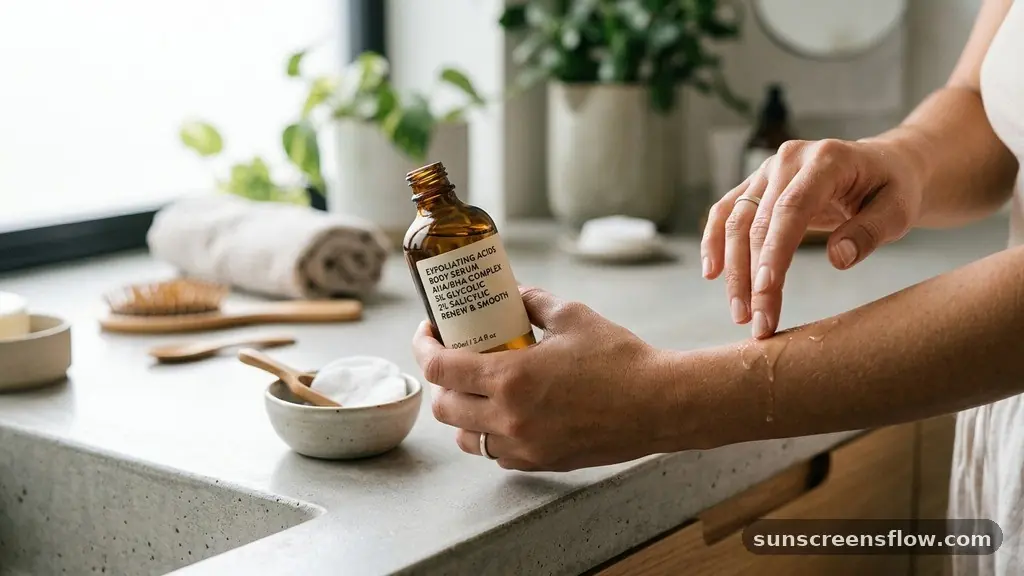
A significant advantage of using a serum is the inclusion of exfoliating acids. Many people suffer from rough, bumpy skin on their arms or legs—a condition often caused by the buildup of keratin. While physical scrubs can be abrasive and cause micro-tears in the skin, chemical exfoliants like lactic acid or glycolic acid work by dissolving the glue that holds dead skin cells together.
When these acids are delivered in a serum format, they are more evenly distributed and can be left on the skin to work over several hours. This is far more effective than a wash-off scrub. Regular use of an exfoliating body serum can lead to a noticeable improvement in skin elasticity and overall smoothness.
Furthermore, by removing the top layer of debris, you allow your other skincare products—like your moisturizer—to work more efficiently. This creates a feedback loop of health where your skin becomes progressively easier to manage, less prone to ingrown hairs, and significantly more radiant.
Addressing Skin Barrier Integrity
The skin barrier is the body’s first line of defense against environmental stressors, pollution, and bacteria. When this barrier is compromised, the skin loses moisture rapidly, leading to the dreaded “tight” or “itchy” feeling associated with dry skin. Many body serums are formulated specifically to support the lipid barrier by incorporating ceramides, fatty acids, and cholesterol.
When you apply a serum that contains these lipids, you are essentially “patching” the cracks in your skin’s defense system. This is especially important for those living in harsh climates or those who take frequent hot showers, which can strip away natural oils. A good serum will soothe the skin immediately upon contact, reducing redness and sensitivity.
Over time, a healthy barrier results in skin that looks plumper and feels more resilient. If you struggle with chronic inflammation or persistent dry patches, look for serums labeled as non-comedogenic and fragrance-free, as these are less likely to cause irritation while the barrier is in the process of healing.
Antioxidants and Long-Term Skin Health
Beyond immediate hydration, the best body serums act as a long-term insurance policy for your skin. The inclusion of antioxidants such as vitamin c, vitamin E, and niacinamide helps protect the skin from oxidative stress caused by UV exposure and air pollution. While these ingredients are famous in facial skincare for preventing fine lines, they are equally effective on the body.
The skin on our arms and chest is often exposed to the sun and environmental elements, leading to premature aging, sunspots, and loss of tone. By applying an antioxidant-rich serum before your daily sunscreen or moisturizer, you are adding an extra layer of protection. These ingredients neutralize free radicals before they can damage your cells, effectively slowing the visible signs of aging.
It is a proactive approach to body care that pays dividends in the form of firmer, more even-toned skin as you age. It is worth noting that antioxidants work best when used consistently; unlike a quick-fix moisturizing cream, the benefits of these active compounds accumulate over time.
Addressing Common Misconceptions and Topical Gaps
There is a prevalent myth that body serums are merely diluted versions of facial serums sold at a higher price point. While the base ingredients might overlap, the formulation is quite different.
The skin on the body is generally thicker, less sensitive, and has fewer oil glands than the skin on the face. Therefore, body serums are often formulated with a higher concentration of active ingredients to ensure they can penetrate the thicker stratum corneum.
Another common gap in knowledge is the idea that you shouldn’t mix products. Many users fear that “layering” will clog their pores. However, as long as you use non-comedogenic products, layering is the most effective way to treat the skin.
You should always start with the product that has the thinnest consistency—the serum—and move toward the thickest. This ensures that the water-based active ingredients reach the skin cells before they are sealed off by heavier oils or waxes. If you are experiencing breakouts after using a body product, it is rarely the serum’s fault; it is more likely that a heavy occlusive in your lotion is trapping sweat or bacteria against your skin.
Integrating Body Serum Into Your Routine
To see the best results, consistency is key. You should treat your body with the same level of care you give your face. After stepping out of the shower, gently pat your skin dry—leaving it slightly damp is actually ideal for epidermal hydration.
Apply your body serum to the areas of concern, such as the thighs, arms, or décolleté. Allow it to absorb for about sixty seconds.
Once the serum has settled, follow up with your preferred body lotion or cream. This “sandwich” method ensures that the active ingredients in the serum are locked in by the emollient properties of the lotion.
If you are using a serum with exfoliating acids, it is imperative to use sunscreen on those areas during the day, as these acids can increase the skin’s sensitivity to UV light. By following this structured approach, you will notice a significant shift in your skin’s texture and glow within just a few weeks of consistent use.
Frequently Asked Questions
Is a body serum the same as a body oil?
No, they serve different purposes. A serum is water-based and contains active ingredients designed to penetrate the skin to treat specific concerns like aging or texture. A body oil is lipid-based and functions as an occlusive to lock in moisture and prevent water loss from the surface.
Can I apply body serum on my face?
While some body serums are gentle, it is generally not recommended. Facial skin is thinner and more sensitive than body skin. Body serums often contain higher concentrations of active ingredients or different pH levels that might be too harsh or irritating for the delicate skin on your face.
Is body serum better than lotion?
It is not necessarily “better,” but rather different. A lotion provides essential surface hydration and barrier protection. A serum acts as a targeted treatment to address deeper concerns. For the best results, most people benefit from using both a serum for treatment and a lotion for moisture.
How often should I use a body serum?
For most people, using a body serum once a day—preferably after showering—is sufficient to see improvements. If your serum contains strong exfoliating acids, you might want to start by using it every other day to ensure your skin tolerates the ingredients well before increasing to daily use.
Conclusion
Understanding what a body serum is opens the door to a more effective and personalized approach to skincare. By moving beyond simple surface-level moisturizers, you can address deeper skin concerns such as loss of elasticity, uneven texture, and dehydration. Through the strategic use of active ingredients like hyaluronic acid, niacinamide, and exfoliating acids, a body serum provides the targeted care necessary to maintain a healthy skin barrier and a radiant appearance.
Remember that the success of any body care routine relies on the correct order of application and the consistency of use. By prioritizing skin absorption and selecting products that align with your specific skin goals, you can achieve professional-level results at home.
Whether you are aiming to smooth rough patches or boost long-term skin health with antioxidants, a body serum is the essential missing link in your daily regimen. Embrace the science of skincare and treat your body with the same precision and care you afford your complexion.


