

Deciphering the correct order of your skincare products is one of the most common hurdles for beauty enthusiasts. If you have ever stared at your vanity wondering, do I put serum on before or after moisturizer, you are certainly not alone. The general rule of thumb in dermatology is to apply products from the thinnest consistency to the thickest consistency.
Because a facial serum is typically designed as a lightweight, highly concentrated delivery system for active ingredients, it must be applied to the skin before your heavier, cream-based moisturizer. This ensures that the potent ingredients can penetrate the epidermis effectively without being blocked by the thicker, often occlusive nature of a cream.
The Science of Product Layering and Absorption
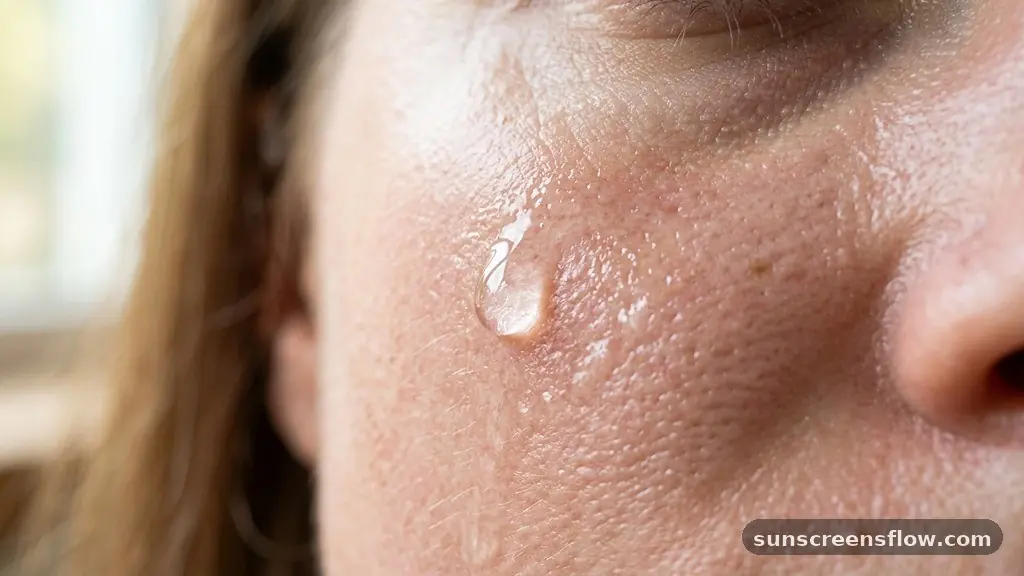
Understanding the logic behind your skincare routine requires a look at how your skin actually functions as a barrier. The skin’s primary job is protection, which means it is inherently designed to keep foreign substances out. When you apply topical application products, you are essentially trying to bypass this natural defense system to deliver nutrients to the deeper layers of the dermis.
The concept of molecular weight is critical here; smaller molecules can penetrate the skin barrier more easily than larger ones. Serums are formulated with small, low-molecular-weight ingredients that are meant to be absorbed quickly.
If you were to apply a heavy moisturizer first, you would essentially be creating a physical barrier on the surface of your skin. Moisturizers are often rich in oils and waxes designed to seal in moisture and prevent transepidermal water loss. If you apply your serum on top of this layer, the serum’s active ingredients will struggle to reach their target destination.
By placing the serum directly onto clean, slightly damp skin, you maximize the absorption rate, allowing the product to work efficiently. Think of your skin like a sponge: it is much better at soaking up a thin, watery liquid than it is at absorbing a thick, heavy paste.
The Role of Humectants and Occlusives
To truly master the order of application, you must distinguish between the two primary types of skincare components: humectants and occlusives. A humectant, such as hyaluronic acid, works by drawing moisture into the skin. These ingredients are found in almost every hydrating serum.
They are thirsty molecules that bind to water, pulling it from the environment or deeper layers of the skin to the surface. Because they are designed to attract water, they function best when they have a clear path to the skin’s surface.
On the other hand, an occlusive is an ingredient that creates a seal over the skin. Ingredients like petrolatum, shea butter, or certain heavy plant oils are classic occlusives. Their role is to lock everything in and prevent evaporation.
If you apply a product with high occlusive properties before your serum, you are essentially sealing the skin before the serum has had a chance to work. By applying the serum first, you allow the humectants to pull hydration into the skin, and by following up with a moisturizer, you create that necessary seal to keep the hydration locked in. This synergy between the two product types is what maintains optimal hydration levels throughout the day and night.
Why Consistency Dictates the Order
The “thinnest to thickest” rule is the most reliable guideline for anyone confused about their regimen. Serums are almost always water-based or thin oil-based solutions containing high concentrations of active ingredients like vitamin C, retinol, or niacinamide.
These ingredients are potent and need to be applied directly to the skin to ensure maximum efficacy. A moisturizer, meanwhile, is usually an emulsion—a mix of water and oil—that feels creamier and more substantial.
If you attempt to apply a heavy, thick cream and then layer a thin, watery serum on top, you will likely notice the serum pilling or balling up on your skin. This happens because the serum cannot penetrate the oily layer of the moisturizer. Not only is this frustrating from a cosmetic standpoint, but it is also a waste of expensive products.
By adhering to the order of consistency, you ensure that every product you apply serves its intended purpose. If you use multiple serums, the same rule applies: apply the thinnest, most watery formula first, and allow it to dry for a minute before moving on to the next slightly thicker serum, and finally, your moisturizer.
Key Differences Between Serums and Moisturizers
To help you visualize why the order matters, it is helpful to contrast the primary functions of these two essential skincare steps. While both contribute to the overall health of your skin barrier, they do so in fundamentally different ways.
| Feature | Facial Serum | Moisturizer |
|---|---|---|
| Primary Goal | Targeted treatment | Protection and hydration |
| Texture | Lightweight, thin, watery | Creamy, thick, emollient |
| Absorption | Rapid, deep penetration | Surface-level, protective seal |
| Ingredient Load | High concentration of actives | Balanced blend of hydrators and fats |
As shown in the table, the serum is the “worker” that delivers concentrated nutrients like peptides or antioxidants, while the moisturizer is the “protector” that maintains the lipid barrier. If you prioritize the protector before the worker, you impede the delivery of the specialized nutrients your skin needs to improve skin texture and tone.
Navigating Active Ingredients: Vitamin C, Retinol, and Niacinamide
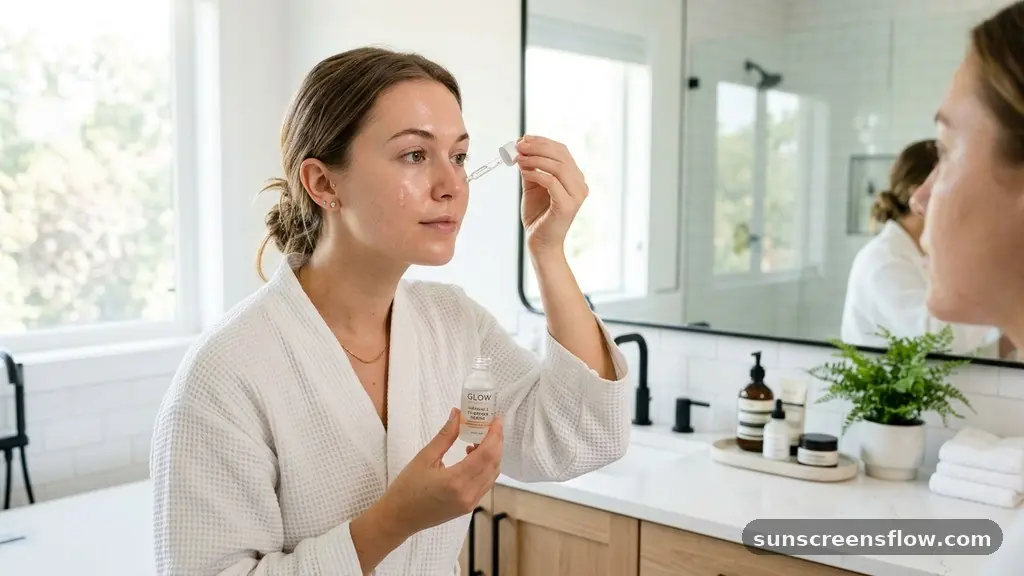
When dealing with powerful active ingredients, the timing of your application becomes even more important. Products containing vitamin C are typically applied in the morning to provide antioxidant protection against environmental stressors.
Because vitamin C is often formulated in a very thin, acidic serum, it should always be the first step after cleansing and toning. If you apply a cream before it, the pH of your skin might be altered, or the absorption might be inhibited, rendering the expensive vitamin C ineffective.
Similarly, retinol is a powerhouse ingredient that requires direct contact with the skin to stimulate cellular turnover. If you apply retinol over a thick moisturizer, you are diluting its potency.
While some people with sensitive skin choose to “sandwich” their retinol between two layers of moisturizer to minimize irritation, the standard protocol for maximum impact is to apply the retinol serum to clean, dry skin. Niacinamide, which is excellent for soothing and refining pores, is also best applied early in the routine. Because it is generally well-tolerated and stable, it pairs beautifully with other serums, but it should still precede your final moisturizing step to ensure it doesn’t cause any pore clogging when trapped under a heavy cream.
The Importance of the Skin Barrier and Non-Comedogenic Choices
Your skin barrier is the outermost layer of your skin, composed of lipids and skin cells that prevent water loss and block irritants. When you are layering products, your ultimate goal is to support this barrier rather than disrupt it.
Using products that are non-comedogenic is essential, especially if you are prone to acne. If you apply a heavy, pore-clogging moisturizer over a serum that contains active ingredients, you might inadvertently trap impurities against the skin, leading to breakouts.
By applying your serum first, you allow those active ingredients to absorb fully. Then, by following with a lightweight, non-comedogenic moisturizer, you support the lipid barrier without overwhelming the skin. This balance is crucial for people with oily or combination skin.
Many people fear that using a serum and a moisturizer will feel too heavy, but if you choose the right textures—such as a gel-based serum followed by a lightweight lotion—you can achieve excellent hydration without feeling greasy or heavy. The layering process should feel like a ritual that feeds your skin, not one that suffocates it.
Common Mistakes When Layering Skincare
One of the biggest mistakes people make is applying their products too quickly, one right after the other. It is not enough to just know the order; you must also allow for “dry time.” When you apply a serum, give it about 30 to 60 seconds to sink into the skin.
You will know it has absorbed when the skin feels slightly tacky but not wet. If you rush and slap your moisturizer on immediately, you are essentially mixing the two products together on the surface of your face, which can lead to pilling and prevent the serum from penetrating the dermis.
Another common mistake is ignoring the state of the skin. If your skin is extremely dry, you might feel the urge to layer multiple heavy creams. However, layering more heavy products does not always equal better hydration.
In fact, if you don’t have a water-based layer (the serum) underneath, you are just applying oil to dry skin. This can lead to a feeling of “surface dryness” where the skin feels tight despite being covered in cream. Always start with a water-based serum to provide the hydration, and then use your moisturizer to lock it in.
Addressing Topical Gaps: Can You Mix Them?
A common question that arises is whether you can simply mix your serum into your moisturizer in the palm of your hand and apply them together. While this might seem like a time-saver, it is generally discouraged by skincare experts.
When you mix products, you are diluting the concentration of the active ingredients in the serum. Furthermore, you are altering the pH balance of the serum, which is carefully formulated to be effective at a specific acidity level.
By mixing them, you compromise the delivery system. The serum is designed to penetrate quickly, while the moisturizer is designed to sit on top. When you combine them, you create a hybrid consistency that may not penetrate as well as the serum alone, and it may not provide the same protective, occlusive benefit as the moisturizer alone.
If you want the best results, follow the step-by-step approach. Apply the serum, let it absorb, and then follow with the moisturizer. This ensures that each product performs its specific function without interference from the other.
FAQ: Common Queries About Skincare Order
Does it matter if my serum is oil-based or water-based?
Yes, it does. Always apply water-based serums first, as they have the lightest consistency. If you are using an oil-based serum, it should be applied after your water-based serums but before your moisturizer, unless the oil-based serum is extremely heavy, in which case it might serve as your final moisturizing step.
Can I skip the moisturizer if my serum feels hydrating enough?
While some serums are highly hydrating, most are not designed to act as a standalone moisturizer. A moisturizer is necessary to create an occlusive seal that prevents transepidermal water loss. If you skip the moisturizer, the water you’ve added with your serum may simply evaporate into the air.
What if I am using multiple serums at once?
If you use multiple serums, apply them in order of consistency, starting with the thinnest, most watery formula and moving to the thickest. Allow each one to dry for about 30 to 60 seconds before applying the next. This prevents pilling and ensures maximum absorption for each active ingredient.
Should I wait for the serum to dry completely before applying moisturizer?
You do not need to wait for the skin to be bone-dry, but it should feel slightly tacky. If the skin is still wet, the moisturizer may slide around and not adhere properly. A short window of 30 to 60 seconds is usually sufficient for the serum to sink in.
Conclusion
Navigating the world of skincare can be overwhelming, but the answer to “do i put serum on before or after moisturizer” is a fundamental principle that simplifies your entire routine. By prioritizing the absorption rate and sticking to the “thinnest to thickest” rule, you ensure that your active ingredients reach their intended destination in the epidermis while your moisturizer provides the necessary occlusive protection to keep your skin healthy and hydrated. Whether you are using hyaluronic acid, vitamin C, or retinol, the order of application is the bridge between using a product and seeing actual results.
Remember that your skincare routine is a personalized process; pay attention to how your skin responds to different textures and layering techniques. By consistently applying your serum first, you give your skin the best possible chance to thrive, remain hydrated, and maintain a smooth, radiant texture. Take your time, allow for proper absorption, and enjoy the benefits of a well-structured, evidence-based approach to your daily beauty regimen.


