

Serum free media represents a sophisticated advancement in cell culture technology, moving away from the traditional reliance on animal-derived supplements like fetal bovine serum (FBS). At its core, this specialized formulation provides a controlled environment where every component is known, quantified, and synthetic or highly purified. By removing the biological variability inherent in serum, researchers gain precise control over the cellular microenvironment, which is essential for high-stakes applications like biopharmaceutical production, regenerative medicine, and fundamental molecular biology research.
Defining Serum-Free Media and Its Evolution
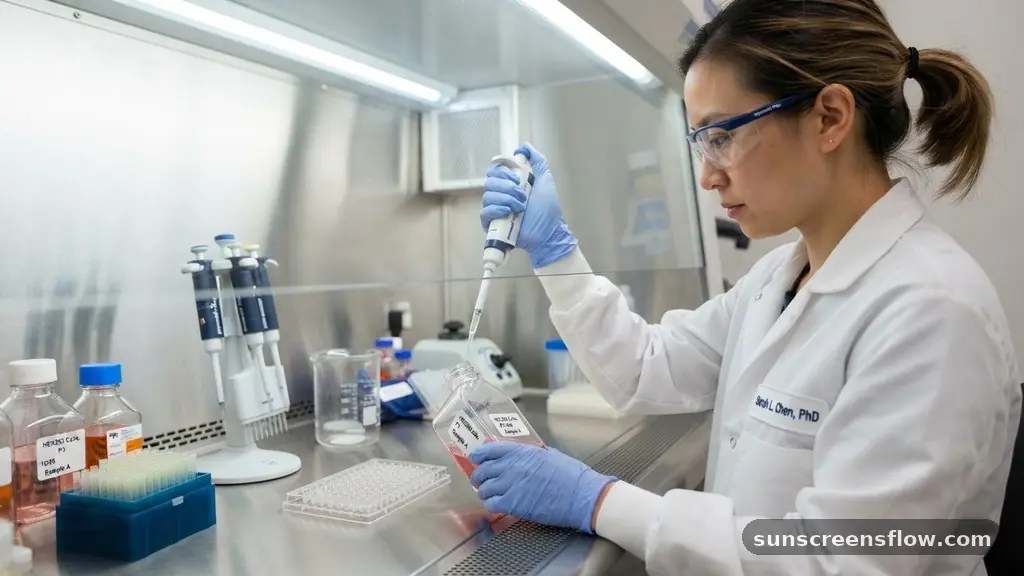
The transition from serum-supplemented to serum-free formulations marks a significant shift in modern biotechnology. Traditionally, cell culture relied heavily on FBS to provide a complex cocktail of hormones, lipids, and proteins necessary for cell survival and proliferation. However, serum is a biological product, and its composition fluctuates significantly between batches, leading to inconsistent experimental results. Defining serum-free media involves identifying the specific requirements of a cell line and substituting serum with a precise cocktail of purified proteins and small molecules.
This evolution was driven by the necessity for consistency. When researchers use serum, they are essentially introducing an unknown variable into their experiments. By contrast, a defined medium eliminates these unknowns.
The process requires a deep understanding of cellular physiology. Scientists must identify the exact growth factors, attachment proteins, and transport molecules that the specific cell line requires to thrive.
Once these factors are identified, they are added in specific concentrations to a basal medium, such as DMEM or Ham’s F12. This shift not only improves the reliability of data but also aligns with ethical standards by reducing the reliance on animal-derived resources in industrial processes.
Enhanced Reproducibility in Laboratory Research
One of the most compelling arguments for using serum-free conditions is the promise of Enhanced Reproducibility. In a typical laboratory setting, an experiment performed in January might yield different results than the same experiment in June if the serum batch has changed. Serum contains thousands of unidentified molecules, ranging from cytokines to trace minerals, which can inadvertently stimulate or inhibit cellular pathways.
When researchers switch to a chemically defined system, they eliminate the “black box” of serum. Because the formulation is standardized, the experimental conditions remain constant across different labs and different timeframes. This is particularly critical for clinical research, where regulatory bodies demand strict adherence to standardized protocols.
If a therapy is being developed for human use, the production process must be validated and reproducible. Serum-free systems provide the documentation and consistency required for these high-level regulatory approvals. Furthermore, it allows for the precise titration of components; if a researcher suspects that a specific growth factor is influencing a signaling pathway, they can adjust that single variable without affecting the rest of the culture environment.
Reduction of Contamination Risks and Safety
The use of animal-derived products introduces significant biosafety challenges. Fetal bovine serum, while effective at promoting growth, carries the risk of harboring adventitious agents, including viruses, prions, and mycoplasma. These contaminants can be devastating for a cell culture facility, leading to the loss of expensive cell lines and compromising the integrity of research data.
By transitioning to serum-free alternatives, laboratories can achieve a substantial Reduction of Contamination Risks. Synthetic or highly purified components are subject to rigorous quality control measures that biological products cannot match. For instance, recombinant proteins produced in bacterial or yeast systems are much easier to screen for pathogens than serum harvested from livestock.
This safety profile is not just a benefit for the cell culture itself; it is a prerequisite for the clinical application of cells. In cell therapy, where patients receive treatments derived from cultured cells, the presence of animal-derived contaminants could trigger immune responses or transmit diseases. Therefore, moving to a fully defined, serum-free environment is not merely an improvement in convenience—it is a foundational requirement for modern medical safety standards.
Key Components and Challenges in Media Design
Designing a successful serum-free medium is a complex task that requires balancing the specific needs of a cell type with the availability of high-quality supplements. The primary challenge lies in the fact that serum provides a multifaceted support system that is difficult to replicate. To succeed, the medium must provide a precise balance of nutrients and signaling molecules. Key Components and Challenges in this field revolve around the replacement of serum-derived proteins with recombinant or synthetic equivalents.
The medium must contain:
- Growth factors: Insulin, transferrin, and selenium are the “big three” often used to replace the mitogenic activity of serum.
- Attachment factors: Fibronectin, collagen, and laminin are essential for adherent cell types that require a substrate to anchor themselves.
- Transport molecules: These ensure that essential nutrients are delivered to the cell surface, often mimicking the role of naturally occurring serum proteins.
- Specific additives: Trace elements, lipids, and vitamins are added to fine-tune the metabolic environment for optimal performance.
The challenge often arises when a cell line is highly dependent on the “unknown” factors found in serum. Some cells require specific hormones or binding proteins that are not yet fully characterized in the context of their specific growth cycle. Consequently, developers must often engage in a trial-and-error process, testing various combinations of including albumin and transferrin, to ensure that the cells maintain their phenotype and functional characteristics over long-term culture.
Simplified Downstream Processing
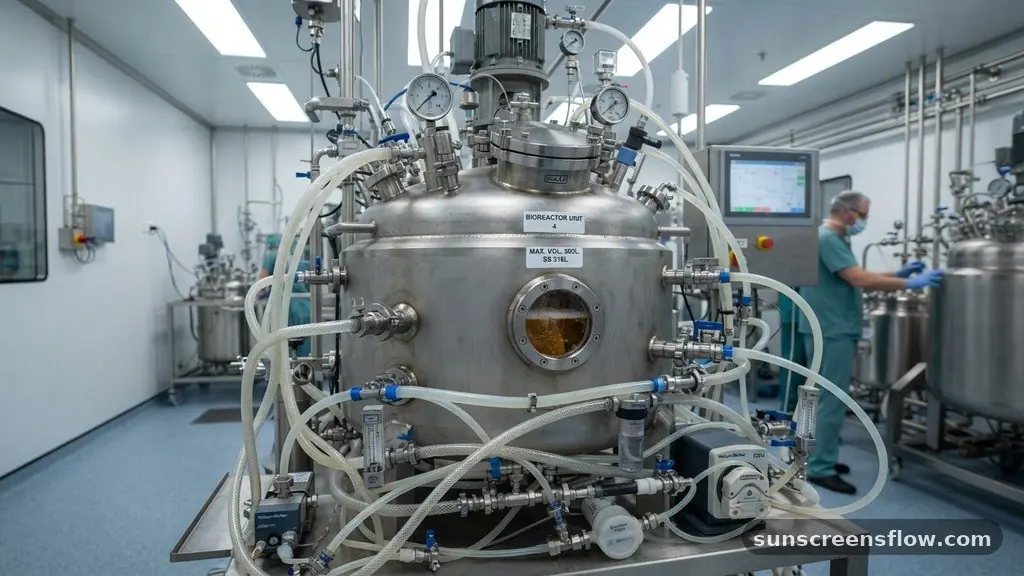
In the biopharmaceutical industry, the purification of a final product—such as a monoclonal antibody or a viral vector—is a labor-intensive and costly process. When cells are grown in serum-supplemented media, the culture broth is teeming with high concentrations of bovine proteins, lipids, and other impurities. These must be rigorously removed during the purification steps to ensure the final product is pure and safe for human use.
By utilizing serum-free media, manufacturers achieve Simplified Downstream Processing. Because the media formulation is defined, the “background noise” of serum proteins is absent. This significantly reduces the burden on filtration and chromatography systems, as there are fewer impurities to separate from the target molecule.
This leads to higher yields, faster turnaround times, and reduced costs for manufacturing facilities. When the culture environment is cleaner, the downstream steps become more efficient, allowing for a more streamlined production pipeline. This is a primary driver for the adoption of serum-free technologies in large-scale therapeutic protein production, where every percentage point of efficiency translates to significant commercial and clinical value.
Adaptation Strategies for Cell Lines
Transitioning a cell line from a serum-containing environment to a serum-free one is rarely instantaneous. Cells often undergo a period of stress when their accustomed source of growth factors is removed.
Therefore, Adaptation Strategies are crucial to ensure cell viability and prevent the loss of the cell line. Most researchers employ a “weaning” process, where the concentration of serum is gradually reduced over several passages while the concentration of the defined supplements is increased.
During this transition, it is common to observe changes in cell morphology or growth rates. Some cells may undergo selection, where only a sub-population that is capable of thriving in the new medium survives. It is important to monitor these cells closely to ensure that their fundamental characteristics, such as protein expression or signaling pathways, remain unchanged.
In some cases, the selection of a robust sub-clone that thrives in serum-free conditions is the desired outcome. This ensures that the resulting cell line is optimized for the new environment and will perform consistently in future experiments. Documentation of these adaptation protocols is vital for maintaining the integrity of the research, as different labs may require slightly different adaptation timelines depending on the specific cell line’s robustness.
Comparing Media Types: A Technical Perspective
Understanding the differences between conventional and defined media is essential for selecting the right approach for a project. The following table highlights the distinct differences between serum-containing media and serum-free, chemically defined media.
| Feature | Serum-Containing Media | Serum-Free (Defined) Media |
|---|---|---|
| Batch Consistency | Low (High variability) | High (Standardized) |
| Contamination Risk | High (Biological origin) | Low (Synthetic/Purified) |
| Downstream Purification | Complex and expensive | Simplified and efficient |
| Cost per Liter | Lower upfront cost | Higher upfront, lower total cost |
| Regulatory Compliance | Difficult | Straightforward |
This comparison illustrates why, despite the higher initial cost of specialized serum-free components, the long-term benefits of efficiency and regulatory compliance make them the industry standard for modern manufacturing and clinical research.
Addressing Topical Gaps: Why Serum-Free Isn’t Always the Default
While the benefits are clear, there are reasons why serum-free media hasn’t completely replaced serum in every single laboratory. One of the primary topical gaps in existing literature is the acknowledgment of the “generalist” nature of serum.
Serum is a “catch-all” supplement that works for a vast array of cell types without requiring extensive optimization. For small academic labs with limited resources or those working with rare, poorly characterized cell lines, the cost and time required to develop a custom serum-free medium are often prohibitive.
Furthermore, some primary cells are extremely sensitive to the transition and may undergo terminal differentiation or senescence when removed from the protective, complex environment provided by serum. This is where the field of specific additives becomes critical. Researchers are currently focusing on identifying the missing signals—often small, transient molecules—that serum provides but that are currently missing from standard defined media.
Filling these gaps requires interdisciplinary work between biochemists and cell biologists, who must map the “secretome” of cells in serum to identify the exact cocktail needed to support them in a fully synthetic environment. Addressing these gaps is the next frontier, moving us closer to a future where serum is obsolete for all cell culture applications.
Future Outlook and Technological Integration
The future of cell culture lies in the integration of high-throughput screening and automation. As we better understand the metabolic requirements of various cell types, we can use machine learning algorithms to predict the optimal concentrations of growth factors and other supplements for a given cell line.
This will drastically reduce the time spent on manual adaptation and optimization. Additionally, the development of synthetic, animal-free alternatives for attachment factors, such as recombinant human collagen or synthetic peptide-based surfaces, will continue to improve the ethical and safety profile of these cultures.
We are entering an era where the culture medium is no longer just a “soup” of nutrients but a highly engineered, precision-tuned tool for cellular manipulation. This progress is essential for the growth of the personalized medicine sector, where patient-specific cells must be cultured safely and efficiently.
By continuing to refine the definition of serum-free media, we are not only improving the quality of scientific research but also accelerating the delivery of life-saving therapies to patients worldwide. The transition is a testament to the power of precise, analytical science in overcoming the limitations of traditional, empirical methods.
Frequently Asked Questions
What is the main reason to switch to serum-free media?
The primary reason is to achieve consistency. Serum is a biological product with high batch-to-batch variability, which makes experimental results hard to replicate. Serum-free media is chemically defined, meaning it contains known, quantified components, leading to Enhanced Reproducibility and more reliable data for clinical and industrial applications.
Are there disadvantages to using serum-free media?
The main disadvantages are the initial cost and the complexity of development. Because serum is a generalist supplement, it works for many cells without effort. Serum-free media often requires significant time and optimization to ensure a specific cell line survives and maintains its phenotype, which can be challenging for some researchers.
Can any cell line be adapted to serum-free conditions?
Most mammalian cell lines can be adapted to serum-free media through a gradual weaning process. However, some highly sensitive primary cells or specific, rare cell lines may require specialized, proprietary formulations that are not yet widely available. Success often depends on finding the right combination of specific additives for that cell type.
How does serum-free media affect downstream processing?
It significantly simplifies downstream processing by eliminating the high concentration of bovine proteins found in serum. This reduces the burden on purification equipment like filters and chromatography columns, leading to higher product purity, lower costs, and more efficient production cycles for biopharmaceuticals like monoclonal antibodies.
Conclusion
In summary, the transition to serum-free media represents a major leap forward in the reliability, safety, and efficiency of cell culture. By moving away from the biological unpredictability of serum and toward a defined environment, researchers can ensure their work is reproducible and compliant with the highest safety standards.
While the development of these media requires a deep understanding of cellular needs and a commitment to rigorous optimization, the benefits—including the Reduction of Contamination Risks and Simplified Downstream Processing—far outweigh the challenges. As the biotechnology landscape continues to evolve, the adoption of chemically defined media will remain a cornerstone of progress in both fundamental research and large-scale industrial manufacturing, paving the way for more consistent and safer medical breakthroughs.


