
Navigating the nuances of a skincare routine can feel like solving a complex puzzle, especially when you are trying to figure out if your serum go before or after toner. Many people find themselves confused by the sheer volume of products available, but the golden rule of skincare application is almost always to move from the lightest, thinnest consistency to the thickest, most occlusive formula.
Understanding the specific function of each product clarifies why the sequence matters. By applying your products in the right order, you ensure that active ingredients can penetrate effectively without being blocked by heavier creams or oils.
The Fundamental Rule of Skincare Layering
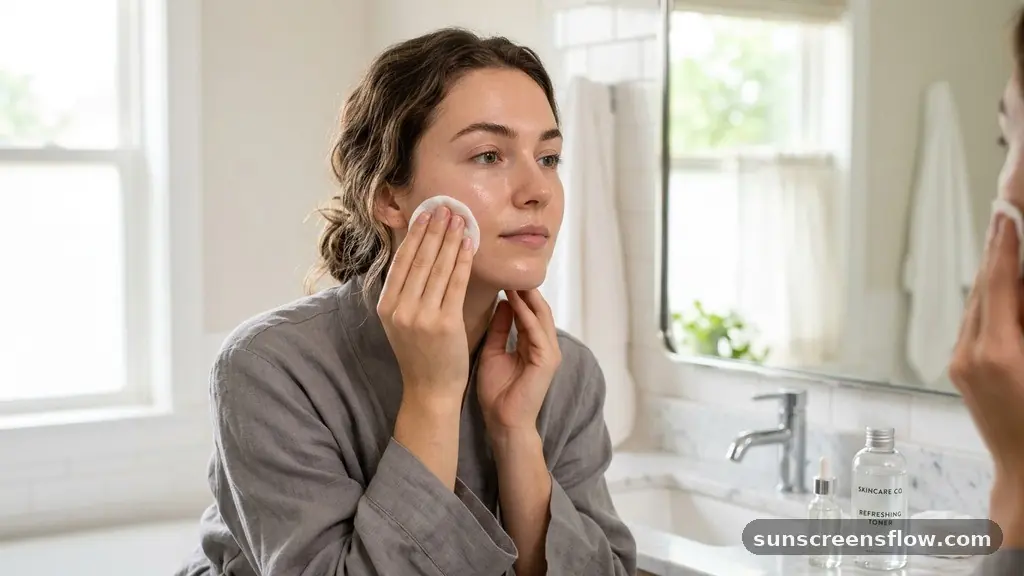
The primary reason we follow a specific order in our daily regimen is to maximize the absorption of potent ingredients. Toners are typically water-based and designed to balance the skin’s pH levels after cleansing, while serums are concentrated treatments packed with active molecules.
Because toners are so thin, they act as a bridge between your cleanser and your treatment steps. If you were to apply a thicker serum first, the toner would struggle to reach the skin, effectively rendering its balancing properties useless.
When you apply your toner to slightly damp skin, you are essentially creating a hydrated canvas. This moisture helps the subsequent serum spread more evenly across your face, neck, and décolletage.
Think of your skin like a sponge; it absorbs liquid much more efficiently when it is already slightly moist. By sticking to this sequence, you allow the specialized ingredients—whether they are meant for brightening or hydration—to sink in exactly where they are needed most.
Why Toner Precedes Serum in Your Routine
Toners serve a very specific purpose: they remove any lingering impurities that your cleanser might have missed while simultaneously prepping the skin for better absorption. When you ask if serum goes before or after toner, the answer is consistently after, because the toner is essentially preparing the surface for treatment. Modern formulations offer much more than the harsh, alcohol-laden astringents of the past; today’s toners are often infused with soothing botanicals, humectants, and antioxidants.
Once you have wiped or patted on your toner, your skin is primed. Applying your serum immediately afterward while the skin is still slightly damp allows the active ingredients to penetrate deeper into the epidermis.
This is especially important if your serum contains powerhouse ingredients like hyaluronic acid, which binds moisture to the skin, or potent antioxidants designed to fight environmental stressors. If you skip the toner or flip the order, you risk wasting expensive products that simply cannot reach their target depth.
The Role of Serums in Targeted Treatment
Serums are the heavy lifters of any skincare routine. They are engineered to deliver high concentrations of active ingredients directly into the skin to address specific concerns like hyperpigmentation, fine lines, or dullness. Because they are designed to be potent, they usually have a lightweight, liquid consistency that sits comfortably under heavier moisturizers or facial oils.
When choosing a serum, you are usually looking for specific results. If you are dealing with premature aging, you might reach for a formula containing retinol. If your goal is deep hydration, a hyaluronic acid serum is the standard choice.
Because these formulas are so refined, they don’t contain the heavy emollients found in creams. This unique composition is exactly why they must be applied after your toner but before your heavier creams or oils. If you put a heavy cream on first, the serum will sit on top of that barrier, unable to perform its work.
Step-by-Step Application Guide for Optimal Results
To ensure you are getting the most out of your products, following a consistent sequence is key. This routine ensures that every layer serves a purpose and doesn’t interfere with the next.
- Cleanse your face thoroughly to remove dirt, oil, and makeup.
- Apply your toner using a cotton pad or by gently pressing it into the skin with your palms.
- While your skin is still slightly damp, dispense a few drops of your chosen serum.
- Gently press the serum into your skin, starting from the center of your face and working outward.
- Allow the serum to absorb for at least 60 seconds before applying your moisturizer.
- Finish with sunscreen during daytime routines to protect the active ingredients from UV damage.
Following this flow prevents the “pilling” effect, where products clump together and roll off the skin. Pilling is often a sign that you have applied a thicker product before a thinner one, or that you haven’t given the previous layer enough time to fully sink in. By waiting a moment between steps, you allow the skin to drink up the nutrients, creating a smooth, primed surface for the rest of your day.
Comparing Product Consistencies
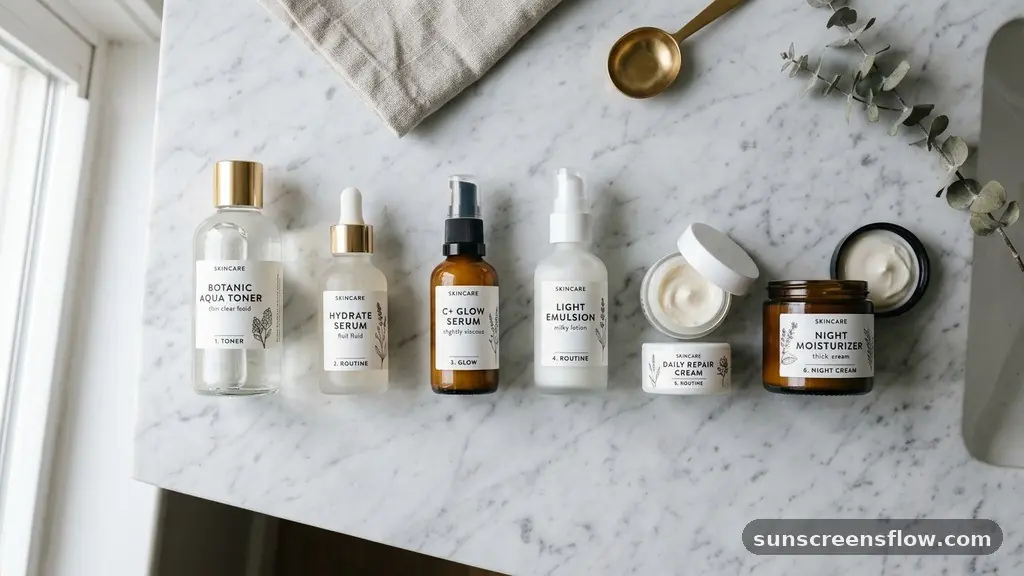
Understanding the texture of your products is the most reliable way to determine the correct order of application. If you are ever in doubt, look at the viscosity of the bottle’s contents. Generally, the more fluid the product, the earlier it should be applied in your routine.
| Product Type | Consistency | Application Order |
|---|---|---|
| Cleanser | Varies | First |
| Toner | Very Thin/Liquid | Second |
| Serum | Light/Liquid to Gel | Third |
| Moisturizer | Cream/Lotion | Fourth |
| Oil/Sunscreen | Viscous/Thick | Last |
As shown in the table above, the progression moves from the most fluid substances to the thickest. This is not just a matter of convenience; it is a matter of physics.
Heavier creams often contain occlusives like waxes or heavy oils that create a seal on the skin to prevent water loss. If you place that seal over your skin before your serum has had a chance to work, you are effectively locking the serum out of your pores.
Exceptions and Considerations for Complex Routines
While the general rule is to apply products from thinnest to thickest, there are always exceptions and considerations. For instance, some people use specialized treatment toners, such as those containing chemical exfoliants like AHAs or BHAs.
These products are technically treatments and might be used differently than a simple hydrating toner. If your toner is highly active, you may want to let it sit on the skin for a few minutes longer than a standard hydrating toner to ensure the pH is right for the next step.
Additionally, if you are using multiple serums, you should apply them from the thinnest consistency to the thickest. You might layer a water-based vitamin C serum before a slightly thicker niacinamide serum.
Always listen to your skin; if you notice redness or irritation, you may be layering too many active ingredients at once. In such cases, it is often better to alternate your treatments—using one in the morning and another in the evening—instead of piling them all on at once.
Common Skincare Mistakes to Avoid
One of the most frequent errors people make is applying their products too quickly. We often rush through our routines, slapping on layer after layer without giving the skin a chance to breathe. This leads to poor absorption and can make your expensive serums less effective.
Another common mistake is applying serums to completely dry skin. Applying them to slightly damp skin helps the product glide on and improves the overall efficacy of the formula.
Another pitfall is ignoring the specific needs of your skin type. If you have oily skin, you might skip a heavy moisturizer entirely and rely on a lightweight serum to provide enough hydration. If you have dry skin, you might need to layer an oil over your moisturizer to lock everything in.
Don’t feel pressured to use every product in a long, complicated routine if your skin doesn’t need it. Simplicity is often better than a ten-step process that causes breakouts or irritation.
Addressing Topical Gaps: When to Deviate
You might be wondering if there are specific cases where the standard order doesn’t apply. For example, some dermatologists recommend applying a very thin layer of serum before a toner if the serum is a specific type of “booster” intended to enhance the delivery of everything that follows. However, for 95 percent of the population, the standard “toner then serum” approach is the most effective and least confusing method.
Another gap often discussed is the use of facial oils. Should oil go before or after your serum? Because oils are occlusive, they should almost always be the final step before sunscreen.
They create a barrier that keeps moisture in, which is the opposite of what you want a serum to do. If you are using a water-based serum, it must go on before the oil, or the oil will prevent it from penetrating the skin. Always check the ingredient list; if your serum contains a high percentage of oil, it should be treated as a final-step product.
The Role of Sunscreen and Daytime Protection
Regardless of your serum or toner choices, your morning routine must conclude with protection. Sunscreen is non-negotiable if you want to maintain the results of your skincare efforts. Exposure to UV rays can trigger hyperpigmentation and break down collagen, which are the very things your serums are trying to fix.
During daytime routines, your sunscreen acts as the final shield. Because it is designed to sit on the surface of the skin to reflect or absorb UV rays, it should never be applied underneath your treatment products.
If you apply sunscreen first, your toner and serum will be completely blocked. Always ensure your moisturizer or oil has had a moment to settle before applying your SPF, as this will help prevent the sunscreen from shifting or becoming patchy, which could leave areas of your face unprotected.
FAQ: Common Questions on Skincare Order
Does the order change if I am using a prescription treatment?
Prescription treatments, such as retinoids or acne medications, are powerful and should usually be applied as close to the skin as possible. After cleansing and toning, apply your prescription medication, let it absorb fully, and then follow up with your serum and moisturizer to buffer any potential dryness.
Can I mix my serum and toner together to save time?
It is generally not recommended to mix products in your palm before application. Each product is formulated with specific pH levels and stabilizers that ensure the ingredients remain active. Mixing them can alter these properties, potentially making the products less effective or causing them to become unstable.
Does it matter if I use a spray toner versus a liquid one?
The delivery method doesn’t change the order, but it does change the experience. Spray toners are excellent for ensuring even coverage, but you should still pat the product into your skin with your hands to ensure it is absorbed. The rules of layering remain the same regardless of whether you mist or wipe.
How long should I wait between applying toner and serum?
You don’t need to wait for the skin to be bone dry. In fact, waiting until the skin is just barely damp—usually about 30 to 60 seconds—is perfect. This timing allows the toner to settle into the pores while keeping the surface receptive to the active ingredients in your serum.
Mastering your skincare routine is all about understanding how your products interact with your skin. By consistently applying your toner before your serum, you ensure that your skin is properly balanced and primed to receive the potent active ingredients that address your specific concerns. Whether you are targeting fine lines or working to clear up hyperpigmentation, the order in which you layer your products is the foundation of a healthy, glowing complexion.
Start by observing the texture of your products, and remember that moving from the thinnest liquids to the thickest creams is the most reliable way to get the results you want. If you find your skin is responding well, stick to the rhythm that feels right for you, and don’t be afraid to adjust based on how your skin feels each day.