

Determining when to apply serum on hair wet or dry is a pivotal decision that can drastically alter the efficacy of your styling routine. Many users find themselves frustrated by greasy residue or lackluster results, often because they are applying their products at the wrong stage of the drying process.
While hair serum is a versatile tool designed for smoothing, protecting, and adding shine, its interaction with the hair shaft depends heavily on the presence of water and the current state of your cuticles. Understanding the science of moisture retention and how different formulations interact with your specific hair texture is the first step toward achieving a salon-quality finish at home.
The Science of Hair Absorption and Cuticle Health
The primary reason for confusion regarding application timing lies in how the hair cuticle behaves when exposed to water. The cuticle consists of overlapping scales that protect the inner cortex of the hair strand.
When your hair is soaking wet, these scales are slightly raised, which allows for deeper penetration of water-based products. However, if you apply a heavy, silicone-based serum to soaking wet hair, you may inadvertently trap water in a way that prevents the cuticle from laying flat as it dries.
Conversely, when hair is dry, the cuticle is naturally sealed. Applying a serum to dry hair acts as a topical coating rather than a hydrating treatment. This is excellent for frizz control and managing flyaways, but it does little to address internal dehydration.
Factors such as hair porosity play a massive role here; high-porosity hair absorbs moisture rapidly but loses it just as quickly, making the timing of your serum application critical for locking in hydration. By applying serum to damp hair, you create a lipid barrier that slows down evaporation, keeping the strand supple and resilient throughout the day.
Applying Serum to Damp Hair: The Benefits of Moisture Retention
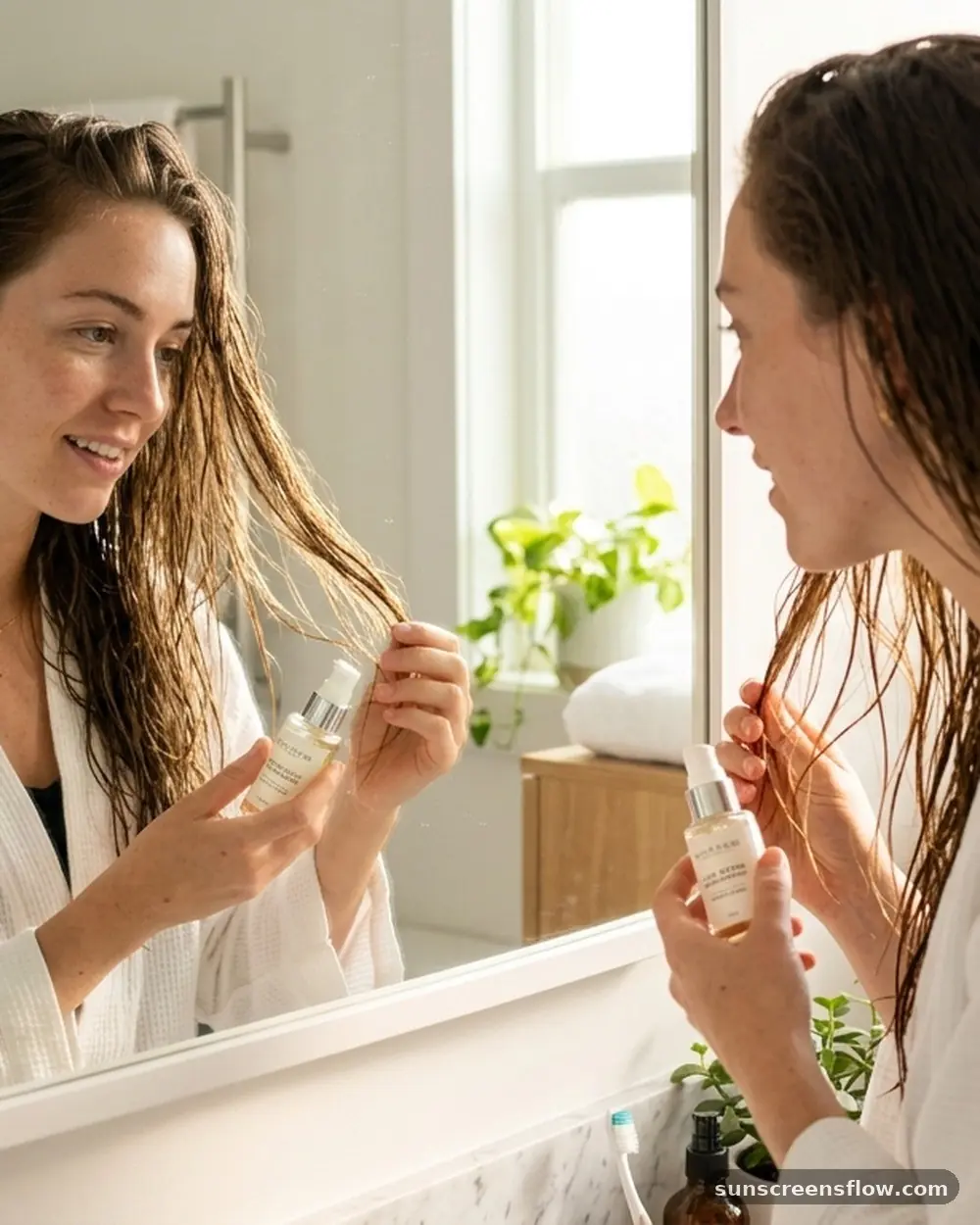
For most hair types, applying serum to damp hair—specifically hair that has been gently towel-dried—is the gold standard. When the hair is damp, it is in a softened state, making it much easier to distribute the product evenly across the entire length.
This is where you gain the most benefit from moisture retention. As the hair dries, the serum acts as a sealant, locking in the hydration provided by your wash-day conditioner or leave-in conditioner.
Using serum on damp hair also serves as a crucial heat protectant. If you plan to blow-dry or heat-style your hair, the serum creates a physical barrier that helps dissipate heat, preventing the internal proteins of the hair from becoming brittle or scorched.
When you distribute the product while the hair is still damp, you ensure that every strand is coated before the high-heat styling begins. This practice is particularly effective for those with thick, curly, or coarse hair, as it helps define the natural pattern and prevents the dreaded “puffiness” that occurs when hair is dried without a stabilizing agent.
When Dry Application is Preferable for Styling
While damp application is ideal for hydration, there are specific scenarios where applying serum to dry hair is the superior choice. If your primary goal is to smooth out frizz control or add a high-gloss finish to a finished style, dry application is your best friend.
In this instance, the serum acts purely as a finishing styling product. It sits on the surface of the hair, catching the light and smoothing down any stray flyaways that appeared during the drying process.
Dry application is also much safer for those who struggle with fine or thin hair that is easily weighed down. When you apply serum to dry hair, you have total control over the amount used; you can focus specifically on the ends or the mid-lengths, avoiding the roots entirely.
This prevents the serum from mixing with your natural sebum and making your scalp look oily. If you find your hair looking dull by the afternoon, a tiny, pea-sized amount of serum worked into dry ends can provide an instant, healthy-looking refresh without requiring a full wash.
Understanding the Role of Hair Texture and Density
Your specific hair texture dictates how much serum you need and when you should apply it. Fine, straight hair often benefits from a lighter, water-based serum applied sparingly to damp ends, whereas thick, curly hair can handle a heavier, oil-rich formula. Hair density also matters; if you have a high density of strands, you need to be very careful to emulsify the product in your hands before application to ensure it doesn’t clump in one area, leading to product buildup.
| Application State | Primary Benefit | Best Hair Type |
|---|---|---|
| Damp Hair | Hydration & Heat Protection | Curly, Dry, or Damaged |
| Dry Hair | Frizz Control & Shine | Fine, Straight, or Frizzy |
| Hybrid (Both) | Maximized Smoothness | Coarse or Thick |
By looking at the table above, you can see that the “best” time is subjective to your specific needs. If you are dealing with significant damage, the damp-application method provides the structural support needed to keep the hair healthy. If you are simply looking to polish a look, the dry-application method provides that aesthetic finish.
Addressing Topical Gaps: The Importance of Emulsification
A common mistake that leads to uneven results is failing to properly emulsify the serum before it touches the hair. Many people pump the product directly onto their palms and immediately run it through their hair. This often results in a concentrated glob of product that makes one section of hair feel greasy while the rest remains dry.
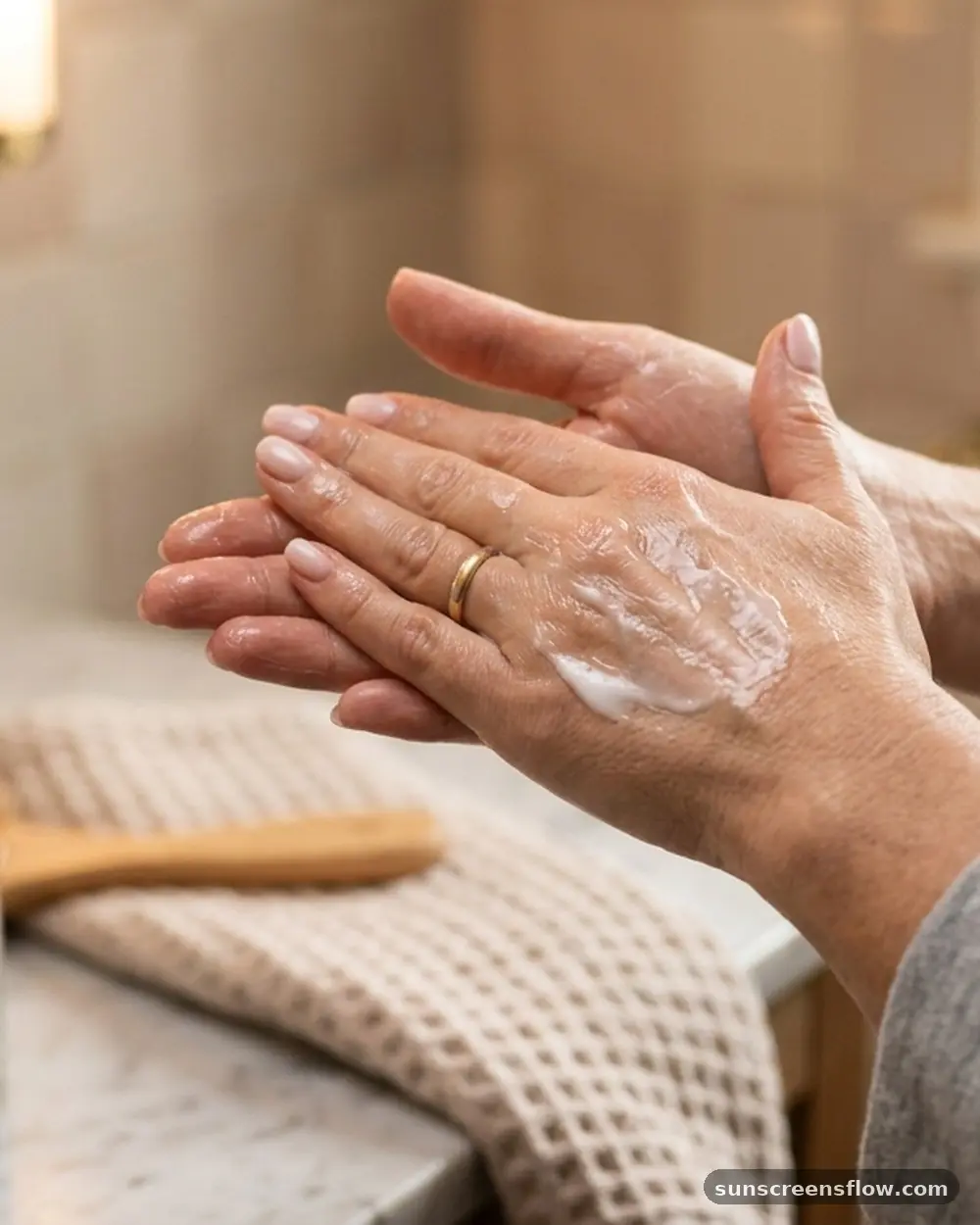
To properly emulsify, dispense the serum into your palms and rub your hands together vigorously for several seconds. This warms the product, thinning its consistency and ensuring it is evenly distributed across your fingers.
Once the serum is warmed and spread, use a “praying hands” motion to gently glide it down the mid-lengths and ends of your hair. This technique ensures that the hair shaft receives an even coating, preventing the oily patches that often lead users to believe their serum is “too heavy” when it is actually just poorly applied.
Managing Split Ends and Scalp Health
While serums are fantastic for aesthetic improvements, it is important to address the reality of split ends. No product, regardless of when it is applied, can permanently “heal” a split end.
Serums work by temporarily binding the frayed edges of the hair together, which makes the hair look healthier and prevents the split from traveling further up the strand. Applying serum to damp hair is slightly more effective for this, as it allows the product to penetrate the cuticle more effectively before the hair dries and hardens.
Regarding scalp health, be very wary of where you start your application. Unless you are using a specialized scalp serum designed to stimulate hair growth or soothe irritation, you should strictly avoid the roots. Your scalp produces natural oils (sebum) to protect the hair.
When you introduce synthetic serums to the scalp, you can clog the follicles, leading to irritation or a heavy, weighed-down appearance. Always start your application at the mid-lengths and work your way toward the ends, where the hair is oldest and most in need of protection.
Common Mistakes That Lead to Product Buildup
Product buildup is the silent enemy of hair health. It occurs when layers of silicone, oils, and styling agents accumulate on the hair strand over time, creating a barrier that prevents moisture from entering.
If you apply serum every single day without washing it out, you will eventually notice that your hair feels “coated” or waxy. This is a sign that the serum is no longer benefiting your hair but is instead acting as a magnet for dust and environmental pollutants.
To avoid this, ensure you are using a clarifying shampoo periodically to strip away excess residue. Furthermore, pay attention to the ingredients in your serum. If you see high concentrations of heavy waxes or non-water-soluble silicones, use them sparingly.
If you prefer to apply serum daily, look for lighter, water-based formulations that are designed to be absorbed rather than just sitting on the surface. Being mindful of your product cycle will help you maintain the natural bounce and vitality of your hair.
Developing a Personalized Styling Routine
Creating a styling routine that works for you requires a bit of experimentation. Start by testing the damp-application method for one week. Focus on how your hair feels after it air-dries or blow-dries.
Does it feel softer? Is it easier to detangle?
If the answer is yes, you have found your baseline. If your hair feels limp or greasy, try reducing the amount of product by half, or switch to applying the serum only to the final two inches of your hair.
Once you have mastered the damp application, try adding a tiny drop of serum to your dry hair as a final polish. You will likely find that this two-step process provides the best of both worlds: the internal moisture and protection of the damp application, combined with the external shine of the dry application.
Remember that hair needs change based on the weather, too. In humid environments, you may need more serum to combat frizz, whereas, in dry, winter air, you may need more hydration-focused products.
The Role of Hair Oil vs. Serum
There is often confusion between a hair serum and a hair oil. While they are sometimes used interchangeably, they serve different purposes. Serums are typically silicone-based and are designed to coat the hair for smoothness and protection.
They are excellent for managing texture and providing a sleek look. Hair oils, on the other hand, are often plant-based (like argan, jojoba, or coconut) and are designed to provide actual nourishment to the hair shaft.
If your hair is extremely dry or brittle, you might benefit from using an oil on damp hair to provide deep nourishment, followed by a light serum on dry hair to seal the cuticle and provide shine. Understanding the difference allows you to stop seeing these products as competitors and start seeing them as complementary tools. When you know exactly what each product does, you can curate a routine that addresses your specific hair needs without overloading your strands.
FAQ
Can I apply hair serum every single day?
Yes, you can apply hair serum daily, but you must be careful with the quantity. Using too much can lead to product buildup, which makes hair look greasy and dull. If you use it daily, ensure you are using a clarifying shampoo at least once a week to reset.
Should I apply serum before or after using a heat protectant?
If your serum does not contain heat-protecting ingredients, you should apply your dedicated heat protectant first to damp hair, then follow up with your serum. If your serum is specifically formulated as a heat protectant, it can be applied alone to damp hair before styling.
Does applying serum to damp hair make it dry faster?
No, applying serum to damp hair does not necessarily speed up the drying time, but it can help the hair dry more smoothly. The serum helps the hair cuticle lay flat, which prevents moisture from getting trapped unevenly, resulting in a more polished, frizz-free finish once the hair is fully dry.
Will serum make my hair greasy if I apply it to dry hair?
It can, if you use too much or apply it too close to the roots. To avoid a greasy look, apply only a small, pea-sized amount to your palms, emulsify it thoroughly, and focus strictly on the ends of your hair where the strands are most porous.
Conclusion
Mastering when to apply serum on hair wet or dry is not about finding a single universal rule, but rather understanding how your hair reacts to moisture and product distribution. By applying serum to damp hair, you lock in vital hydration and provide a defensive barrier against heat damage. By applying it to dry hair, you achieve the perfect polished finish and keep frizz in check.
The most successful routines often involve a hybrid approach, using the product strategically based on your hair’s current needs. Remember to always emulsify your serum, avoid the scalp, and monitor your hair for signs of product buildup. With these principles in mind, you can transform your hair care routine, ensuring that every application contributes to healthier, more resilient, and more beautiful hair.


