


Mastering how to apply serum on face at night is one of the most effective ways to transform your skin’s health. While your body rests, your skin shifts into repair mode, making the evening the perfect window to deliver potent nutrients where they are needed most. By understanding the proper sequence and technique, you ensure that high-performance ingredients penetrate deeply rather than evaporating from the surface.
This process isn’t just about layering products; it’s about creating a strategic environment that supports your complexion’s natural regenerative cycle. Whether you are targeting fine lines, hyperpigmentation, or persistent dryness, the right evening application protocol ensures you wake up with visibly refreshed, nourished skin.
The Science of Evening Skin Absorption

Your skin functions differently once the sun goes down. During the day, your epidermis is primarily focused on protection against environmental stressors like UV rays and pollution. At night, that defensive posture relaxes, and the skin turns its attention to cellular turnover and repair.
This is why applying a serum at night is so effective; the permeability of the skin barrier is often higher during these hours. When you apply targeted treatments, you are essentially feeding the skin the raw materials it needs to mend itself.
Understanding the role of molecular weight is crucial here. Serums are formulated with smaller molecules than heavy creams or balms, which allows them to bypass the surface layers and reach the deeper dermis.
If you apply a thick, heavy cream before your serum, those small molecules will struggle to penetrate, effectively rendering your expensive treatment useless. By prioritizing your serum application technique immediately after cleansing, you ensure that active ingredients have clear access to the skin cells that need them most.
Preparing the Skin for Maximum Efficacy
Before you even reach for your bottle of serum, the state of your skin matters. You should never apply active treatments to a face covered in the day’s grime, sebum, and environmental debris. A thorough cleanse is the foundation of any evening skincare regimen.
Using a gentle, non-stripping cleanser helps maintain the pH balance of your skin, which is essential for the efficacy of many modern serums. If your pH is disrupted, the active ingredients—especially those like retinol or acids—might cause unnecessary irritation.
Many experts suggest applying your serum to slightly damp skin. When your skin is hydrated from washing, it acts like a sponge, drawing the product deeper into the epidermis. This is particularly important for humectants like hyaluronic acid, which bind water to the skin.
If you wait until your face is bone-dry, the humectant might actually pull moisture out of the deeper layers rather than from the environment. Pat your face with a clean towel until it is soft and moist, but not dripping, before moving to the next step.
Correct Sequencing of Skincare Products
The golden rule of layering is to move from the thinnest consistency to the thickest. This ensures that lighter, water-based formulas reach the skin first, while thicker, oil-based products provide a final layer of protection.
If you are using multiple serums, always apply the one with the most potent active ingredients closest to the skin. For example, if you are using a niacinamide serum and a thicker peptide treatment, apply the niacinamide first.
It is also vital to consider the concept of occlusion. Many people make the mistake of using a serum as their final step, thinking it is enough to keep the skin hydrated. However, serums are designed to deliver ingredients, not to seal them in.
Without a moisturizer or facial oil, you risk trans-epidermal water loss. This occurs when moisture evaporates from your skin into the air, especially in air-conditioned or heated rooms. A moisturizer creates a physical barrier that locks the serum into the skin, ensuring you get the full benefit of every drop.
| Product Category | Consistency | Order of Application |
|---|---|---|
| Cleanser | Varies | 1 |
| Water-based Serum | Thin/Fluid | 2 |
| Treatment/Active Serum | Moderate | 3 |
| Moisturizer | Cream/Lotion | 4 |
| Facial Oil | Heavy/Oil | 5 |
Managing Active Ingredients and Potential Irritation
Not all serums are created equal, and some require a cautious approach. If you are incorporating high-strength actives like retinol or concentrated chemical exfoliation, you must be mindful of how they interact with your skin barrier.
These ingredients are designed to speed up cell turnover, which is fantastic for smoothing skin texture, but it can lead to redness or flaking if overused. Always introduce new actives slowly, perhaps starting with two or three nights a week rather than every single night.
Performing a patch test is a non-negotiable step when adding a new serum to your routine. Apply a small amount of the product to the inside of your wrist or behind your ear and wait 24 hours to see how your skin reacts.
This simple measure prevents full-face reactions that can be painful and time-consuming to heal. Remember that your skin’s tolerance can fluctuate based on stress, weather, and hormonal cycles, so listen to your complexion rather than following a rigid, unchanging calendar.
Addressing Topical Gaps: Common Mistakes
One of the most frequent gaps in knowledge involves the misuse of vitamin C and retinol. Many people believe they should be used together for maximum results, but this can cause significant irritation for most skin types.
Vitamin C is an antioxidant that works best in the morning to fight free radicals, while retinol is a powerhouse for nighttime repair. By splitting these into a morning and evening rotation, you avoid overloading the skin and minimize the risk of damaging your delicate moisture barrier.
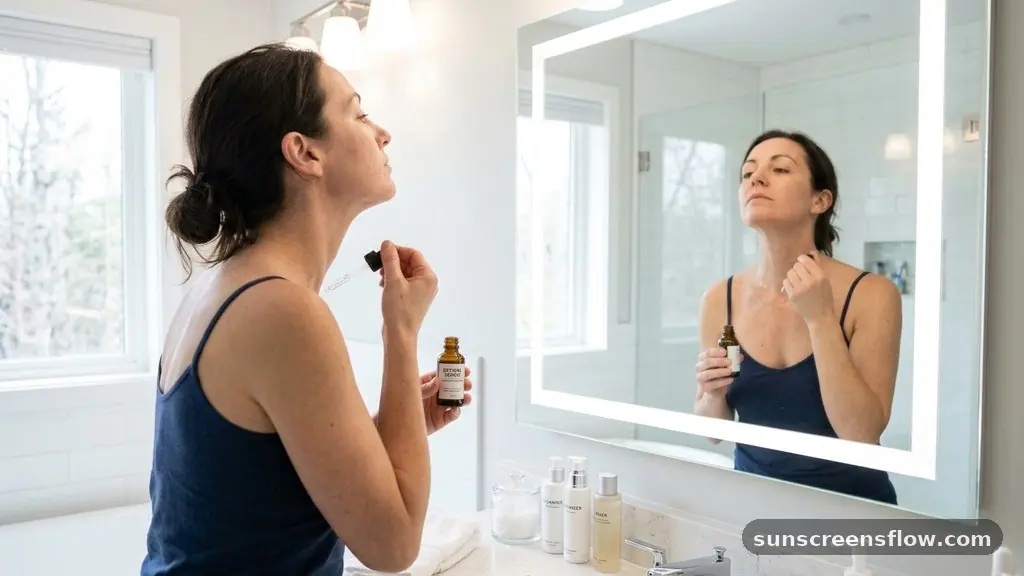
Another common oversight is ignoring the neck and décolletage. These areas are just as prone to aging as your face but are often neglected during the serum application process.
When you apply your products, use your fingers to gently press the remaining serum onto your neck and chest. This small habit ensures that your treatment yields a uniform appearance over time, preventing a stark contrast between your face and the surrounding skin.
Understanding the Role of Humectants and Occlusives
Your choice of serum often dictates the rest of your routine. If you are using a serum heavy in hyaluronic acid, you are dealing with a humectant. Humectants are like magnets for water, but they need an occlusive to work perfectly.
Without a moisturizer or facial oil on top, a humectant serum might leave your skin feeling tighter than it did before you started. The occlusive layer acts as a lid, keeping that water trapped within the skin cells.
Conversely, if you are using an oil-based serum, it may already contain some occlusive properties. In these cases, you might not need a heavy cream afterward, especially if you have oily or acne-prone skin.
Always check the ingredients list for non-comedogenic labels if you are worried about pore congestion. High-quality serums are formulated to be absorbed, but if you have naturally congested skin, choosing the wrong base can cause breakouts.
- Cleanse thoroughly to remove daily pollutants and debris.
- Apply serums to slightly damp skin to enhance absorption.
- Layer products from the thinnest consistency to the thickest.
- Always follow with a moisturizer to prevent moisture evaporation.
- Wait 60 seconds between layers to allow for better penetration.
- Include the neck and décolletage in your application process.
- Perform a patch test before trying a new active ingredient.
The Importance of Consistency and Patience
Skincare is a marathon, not a sprint. While some products offer immediate hydration, active ingredients like peptides or retinol require weeks of consistent use to show visible changes in skin texture or tone. Many people give up on a serum after a week because they don’t see a dramatic transformation.
However, your skin needs time to cycle through its regeneration phase. Stick to your chosen serum for at least six to eight weeks before deciding if it is the right match for your specific goals.
Consistency also means not skipping nights. It is tempting to fall into bed without doing your routine after a long day, but that is exactly when your skin is most vulnerable.
Even a simplified routine—cleansing and applying one high-quality serum followed by a basic moisturizer—is far better than doing nothing at all. Make your evening ritual something you look forward to rather than a chore; it is a brief moment of self-care that pays off in the long run.
Identifying Your Skin Concerns
To get the most out of your nighttime routine, you must accurately identify what your skin actually needs. Using a brightening serum when your skin is dehydrated will not solve the underlying issue of moisture loss. Take the time to observe your skin in the mirror.
Is it dull? Is it flaky?
Are you seeing signs of premature aging or persistent acne? Choosing a serum that targets these specific concerns is the key to seeing results.
If you are dealing with multiple issues, you don’t necessarily need five different serums. In fact, layering too many actives can lead to a compromised barrier.
Instead, look for multi-functional serums that contain a blend of ingredients, such as a mix of niacinamide and peptides. These provide a broader range of benefits without the need to apply layer upon layer of different formulas, which keeps your routine efficient and effective.
Optimizing the Application Technique
The physical way you apply your serum matters more than you might think. Many people rub their serums into the skin aggressively, which can cause micro-tears or irritation. Instead, use a gentle pressing motion with your fingertips.
This technique, often called “patting,” helps the product settle into the pores and surface contours without dragging the skin. It is especially beneficial for the delicate eye area, where the skin is thin and prone to stretching.
Start at the center of your face and work your way outward. This ensures that you cover the areas that typically need the most treatment while avoiding the eyes unless the serum is specifically formulated for that area.
If you have extra product on your hands after finishing your face and neck, rub it into the backs of your hands. They are often the first place to show signs of aging, and they will benefit immensely from the extra nourishment provided by your high-quality serums.
Frequently Asked Questions
How long should I wait between applying serum and moisturizer?
It is generally best to wait about 60 seconds after applying your serum before moving on to your moisturizer. This short window allows the serum to absorb into the skin and sets the stage for the moisturizer to lock everything in without pilling or smearing the layers.
Can I use more than one serum in my evening routine?
Yes, you can use multiple serums, but it is best to limit yourself to two or three. Always apply them from the thinnest to the thickest consistency. Ensure that the active ingredients in your chosen serums are compatible, such as pairing a hydrating serum with a peptide treatment.
Do I really need to apply a moisturizer after my serum?
Yes, applying a moisturizer is essential for almost all skin types. Most serums are designed to deliver active ingredients, not to provide long-lasting hydration or protection. A moisturizer acts as an occlusive, which prevents water from evaporating from your skin throughout the night, ensuring you wake up hydrated.
What should I do if my skin stings after applying a serum?
If you experience stinging, wash the product off immediately with cool water. This indicates that the product is either too strong for your skin, you are using it too frequently, or your skin barrier is compromised. Stop using the product for a few days and focus on gentle, hydrating moisturizers until your skin settles.
Conclusion
Integrating a serum into your nightly routine is a simple yet transformative habit that yields significant benefits for your skin’s health. By following the correct order of application, respecting your skin’s barrier, and choosing products tailored to your specific needs, you create the best possible conditions for overnight repair. Remember that the goal is to provide your skin with the tools it needs to function at its peak, not to overwhelm it with too many chemicals.
Start slow, stay consistent, and pay attention to how your complexion responds to different textures and ingredients. With a mindful approach to how you apply serum on face at night, you are well on your way to achieving a healthier, more radiant complexion that stands the test of time. Take a moment to evaluate your current routine tonight and make these small adjustments for long-term improvement.


