


Navigating the complexities of a modern skincare routine can often feel like solving a puzzle, especially when it comes to the order of application. If you have ever found yourself staring at your bathroom counter, wondering if your potent treatment should be applied before or after your cream, you are not alone. The short answer is that serum goes on before moisturizer in almost every scenario.
This sequence is not merely a suggestion; it is rooted in the fundamental principles of dermatology and the chemical composition of your products. By understanding how these formulas interact with your skin, you can ensure that your products work as intended, providing the maximum benefit for your complexion.
The Science of Product Layering and Absorption
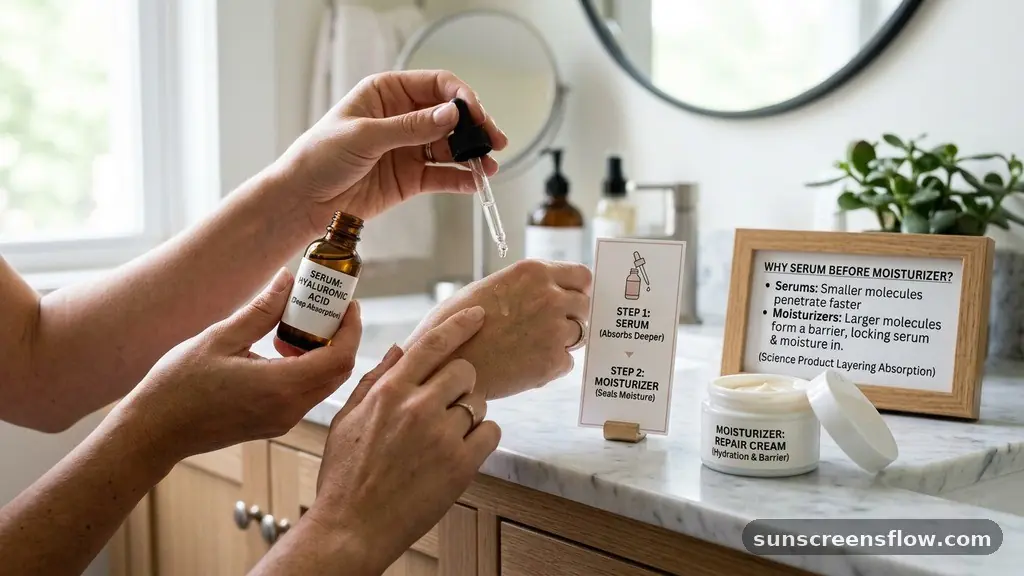
The primary reason why serum goes on before moisturizer is based on the concept of molecular weight and the principle of layering from thinnest to thickest. Serums are typically formulated as lightweight, water-based liquids designed to penetrate deep into the epidermis.
Because they lack the heavy waxes and oils found in creams, they can deliver active ingredients directly to where they are needed most. If you were to apply a heavy moisturizer first, its thick, occlusive barrier would effectively block the serum from sinking into the skin, rendering your expensive treatment largely ineffective.
Think of your skin like a sponge. If you saturate the sponge with a thick, oily substance, it struggles to absorb the water-based treatment you apply afterward. By applying the serum first, you allow those small, highly concentrated molecules to travel through the upper layers of the skin.
Once the serum has been absorbed, you can then seal those benefits in with a moisturizer. This layering technique ensures that your skin receives the necessary hydration and targeted therapy without any interference. Furthermore, the pH balance of your skin is better maintained when products are applied in this specific order, preventing the disruption of the delicate acid mantle that protects your face from external aggressors.
Understanding the Role of Occlusives and Humectants
To truly grasp why the order matters, it is helpful to distinguish between the two main categories of moisturizing agents: humectants and occlusives. A humectant, such as hyaluronic acid, works by drawing moisture into the skin. Serums often contain high concentrations of these ingredients.
If you apply a humectant serum to damp skin, it pulls water into the dermis, plumping the skin and providing immediate hydration. However, humectants can sometimes pull moisture out of the deeper layers of the skin if the air is dry, which is why they need a partner.
This is where the occlusive moisturizer comes into play. Occlusives, like shea butter, ceramides, or certain silicones, sit on the surface of the skin to create a physical barrier. Their primary job is to prevent trans-epidermal water loss (TEWL), which is the process where moisture evaporates from your skin into the atmosphere.
When you apply your serum first, you are providing the hydration; when you apply your moisturizer second, you are locking that hydration in. If you reversed this order, the occlusive layer would sit between the serum and your skin, preventing the serum from reaching the dermis, while simultaneously failing to lock in the hydration that the serum was supposed to provide.
The Importance of Consistency and Texture
When building a daily regimen, the general rule of thumb is to apply products in order of their consistency, starting with the thinnest and finishing with the thickest. This is a practical heuristic that aligns with the chemical reality of product formulation. A facial cleanser and a toner are the absolute base of your routine, as they clean the skin and prepare the surface for treatment.
Once the skin is clean and slightly damp from the toner, it is the perfect time to apply a serum. Because serums are thin and watery, they spread easily and absorb quickly.
Following the serum with a moisturizer—which is often an emulsion of oil and water—is the logical next step. If you use a facial oil, that should generally be applied after your moisturizer, as oils are the heaviest products in a standard routine and can penetrate through most moisturizers, but not vice versa.
Following this sequence prevents the “pilling” effect, where products clump up on the skin because they cannot be absorbed properly. If you find that your products are flaking off or feeling sticky, it is almost always a sign that your layering order is off or that you are not allowing enough time for each layer to dry.
Common Active Ingredients and Their Specific Needs
Different treatments have different requirements when it comes to timing and application. For example, Vitamin C is a potent antioxidant that is best applied in the morning to protect the skin from environmental damage. It is almost always a water-based serum that should be applied to clean, dry skin before anything else.
Similarly, retinol, which is typically used at night, is a powerful active that needs direct contact with the skin to stimulate cell turnover. If you apply a heavy moisturizer before your retinol, you may dilute its effectiveness, though some people choose to do this intentionally to reduce irritation—a technique known as “buffering.”
Niacinamide is another popular ingredient that works well in serum form. It is highly versatile and generally compatible with most other products. Regardless of which active you are using, the rule that serum goes on before moisturizer holds firm.
The only exception would be if a specific product label instructs you otherwise, which is rare. When dealing with multiple serums, always apply the one with the thinnest texture first. By respecting the chemical nature of these active ingredients, you ensure that they remain stable and effective throughout the day or night.
Addressing Topical Gaps: Myths and Misconceptions

A common misconception is that if you use a very expensive or high-end moisturizer, it must contain all the active ingredients you need, making serums redundant. This is rarely true.
Moisturizers are formulated primarily to provide a barrier and seal in moisture, while serums are designed to deliver high concentrations of specific actives like peptides, antioxidants, or acids. Relying solely on a moisturizer often means you are missing out on the targeted benefits that a serum can provide for specific concerns like hyperpigmentation, fine lines, or dehydration.
Another gap in common knowledge is the idea that “more is better.” Some people believe that layering five different serums will yield five times the results. In reality, applying too many products can overwhelm the skin barrier and lead to irritation or clogged pores.
A streamlined routine with a few high-quality, compatible products is almost always superior to a cluttered one. If you are unsure about which products to combine, look for ingredients that complement each other, such as pairing a hyaluronic acid serum with a ceramide-rich moisturizer to maximize skin hydration without causing inflammation.
Structuring Your Morning vs. Evening Routine
While the fundamental rule that serum goes on before moisturizer remains consistent, the specific products you choose may change between your morning and evening routines. In the morning, your focus should be on protection. You want products that defend your skin against pollution, UV rays, and free radicals.
An antioxidant serum followed by a moisturizer with integrated SPF or a separate sunscreen is the gold standard. Sunscreen should always be the final step in your morning routine, as it needs to form an even, uninterrupted film over your skin to provide adequate protection.
In the evening, your focus shifts to repair and regeneration. This is the time to use heavier treatments, such as retinoids or exfoliating acids.
You might use a hydrating serum to replenish moisture lost during the day, followed by a richer night cream that supports the skin’s natural repair process while you sleep. The table below provides a quick reference for the standard order of operations to help you keep your routine organized and effective.
| Step | Product Category | Primary Purpose |
|---|---|---|
| 1 | Facial Cleanser | Remove impurities and prep the skin |
| 2 | Toner | Balance pH and remove residual debris |
| 3 | Serum | Deliver targeted active ingredients |
| 4 | Moisturizer | Seal in moisture and protect the barrier |
| 5 | Sunscreen/Oil | Final protection or sealing (day/night) |
How to Identify Product Textures
If you are ever in doubt about whether a product is a serum or a moisturizer, look at the ingredient list and the packaging. A serum will almost always be packaged in a dropper bottle or a pump, and it will have a watery, gel-like, or thin lotion consistency. If you pour a drop onto your hand, it should move easily.
A moisturizer, on the other hand, is usually packaged in a jar or a thick-walled tube because it has a creamier, thicker consistency. It should hold its shape when you scoop it out.
Understanding these visual and tactile cues is vital for maintaining the correct order. If you accidentally apply a thick cream before a thin serum, you will likely notice that the serum sits on top of your skin, feeling sticky or tacky for an extended period. This is a clear indicator that the absorption process has been blocked.
By paying attention to these physical characteristics, you can intuitively determine the correct order of application even when trying out new products for the first time. Developing this sense of touch and sight makes you much more effective at managing your own skincare needs.
The Role of Skin Hydration and Barrier Health
Healthy skin is defined by its ability to retain moisture and resist damage. When your skin barrier is compromised, it becomes leaky, allowing moisture to escape and irritants to enter. This is why hydration is the cornerstone of any effective routine.
By applying a serum that contains humectants, you are actively working to restore the water content of your skin. By following it with a moisturizer that contains lipids and occlusives, you are repairing the barrier itself.
It is important to remember that hydration is not the same as moisture. Hydration refers to the water content of your skin cells, while moisture refers to the oil content. A serum provides the hydration, while the moisturizer provides the moisture.
Using both in the correct order ensures that your skin remains balanced, supple, and resilient. If you ignore the serum, your skin may feel dry or tight; if you ignore the moisturizer, your skin may feel dehydrated despite having applied plenty of product. The synergy between these two types of products is what leads to long-term skin health.
Common Mistakes to Avoid in Your Routine
One of the most common mistakes people make is rushing the application process. After applying your serum, it is beneficial to wait thirty to sixty seconds before applying your moisturizer. This allows the serum to settle into the skin and begin the absorption process.
If you apply your moisturizer immediately, you risk mixing the two products on the surface of your skin, which can prevent the serum from penetrating as deeply as it should. Patience is a virtue in skincare, and a few seconds of waiting can make a significant difference in the efficacy of your products.
Another mistake is applying products to skin that is too wet or too dry. While it is helpful to apply humectant serums to slightly damp skin to lock in extra water, applying heavy creams to soaking wet skin can lead to a diluted, less effective barrier. Find a balance where your skin is clean and slightly supple, but not dripping wet.
Finally, do not forget to extend your routine to your neck and décolletage. These areas are just as prone to aging and dehydration as your face and benefit just as much from the correct application of serum and moisturizer.
Frequently Asked Questions
Can I mix my serum and moisturizer together in my palm?
While it might seem like a time-saver, mixing your serum and moisturizer in your palm is generally not recommended. Each product is formulated with a specific delivery system in mind. Mixing them can alter the pH, dilute the active ingredients, and prevent them from absorbing correctly. It is always better to apply them in separate, sequential layers.
Should I use a different order for my morning and night routines?
The fundamental rule that serum goes on before moisturizer remains the same regardless of the time of day. The main difference lies in the types of products you use. In the morning, you prioritize protection and antioxidants, while in the evening, you prioritize repair, exfoliation, and deep hydration. The sequence remains consistent.
How long should I wait between applying serum and moisturizer?
Waiting about thirty to sixty seconds between applying your serum and your moisturizer is ideal. This short pause allows the serum to be absorbed into the skin, ensuring that it is not disturbed by the heavier cream. If you are in a rush, even a few seconds of patience is better than none.
Does the order change if I am using an oil-based serum?
If you are using an oil-based serum, the rule of “thinnest to thickest” still applies. However, oil-based products are generally heavier than water-based ones. If your serum is oil-based, you should apply it after any water-based treatments but before your heaviest cream. If the oil is very light, it may even replace your moisturizer in some cases.
Conclusion
Ultimately, the question of does serum go on before moisturizer is settled by the science of product formulation and skin absorption. By applying your lightweight, water-based serums first, you allow the active ingredients to penetrate the epidermis effectively. By following up with a moisturizer, you create an occlusive seal that locks in that hydration and protects your skin barrier from trans-epidermal water loss.
This simple, two-step logic is the foundation of an effective skincare routine. Whether you are using vitamin c, retinol, or niacinamide, respecting the order of application ensures that your investment in quality products yields the best possible results for your skin. By consistently following these guidelines, you can achieve a healthier, more radiant complexion that stands the test of time.


