

Achieving a radiant, healthy complexion often feels like solving a complex chemistry puzzle, especially when it comes to the order of application. If you have ever stood in front of your bathroom mirror holding two different products and wondering, “do I apply serum or moisturizer first,” you are certainly not alone. The general rule of thumb in professional skincare is to apply products from the thinnest consistency to the thickest.
Because serums are typically lightweight, water-based, and packed with active ingredients, they must be applied before your moisturizer, which acts as a protective, occlusive barrier. Understanding this sequence is not just about preference; it is about ensuring that your skin can effectively absorb high-potency ingredients before sealing them in with a heavier cream.
The Science Behind Skincare Layering
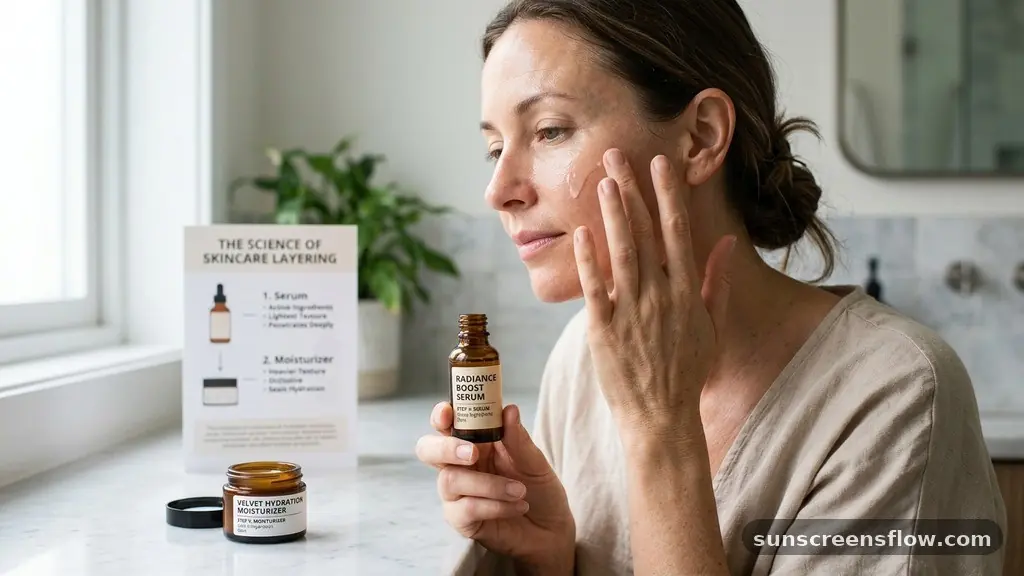
At the molecular level, your skin is a sophisticated barrier designed primarily to keep foreign substances out. Skincare products are formulated to bypass this barrier, but they can only do so if the delivery system is optimized. Serums are engineered with smaller molecular weights, allowing them to penetrate deeper into the epidermis.
If you were to apply a heavy moisturizer first, the thick waxes, oils, and occlusives in that cream would create a physical film over your pores. This film effectively blocks the serum from reaching the deeper layers of the skin, rendering your expensive treatment virtually useless.
When you apply your serum directly to cleansed, slightly damp skin, you are creating a direct pathway for concentrated actives like Vitamin C, niacinamide, or hyaluronic acid to work their magic. Once these ingredients have had a minute or two to sink in, your moisturizer serves as the final step in your routine. Its primary job is to provide hydration while simultaneously locking in the moisture and the active ingredients you just applied.
This process, often referred to as “sealing,” prevents transepidermal water loss (TEWL), which is the process where water evaporates from the surface of the skin, leading to dehydration and fine lines. By following the correct order, you maximize the efficacy of your entire product lineup.
Why Consistency Determines Application Order
The “thinnest to thickest” rule is the most reliable heuristic in the skincare industry. Think of your skin as a sponge. If you pour thick syrup onto a sponge, it sits on the surface; if you pour water, it soaks in.
Serums are the water in this analogy—they contain high concentrations of ingredients suspended in a thin, watery base. Moisturizers are the syrup, containing emollients and occlusives that are designed to sit on the skin to prevent evaporation.
If you ignore this rule, you risk “pilling,” a common frustration where your products clump up and roll off your face in little rubbery bits. Pilling happens when a heavy, silicone-based moisturizer is applied underneath a water-based serum, or when you apply too many layers without letting each one fully dry. To avoid this, always allow your serum to absorb for at least 60 seconds before layering your moisturizer.
You can tell your skin is ready for the next step when it no longer feels tacky to the touch. This simple waiting period is often the missing link for people who struggle with product buildup or uneven application.
The Role of Active Ingredients in Serums
Serums are not just “extra” steps; they are the workhorses of your skincare routine. Whether you are using a retinol serum for anti-aging, a salicylic acid serum for acne, or a hyaluronic acid serum for hydration, these products are designed to deliver a high dose of targeted benefits.
Because these ingredients are often volatile or sensitive to air, they are usually packaged in airtight bottles. Applying them first ensures that their potency is not diluted or blocked by the lipids found in heavier creams.
For instance, if you are using an L-ascorbic acid (Vitamin C) serum, it is highly pH-dependent. It needs to interact directly with your skin to provide antioxidant protection. If you apply a moisturizer first, you might disrupt the pH balance of the serum, making it less effective.
Similarly, exfoliating acids (AHAs and BHAs) need direct contact to dissolve the “glue” between dead skin cells. By prioritizing the serum, you ensure that these potent chemicals perform their intended function without interference.
| Product Category | Primary Function | Consistency | Order of Use |
|---|---|---|---|
| Cleanser | Removes debris/oil | Variable | 1st |
| Toner/Essence | Balances skin pH | Watery | 2nd |
| Serum | Targets specific concerns | Lightweight/Gel | 3rd |
| Moisturizer | Hydrates and seals | Cream/Lotion | 4th |
| Sunscreen | Protects from UV | Variable | 5th (AM only) |
Addressing Common Topical Gaps
Many consumers often wonder about exceptions to the rule. For example, what happens if you use a facial oil? Facial oils are notoriously confusing because they are often marketed as serums, yet they have a very thick, lipid-heavy consistency.
If you are using a pure botanical oil, it should technically be applied after your moisturizer. This is because oils are occlusive; they prevent moisture from escaping. If you apply an oil before a water-based moisturizer, you are effectively creating a waterproof barrier that prevents the water-based product from penetrating the skin.
Another common gap involves the use of “all-in-one” products. Some modern moisturizers are formulated with active ingredients like peptides or niacinamide, blurring the lines between a treatment and a hydrating cream. In these cases, you don’t necessarily need a separate serum.
However, if you choose to use both, the rule remains: if it’s a thinner, more liquid-like formula, it goes first. If you are ever in doubt, check the texture. If the product spreads like water, it is a serum; if it spreads like butter, it is a moisturizer.
The Importance of Skin Prep
Before you even worry about whether to apply serum or moisturizer first, you must consider the state of your skin. Applying products to dirty or oily skin will prevent both serums and moisturizers from working correctly. A thorough cleanse is the foundation of any effective routine.
Beyond cleansing, some experts recommend applying your serum while the skin is still slightly damp from washing. This is particularly effective for humectants like hyaluronic acid or glycerin, which pull moisture from the environment into your skin.
When your skin is damp, it acts like a sponge that is ready to absorb active ingredients. If you wait until your skin is bone-dry, the absorption rate is significantly lower. However, be cautious with stronger actives like retinol or prescription-strength treatments.
These can sometimes be too intense when applied to damp skin, leading to irritation. In those specific cases, it is often better to let your skin dry completely before applying your treatment serum. This nuance shows that while the “serum first” rule is solid, your specific product ingredients should dictate the minor details of your application technique.
Common Mistakes When Layering Products
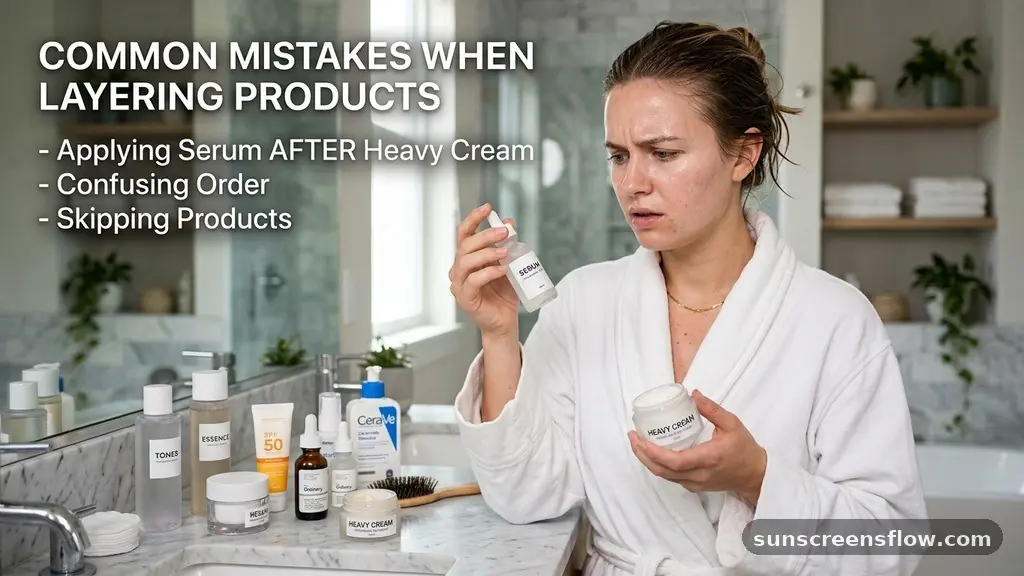
One of the most frequent mistakes people make is over-layering. Using three different serums followed by a heavy moisturizer can lead to a “suffocated” feeling, where the skin becomes congested and prone to breakouts.
If you have an extensive collection of products, consider alternating them between morning and evening. For example, use your antioxidant Vitamin C serum in the morning and your retinol or exfoliating serum at night.
Another mistake is rushing the process. Applying your moisturizer immediately after your serum without waiting for it to dry is a recipe for uneven application. As mentioned earlier, this is the primary cause of pilling.
It is also important to consider the “wait time” for specific actives. If you are using a BHA (beta hydroxy acid) to clear pores, waiting 5 to 10 minutes before applying your moisturizer allows the acid to work at its optimal pH level before the moisturizer potentially shifts that pH. Taking these extra few minutes ensures that every product you have invested in is actually providing a return on your investment.
- Consistency Check: Always apply products from the thinnest, most watery texture to the thickest, most emollient texture.
- The Absorption Rule: Give your serum 60 seconds to sink in before moving on to your moisturizer.
- Damp Skin Strategy: Apply hydrating serums to damp skin to boost their moisture-binding capabilities.
- Occlusive Timing: Save facial oils for the very end, as they are the most occlusive products in your routine.
- Sunscreen Priority: Always finish your daytime routine with an SPF to protect the skin from UV damage.
How Texture Affects Absorption
The formulation of a product determines its ability to penetrate the stratum corneum, the outermost layer of your skin. Serums are often formulated with “penetration enhancers” like propylene glycol or specific alcohols that help the active ingredients cross the lipid barrier.
These ingredients are designed to be light and fast-absorbing. Moisturizers, by contrast, are formulated with lipids, ceramides, and fatty acids that are designed to sit on the surface and reinforce the skin’s natural barrier.
When you flip this order, you are essentially asking your skin to absorb a heavy lipid barrier before it can get to the active ingredients. It is physically impossible for the serum to bypass the thick layer of cream. Furthermore, many moisturizers contain silicones (like dimethicone), which are excellent at smoothing the skin and locking in hydration, but are also designed to be film-forming.
Once that film is set, nothing else is getting through. By sticking to the serum-first rule, you respect the physical limitations of your skin barrier and ensure that your high-performance ingredients are not wasted.
Optimizing Your Routine for Long-Term Results
Consistency is the secret ingredient to any successful skincare regimen. Once you master the order of application, you should focus on the quality and compatibility of your products.
It is often better to use a simple, consistent routine than to cycle through dozens of products randomly. If you find that your skin feels tight or dry even after moisturizing, you might need a serum with more humectants, or perhaps a heavier moisturizer for the winter months.
It is also worth noting that your skin’s needs change with the seasons. In the summer, you might prefer a lightweight gel serum and a thin, oil-free moisturizer. In the winter, you might need a more viscous, oil-based serum and a rich, cream-based moisturizer.
Regardless of the season, the rule of “serum then moisturizer” remains the golden standard. By keeping this sequence consistent, you allow your skin to adapt to the changing environment while maintaining a steady delivery of the nutrients it needs to remain healthy, hydrated, and resilient against environmental stressors.
FAQ Section
Can I mix my serum and moisturizer together in my palm before applying?
While some people do this to save time, it is generally discouraged. Mixing them in your palm can alter the pH balance of the serum and prevent the active ingredients from penetrating effectively. It is best to apply them sequentially to ensure each product performs its intended function.
Does the order change if I use an eye cream?
Yes, eye cream is typically applied after your serum but before your moisturizer, or sometimes after your moisturizer depending on the thickness of the cream. The skin around the eyes is thinner and more delicate, so it is best to apply specialized products there after your serum has had time to absorb.
What if I use a facial oil? Should it be applied before or after my moisturizer?
Facial oils should almost always be applied after your moisturizer. Because oils are occlusive, they create a seal over the skin. If you apply an oil before your moisturizer, you are blocking the water-based ingredients in the moisturizer from penetrating the skin, which can lead to dehydration over time.
Is it possible to use too many serums?
Yes, using too many serums can lead to product buildup, irritation, or pilling. It is generally recommended to stick to one or two targeted serums per routine. If you have multiple concerns, try using one in the morning and a different one in the evening rather than layering them all at once.
Conclusion
Mastering the order of your skincare routine is one of the most effective ways to see real results from your products. By remembering that you should always apply your serum before your moisturizer, you respect the fundamental “thinnest to thickest” rule of dermatology. This simple adjustment ensures that your high-potency treatments can penetrate the epidermis effectively, while your moisturizer provides the necessary seal to lock in hydration and protect the skin barrier.
While it may seem like a minor detail, the sequence of application is the difference between products that sit on the surface and products that truly transform your complexion. Take the time to layer carefully, allow for proper absorption, and choose high-quality formulations that work in harmony, and you will undoubtedly see a noticeable improvement in your skin’s health and appearance over time.


