


Navigating the order of your skincare regimen can feel like solving a complex puzzle, especially when you are standing in front of the bathroom mirror with a dozen different bottles. A frequent point of confusion for many enthusiasts is determining exactly what comes first: toner or serum. To maximize the efficacy of your products, you must adhere to the fundamental rule of skincare application: products should generally be applied from the thinnest, most watery consistency to the thickest, most occlusive formula.
By following this sequence, you ensure that each layer can penetrate the skin barrier effectively without being blocked by heavier creams or oils. Understanding the role of toner is the first step in mastering this process, as it serves as a bridge between cleansing and treatment.
The Fundamental Rule of Skincare Layering
The golden rule for layering your products correctly is based on molecular weight and absorption. Your skin acts as a protective barrier, and while it is designed to keep things out, it also has a finite capacity to absorb substances.
If you apply a thick, rich moisturizer or an oil-based treatment first, you create a physical barrier that prevents lighter, water-soluble products from reaching the deeper layers of the epidermis. Toner, which is typically water-based and highly fluid, is designed to be absorbed almost instantly.
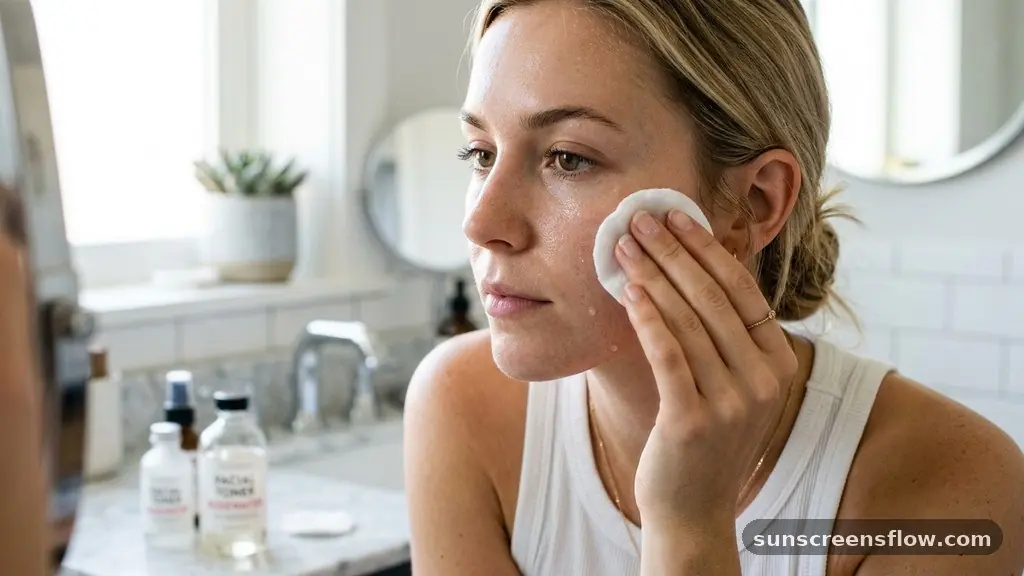
When you apply toner, you are essentially prepping the skin’s surface. It helps to balance the pH levels after cleansing and removes any residual impurities that might have been missed. Because toners are so thin, they act as a “primer” for the rest of your routine.
If you were to apply a thicker serum first, the toner would simply sit on top of that layer, unable to perform its function of hydrating and balancing the skin. By prioritizing the thinnest consistency, you allow the skin to drink in the toner’s benefits before moving on to the more concentrated treatments that follow. This systematic approach ensures that you get the most out of your investment in high-quality skincare products.
Understanding the Role of Toner
Many people mistakenly believe that toner is an optional step or merely a way to remove leftover makeup. However, modern toners have evolved significantly from the harsh, alcohol-laden astringents of the past. Today, the primary purpose of a toner is to rehydrate the skin and restore its natural pH balance immediately after you use a cleanser to remove dirt, oil, and environmental pollutants.
When you use a cleanser, you can sometimes strip away the skin’s natural moisture barrier, leaving it feeling tight or uncomfortable. A good toner acts as a soothing agent, providing an initial layer of hydration that makes the skin more receptive to whatever comes next.
Furthermore, toners often contain ingredients like humectants, which draw moisture into the skin, or soothing botanicals that calm irritation. When you apply toner while the skin is still slightly damp from washing, you enhance its ability to penetrate. Think of your skin like a sponge: a dry sponge doesn’t absorb water as quickly as a slightly damp one.
By using toner as that first layer of moisture, you create an environment where your subsequent products—which often contain more expensive and potent ingredients—can perform at their peak. It is a foundational step that sets the stage for the rest of your routine.
The Function of Serums in Your Routine
Once your skin is prepped with toner, it is time to move on to the heavy lifters of your skincare routine: the serums. Serums are concentrated treatments that contain a high density of high-performance actives.
Unlike toners, which provide general hydration and balance, serums are designed to target specific skin concerns such as dark spots, fine lines, or dehydration. Whether you are using a product featuring vitamin C for brightening, hyaluronic acid for intense moisture, retinol for anti-aging, or niacinamide for pore control, the serum is the vehicle that delivers these potent ingredients directly into the skin.
Because serums are formulated to be highly concentrated, they are usually slightly more viscous than toners but still much thinner than a standard moisturizer. This unique formulation allows them to penetrate deeply into the skin to address issues at a cellular level. When you apply a serum after your toner, the skin is already primed and slightly hydrated, which facilitates better absorption of these active ingredients.
If you were to skip the toner, the serum might struggle to penetrate the skin surface effectively, especially if there are dead skin cells or residual oil present. By following the “toner first, serum second” order, you guarantee that these powerful ingredients can get to work exactly where they are needed most.
Why Consistency Determines the Order
The logic behind the order of application is rooted in the physical properties of the formulas. When you look at the ingredients list of a toner, you will almost always see water (aqua) listed as the primary ingredient. This gives it a watery, lightweight consistency that evaporates or absorbs quickly.
Serums, while also water-based, often contain thicker agents or oils to help stabilize the active ingredients. If you compare a toner to a serum, the toner will almost always be the thinner of the two.
If you are ever in doubt about the order, simply place a drop of each product on the back of your hand. The product that runs down your hand the fastest should be applied first. This simple trick is a foolproof way to remember the layering order.
Even if you have multiple serums, the same rule applies: apply the thinnest serum first, followed by the thicker, more gel-like or oil-based serums. This “runny-to-thick” rule is the cornerstone of effective skincare layering and ensures that every product has the best possible chance to penetrate the skin barrier and deliver its promised results.
Comparing Toner vs. Serum Application

To help you visualize the differences and the correct sequence, consider the following table which breaks down the primary characteristics and roles of these two essential skincare components.
| Feature | Toner | Serum |
|---|---|---|
| Primary Goal | Balance pH & Hydrate | Target Specific Concerns |
| Consistency | Very Thin/Watery | Viscous/Light Gel |
| Key Ingredients | Humectants, Botanicals | Actives (Retinol, Vitamin C, etc.) |
| Application Order | First (After Cleansing) | Second (After Toner) |
As indicated in the table, the distinct roles of these products naturally dictate their placement in your routine. Cleansing serves to remove debris, and the toner acts as the follow-up step to restore the skin’s environment.
The serum then acts as the treatment phase. By respecting these roles, you avoid the common mistake of applying potent actives onto un-prepped skin, which could lead to irritation or decreased efficacy.
Exceptions and Special Cases
While the “thinnest to thickest” rule is a solid guideline, there are always exceptions and special cases in skincare. For instance, some modern “essence-toners” are thicker than traditional water-like toners. If you are using a product that has a slightly milky or serum-like consistency, you might find yourself wondering where it fits.
In these cases, it is helpful to look at the product’s primary function. If it is marketed as a toner but has a thick, essence-like texture, you can still apply it after cleansing. However, if it feels significantly thicker than your serum, you may choose to apply it after your serum.
Another exception involves specific treatment protocols, such as certain prescription topicals. Sometimes, a dermatologist may recommend applying a specific medication directly to clean, dry skin to ensure maximum absorption. In these instances, you would skip the toner and serum steps entirely or apply them after the medication has fully absorbed.
Always prioritize the instructions provided by your skincare professional over general rules. Additionally, if you use a face oil, remember that oils should almost always be the final step in your routine, as they are occlusive and will prevent any water-based product applied afterward from penetrating the skin.
Common Mistakes When Layering Products
One of the most common mistakes people make is applying products too quickly, one right after the other. Even if you follow the correct order, if you don’t give each product time to absorb, you end up with a mix of ingredients on the surface of your skin that may not be working as intended.
When you apply toner, give it about 30 to 60 seconds to sink in. You don’t need to wait for it to be bone-dry, but it should feel like it has been absorbed.
Another mistake is applying too much product. You don’t need a heavy layer of toner or serum for it to be effective. A few drops are usually sufficient to cover the face and neck.
Over-applying can lead to pilling, where the products clump up on the skin’s surface, or simply a waste of expensive active ingredients. Furthermore, some people make the mistake of using too many active ingredients at once, which can overwhelm the skin barrier.
For example, using a strong retinol serum immediately after an exfoliating toner might be too harsh for some skin types. If you are using multiple potent actives, consider alternating them between morning and evening or on different days to allow your skin to recover.
How to Integrate Actives Safely
When you are incorporating high-performance actives into your routine, the order of application becomes even more critical. Ingredients like vitamin C, which is often used in the morning, work best on clean, balanced skin. Because vitamin C is notoriously unstable, applying it after a pH-balancing toner helps ensure the skin is at the optimal pH for the active to remain stable and effective.
Conversely, retinol is typically used in the evening and can be quite drying. Applying a hydrating toner before your retinol serum can help buffer the skin, reducing the risk of irritation while still allowing the retinol to work its anti-aging magic.
Niacinamide and hyaluronic acid are generally more stable and can be layered with most other products. However, the order remains the same: toner, then the lighter serum, then the heavier serum. If you are using a watery serum, it should always precede a thicker, cream-based serum.
By following this sequence, you create a harmonious routine where each product supports the next, rather than competing for space or causing adverse reactions. Remember that less is often more when it comes to potent actives; consistency is far more important than intensity.
Tips for Maximizing Product Efficacy
To achieve the best results from your skincare routine, consider the environment in which you apply your products. Humidity and temperature can affect absorption rates. If you live in a very dry climate, applying your toner and then following up immediately with a hydrating serum can help trap moisture in the skin.
Additionally, using gentle patting motions with your fingertips rather than rubbing can help the products penetrate more effectively. Rubbing can sometimes cause unnecessary friction, especially if you have sensitive skin.
Finally, keep a record of how your skin reacts to your routine. If you notice persistent redness, flaking, or breakouts, you may need to adjust the order or the products themselves. Skincare is highly individual; what works for one person may not work for another.
By paying attention to how your skin feels and looks after you apply your products, you can fine-tune your routine to meet your specific needs. The goal is to create a sustainable, effective habit that leaves your skin feeling healthy, hydrated, and protected, rather than a routine that feels like a chore.
Frequently Asked Questions
Can I skip toner and just use serum?
Yes, you can skip toner if you feel your cleanser is gentle enough and does not disrupt your skin’s pH. However, using a toner can provide extra hydration and prepare the skin for better absorption of your serum, especially if you have dry or dehydrated skin.
What happens if I apply serum before toner?
If you apply a serum before toner, the toner may struggle to penetrate the skin because the serum has already created a layer on the surface. This can lead to the toner sitting on top of the skin, potentially causing a tacky feeling or preventing the serum from absorbing fully.
Should I wait for my toner to dry completely before applying serum?
You do not need to wait for your toner to dry completely. In fact, applying your serum while the skin is still slightly damp from the toner can actually help the serum penetrate more effectively, as the moisture acts as a vehicle for the active ingredients to travel deeper.
Is there a difference between a watery serum and a toner?
Yes, the main difference is the concentration of active ingredients. Toners are primarily designed to balance and hydrate, while serums are formulated with high concentrations of specific actives like vitamin C or retinol to treat targeted concerns. Always apply the thinner product first, regardless of the label.
Conclusion
Mastering the order of your skincare routine is one of the most effective ways to improve your skin’s health and appearance. By understanding that what comes first—toner or serum—is determined by the consistency and molecular weight of the products, you can ensure that every step of your regimen serves a purpose. Starting with a gentle, pH-balancing toner allows your skin to be properly prepped, while following up with targeted, high-performance serums ensures that your active ingredients can penetrate effectively to address your specific concerns.
Remember the golden rule: layer from the thinnest to the thickest consistency, and always listen to your skin’s unique needs. By following this sequence, you will optimize the efficacy of your products, leading to a more radiant and balanced complexion over time. Consistent, thoughtful application is the secret to unlocking the full potential of your skincare collection.


