

Have you ever wondered What is Hair Serum? Hair serum is a specialized liquid-based treatment designed to coat the surface of your hair, providing a protective barrier that smooths the strands and enhances overall appearance. Unlike shampoos or conditioners that penetrate the hair structure to cleanse or hydrate from within, a serum acts primarily as a topical finisher.
It is formulated to address surface-level concerns, making it an essential tool for those looking to manage texture, add brilliance, and protect their locks from the stresses of daily styling. By understanding the core mechanics of how these products interact with the hair cuticle, you can better determine how to incorporate them into your routine for maximum efficacy.
Defining the Core Function of Hair Serum
At its most fundamental level, hair serum is a product engineered to provide frizz control and manageability. While many consumers confuse it with hair oil, the two serve distinct purposes. Oils typically penetrate the fiber to provide deep nourishment, whereas most high-quality serums are silicone-based or formulated with film-forming agents that sit on the outside of the hair shaft.
This creates a sleek, polished look that locks out humidity, which is the primary culprit behind unwanted frizz. By smoothing the cuticle—the outermost layer of the hair—serum prevents moisture in the air from entering the strand and causing it to swell and lose its shape.
Beyond simple smoothing, these products act as a powerful heat protectant. When you apply a small amount before using blow dryers, flat irons, or curling wands, the serum creates a thermal barrier. This prevents the intense heat from directly scorching the delicate protein structure of your hair, significantly reducing the risk of thermal damage.
Furthermore, because of their light-reflecting properties, serums give hair an immediate, healthy-looking sheen. This is particularly beneficial for those with dull or lackluster hair, as the coating fills in minor irregularities along the strand, allowing light to bounce off more evenly.
The Role of Silicone and Chemical Composition
The efficacy of most modern serums lies in the science of cosmetic chemistry. Many popular formulas utilize silicones, such as dimethicone, due to their unique ability to form a flexible, breathable film over the hair.
Silicones are prized because they are hydrophobic, meaning they repel external water while keeping the moisture already inside the hair from evaporating, thus supporting moisture retention. This is particularly important for individuals with high hair porosity, as their hair strands have gaps in the cuticle that allow moisture to escape too quickly.
However, the industry has evolved to include more than just synthetic polymers. Many premium products now integrate botanical extracts to provide secondary benefits. Ingredients like argan oil, jojoba, or vitamin E are often blended into the silicone base to offer a more non-greasy feel while providing antioxidants.
These botanical additions help mitigate the potential dryness that can sometimes occur with long-term reliance on heavy silicones. The goal of a well-formulated serum is to strike a balance between the immediate aesthetic benefits of synthetic smoothing agents and the long-term health benefits provided by natural oils and nutrients, ensuring the hair remains strong and flexible rather than brittle.
How Serum Affects Hair Texture and Density
When selecting a serum, it is vital to consider your specific hair texture and hair density. A person with fine, thin hair will have very different requirements than someone with thick, coarse, or curly hair. For fine hair, a heavy, oil-heavy serum can weigh the strands down, making them appear greasy or limp.
In these cases, a lightweight, water-based serum or a specialized spray-on serum is often the better choice. Conversely, individuals with thick, coarse, or curly hair can handle—and often require—a more robust, viscous formula that provides intense control and weight to keep the hair manageable and defined throughout the day.
The impact of serum on density is mostly visual; it does not physically increase the number of follicles on your head. However, by preventing hair breakage and protecting against daily wear and tear, serum helps you retain the hair you already have. When the hair is protected from mechanical stress—such as aggressive brushing or towel drying—the ends remain intact for longer.
This reduction in breakage allows the hair to maintain a fuller, thicker appearance over time. If you struggle with flyaways that make your hair look thinner or wispy, a dab of serum can instantly pull those stray hairs into alignment, creating a cohesive and denser-looking style.
Strategic Application for Optimal Results
Applying hair serum is an art that requires precision. The most common mistake is applying too much product or applying it too close to the roots.
Because serum is designed to smooth the cuticle and add shine to the lengths, it should generally be applied from the mid-lengths down to the tips. The scalp naturally produces sebum, which provides enough moisture for the roots; adding a concentrated serum there can lead to an oily appearance and may even clog follicles, potentially impacting scalp health.
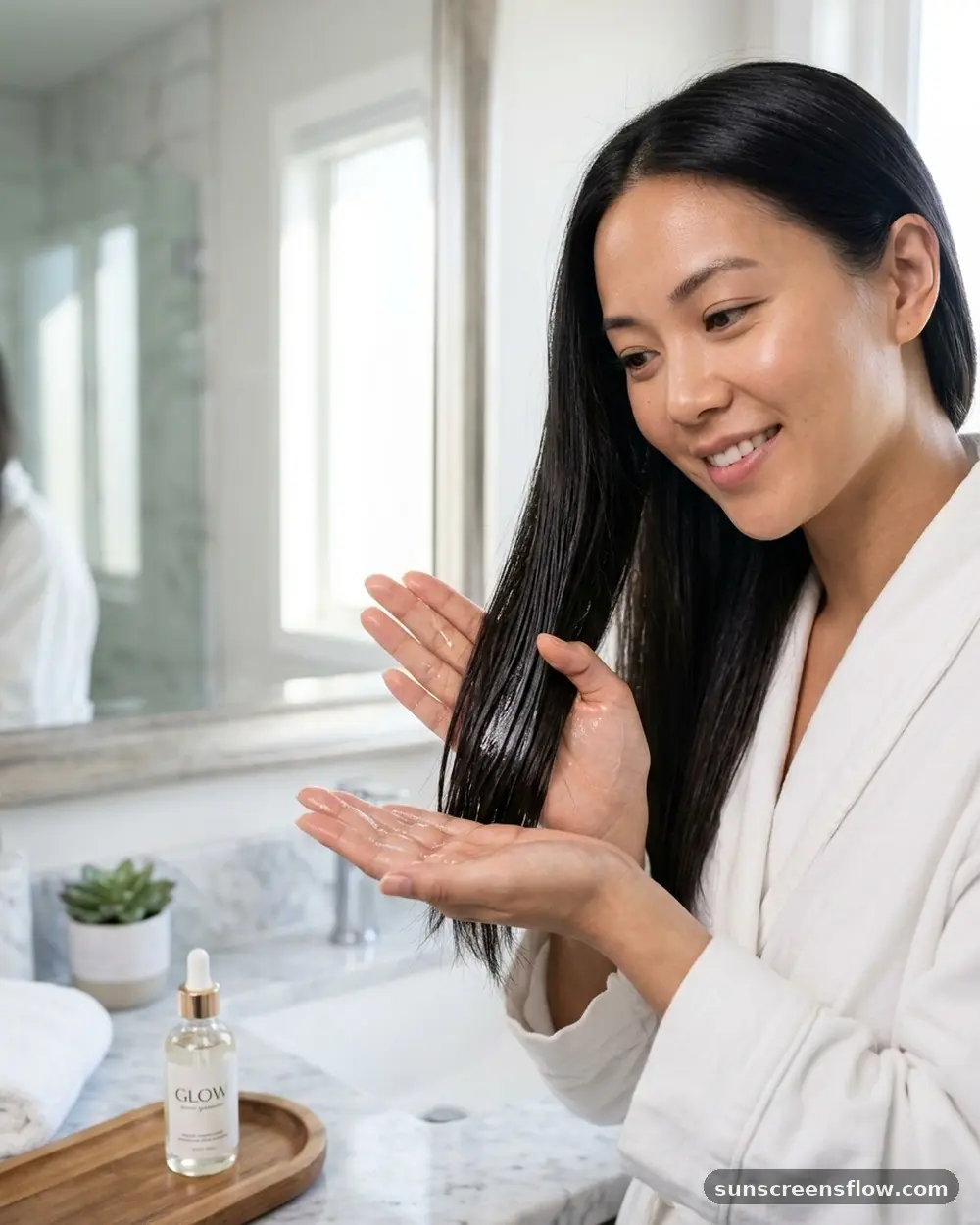
To apply correctly, start with a pea-sized amount in the palm of your hands. Rub your hands together to warm the product, which helps to emulsify it and ensures an even distribution.
Gently work the serum through damp hair—this is the ideal state as it helps seal in the moisture from your wash routine. If you are using it on dry hair to tame frizz, use an even lighter touch, focusing strictly on the ends or areas where split ends are most visible.
| Feature | Hair Serum | Hair Oil |
|---|---|---|
| Primary Purpose | Smoothing & Styling | Nourishment & Conditioning |
| Absorption | Surface-level (Film) | Deep Penetration |
| Finish | High-Gloss/Sleek | Natural/Hydrated |
| Best For | Frizz & Heat Protection | Dryness & Scalp Health |
Protecting Against Environmental Damage

Hair is constantly exposed to stressors that degrade its structural integrity. Environmental pollutants, such as dust, smoke, and industrial particulates, can settle on the hair shaft and cause oxidation, leading to a loss of vibrancy and strength. A quality hair serum acts as a protective shield against these elements. By creating a smooth, non-porous layer, the serum makes it more difficult for pollutants to adhere to the hair.
Many modern formulas also include UV protection filters, which are essential for those who spend a significant amount of time outdoors. UV rays can break down the keratin bonds in your hair, leading to color fading and brittleness, much like how the sun affects our skin.
Furthermore, if you have undergone chemical processing—such as coloring, bleaching, or relaxing—your hair is inherently more vulnerable. These processes strip the hair of its natural protective lipids.
Serum serves as a synthetic replacement for those lost lipids, filling in the gaps in the cuticle and providing the structural support needed to keep the hair from snapping. Think of it as a restorative layer that keeps processed hair looking vibrant and healthy while preventing the straw-like texture that often follows chemical treatments.
Addressing Common Misconceptions
There is a pervasive myth that using hair serum will make your hair dirty or cause it to fall out. In reality, when used correctly, serum is a highly beneficial tool. The “dirty” look only occurs when the product is over-applied or if the formula is too heavy for your specific hair type.
Similarly, hair loss is typically related to internal factors, hormones, or scalp conditions, not the application of a surface-level styling product. As long as you are keeping the product away from your scalp, there is no reason for it to interfere with hair growth.
Another misconception is that serum is only for people who heat style their hair. While it is an excellent thermal protectant, it is also highly effective for air-drying.
If you prefer to let your hair dry naturally, a serum can help keep the strands aligned, preventing the “fluffiness” that often occurs as hair loses moisture during the evaporation process. It is a versatile product that adapts to your lifestyle, whether you are a daily heat-styler or a minimalist who prefers a wash-and-go routine.
The Role of Serum in Detangling and Maintenance
One of the most underrated benefits of hair serum is its ability to assist in detangling. Knots and tangles are often caused by friction between individual strands, especially when the cuticle is raised or damaged. By smoothing the surface of the hair shaft, serum reduces this friction, allowing a comb or brush to glide through the hair effortlessly.
This is particularly useful for individuals with curly or long hair, which is prone to mechanical tangling. Using a small amount of serum before brushing can significantly reduce the amount of hair lost during the detangling process, preserving your hair’s overall density.
Beyond detangling, serum is an excellent tool for maintaining the longevity of a hairstyle. If you have spent time creating a blowout or a specific style, the humidity in the air will naturally try to revert your hair to its original texture. A serum acts as a humidity barrier, keeping your style intact for longer.
This means you don’t have to touch up your hair as often, which in turn reduces the amount of heat and manipulation your hair is subjected to. It is a positive feedback loop: better protection leads to less styling, which leads to healthier hair.
Topical Gaps: Why Serum Is More Than Just a Cosmetic
While many view hair serum strictly as a cosmetic add-on, it plays a vital role in the long-term maintenance of hair health. A common gap in knowledge is understanding how serum functions as a preventative measure rather than just a corrective one. Many users wait until they see damage—like split ends—before reaching for a serum.
However, the best results are achieved when serum is used as part of a preventative routine. By coating the hair regularly, you are essentially “armoring” it against the mechanical damage caused by pillows, hair ties, and clothing friction.
Additionally, many people do not realize that serum can be used in combination with other styling products. It is not an “either-or” situation. You can often layer a lightweight serum with a mousse or a cream.
The key is to apply products in order of consistency, moving from the thinnest to the thickest. Applying serum as the final step in your styling routine helps to seal in the moisture provided by your creams or leave-in conditioners, creating a comprehensive system that addresses hydration, hold, and protection simultaneously.
- Start with a clean, damp base for the best distribution.
- Always warm the product in your palms before application.
- Focus on the ends, where the hair is oldest and most damaged.
- Use only a pea-sized amount to start—you can always add more.
- Avoid the root area to prevent weighing down your style.
- Use a wide-tooth comb to distribute the product evenly through the lengths.
Frequently Asked Questions
Is it safe to use hair serum every day?
Yes, it is generally safe to use hair serum daily, provided you choose a formula suited to your hair type. If you have fine hair, look for lightweight, water-based serums to avoid buildup. Always ensure you are washing your hair regularly to prevent any potential residue accumulation over time.
Can hair serum help my hair grow faster?
Hair serum does not directly stimulate hair follicles to grow faster. However, it promotes length retention by preventing breakage and protecting the ends from splitting. By keeping your existing hair healthy and intact, your hair will appear to grow longer more effectively because it is not breaking off.
Should I apply serum before or after I straighten my hair?
You should apply a heat-protectant serum before using heat tools on damp hair. If your serum is specifically designed as a finishing product for shine and frizz control, it is best applied after you have finished styling to lock in the look and add a final touch of polish.
Does hair serum replace the need for conditioner?
No, hair serum is not a replacement for conditioner. Conditioner is designed to hydrate, soften, and detangle the hair from the inside out during the wash process. Serum is a styling and protective product that sits on the surface. Both are necessary for a complete and healthy hair care routine.
In conclusion, hair serum is a versatile and essential component of modern hair care. By understanding that it functions primarily as a protective, smoothing, and light-reflecting agent, you can leverage its benefits to improve the health and appearance of your hair. Whether your goal is to combat humidity-induced frizz, protect your strands from the rigors of heat styling, or simply add a professional-grade shine to your daily look, the right serum makes all the difference.
When integrated correctly into your routine—focusing on the mid-lengths and ends—it provides a crucial defense against environmental pollutants and mechanical damage. By selecting a formula that respects your specific hair texture and density, you ensure that your hair remains vibrant, manageable, and protected against the various stressors of daily life. Embracing the science of hair serum is one of the simplest yet most effective ways to elevate your hair care game and maintain the integrity of your locks over the long term.


