

Serums represent the heavy-lifting phase of a modern skincare routine, designed to deliver concentrated doses of active ingredients directly into the deeper layers of the skin. Unlike standard moisturizers that primarily function to seal in hydration and protect the surface, a serum is formulated with a lower molecular weight, allowing for rapid absorption rate and targeted delivery of potent compounds.
When you ask what is serum used for, the short answer is that it serves as a precision tool to address specific dermatological concerns, such as dullness, dehydration, or premature aging, rather than providing general maintenance. By utilizing a high serum concentration, these lightweight liquids can effectively penetrate the epidermis to initiate visible changes in skin texture and tone over time.
The Fundamental Role of Serums in Skin Health
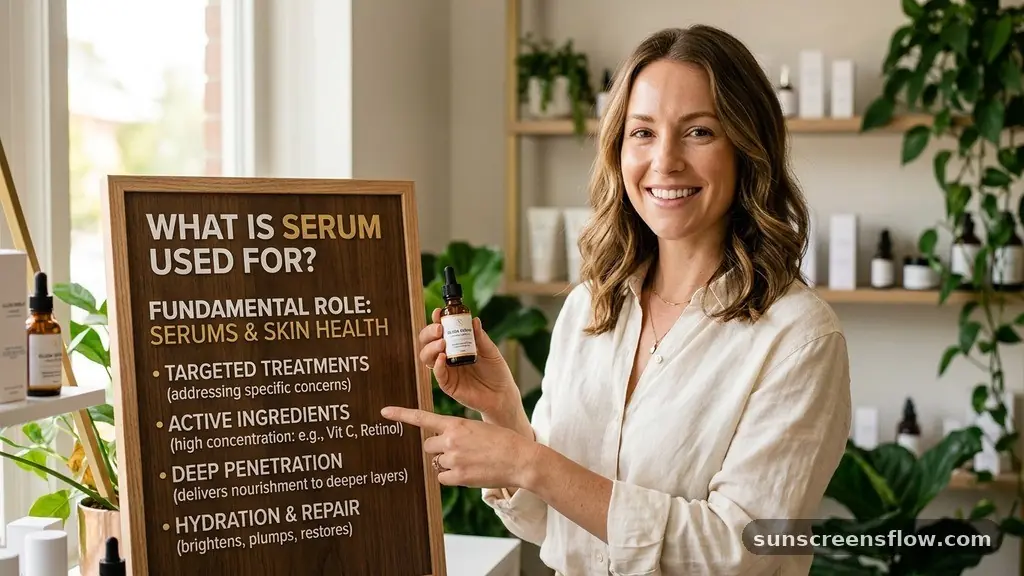
At its core, a serum is a specialized treatment product. While moisturizers focus on occlusion—creating a barrier to prevent water loss—serums focus on penetration. Because they lack the heavy occlusive agents found in creams, they can deliver their payload of nutrients more efficiently.
When you apply a serum, the thin, water-based or gel-like consistency ensures that the product doesn’t sit on the surface of your skin, but rather sinks in to interact with cellular processes. This makes them the ideal vehicle for ingredients that need to reach the dermis to be effective, such as those that stimulate collagen production or regulate melanin synthesis.
Many users find that incorporating a serum is the “tipping point” for seeing real results in their skin. If your current regimen consists only of a cleanser and a moisturizer, you are likely maintaining the status quo, but you aren’t actively correcting issues like hyper-pigmentation or loss of elasticity.
Serums act as the corrective step, bridges between cleaning your face and protecting it. Whether you are dealing with environmental damage from UV exposure or the natural decline of cell turnover, the right serum provides the concentrated support necessary to shift your skin’s trajectory toward a healthier, more resilient state.
Targeting Specific Concerns with Active Ingredients
The primary reason to integrate a serum into your regimen is its ability to deliver high-potency actives. Depending on what your skin needs, the choice of serum can vary wildly. For instance, hyaluronic acid serums are designed to pull moisture from the atmosphere into the skin, acting as a humectant to provide deep hydration.
Conversely, Vitamin C serums are used for their antioxidant properties, helping to brighten the complexion and neutralize free radicals that lead to premature aging. Because these serums contain such high levels of active compounds, they are often the most expensive part of a routine, but they are also the most impactful.
When selecting a product, it is crucial to understand the chemistry. Retinol, for example, is a gold standard for cell turnover and reducing fine lines, but it requires careful handling due to its potency. Using a serum allows you to dose these ingredients precisely.
By choosing a formula that aligns with your skin type—such as a non-comedogenic formula for those prone to breakouts—you can treat your skin without the risk of irritation or clogged pores. The power of the serum lies in its specificity; you aren’t just buying a “face product,” you are buying a targeted solution for a specific biological goal.
Improving Skin Texture and Tone
One of the most common reasons people search for what is serum used for is to address uneven skin texture. Rough, bumpy, or dull skin is often the result of dead skin cell buildup or a sluggish turnover rate.
Serums containing exfoliating acids, such as salicylic acid or glycolic acid, work by gently dissolving the “glue” that holds dead skin cells to the surface. This chemical exfoliation is generally more uniform and less abrasive than physical scrubs, which can cause micro-tears in the skin.
By regularly using an exfoliating serum, you reveal fresh, newer skin cells, which naturally results in a smoother, more radiant appearance. Over time, this process also helps to minimize the appearance of enlarged pores and reduces the visibility of dark spots.
When your skin surface is smooth, light reflects more evenly, which is why consistent use of these serums is often cited as the secret behind a “glow.” It is important, however, to pair these treatments with adequate sun protection, as the removal of dead skin cells can increase your sensitivity to UV rays.
The Science of Absorption and Molecular Weight

The efficacy of a serum is largely determined by its molecular weight. In skincare science, the size of a molecule determines how deep it can travel through the skin’s layers. Smaller molecules can traverse the stratum corneum with ease, while larger molecules might stay on the surface to provide a protective film.
Serums are engineered to have a smaller particle size, which is why they feel so thin and watery compared to a cream. This low molecular weight ensures that the topical application is not wasted; the ingredients are delivered exactly where they need to go to affect change.
Furthermore, the stability of these ingredients is a major factor in serum design. Many potent actives, particularly Vitamin C, are prone to oxidation when exposed to light and air. This is why you will often see these products housed in dark, opaque glass bottles with droppers or airless pumps.
Proper storage is a component of the serum’s functionality; if the product oxidizes, it loses its potency and may even cause irritation. Understanding that your serum is a delicate chemical solution helps you appreciate why it should be stored in a cool, dry place and why you should pay attention to the expiration date after opening.
Addressing Topical Gaps: Serums vs. Moisturizers and Oils
A common point of confusion for consumers is the difference between serums, moisturizers, and face oils. To clarify, think of your skincare routine as a layered process. The serum is the treatment layer, the moisturizer is the hydration-sealing layer, and the face oil is the final, occlusive barrier.
Many people mistakenly believe they can skip the moisturizer if they use a serum, but this is rarely the case. While a serum provides the “medicine,” the moisturizer provides the “environment” for that medicine to work.
Comparison of Skincare Product Functions
| Product Type | Primary Function | Texture | Layering Order |
|---|---|---|---|
| Serum | Targeted treatment | Thin/Watery | After cleansing, before moisturizer |
| Moisturizer | Hydration & protection | Cream/Lotion | After serum |
| Face Oil | Sealing & nourishment | Oily/Viscous | Last step (usually) |
The gap in knowledge often lies in the “why” of this order. Because serums are water-based, they must go on first to ensure they aren’t blocked by the thicker, oil-based ingredients in your moisturizer.
If you apply a heavy cream first, the serum will simply sit on top of the cream, unable to reach the skin. By following the correct order, you optimize the absorption rate of every product in your cabinet, ensuring that you aren’t wasting money on expensive actives that never reach their intended target.
Supporting the Skin Barrier and Long-Term Health
Beyond correcting specific flaws, serums play a vital role in maintaining the integrity of the skin barrier. A compromised barrier leads to sensitivity, redness, and chronic dryness. Serums enriched with ingredients like niacinamide are excellent for this purpose.
Niacinamide helps to strengthen the skin’s natural defenses, improves elasticity, and regulates oil production. When the barrier is healthy, the skin is better equipped to protect itself from environmental stressors like pollution and blue light.
Using a serum is essentially an investment in the long-term health of your complexion. By providing the skin with the nutrients it needs to regenerate, you are essentially slowing down the visible signs of aging.
While no product can stop time, a consistent regimen that includes a high-quality serum ensures that your skin remains resilient. Many dermatologists emphasize that the goal of a good routine is not just to look good today, but to ensure the skin remains functional and healthy for years to come.
Common Mistakes When Using Serums
Even with the best products, users often make mistakes that render their serums ineffective. One of the most frequent errors is applying too much product. Because serums are highly concentrated, a few drops are usually enough to cover the entire face and neck.
Applying excessive amounts not only wastes the product but can also lead to a tacky, sticky residue that makes makeup application difficult. Another mistake is failing to allow the serum to “set” before moving on to the next step. Give your skin about 60 seconds to absorb the serum before layering your moisturizer on top.
Additionally, many people try to use too many active ingredients at once, which can overwhelm the skin. If you are using a strong retinol serum, you should avoid layering it with harsh exfoliating acids like salicylic acid or glycolic acid in the same session. This can lead to severe irritation, burning, and a disrupted barrier.
Instead, consider a “skin cycling” approach, where you alternate your active treatments throughout the week. This allows you to reap the benefits of multiple powerful ingredients without compromising the health of your skin.
Frequently Asked Questions About Serums
When is the best time of day to apply a serum?
The best time depends on the ingredients. Antioxidant-rich serums, like those containing Vitamin C, are best applied in the morning to protect against daytime environmental damage. Treatment serums containing retinol or strong exfoliating acids should generally be used at night when the skin focuses on repair and isn’t exposed to the sun.
Can I use more than one serum at a time?
Yes, you can layer serums, but you must be careful. Always apply the thinnest, most watery serum first and move to the thicker, more viscous formulas. However, avoid layering multiple potent actives (like two different types of strong acids) as this can lead to significant skin irritation and redness.
Do I really need a serum if I have a good moisturizer?
While a good moisturizer is essential for hydration and barrier protection, it typically lacks the high concentration of active ingredients found in a serum. If you have specific concerns like dark spots, fine lines, or persistent congestion, a serum is the most effective way to deliver the necessary treatment.
Are serums safe for sensitive skin?
Serums can be safe for sensitive skin, but the formulation is key. Look for products that are fragrance-free and contain soothing ingredients like niacinamide or hyaluronic acid. Always perform a patch test on your inner arm before applying a new serum to your face to ensure it won’t cause a reaction.
Conclusion
Understanding what is serum used for transforms your skincare routine from a chore into a highly effective, personalized science. By acting as a targeted delivery system for potent active ingredients, serums allow you to address complex concerns like hyper-pigmentation, uneven skin texture, and premature aging with precision. Whether you are seeking the deep hydration of hyaluronic acid, the brightening power of Vitamin C, or the resurfacing capabilities of exfoliating acids, there is a serum designed to meet your specific needs.
Remember that the success of your serum depends as much on the application as the formulation. By respecting the molecular weight of your products, layering them correctly, and ensuring you don’t over-stimulate your skin with too many conflicting actives, you can achieve professional-level results at home.
A serum is not just an extra step in your routine; it is the engine that drives your skin’s health, vitality, and appearance. By consistently integrating these powerful tools, you move beyond mere maintenance and into the realm of active, results-driven skin transformation.


