

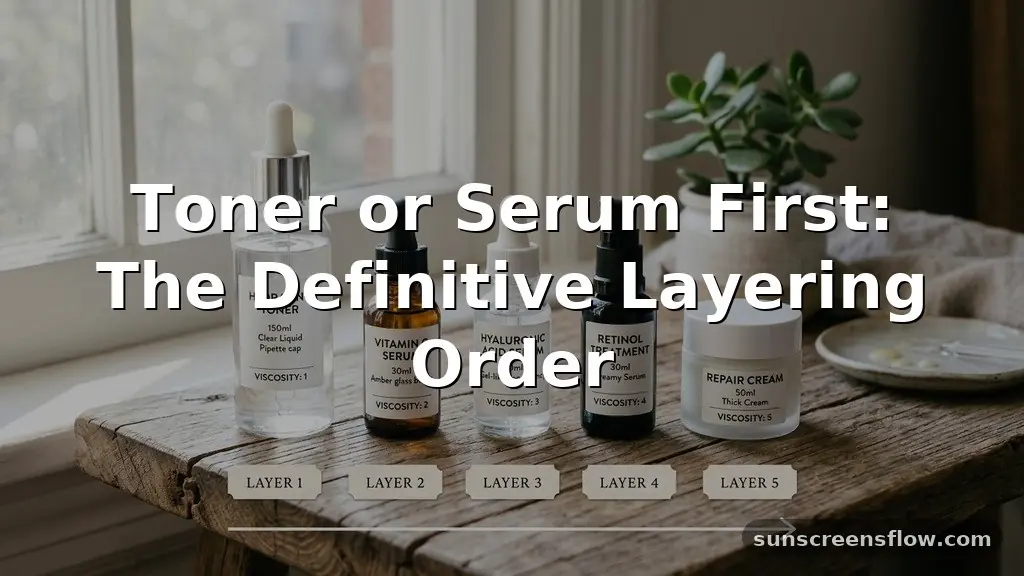
Achieving a radiant complexion often feels like solving a complex puzzle, especially when you are staring at a shelf full of bottles and wondering about the correct sequence. The debate regarding whether to apply toner or serum first is a classic dilemma in the world of beauty, yet the answer is rooted in fundamental principles of chemistry and skin physiology.
To maximize the efficacy of your skincare routine, you must understand how different formulations interact with your skin. By applying products in the correct order—typically from thinnest to thickest—you ensure that your skin can effectively absorb the active ingredients that address your specific concerns.
The Science of Product Layering and Viscosity
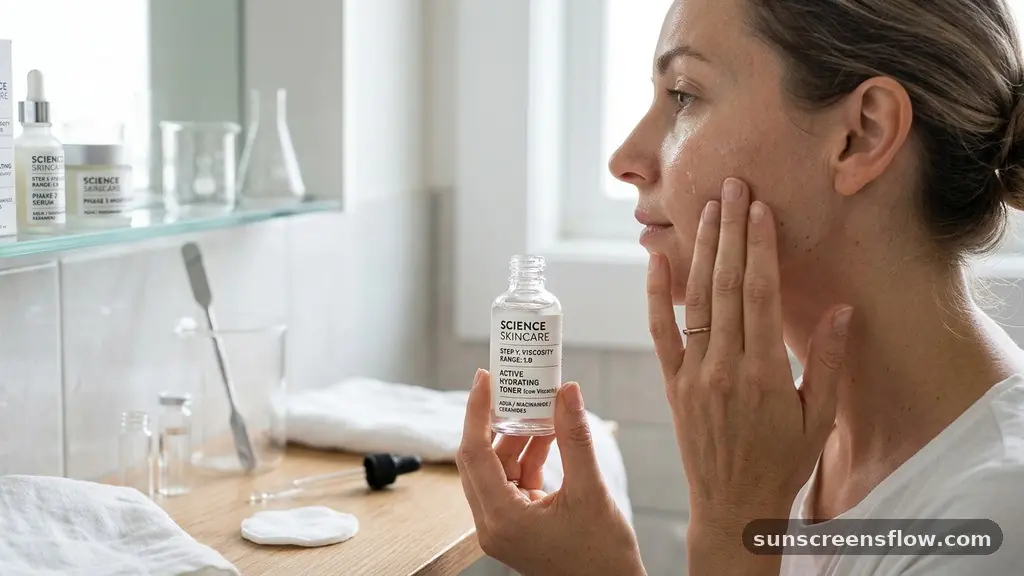
The primary rule of thumb when layering skincare is to move from the lightest consistency to the heaviest. Viscosity serves as your best guide here. A toner is almost always water-like in its consistency, designed to be lightweight and fast-absorbing.
Serums, while often water-based, generally contain a higher concentration of potent molecules and may have a slightly more viscous, gel-like texture. If you were to apply a thick, oil-based serum before a watery toner, the toner would struggle to penetrate the layer of oil, essentially rendering it useless.
By prioritizing thin, aqueous products, you allow the skin to drink in hydration before sealing it in with heavier emollients. This process is essential for maintaining a healthy skin barrier. When you apply your toner first, you are effectively prepping the surface, removing any residual impurities, and balancing the pH balance of your skin.
This creates an optimal environment for the subsequent serum to penetrate the epidermis and deliver its specialized benefits. Ignoring this order can lead to pilling, poor absorption, and a lack of visible results, regardless of how expensive your products are.
Understanding the Role of Toners in Your Routine
Many people mistakenly believe that toners are purely for removing leftover dirt after cleansing. While some toners do provide a final sweep of impurities, their modern role is far more sophisticated.
A high-quality toner is designed to hydrate, soothe, and prep the skin for what comes next. By adjusting the skin’s pH level, toners ensure that the dermis is not overly alkaline or acidic, which can happen after using certain harsh cleansers.
Furthermore, toners often contain humectants that draw moisture into the skin, acting as a primer for the serums that follow. If you skip this step, you might find that your serums don’t spread as evenly or feel as refreshing. Think of your skin like a sponge; a dry, hard sponge doesn’t absorb liquid well.
However, a slightly damp, hydrated sponge absorbs moisture and active treatments much faster. By applying a toner, you are essentially “dampening” the sponge, making it receptive to the high-performance ingredients found in your serums.
The Importance of Molecular Weight in Serums
When considering the absorption rate of your skincare, molecular weight is the silent architect of success. Serums are formulated with smaller molecules specifically to penetrate deeper into the skin layers, targeting concerns like fine lines, dark spots, or loss of elasticity. If you apply a product with a larger molecular structure first, you create a physical barrier that prevents the smaller serum molecules from reaching their intended destination.
Most serums are designed to work in synergy with the hydration provided by a toner. For instance, hyaluronic acid is a classic humectant that works best when applied to slightly damp skin.
If you apply a hyaluronic acid serum immediately after a toner, you are trapping the water from the toner into the skin, significantly boosting the effect of the hydration. This is far more effective than applying a serum to dry, un-prepped skin, where the product might just sit on the surface, eventually evaporating before it can perform its function.
Managing Trans-Epidermal Water Loss
Trans-epidermal water loss (TEWL) is the process by which water evaporates from the skin into the atmosphere. This is a natural occurrence, but an impaired skin barrier can accelerate it, leading to dehydration, flakiness, and sensitivity.
Your layering strategy should aim to combat this. Toners provide the initial surge of hydration, and serums provide the concentrated treatment, but the order remains critical to slowing down evaporation.
When you apply your toner, you provide the skin with a water-based foundation. Following this with a serum—which often contains ingredients like niacinamide or vitamin c—allows these ingredients to be locked into the skin.
If you were to reverse the order, the serum would be the first layer exposed to the air, making it more susceptible to premature evaporation before it has a chance to sink in. By layering correctly, you create a “moisture sandwich” that keeps the skin plump and protected throughout the day or night.
How Active Ingredients Influence Application
Not all serums are created equal, and the type of active ingredients you are using can dictate how they fit into your regimen. For example, serums containing chemical exfoliation agents like AHAs or BHAs function differently than those containing soothing botanicals or antioxidants. Generally, you want your most potent, treatment-focused products to be as close to the skin as possible after cleansing and toning.
Consider the following comparison of product types based on their typical function and placement in a routine:
| Product Category | Primary Function | Typical Placement |
|---|---|---|
| Cleanser | Removing debris | First |
| Toner | pH balance/Hydration | Second |
| Treatment Serum | Targeted correction | Third |
| Moisturizer | Sealant/Emollient | Fourth |
As shown in the table, the sequence is logical and progressive. By adhering to this structure, you minimize the risk of product incompatibility. If you are using a potent vitamin c serum, it is almost always best applied after a toner but before a heavier cream, ensuring the vitamin c can work its magic on brightening your skin texture without being diluted or blocked by thicker formulas.
The Role of Essences and Their Place
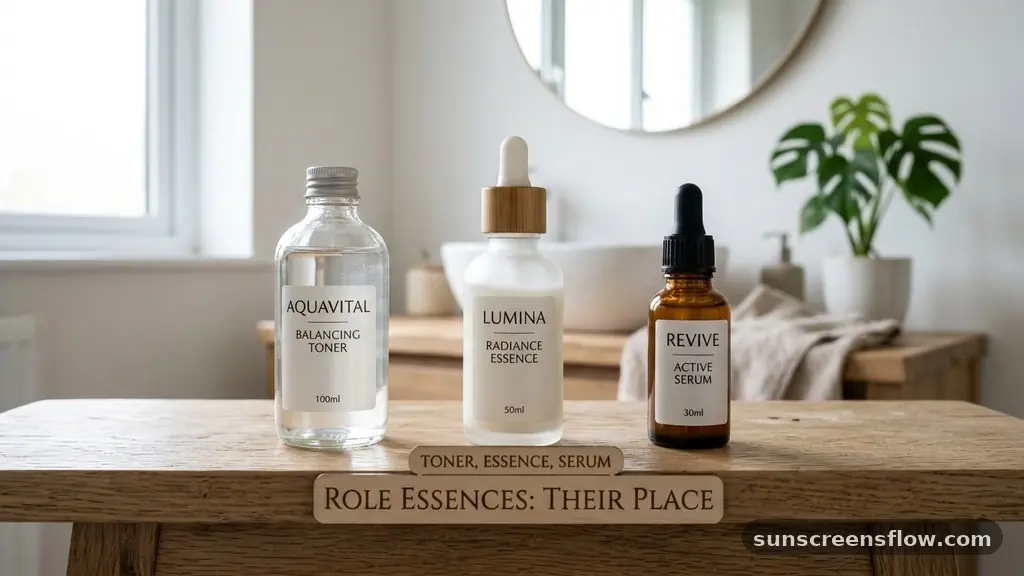
The emergence of the “essence” in Western beauty routines has added another layer of confusion. An essence is often thinner than a serum but richer than a traditional toner.
If you are using an essence, the rule of thumb remains: apply it after your toner but before your serum. Essences are often designed to increase the overall absorption rate of the products that follow, acting as a bridge between the watery toner and the more concentrated serum.
If your routine is becoming crowded with multiple layers, remember that less is often more. You do not necessarily need a toner, an essence, and three different serums. Focus on the core needs of your skin.
If you are dealing with dehydration, a hydrating toner followed by a hyaluronic acid serum is a powerhouse combination. If you are focusing on pore refinement and acne, a clarifying toner followed by a niacinamide serum may be more appropriate. Always assess the thickness and the function of the product before deciding its place in your daily application.
When to Consider Oil-Based Serums
While most serums are water-based, some are formulated with oils. This is a crucial distinction. Oil-based serums have a much higher viscosity and act as a seal. If you apply an oil-based serum before a water-based toner or essence, you will physically block the water-based products from penetrating the skin.
This is where the “water-based products first” rule becomes non-negotiable. If you love the glow that an oil-based serum provides, save it for the very end of your serum application, or even mix it into your moisturizer.
By keeping oil-based products away from the initial stages of your routine, you ensure that your skin receives the essential hydration it craves. If you find your skin feeling greasy or heavy, it is likely because you are applying your heavier, oil-rich products too early in the process.
Addressing Common Skincare Myths
There is a pervasive myth that if you spend a lot of money on a serum, it will “work” no matter how you apply it. Unfortunately, skincare is as much about the method of application as it is about the formula.
Another common misconception is that toners are unnecessary if you have a great cleanser. However, even the best cleansers can leave the skin’s pH slightly off-balance, and a toner is the most efficient way to reset that balance.
Furthermore, people often fear that layering too many products will clog their pores. While this can happen if you use comedogenic ingredients, the order of application is usually the culprit behind “pilling”—that annoying phenomenon where your products ball up and rub off on your fingers.
Pilling is almost always caused by applying a product with a high silicone content before a water-based product has fully dried. By giving each layer a few seconds to settle and ensuring the sequence is correct, you can avoid this frustration entirely.
Optimizing for Skin Texture and Pore Refinement
If your primary goal is pore refinement or improving overall skin texture, your choice of toner and serum is vital. Toners containing gentle exfoliants can help clear out debris within the pores, while serums with active ingredients like niacinamide can help regulate sebum production. When you apply these in the correct order, you are creating a synergistic effect.
The toner acts as the clearing agent, preparing the pores to receive the serum. The serum then delivers the active ingredients deep into the skin to refine and smooth.
If you were to apply the serum first, it might struggle to penetrate the surface debris, and the toner would then potentially wash away some of the expensive serum you just applied. By keeping the toner as the first step after cleansing, you ensure that your pores are clean and ready for the targeted treatment that follows.
Topical Application and Routine Consistency
Ultimately, the best skincare routine is the one you can stick to consistently. The ritual of topical application should be something you enjoy, not a source of stress.
Whether you use one product or five, the order of application remains the same: cleanse, tone, treat (serum), and moisturize. This sequence is designed to honor the biology of your skin, ensuring that every drop of product you apply has the best chance of performing its intended job.
Consistency is more important than the number of steps. If you find that using a toner feels like a chore, you might opt for a spray-on essence that serves a similar purpose.
If you find your serum is too thick, look for one with a lighter, water-based formulation. By understanding the “why” behind the order, you become empowered to customize your routine to fit your lifestyle, ensuring that your skin receives the nourishment it needs to look its best every single day.
Frequently Asked Questions
Is it ever okay to apply serum before toner?
In very rare cases, if your serum is a high-potency, water-based treatment that you want to be the absolute first thing on your skin, you might apply it before a toner. However, for 99% of products, the toner should come first to prep the skin and balance pH.
How long should I wait between applying toner and serum?
You don’t need to wait until the skin is bone-dry. In fact, applying serum to slightly damp skin is better for absorption. Wait about 30 to 60 seconds after applying your toner—just enough time for the liquid to settle into your pores before applying your serum.
Can I skip the toner and just use a serum?
Yes, you can skip toner if your cleanser is gentle and does not disrupt your skin’s pH balance. However, toners offer extra hydration and prep, which can make your serum work more effectively. If you have dry or dull skin, a toner is a highly beneficial addition.
Does the order change for morning versus night routines?
The fundamental order of applying thin to thick products remains the same regardless of the time of day. However, you might use different types of serums—such as an antioxidant-rich serum in the morning and a retinol-based serum at night—to address different skin needs.
Conclusion
The confusion surrounding whether to apply toner or serum first is easily resolved by following the principle of applying products from the lowest to the highest viscosity. By starting with a toner, you effectively balance your skin’s pH balance, clear away residual impurities, and prepare the epidermis for deeper penetration of your active ingredients. This sequence prevents the premature evaporation of moisture, minimizes trans-epidermal water loss, and ensures that your serums—whether they contain hyaluronic acid, vitamin c, or niacinamide—can perform their duties without being blocked by thicker, oil-based serums.
Remember that your skincare routine is a personalized process; by layering your products correctly, you optimize absorption rate, improve your skin texture, and ultimately support a healthier, more resilient skin barrier. Stick to this logical order, and you will see the full potential of your skincare collection realized.