


When you gaze at the crowded shelves of a skincare aisle, the sheer volume of products can feel overwhelming. Among the cleansers, toners, and heavy creams, one category stands out as the powerhouse of any routine: the facial serum. If you have ever wondered what does serum do for your face, the answer lies in its unique composition and targeted delivery system.
Unlike standard lotions, serums are concentrated, lightweight formulas designed to deliver high concentrations of potent ingredients directly into the deeper layers of the skin. By stripping away unnecessary fillers, these products function as precision tools to address specific dermatological concerns, ranging from dehydration and dullness to fine lines and uneven texture.
Understanding the Role of Molecular Weight in Skincare
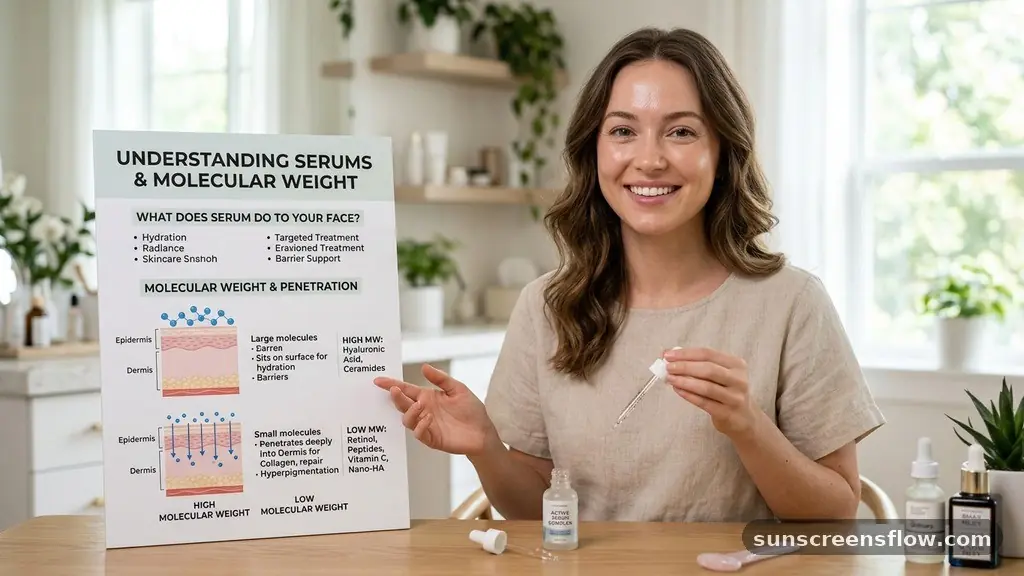
To grasp why serums are so effective, you must first look at the science of dermal absorption. Most heavy moisturizers contain occlusive agents—substances that sit on the surface of the skin to trap moisture. While this is beneficial for the skin barrier, it often prevents other ingredients from reaching the underlying tissue.
Serums operate on a different principle. They are formulated with a smaller molecular weight, which allows the liquid to bypass the surface-level blockade and penetrate the epidermis more effectively.
Because of this efficiency, the active ingredients in a serum can interact with skin cells at a much more profound level. Think of a moisturizer as a protective coat that guards your house, while a serum is the specialized technician sent inside to fix the wiring. This structural difference is why serums feel watery or gel-like rather than creamy.
By utilizing a solvent that facilitates rapid uptake, your skin can utilize vitamins, acids, and botanical extracts to stimulate cellular turnover and repair damage from the inside out. This makes them an essential component for anyone looking to go beyond basic hydration and achieve tangible improvements in skin health.
Targeted Treatment for Specific Skin Concerns
The primary function of a serum is to provide a concentrated dose of active chemistry to solve a specific problem. Because they contain fewer thickening agents and emollients than creams, they can carry a much higher percentage of functional compounds. Whether you are dealing with hyperpigmentation, persistent acne, or the early signs of aging, there is almost certainly a serum designed to handle that exact issue.
For instance, someone struggling with dullness will benefit from brightening agents like Vitamin C, which neutralize free radicals and inhibit melanin production. Conversely, someone dealing with excessive oil production might gravitate toward niacinamide or salicylic acid, which help regulate sebum and refine the pores.
Because these ingredients are not diluted by a heavy base, they start working almost immediately upon contact. This high-potency approach is what separates a serum from a standard moisturizer; you aren’t just applying a product to feel soft—you are applying a treatment to change the biological activity occurring within your skin.
Hydration Beyond the Surface
One of the most common misconceptions is that all serums are designed for anti-aging. In reality, some of the most effective serums are purely focused on deep, long-lasting hydration. The gold standard for this is hyaluronic acid.
This molecule is a humectant, meaning it draws moisture from the environment into the skin. When applied in a serum format, it can hold up to 1,000 times its weight in water, providing a plumpness that a cream alone often cannot achieve.
When your skin lacks adequate water, it experiences trans-epidermal water loss (TEWL), where moisture evaporates into the air. By applying a hydrating serum after cleansing, you create a reservoir of water that sits beneath the surface. When you follow this with a moisturizer, you lock that water in.
This two-step process is the secret to a healthy, glowing complexion. Without the serum, you are simply sealing in whatever moisture is already there; with the serum, you are actively increasing the water content of your skin cells, which helps improve skin elasticity and resilience against environmental stressors.
The Role of Antioxidants in Environmental Defense
The modern environment is filled with pollutants, UV radiation, and blue light from our screens, all of which generate free radicals. These unstable molecules cause oxidative stress, which leads to the breakdown of collagen and the appearance of premature aging. Antioxidants are the body’s primary defense against this damage, and serums provide the most efficient vehicle to deliver these protectors to your face.
Ingredients like Vitamin C, ferulic acid, and vitamin E work by neutralizing free radicals before they can damage your DNA and cell membranes. By incorporating an antioxidant serum into your morning routine, you are essentially applying a shield that works alongside your sunscreen.
This is crucial for maintaining long-term skin health. While you might not see the benefits of antioxidant protection in a single day, the cumulative effect over months and years is significant, leading to fewer fine lines, better tone, and a more vibrant complexion.
Comparison of Serum Versus Moisturizer
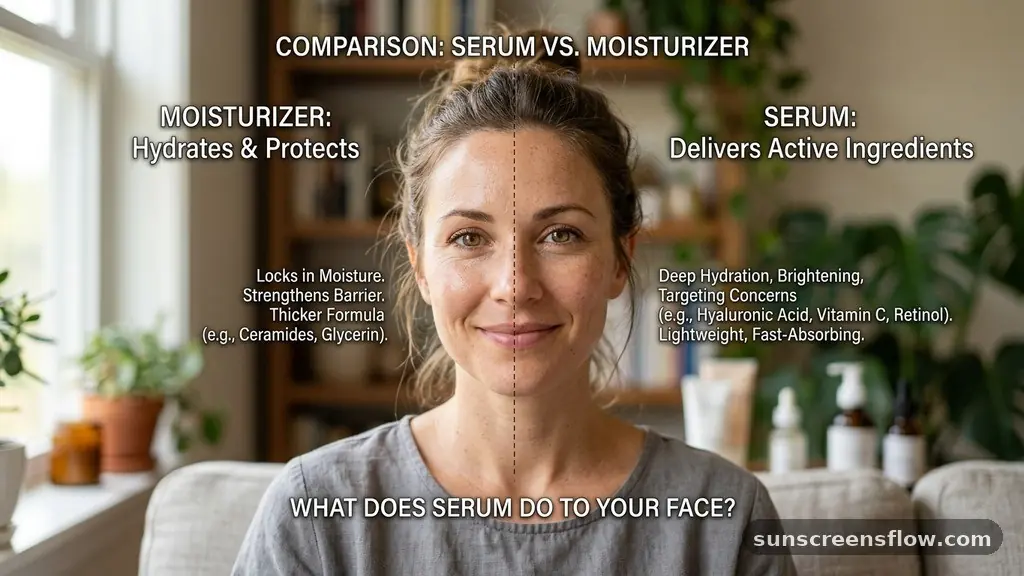
It is common for users to ask if they need both a serum and a moisturizer. While both products offer benefits, they serve distinct roles in a healthy skincare regimen. The following table highlights the functional differences between these two staples:
| Feature | Face Serum | Moisturizer |
|---|---|---|
| Primary Purpose | Targeted treatment | Protection and sealing |
| Texture | Lightweight, liquid, or gel | Creamy, thick, or lotion |
| Molecular Weight | Low (high penetration) | High (surface protection) |
| Application Order | First (after cleansing) | Last (to lock in moisture) |
| Key Goal | Corrective action | Barrier support |
As demonstrated in the table, these products are not interchangeable; they are complementary. Using a moisturizer without a serum is like painting a wall without priming it first, and using a serum without a moisturizer is like priming a wall but failing to add the protective coat of paint.
Addressing Common Skin Issues with Active Ingredients
If you look at the labels of high-quality serums, you will find a variety of powerful compounds. Understanding what these ingredients do is key to selecting the right product for your needs.
- Retinol: A derivative of Vitamin A that accelerates cellular turnover, making it the most effective option for smoothing fine lines and improving skin texture.
- Niacinamide: A versatile form of Vitamin B3 that helps with oil control, reduces redness, and strengthens the skin barrier.
- Peptides: Chains of amino acids that act as the building blocks for proteins like collagen, helping to improve skin firmness and elasticity.
- Ceramides: Essential lipids that keep the skin cells together, preventing moisture loss and irritation.
- Salicylic Acid: A beta-hydroxy acid (BHA) that provides chemical exfoliation, diving deep into the pores to clear out debris and blackheads.
Because these ingredients are potent, it is important to introduce them slowly. If you are starting a new serum, especially one containing retinol or strong acids, begin by using it only a few times a week to ensure your skin reacts well. Over time, you can increase the frequency as your skin builds tolerance.
Optimizing Your Application Routine
The effectiveness of any skincare product depends heavily on how it is applied. The concept of post-cleansing application is vital. After you wash your face, your skin is clean and slightly damp.
This is the optimal time to apply a serum. Because the pores are clear and the skin is receptive to moisture, the serum can penetrate more efficiently.
Avoid the temptation to rub the product aggressively into your skin. Instead, dispense a few drops into your palms and gently press the serum into your face and neck. This “pressing” motion ensures even distribution without tugging at the delicate skin around the eyes.
If you are using multiple serums—for example, a Vitamin C serum in the morning and a hydrating serum at night—always apply the product with the thinnest consistency first. This ensures that the most lightweight molecules reach the skin before you apply thicker layers.
Finally, always give the serum a minute or two to fully absorb before applying your moisturizer or sunscreen. This prevents “pilling,” which is when products ball up on the surface of the skin because they haven’t had time to sink in.
Answering Common Questions About Serum Usage
There is a lot of misinformation regarding serums, leading to confusion about their safety and necessity. Addressing these gaps in knowledge is essential for building a routine that actually works.
Is it good to use face serum daily?
Yes, using a serum daily is generally recommended to see consistent results. Most serums are designed for daily use, either morning or night. However, if you are using a potent active ingredient like a high-strength retinol or intense chemical exfoliant, you might need to start with every other day.
Do I need both serum and moisturizer?
Yes, it is highly recommended to use both. A serum provides the active ingredients to treat specific concerns, while a moisturizer provides the occlusives necessary to prevent water loss and protect the skin barrier. Using them together creates a more balanced and effective skincare routine.
What are the disadvantages of using serum?
The primary “disadvantage” is the potential for irritation if you choose a product too strong for your skin type or if you apply too many active ingredients at once. Additionally, high-quality serums can be expensive compared to basic moisturizers, representing a larger initial investment.
Does serum remove dark spots?
Yes, specific serums containing brightening agents like Vitamin C, kojic acid, or niacinamide can significantly reduce the appearance of dark spots over time. These ingredients work by inhibiting the production of excess melanin and encouraging the turnover of pigmented surface cells, leading to a more even skin tone.
Conclusion
Ultimately, the question of what does serum do for your face is answered by its ability to deliver high-performance results. By choosing a formula that aligns with your specific goals—whether that is minimizing pores, smoothing lines, or boosting hydration—you can significantly alter the trajectory of your skin health. These products are the workhorses of the beauty world, bridging the gap between passive maintenance and active correction.
By integrating a well-chosen serum into your daily ritual, you provide your skin with the precise tools it needs to remain resilient, youthful, and vibrant. Remember that the best results come from consistency and patience; while a serum is a powerful tool, it performs best when used as part of a thoughtful, long-term approach to skincare.


