


Navigating the complexities of a modern skincare routine can often feel like a chemistry experiment gone wrong. One of the most persistent questions enthusiasts face is Do You Put Moisturizer on Before Serum. The short answer is that you should almost always apply your serum first.
Serums are designed to deliver high concentrations of active ingredients deep into the skin, while moisturizers are formulated to seal in that hydration and protect the surface. Reversing this order often hinders the absorption rate of your expensive treatments, essentially rendering them less effective. Understanding the “why” behind this order is essential for achieving the best dermatological efficacy from your products.
The Science of Product Layering and Molecular Weight
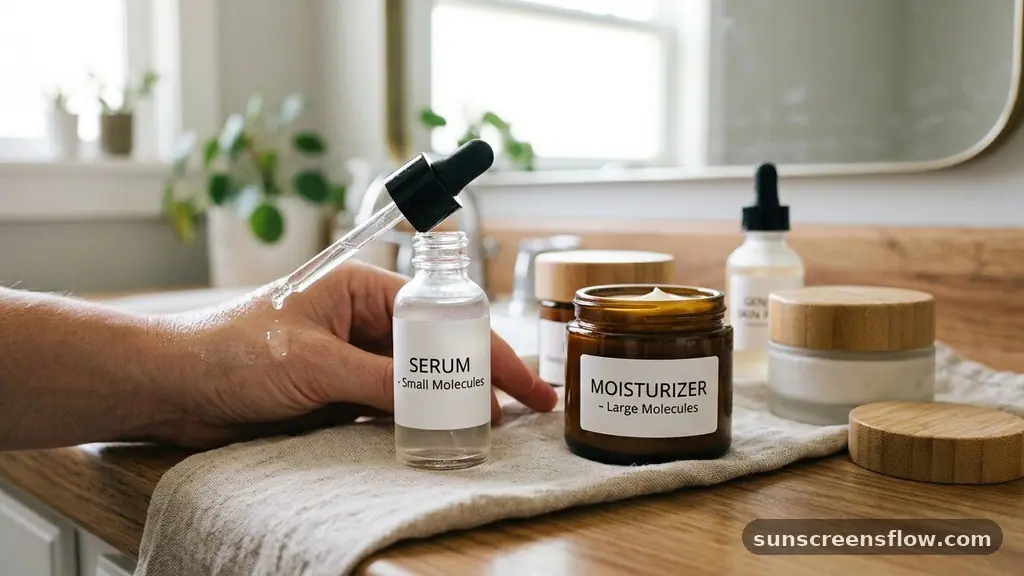
To understand why serums typically come before moisturizers, we must look at the concept of molecular weight. Serums are generally composed of smaller molecules, which allow them to penetrate the skin’s surface more efficiently.
If you were to apply a heavy, thick cream first, you would essentially be creating a physical barrier on your skin that prevents those smaller, more delicate molecules from reaching their intended destination. Think of your skincare routine like building a house: you need the foundation and the structural components (the serum) in place before you put on the roof (the moisturizer).
Furthermore, the formulation of these products dictates their behavior. Many serums are water-based, whereas moisturizers, or face creams, often contain heavier oils, waxes, and butter-based ingredients.
If you apply a water-based product over an oil-rich cream, the serum will struggle to pass through the oil layer, causing it to sit on top of the skin rather than soaking in. By applying the serum to clean, slightly damp skin, you maximize the penetration of those potent ingredients, ensuring that your skin receives the full benefit of your targeted treatments.
Defining the Role of Serums and Moisturizers
It is helpful to view these two product categories as serving entirely different functions. A serum is a targeted treatment designed to address specific concerns, such as hyperpigmentation, fine lines, or dehydration.
Because they contain a high concentration of active ingredients like vitamin C, retinol, or niacinamide, they are meant to interact directly with the skin cells. Their goal is to treat the skin from the inside out.
In contrast, a moisturizer acts primarily as a protectant. It is designed to support the skin barrier by preventing trans-epidermal water loss (TEWL). Moisturizers often contain occlusive agents—substances that create a seal over the skin—and humectant ingredients that draw moisture into the stratum corneum.
If you apply the moisturizer first, you are essentially sealing off the very channels the serum needs to travel through. While there are rare exceptions—such as when a product is specifically formulated as a “booster” or a pre-treatment—the general rule for 99% of products remains: thinnest to thickest, treatment to protection.
How Texture and Consistency Dictate Application Order
A simple way to remember the correct order is to follow the rule of consistency. You should always apply products starting from the most fluid and lightweight, moving toward the most viscous and rich.
Serums are almost always more fluid than creams, lotions, or balms. When you follow this gradient, you ensure that each layer can perform its function without being blocked by a heavier product.
If you are unsure about the order of a specific product, check its texture. If it feels like a watery gel or a light liquid, it is almost certainly a serum. If it feels like a creamy emulsion or an oil-based balm, it belongs in the moisturizer category.
Following this rule helps you avoid product pilling—that annoying phenomenon where your skincare rolls off your skin in little balls. Pilling happens when layers are applied in the wrong order or when a product is not allowed to fully absorb before the next one is added. By giving each layer a minute or two to sink in, you improve the overall finish of your skin and ensure every product is working exactly as intended.
The Importance of Humectants and Occlusives
When building a routine, it is vital to understand the difference between humectants and occlusives. A classic example of a humectant is hyaluronic acid, which works by pulling water into the skin.
If you apply a hyaluronic acid serum to slightly damp skin, it can hold onto that moisture effectively. However, if you don’t follow that up with a moisturizer (an occlusive), that water can actually evaporate, potentially pulling moisture out of your skin and leaving it feeling tighter or drier than before.
This is where the synergy between the two becomes clear. The serum provides the intensive treatment and a boost of hydration, while the moisturizer provides the occlusive layer needed to lock that hydration in. If you use a heavy face cream without a serum, you might be keeping the skin soft, but you are missing out on the specific benefits of the actives.
If you use a serum without a moisturizer, you are providing the treatment but failing to protect the skin from environmental stressors. The combination is not just a suggestion; it is a fundamental aspect of maintaining a healthy skin barrier.
Common Mistakes in Layering Skincare
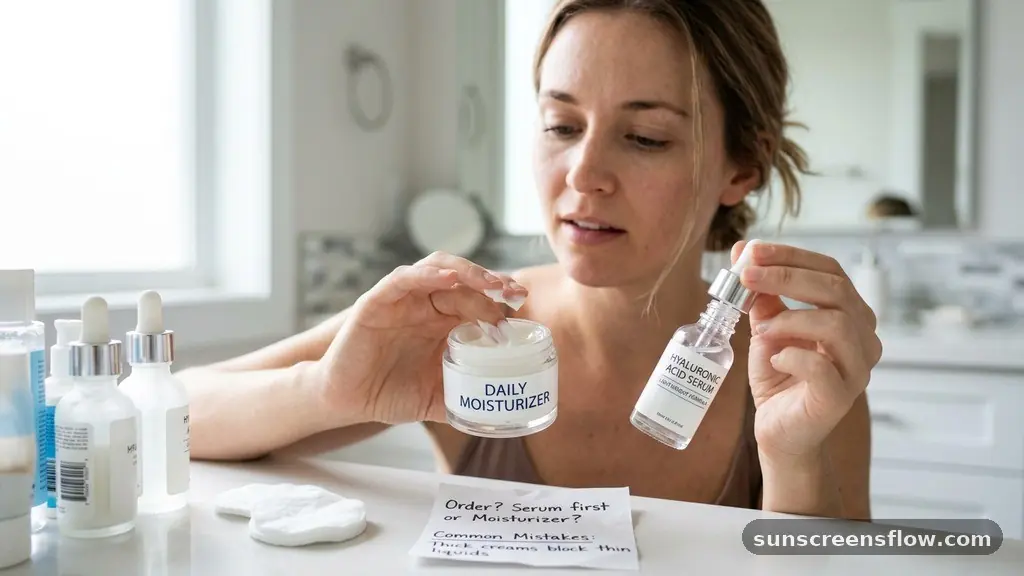
Many people inadvertently sabotage their own efforts by applying products in the wrong sequence or by not allowing enough time for absorption. A very common error is mixing products that shouldn’t be combined or applying too many products at once. For instance, applying a high-strength retinol serum after a heavy moisturizer will significantly dampen its effects, but applying it too close to a vitamin C serum can sometimes lead to irritation.
Another frequent mistake is ignoring the pH level of your products. Some ingredients, like certain forms of vitamin C, require a lower pH to be effective.
If you apply a cream with a higher pH before your vitamin C serum, you may alter the environment enough to render the vitamin C inactive. While this is more of an advanced concern, it underscores why sticking to a “light-to-heavy” and “treatment-to-protection” framework is the safest bet for most users.
| Product Type | Primary Function | Application Order |
|---|---|---|
| Cleanser | Removes impurities | 1st |
| Serum | Targeted treatment | 2nd |
| Moisturizer | Hydration & Sealing | 3rd |
| Sunscreen | UV Protection | 4th (Daytime) |
Addressing Specific Skin Concerns: Dry vs. Oily Skin
Does the order change depending on your skin type? Generally, no. Regardless of whether you have oily, dry, or combination skin, the logic of layering skincare remains consistent.
However, the type of moisturizer or serum you choose will change. For oily skin, you might opt for a lightweight, non-comedogenic serum followed by a gel-based moisturizer. For dry skin, you might use a richer serum followed by a heavy cream or even a few drops of facial oils to provide an extra layer of protection.
The goal is always to address the skin’s needs without overloading it. For those with oily skin, the fear of “too many products” often leads to skipping the moisturizer, which is a mistake. Even oily skin needs hydration; if you strip away all moisture, your skin may overcompensate by producing more oil.
Instead, use a serum that balances oil production and a lightweight moisturizer that supports the barrier without clogging pores. The order remains the same; only the textures and ingredients change.
The Role of Sun Protection Factor (SPF)
It is important to remember that your sun protection factor, or sunscreen, is the final step in any daytime routine. Sunscreen is designed to sit on top of the skin to reflect or absorb UV radiation.
If you apply a serum or moisturizer on top of your sunscreen, you are effectively diluting or disrupting that protective film. This is why sunscreen is always the last item applied before makeup.
If you are using a moisturizer that contains SPF, you should still apply your serum first. The serum will absorb into the skin, while the moisturizer/SPF hybrid will sit on the surface to provide both hydration and UV defense. This is a common point of confusion, but the rule remains: anything that needs to penetrate the skin (like a treatment serum) must go on first, and anything that needs to sit on the surface (like sun protection) goes on last.
Essential Tips for Effective Product Layering
To ensure your routine is as effective as possible, consider these best practices for application:
- Apply products to slightly damp skin to enhance the absorption of humectants.
- Wait 60 to 90 seconds between layers to allow for proper absorption and prevent pilling.
- Use only a pea-sized amount of serum, as these products are highly concentrated and a little goes a long way.
- Always check the instructions provided by the brand, as some specialized treatments may have unique application requirements.
- Consider the time of day; some serums are specifically designed for nighttime use due to photosensitivity.
- Focus on the neck and décolletage, as these areas often show signs of aging as quickly as the face and require the same level of care.
Addressing Topical Gaps: Can You Mix Serums?
A frequently asked question is whether you can apply multiple serums at once. The answer is yes, but you must be careful. If you are using multiple serums, apply them in order of thinnest to thickest.
However, avoid layering too many active ingredients at once, as this can lead to irritation or render the products ineffective. For example, layering a harsh exfoliating serum with a strong retinol serum can severely compromise your skin barrier.
If you have multiple concerns, it is often better to split your serums between your morning and evening routines. Use your antioxidant-rich serums (like vitamin C) in the morning to protect against environmental damage, and use your reparative or resurfacing serums (like retinol or AHAs) at night. This approach allows your skin to process the ingredients more effectively without the risk of over-stimulation.
FAQ
Do I really need a serum if I use a good moisturizer?
While a good moisturizer is essential for barrier health, it typically lacks the concentrated active ingredients needed to address specific skin concerns like fine lines, dark spots, or acne. A serum acts as a targeted treatment that works deeper in the skin than a standard moisturizer.
Can I apply serum after my moisturizer?
Applying serum after moisturizer is generally discouraged because the heavier, often oil-rich consistency of the moisturizer will block the serum from penetrating the skin. To get the most out of your treatment, always apply the serum to clean skin first and allow it to absorb fully.
Does the order of application change at night?
The fundamental rule of applying products from thinnest to thickest remains the same regardless of the time of day. Whether it is morning or night, the serum should always go on first to ensure that the potent actives are absorbed directly into the skin before the occlusive moisturizer seals them in.
How long should I wait between applying serum and moisturizer?
A good rule of thumb is to wait about one to two minutes between each step. This gives the serum enough time to sink into the skin, preventing the products from mixing on the surface or pilling, which ensures that each layer can perform its intended function effectively.
Conclusion
Mastering the order of your skincare products is one of the simplest yet most effective ways to improve your results. By remembering that serums belong on clean skin to maximize the absorption rate of their potent active ingredients, and that moisturizers serve as the vital final step to support the skin barrier and prevent trans-epidermal water loss, you can ensure your products are working in harmony rather than against each other.
Always prioritize consistency, wait for your products to absorb, and tailor your choices to your specific skin type. With the correct layering technique, you can elevate your skincare routine from a simple habit to a highly effective, results-driven ritual that keeps your skin healthy, hydrated, and protected for years to come.


