


Determining exactly when should you apply vitamin c serum is a foundational step in building an effective skincare regimen. While many enthusiasts reach for this potent bottle at random, timing is actually a critical factor in how well the active ingredients perform on your complexion.
Because this ingredient is highly reactive, knowing whether it belongs in your morning routine or evening ritual can significantly impact your results, particularly when addressing concerns like hyperpigmentation, dullness, and signs of premature aging. By aligning your application with the biological needs of your skin and the chemical stability of the formula, you can maximize the benefits of this powerhouse antioxidant.
The Science Behind Morning Application

Most dermatologists agree that the morning skincare routine is the ideal window for using a vitamin C serum. The primary reason for this timing is the nature of the product as a form of antioxidant protection.
Throughout the day, your skin is under constant assault from environmental stressors, including pollution, smoke, and infrared radiation. When you apply a stable form of the serum in the morning, you are essentially arming your skin with a shield against these external aggressors.
During the day, your skin is exposed to high levels of UV rays, which lead to the formation of free radicals. These unstable molecules damage cellular structures and contribute to sun damage, which manifests as dark spots, fine lines, and loss of elasticity. Vitamin C neutralizes these free radicals by donating electrons, thereby preventing the oxidative cascade that causes structural damage to the skin.
By applying it before you leave the house, you provide your skin with a reservoir of antioxidants that works in tandem with your broad-spectrum sunscreen. While vitamin C is not a replacement for SPF, it acts as a secondary line of defense that boosts the efficacy of your sun protection efforts.
Understanding the Role of Ascorbic Acid
The most common and potent form of this ingredient is L-ascorbic acid. This specific compound is highly effective because it is the most researched form of vitamin C, known for its ability to penetrate the skin barrier efficiently when formulated correctly.
However, it is also notoriously unstable. It is highly sensitive to light, heat, and air exposure, all of which can lead to rapid oxidation.
When you purchase a high-quality serum, you will often notice it comes in an opaque or amber-colored bottle. This is not just for aesthetic appeal; it is a functional necessity to protect the formula from light degradation. To ensure you are getting the most out of your investment, you must store it in a cool, dark place, such as a vanity drawer or a cabinet away from the bathroom window.
If you notice a change in color—typically shifting from a clear or light straw hue to a deep orange or brown—this is one of the classic signs of oxidation. Once the product has oxidized, it loses its potency and may even cause mild irritation, meaning it is time to discard the bottle.
Layering Your Products for Maximum Absorption
A common point of confusion is where exactly the serum fits into your routine, specifically regarding order of operations. The general rule of thumb in dermatology is to apply products from the thinnest serum consistency to the thickest cream. Because vitamin C serums are generally lightweight and water-based, they should be applied after cleansing and toning but before your heavier creams or oils.
The ph levels of your skin and the product itself also play a role in absorption. L-ascorbic acid requires a low pH (typically below 3.5) to penetrate the skin barrier effectively. If you apply a high-pH moisturizer immediately before your serum, you may disrupt the acidic environment required for the vitamin C to work.
By applying the serum to clean, dry skin, you allow the active ingredients to penetrate the epidermis directly. Wait about two to three minutes for the serum to absorb fully before moving on to your moisturizer. This ensures that the serum is not diluted or blocked by the occlusive ingredients found in your heavier creams.
Can You Use Vitamin C at Night?
While the morning is the preferred time for most, there are instances where using vitamin C in your evening routine makes sense. Some individuals find that their skin is too sensitive to combine vitamin C with other morning actives, or they simply prefer to focus their morning routine on hydration and sun protection. Applying the serum at night does not negate its benefits; it simply shifts its role from a daytime defender to a nighttime repair agent.
At night, the skin enters a restorative phase. Vitamin C remains a potent ingredient for supporting collagen production and fading existing hyperpigmentation. If you decide to use it in the evening, you can still reap the brightening benefits.
However, you must be cautious about the other products in your routine. If you are using a retinol or high-strength chemical exfoliant at night, applying vitamin C simultaneously can lead to significant irritation. Because both vitamin C and chemical exfoliants (like glycolic acid) are acidic, layering them together can compromise your moisture barrier and lead to redness, stinging, or peeling.
Navigating Ingredients to Avoid Mixing
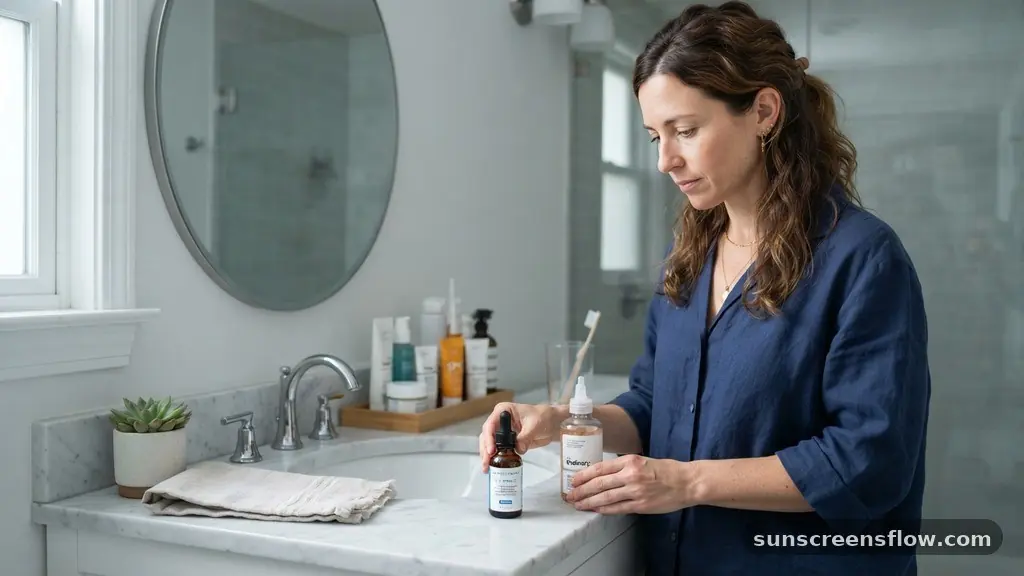
To achieve the best results, you must be aware of ingredients to avoid mixing with your vitamin C serum. Because of its specific pH requirements and oxidative nature, vitamin C does not always play well with others.
The most common conflict occurs with AHAs and BHAs, such as glycolic, lactic, or salicylic acid. These exfoliants can lower the pH of your skin too far, leading to irritation, or they may destabilize the vitamin C molecule, rendering it ineffective.
Another popular ingredient that often causes confusion is niacinamide. In the past, it was thought that vitamin C and niacinamide cancelled each other out or caused flushing. While modern, stabilized formulations have made this concern less urgent, it is still generally advised to space them out or use them at different times of the day to ensure both ingredients remain at their peak efficacy.
| Ingredient | Compatibility | Best Practice |
|---|---|---|
| Sunscreen | Excellent | Apply after serum in the morning |
| Retinol | Poor | Use in separate routines (e.g., Vitamin C AM, Retinol PM) |
| Niacinamide | Moderate | Wait 10-15 minutes between applications |
| Glycolic Acid | Poor | Use on alternating nights/mornings |
Addressing Specific Concerns: Dry Skin and Sensitivity
If you have dry skin, you might be hesitant to add an acidic serum to your routine, as it can sometimes feel drying or tight. However, vitamin C is beneficial for all skin types, including those prone to dryness. The trick lies in the formulation you choose.
Look for serums that include hydrating humectants like hyaluronic acid, glycerin, or vitamin E. These ingredients help buffer the acidity of the vitamin C and provide an additional layer of moisture to keep the skin barrier supple.
For those with highly sensitive skin, starting with a lower concentration is vital. Many brands offer vitamin C in concentrations ranging from 5% to 20%. If you are a beginner, start with a lower percentage to allow your skin to acclimate.
You might also consider using a derivative of vitamin C, such as sodium ascorbyl phosphate or magnesium ascorbyl phosphate. While these are less potent than pure L-ascorbic acid, they are much more stable and significantly less irritating, making them an excellent choice for those who cannot tolerate the lower pH required by traditional serums.
The Long-Term Benefits for Collagen and Pigmentation
Consistency is the secret weapon when it comes to any skincare active, but it is particularly crucial for vitamin C. The benefits of this ingredient are cumulative. While you might notice an immediate glow after a few days due to the brightening effect of the antioxidants, the deeper structural changes—such as increased collagen production and the fading of stubborn hyperpigmentation—take weeks or even months to manifest.
When you apply vitamin C regularly, you are actively encouraging the skin’s fibroblasts to produce more collagen. This structural protein is responsible for the firmness and bounce of youthful skin. As we age, collagen degradation accelerates due to both internal aging and external environmental damage.
By providing the skin with a steady supply of vitamin C, you are giving it the necessary building blocks to maintain its integrity. Furthermore, by inhibiting the enzyme tyrosinase, which is responsible for melanin production, vitamin C helps to prevent the formation of new dark spots while simultaneously lightening existing ones.
Common Mistakes to Avoid
Even with the best intentions, many people make mistakes that render their expensive serum useless. One of the most common errors is failing to wait for the product to absorb.
If you apply your moisturizer immediately after your serum, you are essentially wiping away the active ingredients before they have a chance to penetrate the skin. Always give your skin a few minutes to “drink” the serum.
Another mistake is neglecting the neck and décolletage. These areas are just as prone to sun damage and collagen loss as the face, yet they are frequently ignored. When applying your serum, make sure to bring it down to your neck and upper chest to ensure a uniform appearance.
Finally, avoid the temptation to hoard your serum. Because of its instability, a bottle of vitamin C is best used within three to six months of opening. Buying a massive bottle that will sit on your shelf for a year is a waste of money, as the efficacy will drop significantly long before you reach the bottom of the container.
Topical Gaps: Debunking Myths About Application
There is a pervasive myth that vitamin C makes the skin more sensitive to the sun, leading people to believe they should only use it at night. This is factually incorrect. Vitamin C is a photoprotective agent; it does not increase sun sensitivity.
In fact, it does the exact opposite by mitigating the oxidative stress caused by UV exposure. The confusion likely stems from the fact that many other active ingredients, like retinol and AHAs, do increase photosensitivity, leading people to lump all “active” serums into the same “night-only” category.
Another gap in common knowledge is the importance of the vehicle in which the vitamin C is delivered. Some serums use anhydrous (water-free) formulas to improve stability. If you are using an oil-based or silicone-based vitamin C serum, the application rules change slightly.
These products often have a thicker consistency and may take longer to sink in. They can be applied after your water-based serums but before your heaviest creams. Always check the texture of your specific product to determine its place in your routine, rather than relying on a one-size-fits-all approach.
Frequently Asked Questions
Do I really need to use vitamin C every single day?
For the best results, yes. Because vitamin C works as an antioxidant shield, its protective benefits are most effective when applied daily. Skipping days prevents you from maintaining the necessary levels of the antioxidant in your skin to combat environmental damage consistently.
What should I do if my vitamin C serum stings upon application?
Mild tingling is normal, especially with high-potency L-ascorbic acid. However, if the stinging is persistent or causes redness, your skin barrier may be compromised. Try switching to a lower concentration, applying it every other day, or using a derivative form that is gentler on the skin.
Can I apply vitamin C serum around my eyes?
You can, provided the formula is specifically designed for the delicate eye area or is non-irritating. The skin around the eyes is very thin, so avoid high-concentration formulas that might cause burning. Using a dedicated eye serum with vitamin C is often the safest and most effective approach.
How do I know if my vitamin C serum has gone bad?
The most reliable indicators are color and scent. If your serum has turned a dark yellow, orange, or brown, it has oxidized and is no longer effective. Additionally, if the product develops a strange, metallic, or “hot dog water” smell, it is a sign that the chemical integrity has failed.
As you have explored, the question of when should you apply vitamin C serum is answered by a combination of biological timing and chemical stability. By incorporating this potent antioxidant into your morning routine, you provide your skin with the defense it needs to combat daily environmental stressors.
Remember to store your product carefully, respect the order of application, and remain consistent with your usage to see the long-term benefits of improved texture, brightness, and collagen support. Whether you are aiming to treat hyperpigmentation or simply want to maintain a healthy, resilient complexion, the strategic application of vitamin C remains one of the most effective steps you can take in your skincare journey.


