


Knowing exactly when to apply serum in your daily regimen changes how your skin reacts to the products you invest in. Many people own high-quality treatments but fail to see results because they layer them in the wrong sequence, preventing active ingredients from reaching the deeper layers of the epidermis.
By understanding the science of product viscosity and absorption, you can ensure that every drop of your serum works at maximum efficiency. This article breaks down the precise timing and order required to build a effective skincare routine that delivers visible improvements to your complexion.
The Fundamental Rule of Skincare Layering

The most important principle in skincare is to apply products from the thinnest consistency to the thickest consistency. This rule exists because products with a lower molecular weight penetrate the skin barrier most effectively when they are closest to the skin surface.
Serums are typically water-based, lightweight formulations designed to deliver high concentrations of active ingredients directly into the dermis. If you apply a heavy cream or a rich oil before your serum, the larger molecules in those products create a physical barrier that blocks the serum from reaching its target.
Think of your skin as a sponge. If the sponge is already saturated with a thick, occlusive layer, it cannot absorb the delicate, nutrient-dense serum you are trying to apply. By using your cleanser and toner first, you remove surface debris and balance your pH levels, creating a clean canvas.
Applying your serum immediately after toning allows the product to sink in rapidly. Once the serum feels absorbed—usually within sixty seconds—you can move on to your heavier moisturizer to seal everything in.
Morning Routine: Environmental Defense
Your morning routine serves a specific purpose: protection. Throughout the day, your skin faces constant assault from environmental stressors like UV rays, pollution, and high-energy visible light, also known as blue light.
Using a serum during your morning routine is your first line of defense against these invisible aggressors. Antioxidant-rich formulas, particularly those containing Vitamin C, are ideal for this time of day because they neutralize free radicals before they can cause oxidative damage to your skin cells.
When you apply serum in the morning, you should place it after your toner but before your moisturizer and SPF. Vitamin C is notoriously unstable, so it performs best when applied to clean, dry skin.
By locking it in with a moisturizer and a broad-spectrum sunscreen, you stabilize the active ingredients and ensure they remain effective for hours. Remember that sunscreen is the final, non-negotiable step in your morning sequence; no serum can replace the protection provided by a high-SPF product.
Nighttime Routine: Active Repair
While your morning routine focuses on shielding, your nighttime routine should prioritize repair. At night, your skin enters a natural recovery phase, making it the perfect time to introduce potent active ingredients that might be too sensitive for daytime exposure.
Retinol, peptides, and various acids are best utilized during your evening skincare routine. Because your skin doesn’t need to fight off environmental pollutants while you sleep, it can focus its energy on cellular turnover and collagen production.
When applying serums at night, the same viscosity rule applies. If you are using a hydrating serum alongside a treatment serum, apply the thinner one first.
Many people find that applying their treatment serum on slightly damp skin can increase its potency, though you should always check the manufacturer’s instructions for specific ingredients like retinol, which are sometimes better applied to completely dry skin to minimize irritation. Following your serum with a slightly heavier night cream helps prevent transepidermal water loss while you rest.
Understanding Daytime vs. Nighttime Serum Strategies
Choosing between daytime vs. nighttime serum strategies often comes down to the specific goals you have for your skin. Daytime serums are generally focused on brightening, antioxidant protection, and hydration.
Nighttime serums, conversely, are often formulated to target specific concerns like hyperpigmentation, fine lines, or acne. It is entirely possible to use different serums at different times of the day, provided they do not contain conflicting ingredients.
| Feature | Daytime Serum | Nighttime Serum |
|---|---|---|
| Primary Goal | Protection & Defense | Repair & Regeneration |
| Key Ingredients | Vitamin C, Niacinamide | Retinol, AHAs, BHAs |
| Texture | Lightweight, fast-absorbing | Can be richer or oil-based |
| Final Step | Sunscreen (SPF) | Moisturizer/Night Cream |
This distinction is vital for long-term skin health. If you use a heavy, oil-based serum during the day, it might interfere with your makeup or feel uncomfortable under SPF.
Similarly, if you use strong chemical exfoliants like AHAs or BHAs during the day without proper sun protection, you risk sensitivity. By separating your products based on their intended function, you allow your skin to benefit from a diverse range of nutrients without over-taxing your moisture barrier.
Addressing Topical Gaps: Common Misconceptions
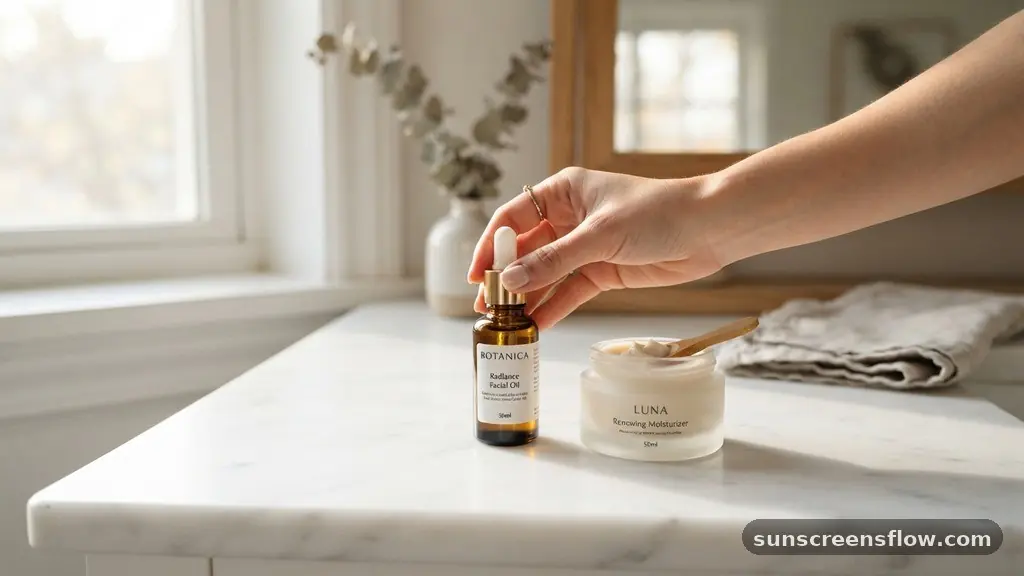
Many users struggle with the order of operations when it comes to specific product types. One major gap in knowledge is the role of facial oils. People often ask if they should apply serum or oil first.
Because oil has a high molecular weight and is highly occlusive, it should always be the final step before your moisturizer or the very last step in your routine. Applying oil before a water-based serum is a recipe for product failure, as the oil will effectively waterproof your skin and prevent the serum from penetrating.
Another common gap involves the use of multiple serums. If you want to use more than one, you should wait for the first one to dry completely before applying the next. This prevents “pilling,” which is that annoying situation where your products ball up on your skin.
If you are layering, always go from the thinnest watery texture to the slightly thicker, gel-like texture. If you have any doubt about the order, follow the thinnest-to-thickest rule, and you will rarely go wrong.
Common Mistakes to Avoid During Application
It is easy to get caught up in an elaborate routine, but simplicity is often more effective. One of the most common mistakes is using too much product. Serums are highly concentrated, so a few drops are usually sufficient to cover the entire face and neck.
Applying excessive amounts not only wastes expensive product but can also leave a sticky residue that interferes with your subsequent skincare steps. Another frequent error is forgetting the neck and décolletage, which are just as prone to signs of aging as the face.
You must also avoid mixing incompatible actives. For instance, you should avoid mixing retinol with strong chemical exfoliants like AHAs or BHAs in the same application, as this can severely compromise your skin barrier and lead to redness, peeling, and inflammation.
If you want to use both, alternate them between morning and evening, or use them on different days of the week. Always listen to your skin; if it feels tight, stinging, or overly dry, you are likely over-applying or using too many harsh actives.
The Role of Molecular Weight in Absorption
The science behind when to apply serum is rooted in molecular weight. Skincare ingredients are measured in Daltons, and the skin barrier is designed to keep foreign substances out.
To be effective, an active ingredient must be small enough to pass through the stratum corneum. Water-based serums are specifically engineered with small molecules that can navigate these microscopic gaps.
When you layer a heavy cream over a serum, you aren’t just adding moisture; you are trapping the serum against the skin. This creates a micro-environment that forces the ingredients into the skin more effectively. This is why hydration is such a crucial component of any routine.
If your skin is dehydrated, it becomes less permeable. Applying a hydrating serum while your skin is still slightly damp from a toner or a gentle wash can help the product penetrate more deeply than if you applied it to bone-dry skin.
Building a Consistent Skincare Routine
Consistency is the secret ingredient to any successful skincare journey. It takes time for the skin cells to cycle, and results from serums—whether they are for brightening, firming, or clearing acne—rarely appear overnight.
You should commit to your routine for at least six to eight weeks before deciding if a product is working for you. Keep a simple log if you are testing new products to see how your skin reacts to different timing strategies.
- Cleanse your face thoroughly to remove dirt and excess sebum.
- Apply a toner or essence to balance skin pH and provide a base of hydration.
- Dispense 2-3 drops of serum onto your fingertips.
- Gently press the serum into your skin using an upward motion.
- Allow the product to absorb for at least 60 seconds.
- Seal the serum with a moisturizer suited to your skin type.
- Apply broad-spectrum sunscreen as the final step during the day.
By following this step-by-step application order, you ensure that your skin receives the maximum benefit from your investment. Remember that your skin’s needs can change based on the season, your stress levels, and even your diet, so don’t be afraid to adjust your routine slightly if you notice your skin feels different.
FAQ: Common Questions About Serum Usage
Do I really need to wait for my serum to dry before applying moisturizer?
Yes, waiting for your serum to absorb ensures that the ingredients have penetrated the skin barrier. If you apply a thick moisturizer immediately, you may dilute the serum or cause it to pill on the surface of your skin, which reduces its overall efficacy.
Can I apply serum around my eyes?
It depends on the formula. If the serum is specifically designed for the eye area, it is safe. However, many facial serums contain active ingredients like strong acids or retinols that are too harsh for the delicate, thin skin around the eyes and may cause irritation.
Is it okay to use multiple serums at the same time?
You can use multiple serums, but you must be careful about ingredient compatibility. Never mix actives that can cause irritation, such as Vitamin C and retinol, in the same application. Always layer from the thinnest consistency to the thickest to ensure proper absorption and prevent product buildup.
Does the order of application change if I have oily skin?
The fundamental rule of applying from thinnest to thickest remains the same regardless of skin type. However, if you have oily skin, you might choose lighter, water-based serums and a gel-based moisturizer. The sequence of application should never be compromised, as the physics of absorption do not change.
Mastering Your Daily Regimen
Learning when to apply serum is a transformative step in your personal care journey. By respecting the order of operations—cleansing, toning, applying serums, and locking in moisture—you allow your high-performance ingredients to function exactly as intended. Whether you are aiming to reduce the appearance of fine lines, brighten a dull complexion, or simply maintain a healthy barrier, the timing of your application is the anchor of your success.
Pay attention to your skin’s unique signals. If a particular combination feels heavy or causes sensitivity, adjust your timing or rotate your products to different times of day. Consistency and patience will always yield better results than rushing through your steps.
Take a moment each morning and night to be intentional with your routine, and you will soon see the benefits of a well-structured application strategy. If you have questions about your specific products, don’t hesitate to consult a dermatologist to tailor your regimen to your specific needs.
Meta Description: Master the art of when to apply serum for maximum results. Learn the correct step-by-step application order, ingredient layering, and daily timing tips.


