


Mastering the precise timing and sequence of your skincare regimen is the difference between products that sit uselessly on the surface of your skin and those that deliver transformative results. When considering when to apply serum on face, the general rule is to move from the thinnest, most potent formulas to the heaviest, most occlusive creams. Because serums are engineered with high concentrations of active ingredients designed to penetrate deep into the dermis, placing them correctly in your sequence ensures they are not blocked by thicker substances.
Think of your skin as a transition zone: you are preparing the canvas, treating the concerns, and then sealing in the benefits. If you apply a heavy moisturizer before your treatment product, the large molecular structure of the cream creates a barrier that prevents the serum’s specialized molecules from reaching their target. By following a logical, science-backed order, you optimize absorption, minimize irritation, and maximize the efficacy of your investment.
The Foundation of Proper Application: Cleansing and Toning
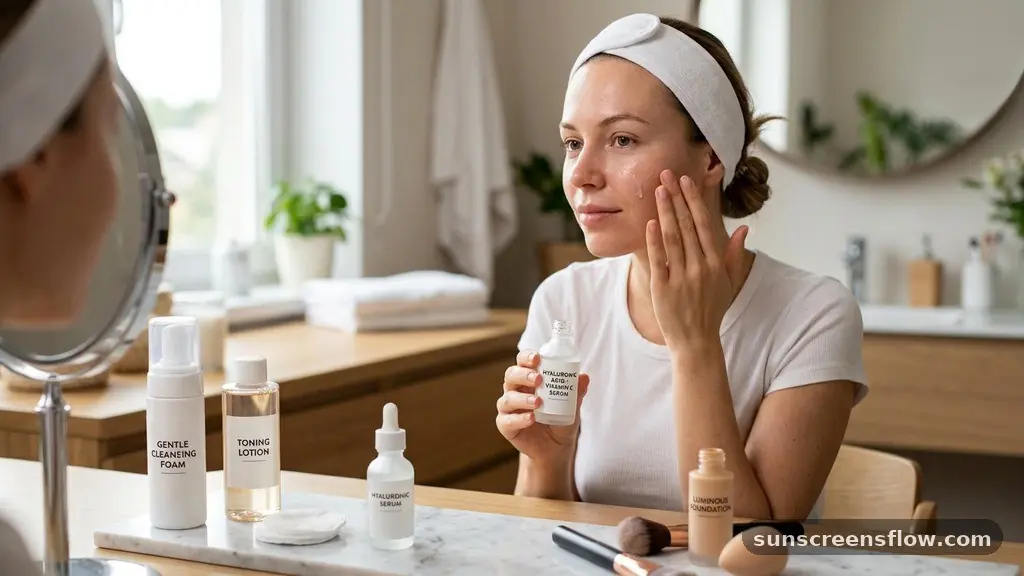
Before you even consider which serum to reach for, you must ensure your skin is a clean slate. Cleansing: Remove dirt, oil, and environmental pollutants that accumulate throughout the day or while you sleep. A gentle facial cleanser is essential here; it washes away the grime that could otherwise clog your pores or react negatively with your active treatments. If you are starting with a dirty or oily surface, the serum cannot make direct contact with the skin cells it is meant to nourish.
Following the cleanse, many people incorporate a toner. While toners were once synonymous with harsh, alcohol-based astringents, modern formulations are designed to balance the skin’s pH and provide a secondary layer of hydration. Applying a toner while the skin is still slightly damp is an excellent way to prepare the surface.
The moisture left behind by your cleanser or toner acts as a vehicle for the subsequent products. This is where Why Damp Skin Matters becomes a critical concept in your routine. When your skin is slightly hydrated, it acts like a sponge, providing a plumping effect. This moisture barrier allows the serum to glide on more evenly and penetrate more effectively, ensuring that high-potency ingredients like hyaluronic acid can pull that water into the deeper layers of the skin, maximizing the hydrating benefits rather than just sitting on the top.
Understanding the Texture Hierarchy
The golden rule of skincare layering is consistency. You should almost always apply your products from the lightest, most watery texture to the thickest, most emollient texture.
Serums are typically water-based or lightweight gels, while moisturizers are often creams or balms. If you apply an occlusive cream first, you have effectively created a physical seal that prevents your serum from being absorbed.
To visualize this, imagine your skin has a limited capacity for absorption at any one time. If you fill that capacity with a heavy butter or oil, the active, water-soluble ingredients in your serum have nowhere to go. They will simply evaporate or sit on the surface, potentially causing a sticky residue or, worse, leading to product pilling.
By starting with the serum, you allow the specialized, high-performance ingredients to sink in first. Once these have had a moment to absorb—usually about 60 seconds—you then follow up with your moisturizer, which serves the secondary purpose of locking everything in. This creates a “sandwich” effect where the serum is the nutrient-dense filling, and the moisturizer is the protective bread that prevents transepidermal water loss.
Daytime Versus Nighttime Applications
The timing of your application depends heavily on the ingredients within the bottle. Daytime Versus Nighttime Applications are not just about convenience; they are about protecting your skin from the environment versus repairing it while you rest. Morning Routines should focus on protection and prevention. During the day, your skin is exposed to UV radiation, pollution, and blue light. Therefore, a vitamin C serum is a staple for most morning regimens.
It acts as an antioxidant, neutralizing free radicals that cause premature aging. Because vitamin C is often sensitive to light, applying it in the morning under your SPF is the perfect way to boost your sun protection.
In contrast, Evening Routines are the time for heavy lifting and cellular turnover. This is when you want to reach for your more aggressive treatments, such as retinol or AHAs (alpha hydroxy acids). Retinol, a derivative of vitamin A, encourages cell turnover but can make your skin more sensitive to sunlight, which is why it is strictly reserved for the evening.
By applying these at night, you allow your skin to undergo its natural repair cycle without the interference of environmental stressors. Using these products at the correct time of day ensures you are working with your body’s natural circadian rhythm rather than against it.
The Science of Layering Multiple Serums
Many skincare enthusiasts find themselves with more than one serum. If you are using multiple treatments, you must apply them in the correct order to avoid neutralizing ingredients or causing irritation.
When Layering Multiple Serums, start with the one that addresses your most urgent skin concern. If you have a specific target—like dark spots or fine lines—apply that treatment first so it has the most direct contact with your skin.
If you are using different types of active ingredients, consider their pH levels. For example, if you are using an AHA and a vitamin C, it is often best to space them out or use them at different times of the day to prevent skin sensitivity.
If you must use them together, wait for the first serum to dry completely before applying the next. This prevents the products from mixing on the surface, which can lead to a change in the pH of the serum, potentially rendering it ineffective.
| Product Type | Best Time to Use | Primary Benefit |
|---|---|---|
| Vitamin C Serum | Morning | Antioxidant protection |
| Hyaluronic Acid | Day or Night | Intense hydration |
| Retinol | Night Only | Cellular renewal/Anti-aging |
| AHA/BHA Exfoliants | Night Only | Surface refining |
Common Mistakes to Avoid
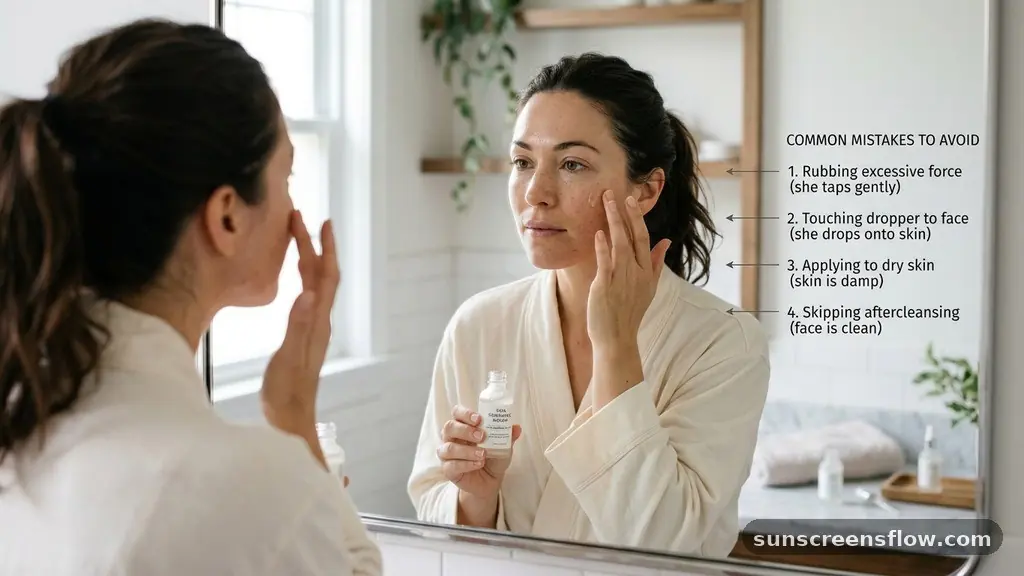
Even with the best products, you can easily sabotage your results by ignoring basic application rules. Common Mistakes to Avoid include applying serum to dry skin, using too much product, or skipping the waiting period between steps. Many people believe that applying more serum will yield faster results, but this is a fallacy. Your skin can only absorb a certain amount of product; excess serum will just sit on your face, potentially causing breakouts or causing your makeup to clump throughout the day.
Another common error is applying serum over sunscreen or makeup. Your serum must be the first layer after cleansing and toning. If you apply it over your moisturizer or SPF, it will never reach the skin.
Additionally, ensure you are not using incompatible ingredients together. For instance, pairing high-strength retinol with potent exfoliants can lead to compromised skin barriers, redness, and peeling. Always introduce new actives slowly to see how your skin reacts.
Remember, skincare is a marathon, not a sprint. Consistency and patience are far more important than the quantity of product you apply in a single session.
The Role of Hyaluronic Acid and Hydration
Hyaluronic acid has become a cornerstone of modern skincare, and for good reason. It is a humectant, meaning it draws moisture from the environment into the skin. However, if you live in a very dry climate and apply hyaluronic acid to dry skin, it can actually pull moisture out of your skin.
This is why the instruction to apply it to damp skin is so crucial. When you apply this serum to a face that has just been misted or lightly patted with water, the hyaluronic acid traps that water against your skin, providing a plumping effect that smooths out fine lines and gives you a dewy glow.
Because it is so gentle and hydrating, it is one of the few serums that can be used safely in both your morning and evening routines. It acts as a perfect base for other, more active treatments.
If you are layering, always put your watery, hydrating serums on first, followed by your treatment serums, and finally your heavier creams. This creates a gradient of hydration that keeps your skin balanced throughout the day.
Integrating Retinol into Your Routine
Retinol is arguably the most effective anti-aging ingredient available over-the-counter, but it requires a strategic approach. Because it is a powerful active ingredient, it should not be applied haphazardly. When you are ready to incorporate it, start by using it only two or three times a week at night.
Apply it after cleansing and toning, and ensure your skin is completely dry. Applying retinol to damp skin can increase its potency, which may lead to irritation for those with sensitive skin.
After applying your retinol, follow up with a high-quality moisturizer. If you find that the retinol is still too drying, you can try the “sandwich method,” where you apply a thin layer of moisturizer, then your retinol, then another layer of moisturizer. This buffers the intensity of the treatment while still allowing the ingredients to work their magic.
Always remember to use sunscreen the next morning, as retinol makes your skin more susceptible to UV damage. By respecting the strength of your products, you can reap the benefits of smoother, firmer skin without the dreaded “retinol burn.”
Addressing Topical Gaps: When Things Go Wrong
A common question is: “What happens if I use my products in the wrong order?” In most cases, the worst that will happen is that you won’t see the results you were hoping for. However, in some instances, you might experience irritation.
For example, if you apply a strong AHA exfoliant and then immediately apply a vitamin C serum, the change in pH can cause a stinging sensation. If you ever feel burning, wash the product off immediately and stick to a simple, soothing moisturizer for a few days to repair your skin barrier.
Another gap often overlooked is the importance of the neck and décolletage. Many people stop their serum application at the jawline. Your neck and chest are just as prone to aging and sun damage as your face.
When you apply your serum, extend the application down to your collarbone. This ensures that these often-neglected areas receive the same level of care as your face, preventing the “face-neck disparity” where your face looks youthful while your neck shows signs of aging. Consistency across these zones is key to a cohesive, healthy appearance.
The Importance of Patience and Observation
Finally, the most important part of your skincare journey is observing how your specific skin type responds. No two people have the same skin, and what works for a friend might cause you to break out.
Keep a close eye on how your skin feels after you introduce a new product. If you notice persistent redness, tightness, or acne, you may need to adjust your sequence or the frequency of your applications.
- Always cleanse your face thoroughly before applying any treatment.
- Apply products from the thinnest consistency to the thickest consistency.
- Allow each product to absorb for at least 60 seconds before moving to the next.
- Use antioxidant-rich serums in the morning to protect against environmental damage.
- Use regenerative actives like retinol or AHAs in the evening to repair the skin.
- Don’t forget to extend your serum application to your neck and chest area.
- Listen to your skin; if it feels irritated, take a break from active ingredients.
By following these guidelines and understanding the science behind when to apply serum on face, you can transform your skincare routine from a chore into an effective, results-driven ritual. Remember that the goal is not to use as many products as possible, but to use the right products at the right time in the right order.
FAQ
Can I apply serum after moisturizer?
Generally, no. Serums are thinner and contain more concentrated actives that need direct contact with the skin. Applying them over a moisturizer acts as a barrier, preventing absorption. Only apply serum after moisturizer if the product is specifically labeled as an oil-based finishing serum meant to seal in hydration.
What are common serum mistakes?
The most common mistakes include applying serums in the wrong order, using too much product, skipping the waiting time between layers, and applying active serums to wet skin that might cause irritation. Another major error is neglecting to use sunscreen the day after using active treatments like retinol or AHAs.
Do I really need to wait between applying skincare steps?
Yes, waiting about 60 seconds between products is beneficial. This allows the ingredients to penetrate the skin and ensures the pH balance of the product isn’t disrupted by the next layer. It also prevents the common issue of product “pilling,” where layers start to clump or roll off the skin.
Should I use a serum every single day?
Most hydrating serums, like those containing hyaluronic acid, can and should be used daily. However, treatment serums containing strong actives like retinol or high-concentration acids should be introduced gradually. Start by using them a few times a week to assess your skin’s tolerance before moving to daily use.
In summary, knowing when to apply serum on face is essential for achieving a radiant, healthy complexion. By prioritizing a clean base, layering from thin to thick, and aligning your active ingredients with the time of day, you provide your skin with the best possible environment for repair and protection. Whether you are using a simple hydrating serum or a complex cocktail of anti-aging treatments, order matters.
Stay consistent, monitor your skin’s unique needs, and always finish your morning routine with a broad-spectrum SPF to protect the progress you have made. With these practices, you can effectively harness the power of your skincare products and maintain long-term skin health.


