

Achieving optimal results from your skincare routine requires more than just high-quality products; it demands a strategic approach to application. Many enthusiasts wonder how long to wait between serum and moisturizer to ensure that each layer performs at its peak. While there is no universal law carved in stone, the general consensus among dermatologists is that you should wait until the serum feels slightly tacky or has visibly absorbed into the skin.
This typically takes anywhere from 30 seconds to two minutes, depending on the formulation and the ambient humidity of your environment. Understanding the science of skincare layering—specifically how active ingredients interact with your skin barrier—will help you maximize product efficacy and avoid the common pitfall of pilling, where products ball up on the skin surface.
The Science of Absorption Rates and Product Layering
To understand why timing matters, one must first consider the absorption rate of various topical formulations. Serums are designed to be lightweight, often featuring a smaller molecular structure compared to creams or lotions.
This allows them to penetrate the deeper layers of the epidermis more effectively. When you apply a heavy oil-based moisturizer immediately over a water-based serum, you risk trapping the serum on the surface or, conversely, diluting its potency before it has a chance to sink in.
The goal of layering is to respect the order of operations, moving from the thinnest consistency to the thickest. By allowing the serum to settle, you ensure that the active ingredients, such as vitamin C or retinol, have direct contact with the skin. If you rush the process, you essentially mix the products together on your palms rather than letting them function as distinct layers.
This can disrupt the pH balance of the product, potentially rendering it less effective. Think of your skin as a sponge; if it is already saturated with a thick layer, it cannot effectively soak up the targeted treatment you are trying to provide.
Why the Tacky Texture Matters in Skincare
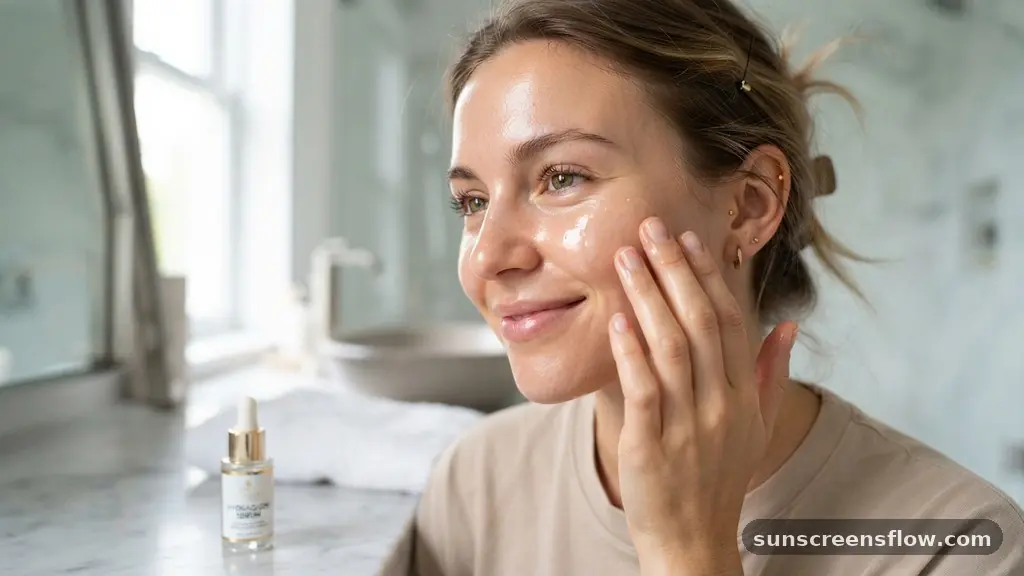
Many people mistakenly believe that the skin must be bone-dry before moving to the next step. In reality, a tacky texture—that slightly sticky feeling left behind after a serum application—is actually an ideal state for applying your next product.
This tackiness indicates that the humectants within the serum, such as hyaluronic acid, are currently working to draw moisture into the skin. Applying a moisturizer while the skin is still slightly damp or tacky can actually help “seal in” that hydration.
This technique is particularly beneficial if you are using products rich in humectants. Because humectants are hygroscopic, they pull water from the air or the deeper layers of the skin to the surface. By applying your moisturizer—which often contains occlusives—over a slightly damp, serum-treated face, you create a protective seal that prevents transepidermal water loss.
This prevents the water from evaporating into the air, effectively locking it into your skin. If you wait until the skin is completely tight and dry, you may lose the opportunity to maximize this hydration-locking effect.
The Role of Molecular Weight and Formulation
Not all serums are created equal, and the molecular weight of the ingredients plays a massive role in how quickly they absorb. A serum containing low-molecular-weight hyaluronic acid will sink into the skin almost instantly, whereas a serum containing larger molecules or suspended oils may sit on the skin for a longer period. Furthermore, the base of the product—whether it is water, alcohol, or silicone-based—will dictate the evaporation rate.
If your serum contains volatile ingredients that evaporate quickly, you have a very narrow window to apply your moisturizer before the skin starts to feel tight. Conversely, if your serum is formulated with thickeners or high concentrations of silicones, it may create a film that takes longer to set.
You can gauge the timing by touch: if your fingers slide easily across your face without any resistance, the product likely hasn’t absorbed yet. If you feel a slight “grip” or drag when you touch your skin, the serum has likely reached the optimal state for receiving a moisturizer.
Optimizing Your Routine for Different Ingredients
Different active ingredients have unique needs when it comes to layering. For example, vitamin C is notoriously finicky and often requires a lower pH to be effective.
If you apply a heavy, alkaline moisturizer immediately after a vitamin C serum, you might inadvertently raise the pH level of the serum, which can lead to oxidation and loss of potency. In these cases, waiting two to three minutes is highly recommended to allow the serum to stabilize on the skin.
On the other hand, niacinamide and hyaluronic acid are generally more stable and can be layered with less stringent timing. However, if you are using a retinol, it is often advised to wait until the skin is completely dry—not just absorbed—to prevent potential irritation.
Applying retinol to damp skin can increase its penetration, which might lead to redness or peeling for those with sensitive skin. The following table illustrates the recommended waiting times for common active combinations.
| Ingredient Combination | Recommended Wait Time | Reasoning |
|---|---|---|
| Vitamin C + Moisturizer | 2–3 Minutes | Allows for optimal pH stabilization and absorption. |
| Hyaluronic Acid + Moisturizer | 30–60 Seconds | Best applied while skin is still slightly damp. |
| Retinol + Moisturizer | 3–5 Minutes | Prevents excessive irritation from deep penetration. |
| Niacinamide + Moisturizer | 1 Minute | Standard absorption time to prevent pilling. |
Common Mistakes That Lead to Pilling
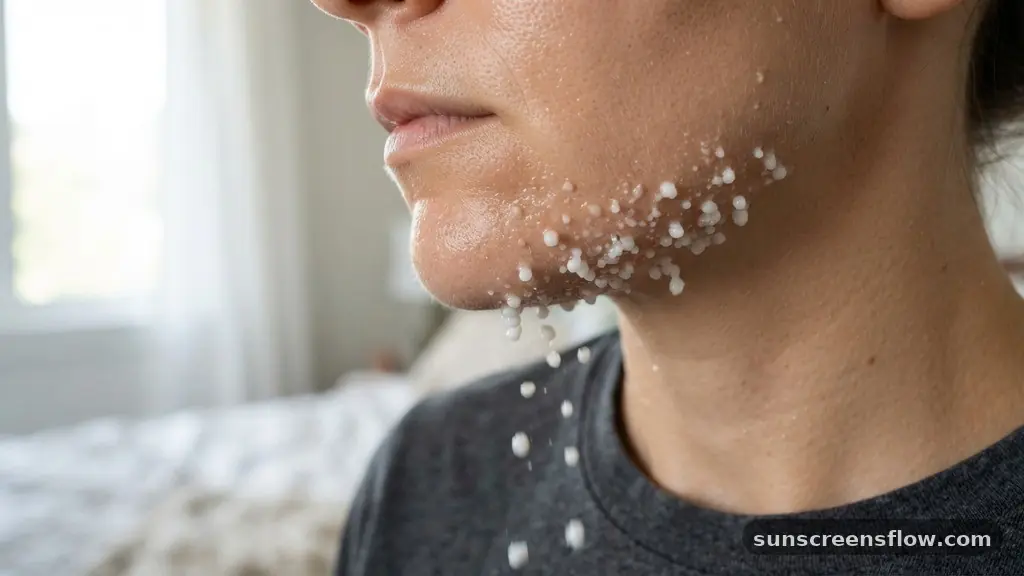
One of the most frustrating aspects of a skincare routine is “pilling,” where the products you apply start to roll off your face in small, rubbery beads. This almost always happens when you move too quickly between steps.
When you apply a cream over a serum that hasn’t set, the polymers in the serum can interact with the emulsifiers in the cream, creating a physical barrier that cannot be absorbed. This is exacerbated if you use too much product; applying a thick layer of serum will inevitably take longer to absorb than a thin, targeted layer.
To avoid this, focus on applying your products in thin, even layers. You do not need a thick coat of serum for it to be effective. Another common mistake is rubbing the product into the skin aggressively.
Instead, try pressing the product into your skin with your palms. This “patting” motion helps the serum settle into the pores and fine lines without disturbing the surface tension, which is much more effective than vigorous rubbing. If you find your products are still pilling, consider exfoliating to remove dead skin cells that might be interfering with the absorption process.
Environmental Factors and Their Impact on Timing
It is easy to overlook how the environment affects the way your skin behaves. In a high-humidity environment, your skincare products will naturally stay “wet” on the skin for longer.
In these conditions, you may need to wait slightly longer before moving on to your moisturizer, or you might find that you can skip a heavy cream altogether. Conversely, in a dry or air-conditioned environment, your products will evaporate much faster.
If you are in a dry climate, you might notice that your serum disappears into your skin almost instantly. This is a sign that your skin is thirsty and is drinking up the moisture. In this case, you don’t need to wait; you can apply your moisturizer immediately to lock in the hydration before the dry air pulls the moisture back out of your skin.
Listening to your skin’s feedback—how tight it feels or how quickly it absorbs—is more important than following a strict timer. Your skin texture can change throughout the year, so be prepared to adjust your waiting times based on the season and the local climate.
The Importance of Skin Barrier Integrity
Your skin barrier is the first line of defense against external aggressors, and how you layer your products can either support or damage this barrier. If you rush the application process, you aren’t just wasting expensive products; you are also potentially creating a cocktail of ingredients that wasn’t intended to be mixed. For example, mixing certain acids with specific types of moisturizers can lead to a stinging sensation or inflammation, which compromises the integrity of your barrier.
By allowing each layer to absorb, you allow the skin to process the ingredients one at a time. This is especially important for those with compromised or sensitive skin. When the barrier is healthy, it is more resilient to slight variations in layering.
However, if you are struggling with breakouts, redness, or dryness, slowing down your routine is a simple but effective way to improve your results. Give your skin the time it needs to adjust to each layer; it will reward you with a more balanced, hydrated, and radiant complexion.
Addressing Topical Gaps: Myths vs. Reality
There is a lot of misinformation circulating about the “3-minute rule” or the “4-2-4 method.” While these frameworks can be helpful for beginners who need structure, they are not scientifically required for everyone.
The idea that you must wait exactly three minutes is a generalization that ignores the vast differences in product formulations. Some serums are designed for rapid absorption, while others are intended to remain on the surface for a longer duration.
Another common myth is that you must wait for the skin to be completely dry before applying anything. While this is true for specific actives like retinol, it is actually counterproductive for hydrating serums.
By understanding the difference between penetration (getting the active ingredient to the right layer) and occlusion (trapping moisture), you can tailor your routine to your specific needs. The goal is to provide your skin with the right environment to thrive, not to adhere to a rigid, arbitrary timer that doesn’t account for your unique skin type or the products you are using.
- Use a gentle patting motion rather than rubbing to encourage better absorption.
- Apply products from the lightest, thinnest consistency to the thickest, most occlusive formula.
- Observe the “tacky” feeling; if it’s slightly sticky, it’s usually the perfect time to apply your next layer.
- Adjust your wait times based on the humidity of your environment and the specific active ingredients in your serum.
- Avoid over-applying; a pea-sized amount of serum is often sufficient for the entire face and neck.
Frequently Asked Questions
Does the order of my skincare products really matter?
Yes, the order of application is critical for efficacy. Applying products from the thinnest to the thickest consistency ensures that lightweight, water-based serums can penetrate the skin before being sealed in by heavier creams or oils, which act as barriers to prevent evaporation.
What happens if I apply my moisturizer too quickly?
Applying moisturizer too soon can cause the products to mix on the skin’s surface rather than absorbing individually. This can lead to pilling, where the product forms small beads, and it may reduce the effectiveness of the active ingredients by altering their intended pH levels.
Is it better to apply moisturizer to damp or dry skin?
For most hydrating serums containing humectants, applying moisturizer to slightly damp or tacky skin is ideal. This helps trap the added moisture. However, if you are using potent actives like retinol or certain acids, it is usually better to let the skin dry completely first.
How can I tell if my serum has fully absorbed?
Your serum has likely absorbed when your skin no longer feels “wet” but still has a slight, pleasant tackiness. If your skin feels completely dry and tight, you may have waited too long. If your skin still feels slippery or wet, you should wait a bit longer.
Conclusion
Mastering the art of skincare layering is a subtle but impactful way to elevate your daily routine. By understanding that the answer to how long to wait between serum and moisturizer is dictated by the absorption rate, the molecular weight of the ingredients, and the current state of your skin barrier, you can move away from rigid rules and toward a more intuitive approach. Remember that the goal is to allow each product to perform its specific function—whether that is delivering active ingredients deep into the dermis or preventing transepidermal water loss through the use of occlusives.
Whether you are dealing with the rapid absorption of a water-based serum or the slow, deliberate settling of a more complex treatment, taking an extra minute to ensure each layer is ready will significantly improve your product efficacy. By focusing on the texture of your skin and the specific needs of your chosen ingredients, you can prevent common issues like pilling and irritation, ultimately achieving a healthier and more radiant complexion. Consistency and patience are the cornerstones of effective skincare; treat your skin with the time it deserves, and you will see the results in the quality of your skin texture and overall vitality.


