


Navigating the complexities of a modern skincare routine often leads to confusion regarding the specific order of application. If you have ever stared at your bathroom counter wondering whether your potent treatment should go on before or after your daily cream, you are not alone. The general rule of thumb in dermatology is to apply products from the thinnest consistency to the thickest.
Because serums are designed to deliver high concentrations of active ingredients directly into the skin, they are almost always applied before a heavier moisturizer. By understanding the science of penetration and how different formulations interact with your skin barrier, you can significantly improve the efficacy of your daily regimen.
The Science of Molecular Weight and Layering
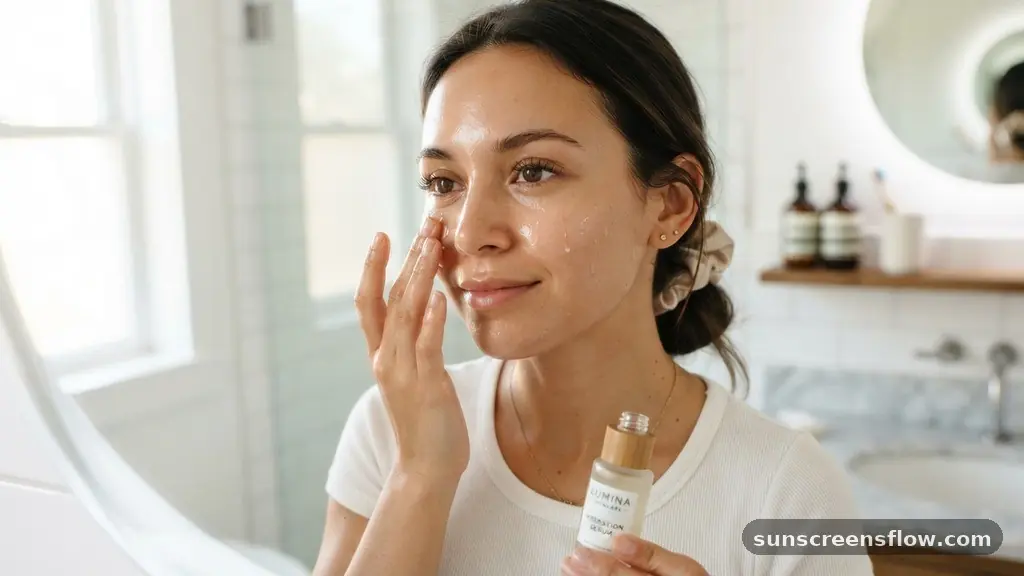
The fundamental reason we prioritize specific products in a particular sequence is rooted in the concept of molecular weight. Serums are typically formulated with smaller molecules, which allow them to travel deeper into the epidermis to address specific concerns like hyperpigmentation, fine lines, or dehydration.
If you were to apply a heavy, cream-based moisturizer first, its larger molecules and thick texture would create a physical barrier on the surface of your skin. This would effectively block the serum from reaching its target destination, rendering your expensive treatment largely ineffective.
When you apply a serum first, you allow those concentrated ingredients to sink in without resistance. Once the serum has been absorbed—usually within 30 to 60 seconds—you can follow up with a moisturizer. Moisturizers are designed to seal everything in.
They often contain occlusives, which are ingredients that sit on top of the skin to prevent transepidermal water loss. By applying the moisturizer second, you are effectively “locking in” the serum, creating a protective seal that keeps the active ingredients working throughout the day or night. This systematic approach ensures that you get the maximum benefit from every product in your cabinet.
Understanding the Role of Humectants and Occlusives
To truly master your routine, it helps to distinguish between the primary functions of your products. Serums are often packed with humectants, such as hyaluronic acid, which act like magnets for water, drawing moisture from the environment into the skin.
If you apply a humectant-rich serum to slightly damp skin, it can pull that water into the deeper layers of the dermis. However, humectants can sometimes evaporate back into the air if not covered by a heavier product.
This is where the moisturizer comes into play. Moisturizers function as both humectants and emollients or occlusives. Emollients soften the skin, while occlusives create that vital barrier that prevents moisture from escaping.
If you skip the moisturizer, your skin might actually feel tighter or drier after using a serum because the humectants have nothing to hold onto. By understanding that serums provide the treatment and moisturizers provide the seal, the question of does serum come before or after moisturizer becomes easy to answer: always treat first, then seal. This synergy is essential for maintaining a healthy, balanced complexion.
How Water-Based vs. Oil-Based Serums Impact the Order
While the general rule is “thinnest to thickest,” the chemical makeup of your products can occasionally complicate things. Water-based serums are the most common and should almost always be applied to clean, bare skin. Their thin, watery consistency allows for rapid absorption. Because they are water-soluble, they struggle to pass through oil-based layers, which is why applying them after a cream or oil would be counterproductive.
Oil-based serums, on the other hand, are a slightly different animal. If you are using a facial oil or a serum that is high in lipid content, you should still apply it before a heavy moisturizer, but it may take a bit longer to absorb. If you are using multiple serums, always apply the water-based ones first, followed by the oil-based ones.
Once the oil-based serum has settled into the skin, you can apply your moisturizer. If your moisturizer is particularly thick, you might find that you don’t need a heavy cream after an oil-based serum, but for most skin types, layering remains the gold standard for long-lasting hydration.
The Importance of pH Balance and Absorption
Another technical aspect to consider is the pH balance of your products. Many targeted treatments, such as those containing vitamin c or certain exfoliating acids, rely on a specific pH level to function optimally.
If you apply a moisturizer—which often has a higher, more neutral pH—before your acidic serum, you may unintentionally raise the pH of the serum. This change can deactivate the active ingredients, drastically reducing their dermatological efficacy.
By applying your serum directly to cleansed skin, you are ensuring that the product interacts with your skin’s natural pH environment, allowing the ingredients to perform as intended. Once the serum has had time to absorb—usually a minute or two—the risk of the moisturizer altering the pH of the treatment is significantly minimized.
This is particularly important for high-potency treatments like retinol or L-ascorbic acid, which are notoriously sensitive to the environment in which they are applied. Respecting this chemistry is the secret to seeing visible results from your skincare investment.
Addressing Topical Concerns: Vitamin C and Retinol

When integrating specific power-players like vitamin c and retinol into your routine, the order of operations becomes even more critical. Vitamin C is a potent antioxidant that works best when applied in the morning on clean, dry skin. Because it is highly unstable, it needs to be the first layer after cleansing to ensure it can penetrate the skin and provide protection against environmental stressors.
Retinol, conversely, is typically reserved for nighttime use. It is a powerful topical treatment that speeds up cell turnover. Because retinol can be irritating, many dermatologists suggest the “sandwich method.”
This involves applying a light layer of moisturizer, followed by your retinol, and finishing with another layer of moisturizer. However, for those who have built up a tolerance to retinol, applying it directly to the skin before the moisturizer is the most effective way to harness its full power. In either case, the serum—or the retinol treatment—is the engine of your routine, while the moisturizer is the protective shell.
Common Mistakes to Avoid in Your Skincare Routine
Even when you know the correct order, there are common pitfalls that can undermine your results. One major mistake is applying products too quickly, one right after another.
If you layer your moisturizer immediately after your serum without giving it time to dry, you risk “pilling,” where the products ball up on the surface of your skin. This not only feels unpleasant but also suggests that the products are not being properly absorbed.
Another error is using too much product. You only need a few drops of serum to cover your entire face. Applying an excessive amount won’t increase the benefits; it will only create a slick surface that prevents the moisturizer from bonding correctly.
Furthermore, neglecting your neck and chest is a missed opportunity. Your serum and moisturizer should follow the same path down your décolletage to ensure consistent skin texture and health across all exposed areas. Finally, failing to use sunscreen as the final step in your morning routine renders all your hard work useless, as UV damage is the primary cause of premature aging and pigmentation.
Optimizing the Routine for Your Skin Type
Your specific skin type should dictate not just the order, but the texture and frequency of the products you choose. Someone with oily skin might find that a lightweight, water-based serum followed by a gel-based moisturizer is sufficient. In this case, the serum provides the necessary hydration without pore clogging, and the gel moisturizer provides a light occlusive layer that doesn’t feel heavy.
Conversely, those with dry or mature skin might benefit from a more layered approach. A hyaluronic acid serum can be followed by an oil-based serum for added nourishment, and finished with a rich, cream-based moisturizer.
This “layering” technique ensures that the skin receives a complex cocktail of hydration, antioxidants, and lipids. By adjusting the weight of the products based on your skin’s unique needs, you can achieve a healthy, radiant complexion without feeling overwhelmed by an overly complicated routine.
| Product Category | Ideal Application Order | Primary Function |
|---|---|---|
| Cleanser | 1st | Removes impurities |
| Water-based Serum | 2nd | Deep delivery of actives |
| Oil-based Serum | 3rd | Nourishment & barrier support |
| Moisturizer | 4th | Locks in moisture |
| Sunscreen | 5th (AM Only) | Protects from UV rays |
The Role of Niacinamide and Other Versatile Actives
Ingredients like niacinamide have become staples in modern skincare due to their versatility. Niacinamide is known for its ability to regulate oil production and improve overall skin texture.
Because it is generally well-tolerated and stable, it fits easily into both morning and evening routines. When using a niacinamide serum, the same logic applies: apply it after cleansing and before your moisturizer.
One of the benefits of using a versatile ingredient like niacinamide is that it plays well with others. It can be layered with hyaluronic acid for hydration or used alongside retinol to help mitigate potential irritation.
Because it isn’t as sensitive to pH fluctuations as vitamin C, it is a great “entry-level” serum for those just starting to build a more advanced routine. Regardless of the active ingredient, always remember that the goal is to get the serum as close to the skin as possible while using the moisturizer to seal in those benefits and maintain a healthy moisture level.
Frequently Asked Questions
Can I mix my serum into my moisturizer to save time?
While it might seem efficient to mix them, it is generally discouraged. Most serums are formulated with specific delivery systems designed to penetrate the skin. By mixing them into a heavy moisturizer, you dilute the active ingredients and alter their pH, which can significantly reduce their effectiveness and absorption.
How long should I wait between applying serum and moisturizer?
You should wait until your serum feels tacky or has completely dried down, which typically takes between 30 to 60 seconds. You do not need to wait for it to be bone-dry, but you want to ensure it has sufficiently absorbed so that it doesn’t just get wiped away by your cream.
What happens if I accidentally apply moisturizer before my serum?
If you apply moisturizer first, the thick, occlusive ingredients will create a barrier that prevents the serum from penetrating. Your skin will still receive some benefit from the moisturizer, but the high-concentration actives in your serum will likely sit on the surface and be wasted rather than absorbed.
Does the order change if I am using an eye cream?
Yes, eye cream is typically applied after your serum but before your moisturizer. Because the skin around the eyes is thinner and more delicate, you want to ensure the serum is absorbed first, then apply your eye cream to the orbital bone, and finish with your moisturizer to seal everything in.
Conclusion
Mastering the order of your skincare products is the most effective way to ensure your investments actually pay off. By remembering that serums act as targeted treatments and moisturizers act as protective seals, you can easily determine the correct sequence for any product in your collection. Always start with the thinnest, most potent formulas—the serums—to allow for maximum penetration and dermatological efficacy.
Follow these with your moisturizer to lock in hydration and prevent transepidermal water loss. Whether you are dealing with acne, aging, or simple dryness, keeping this “treatment-first” philosophy in mind will help you maintain a healthy skin barrier and achieve the glowing complexion you are after. When in doubt, look at the texture: if it flows like water, it goes on early; if it feels like a rich cream, it goes on at the end of your routine.


