


Knowing exactly when vitamin C serum should be applied is the first step toward maximizing its brightening and protective benefits. While many people assume all serums are interchangeable, this particular powerhouse requires a specific environment to perform at its peak. By understanding how environmental stressors interact with your skin, you can strategically time your application to ensure you gain the most from your investment.
Whether you are aiming to neutralize free radicals or improve your skin barrier, the timing of your routine dictates the efficacy of the product. Let’s explore the science behind these timing decisions and how to build a routine that truly works for your specific skin type.
The Case for Morning Application

Most dermatologists agree that the morning is the ideal time for your daily dose of vitamin C. This timing is rooted in the ingredient’s primary function: providing antioxidant protection. During the day, your skin is under constant assault from UV radiation, blue light, and urban pollution.
These environmental stressors trigger the production of free radicals, which are unstable molecules that damage your collagen and elastin. By applying a high-quality serum to clean skin first thing in the morning, you create a defensive shield that neutralizes these threats before they can cause oxidative damage.
Think of your morning serum as a partner to your sunscreen. While SPF blocks or scatters UV rays, vitamin C acts as a secondary line of defense, mopping up any free radicals that manage to penetrate your sunscreen barrier.
Using it in your morning skincare routine also helps to brighten dullness that may have accumulated overnight. Because it is a potent active, it works best when applied directly to the skin after cleansing, allowing it to penetrate effectively before you layer on other products.
Understanding the Role of pH Levels
The chemistry of your skincare products is a major factor in determining when you should use them. L-ascorbic acid, the most common and potent form of vitamin C, requires a low pH environment—typically below 3.5—to effectively penetrate the stratum corneum. This acidic nature is exactly why the order of application matters so much. If you apply a product with a higher pH immediately before your vitamin C, you risk neutralizing the serum, rendering it ineffective.
Because of this specific requirement, you should always apply your vitamin C serum after cleansing and toning but before any thicker, cream-based products. If your cleanser has a high pH, you might benefit from using a pH-balancing toner to reset your skin before applying the serum.
This ensures that the L-ascorbic acid remains stable and active. Ignoring these chemical requirements is one of the most common reasons people fail to see results from their expensive serums, as the active ingredient simply sits on the surface without penetrating deep enough to provide the promised benefits.
Serum Layering and Product Order
Determining where a serum fits in your sequence can be confusing, but the general rule for serum layering is to move from the thinnest consistency to the thickest. Vitamin C serums are almost always water-based and thin, meaning they should be applied early in your process.
If you are using multiple serums, put the most potent, active-driven formula on first. This gives the ingredients the best chance to reach your skin cells without having to bypass a layer of heavier oils or silicones.
Once the serum has fully absorbed—usually after about one to two minutes—you can follow up with your moisturizer. The moisturizer serves as a seal, locking in the hydration and the active ingredients.
If you try to apply your serum after a heavy cream or facial oil, the thick molecular structure of those products will act as a barrier, preventing the vitamin C from reaching your skin. Always keep your routine simple in the morning; you do not need five different steps for the product to be effective.
Avoiding Common Mistakes and Compatibility
One of the most frequent errors people make is combining vitamin C with other high-potency actives that can lead to skin irritation. You should be very cautious about mixing it with BHAs (beta hydroxy acids) or retinol in the same application.
While some people with resilient skin can tolerate these combinations, the varying pH levels and the intensity of these ingredients often cause redness, stinging, or peeling. It is generally safer to reserve your retinol for your evening routine and keep your vitamin C for the morning.
Another oversight is failing to perform a patch testing protocol. Because vitamin C is an acid, it can be quite harsh for those with sensitive skin. Applying a small amount behind your ear or on your inner forearm for 24 hours can save you from a major breakout or irritation across your entire face.
Furthermore, be wary of the product’s color. If your serum has turned a dark orange or brown, it is likely a sign of oxidation. When the product oxidizes, it loses its efficacy and can actually cause more harm than good by introducing unstable free radicals to your skin.
| Ingredient | Best Time to Apply | Compatibility Note |
|---|---|---|
| Vitamin C | Morning | Avoid mixing with Retinol |
| Retinol | Night | Do not use with BHAs |
| BHAs | Night | Can cause sun sensitivity |
The Importance of Proper Storage
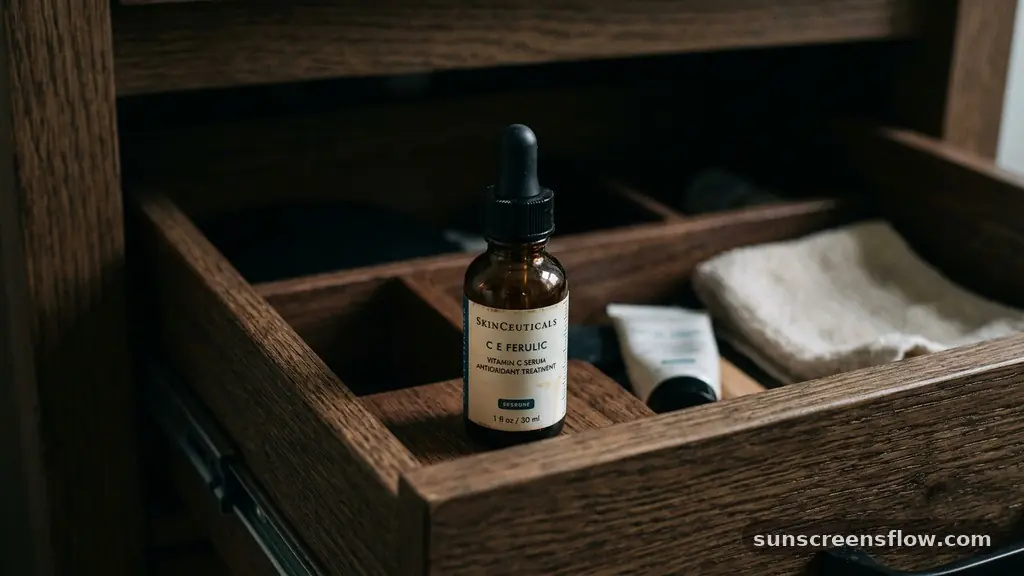
Even if you know exactly when to apply your serum, you will get poor results if the product has degraded. Vitamin C is notoriously unstable and sensitive to light, heat, and air.
To preserve its integrity, you must store your bottle in a cool, dark place, such as a drawer or a cabinet away from the bathroom window. Some enthusiasts even keep their serums in the refrigerator to slow down the rate of oxidation, though this is not strictly necessary as long as the product is kept out of direct sunlight.
The packaging also tells you a lot about the quality of the formula. Look for opaque, airtight bottles with a pump or dropper that minimizes air exposure. If you find your serum changing texture or smell, it has likely reached the end of its shelf life.
Using expired or oxidized products is a wasted effort, as the beneficial antioxidant properties are no longer active. Always check the manufacturing date or the “period after opening” symbol to ensure you are using a fresh, potent formula that can actually support your skin barrier.
Addressing Topical Gaps
A common point of confusion is whether you can use vitamin C at night. While morning is the standard recommendation, there is no biological rule stating it cannot be used in the evening.
However, because its primary benefit is protection against daytime environmental stressors, using it at night is arguably less efficient. If you have extra product and want to use it at night, ensure you are not layering it with other potent acids or exfoliants that could compromise your skin barrier.
Another gap in knowledge concerns the wait time between steps. Many users rush through their routine, applying moisturizer seconds after their serum. This can cause “pilling,” where the product balls up on the skin.
Giving the serum a moment to dry completely is not just about texture; it is about ensuring that the product has properly absorbed into the skin. If you are in a rush, you can use a small fan or simply wait until your skin feels slightly tacky before moving to the next step. Understanding these nuances helps you get the most out of your skincare investment.
The Relationship Between Vitamin C and Sunscreen
Perhaps the most critical aspect of using vitamin C is recognizing that it does not replace your need for SPF. Some users erroneously believe that because vitamin C provides antioxidant benefits, it offers some form of sun protection. This is incorrect.
Vitamin C does not block UV rays, and it does not prevent sunburn. If you apply it in the morning without following up with a broad-spectrum sunscreen, you are leaving your skin vulnerable to the very rays you are trying to mitigate.
When used together, however, they create a synergistic effect. The vitamin C neutralizes the free radicals created by the UV rays that slip past your sunscreen, while the sunscreen physically shields the skin from the bulk of the radiation.
This combination is widely considered the gold standard for anti-aging and preventative skincare. By consistently applying both, you are effectively reducing the long-term impact of photoaging, which includes dark spots, fine lines, and uneven texture.
Signs of Oxidation and When to Discard
How do you know when your product has crossed the line? Signs of oxidation are usually visible to the naked eye. If your serum was initially clear or pale yellow but has darkened significantly to a deep amber or brown, the chemical structure has changed. This color shift indicates that the L-ascorbic acid has degraded into dehydroascorbic acid, which does not provide the same benefits to your skin.
Beyond color, watch for a change in scent. Many vitamin C products have a slight, metallic, or citrusy odor. If this smell becomes pungent or unpleasant, it is a clear indicator that the ingredients are breaking down.
Never try to “use up” a bottle that has clearly oxidized. Applying degraded products can lead to increased skin sensitivity and may even cause irritation that persists for days. Investing in a fresh bottle is always better than applying a compromised formula that can no longer protect your skin.
Building a Consistent Routine
Consistency is the secret ingredient to any successful skincare regimen. Vitamin C is not a quick fix; it is a long-term commitment.
You will likely not see a dramatic transformation overnight, but with daily application over several weeks, you will notice improvements in skin tone, brightness, and texture. The goal is to make the application of your serum a non-negotiable part of your morning rhythm, just like brushing your teeth or washing your face.
To make this easier, keep your serum right next to your cleanser. If it is sitting in the back of a cabinet, you are far more likely to skip it on busy mornings. By streamlining your space and ensuring your products are easily accessible, you remove the barriers to consistency.
Remember that the best skincare routine is the one you actually follow. Even if you only have time for a simple three-step process—cleanser, vitamin C, and sunscreen—you are doing significantly more for your skin health than someone who ignores these foundational habits.
Frequently Asked Questions
Can I use vitamin C serum every single day?
Yes, using vitamin C serum daily is generally recommended to maintain high levels of antioxidants in the skin. However, if you have highly sensitive skin, you might want to start by using it every other day to allow your skin barrier to adjust to the acidity of the formula.
Does the concentration of vitamin C affect when I should apply it?
The concentration, typically ranging from 5% to 20%, does not change the timing of application. Regardless of the strength, you should apply it to clean, dry skin in the morning. Higher concentrations are more potent but may also be more likely to cause mild irritation for sensitive users.
Is it okay to apply moisturizer immediately after vitamin C serum?
It is better to wait about one to two minutes before applying moisturizer. Allowing the serum to absorb fully prevents pilling and ensures that the active ingredients have successfully penetrated the surface of the skin before you apply a heavier cream or SPF on top.
Can I use vitamin C serum if I have acne-prone skin?
Vitamin C is generally safe for acne-prone skin and can actually help fade post-inflammatory hyperpigmentation left behind by breakouts. Just be sure to choose a formula that is non-comedogenic and avoid using it if you are currently using prescription acne treatments that might cause excessive dryness.
Conclusion
Integrating a high-quality serum into your morning ritual is one of the most effective ways to defend your complexion against the daily hazards of modern life. By focusing on clean skin and ensuring your product is kept away from light and air, you create the optimal conditions for the active ingredients to function. Remember that patience is key, as the benefits of consistent antioxidant protection accumulate over time.
Start slowly if your skin is sensitive, pay attention to the color of your serum, and always follow up with a reliable sunscreen to lock in your progress. If you keep your routine simple and consistent, you will find that your skin looks brighter and more resilient within just a few weeks of regular use.


