


Brightening serum acts as a targeted treatment designed to address uneven skin tone, fade dark spots, and restore a natural, healthy glow to the face. By utilizing a concentrated blend of potent active ingredients, these serums penetrate the dermal layer to disrupt the pathways that lead to discoloration.
Many people mistakenly assume that brightening products are intended to bleach the skin or change its natural color; however, their primary function is to optimize the health of the skin barrier, encourage cell turnover, and inhibit the overproduction of melanin, which is the root cause of hyperpigmentation. Whether you are dealing with sun damage, acne scars, or general dullness caused by environmental stressors, a well-formulated serum works to correct these issues while providing essential antioxidants to protect against future damage.
The Biological Mechanisms Behind Skin Brightening
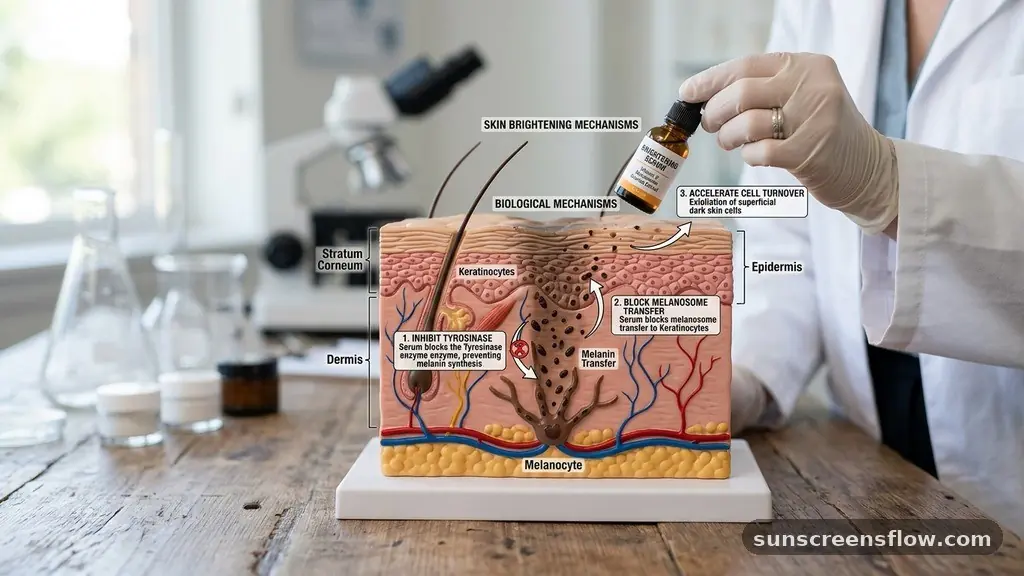
At the core of understanding what does brightening serum do is the concept of melanin production. Melanin is the pigment responsible for the color of our skin, hair, and eyes. When the skin experiences trauma—such as inflammation from acne, exposure to harmful UV rays, or hormonal fluctuations—it produces an excess of melanin as a defense mechanism.
This excess pigment often clumps together, resulting in visible dark spots or patches of hyperpigmentation. Brightening serums function primarily through tyrosinase inhibition.
Tyrosinase is the key enzyme responsible for the production of melanin. By inhibiting this enzyme, the serum effectively prevents new dark spots from forming while allowing existing pigmentation to fade as the skin naturally renews itself.
Beyond inhibiting pigment, these serums also facilitate cell turnover. As we age, the rate at which our skin sheds dead cells slows down, leading to a buildup that causes dullness and a rough texture. By incorporating ingredients that encourage the shedding of these surface cells, brightening serums reveal the fresher, more vibrant skin underneath.
This process is often supported by antioxidants, which neutralize free radicals caused by pollution and sun exposure. These free radicals are notorious for breaking down collagen and triggering the skin’s inflammatory response, which leads to further discoloration. When you apply a brightening serum, you are essentially providing the skin with the tools it needs to repair its structural integrity while simultaneously polishing the surface for a more radiant appearance.
Key Active Ingredients and Their Functions
The efficacy of a brightening serum is entirely dependent on its formulation. Different ingredients target different aspects of the skin’s biological pathways. Vitamin C is perhaps the most famous brightening agent, prized for its ability to brighten the complexion while stimulating collagen synthesis.
However, it is not the only player in the game. Niacinamide is another powerhouse that works by preventing the transfer of pigment to surface skin cells, making it an excellent choice for those with sensitive skin. Furthermore, alpha arbutin and kojic acid are highly effective at suppressing tyrosinase, directly targeting the source of uneven pigment without the irritation that some stronger chemical treatments might cause.
Other ingredients focus on the surface layer of the skin. Chemical exfoliants like AHAs (alpha hydroxy acids) help dissolve the “glue” holding dead skin cells together, promoting a faster rate of renewal. Tranexamic acid has also gained significant traction in recent years for its ability to treat stubborn, deep-seated pigmentation, particularly when it is related to hormonal issues or chronic inflammation. When these ingredients are combined with hydrating agents like hyaluronic acid, the serum can brighten the skin without compromising the skin barrier.
A healthy barrier is essential; if the barrier is stripped or irritated, the skin becomes more susceptible to inflammation, which ironically leads to more dark spots. Therefore, the best serums balance potency with ingredients that soothe and hydrate.
Addressing Hyperpigmentation and Dark Spots
One of the most common reasons individuals seek out brightening serums is to manage hyperpigmentation. This condition manifests in several forms, including sun spots, age spots, and post-inflammatory hyperpigmentation (PIH). PIH is particularly common among those who struggle with acne; once the pimple heals, it leaves behind a dark or reddish mark that can persist for months or even years.
Brightening serums address these concerns by interrupting the inflammatory cascade. By soothing the skin and regulating melanin production, these products help these marks fade significantly faster than they would on their own.
When treating dark spots, consistency is non-negotiable. Because the skin cycle takes approximately 28 to 40 days to complete, you cannot expect overnight results. The serum must be used daily to ensure that the active ingredients are constantly present in the skin to inhibit pigment production.
Over time, as the skin replaces its surface layers, the older, hyperpigmented cells are shed and replaced by newer cells that were produced while the tyrosinase was being inhibited. This is why the result is often described as a “glow”—it is not a change in skin color, but rather a reflection of healthier, more uniform skin that is free from the shadows cast by patches of excess pigment.
The Role of Exfoliation in Brightening
While many people associate brightening serums with pigment-inhibiting chemicals, exfoliation plays a massive role in the final look of the skin. Dullness is rarely just about pigment; it is often about texture. If the surface of your skin is covered in a layer of dead, dry cells, light cannot reflect off the surface evenly, which makes the skin appear flat and gray.
By incorporating mild chemical exfoliants, brightening serums help clear away this debris. This not only makes the skin look brighter immediately but also ensures that other skincare products—such as moisturizers and sunscreens—can penetrate more effectively.
It is vital to distinguish between physical scrubs and chemical exfoliants. Physical scrubs can often cause micro-tears in the skin, leading to inflammation and, consequently, more dark spots. In contrast, chemical exfoliants like lactic acid or glycolic acid provide a uniform, controlled removal of dead cells.
When this is paired with brightening agents like Vitamin C, the result is a synergistic effect: the exfoliant clears the path, and the brightening agent works on the underlying pigment. This dual approach is one of the reasons why modern serums are so much more effective than the simple, one-ingredient products of the past.
Common Myths About Brightening and Bleaching
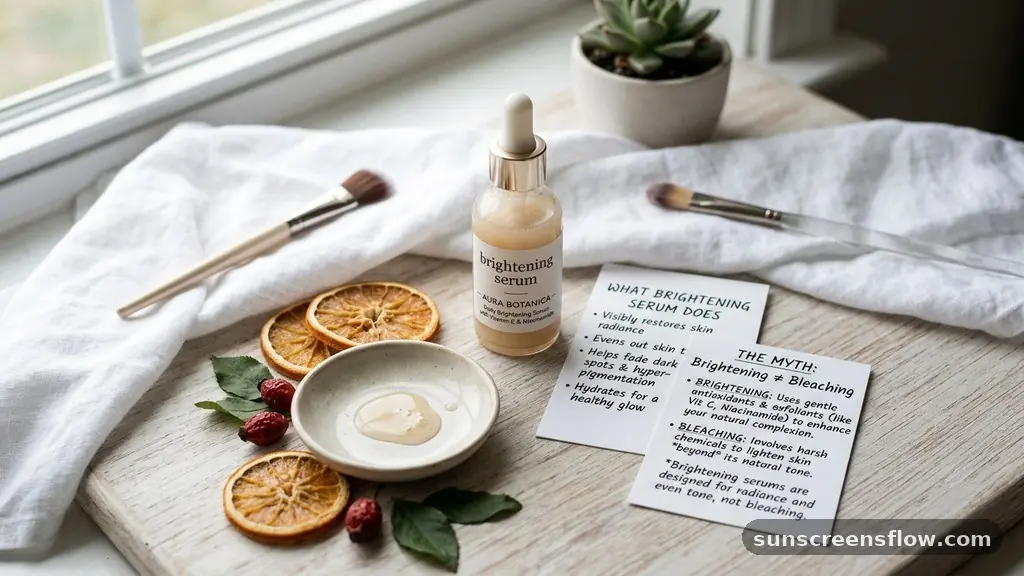
A frequent point of confusion, and one that often prevents people from using these products, is the fear that “brightening” is synonymous with “bleaching.” It is crucial to clarify that these are two entirely different concepts. Bleaching, or skin lightening, often involves harsh, sometimes dangerous chemicals like hydroquinone (when used improperly) or mercury, intended to strip the skin of its natural pigment.
In contrast, brightening is about restoring health, evening out tone, and enhancing radiance. A brightening serum does not change your natural skin tone; it simply removes the “noise” of sun damage, acne scars, and environmental wear that masks your natural, healthy complexion.
If you have darker skin, you might be particularly concerned about this. The reality is that melanin-rich skin is more prone to hyperpigmentation because the melanocytes are more active. Therefore, brightening serums are actually incredibly beneficial for deeper skin tones to keep the complexion clear and uniform.
By focusing on tyrosinase inhibition rather than pigment destruction, these serums respect the skin’s natural biology. They help you achieve a “lit-from-within” look rather than a flat, monochromatic finish. Understanding this distinction is key to choosing the right products and having realistic expectations about what your skincare routine can achieve.
Comparison of Key Brightening Agents
To understand the specific strengths of various ingredients, it helps to look at how they function within the skin’s structure. Not all brightening agents work in the same way, and some may be better suited for specific skin types or concerns.
| Ingredient | Primary Mechanism | Best For |
|---|---|---|
| Vitamin C | Antioxidant protection & collagen support | Dullness & environmental damage |
| Niacinamide | Anti-inflammatory & pigment transfer blocking | Sensitive skin & redness |
| Alpha Arbutin | Tyrosinase inhibition | Stubborn dark spots |
| Tranexamic Acid | Reduces melanin synthesis & vascular issues | Hormonal pigmentation (melasma) |
This table illustrates that while all these ingredients contribute to a brighter appearance, their pathways differ. Niacinamide, for instance, is excellent for those who cannot tolerate the acidity of Vitamin C, while tranexamic acid is a specialized tool for those dealing with more complex, hormonal types of discoloration. By selecting a serum that contains a combination of these, or one that features a specific ingredient tailored to your primary concern, you can optimize your results.
How to Integrate Brightening Serums into Your Routine
The order of application is critical when using active ingredients. Because serums are formulated with smaller molecules than moisturizers, they should always be applied to clean, slightly damp skin after cleansing and toning. This allows the active ingredients to reach the dermal layer without being blocked by heavier creams or oils.
If you are using multiple serums, a good rule of thumb is to apply them from thinnest to thickest consistency. Most brightening serums are lightweight, making them perfect for layering under a moisturizer or SPF.
Using a brightening serum in the morning is highly recommended, especially if it contains antioxidants like Vitamin C. This provides a protective shield against the environmental stressors you will encounter throughout the day, such as pollution and UV light. However, some ingredients—particularly those that increase cell turnover—can make the skin more sensitive to the sun.
Therefore, wearing a broad-spectrum SPF is non-negotiable. If you skip sunscreen, you are essentially undoing all the work the serum is trying to do, as UV damage is the primary trigger for the very dark spots you are trying to fade.
Addressing Topical Gaps: Beyond the Basics
Many articles on this topic fail to address the nuance of “vascular” pigmentation. While most dark spots are melanin-based, some discoloration is actually caused by dilated blood vessels or chronic inflammation, which gives the skin a reddish or purple hue.
Standard brightening serums that focus only on melanin may not be enough for this type of concern. This is where ingredients like niacinamide and tranexamic acid shine, as they address the inflammatory and vascular components of skin discoloration.
Another gap in common knowledge is the importance of the microbiome. Recent research suggests that an imbalanced skin microbiome can contribute to chronic inflammation, which in turn triggers pigment production. Using a brightening serum that also includes prebiotics or soothing botanical extracts can help keep the skin’s ecosystem in check, preventing the inflammation that leads to recurring dark spots.
Furthermore, many consumers ignore the role of hydration. If your skin is dehydrated, it loses its ability to function optimally, including its ability to repair pigment damage. Always pair your brightening serum with a high-quality moisturizer to lock in hydration and support the skin’s healing process.
* Always perform a patch test when starting a new active ingredient.
* Start with a lower concentration if you have sensitive skin to avoid irritation.
* Consistency is more important than the strength of the formula.
* Ensure your sunscreen is at least SPF 30 for maximum protection.
* Monitor your skin for signs of over-exfoliation, such as redness or stinging.
* Be patient; it takes at least 4-8 weeks to see significant changes in pigment.
The Long-Term Benefits for Skin Health
Ultimately, the goal of using a brightening serum is to achieve a resilient, healthy, and luminous complexion. While the aesthetic benefit of fading dark spots is what draws most people to these products, the long-term benefits for skin health are just as significant.
By consistently protecting the skin from UV damage and free radicals, you are essentially slowing down the process of photoaging. This means that in addition to having a more even skin tone, you are also maintaining better skin elasticity and a firmer structure over time.
Think of a brightening serum as a maintenance tool. Just as you brush your teeth daily to prevent decay, you use a brightening serum to prevent the accumulation of damage that leads to dullness and discoloration. It is a proactive approach to skincare that keeps your complexion looking vibrant well into the future.
When you combine this with a healthy lifestyle, adequate sleep, and proper hydration, you create the optimal environment for your skin to thrive. The “glow” that results is not just a surface-level effect; it is a sign that your skin is functioning at its absolute best.
Frequently Asked Questions
Does brightening serum really work?
Yes, brightening serums are highly effective when they contain clinically proven ingredients like Vitamin C, niacinamide, or alpha arbutin. They work by inhibiting the enzymes that cause pigment production and encouraging faster cell turnover, which helps fade existing dark spots and prevents new ones from forming over time.
When should I use brightening serum in my routine?
You should apply your brightening serum after cleansing and toning, but before your moisturizer and sunscreen. Most experts recommend using them in the morning to take advantage of the antioxidant protection they provide against daily environmental stressors like pollution and UV rays, which can cause skin dullness.
Is brightening serum the same as bleaching?
No, brightening is not the same as bleaching. Brightening serums aim to even out skin tone and restore a natural, healthy glow by correcting hyperpigmentation. Bleaching agents are often harsh and intended to lighten the skin’s overall color, which is not the purpose or function of quality brightening products.
How quickly does brightening serum work?
Visible results usually take between four to eight weeks of consistent daily use. Because the skin’s natural cycle of shedding and renewing cells takes about a month, you must be patient and allow the active ingredients enough time to work on the deeper layers of the skin.
Conclusion
What does brightening serum do? It serves as a sophisticated, targeted solution for those looking to reclaim a clear, radiant, and even-toned complexion. By leveraging advanced ingredients that inhibit melanin production, boost cell turnover, and protect against environmental damage, these serums address the root causes of dullness and hyperpigmentation.
Whether you are dealing with post-inflammatory hyperpigmentation from acne or the long-term effects of photoaging, a high-quality serum provides the necessary support to help your skin heal and glow. By integrating these products into a consistent routine that includes sun protection and proper hydration, you are not just treating surface-level concerns; you are investing in the long-term health and resilience of your skin. Remember, the journey to a brighter complexion is a marathon, not a sprint, but with the right tools and a bit of patience, the results are well worth the effort.


