


Incorporating a high-quality product into your daily regimen can feel like a guessing game, especially when it comes to potent actives. Many skincare enthusiasts find themselves wondering exactly when do you use vitamin c serum to ensure the most effective results.
Because this ingredient is a powerful topical antioxidant, its timing within your morning skincare routine is critical for defending your complexion against the environmental stressors you encounter throughout the day. By understanding the chemical properties of L-ascorbic acid and how it interacts with other skincare layers, you can significantly enhance your skin brightening efforts and long-term dermal health.
The Biological Necessity of Morning Application
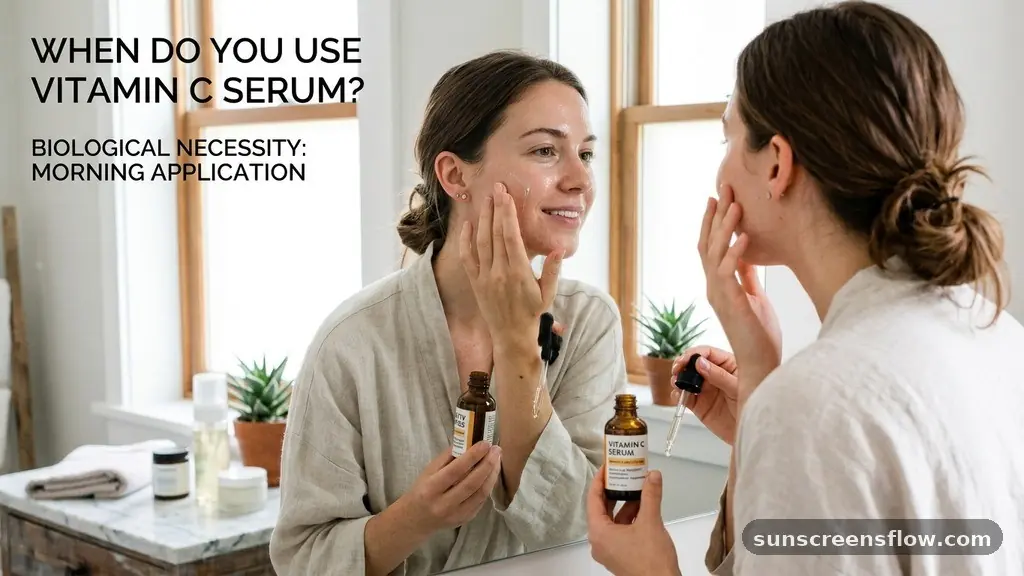
When addressing the question of when do you use vitamin c serum, the consensus among skin experts points almost exclusively to the morning. This is not merely a matter of habit; it is a matter of biology.
During the day, your skin is under constant assault from UV radiation, pollution, and blue light, all of which contribute to oxidative stress. Vitamin C acts as a shield, neutralizing the free radical damage that leads to premature signs of photoaging, such as fine lines, wrinkles, and uneven skin tone.
If you apply your serum in the morning, you are essentially providing your cells with the tools they need to defend themselves before the day’s exposure begins. While your skin does undergo repair processes at night, the primary function of vitamin C is preventative.
By applying it after cleansing but before your sunscreen application, you create a reservoir of protection that works in tandem with your SPF to mitigate the effects of sun exposure. Relying on vitamin C at night is not necessarily “wrong,” but it misses the opportunity to leverage the ingredient’s most significant benefit: the neutralization of daytime environmental aggression.
Optimizing Serum Absorption and Skin pH
The efficacy of your serum is heavily dependent on the pH level of your skin at the time of application. L-ascorbic acid, the most researched form of vitamin C, is highly acidic and requires a low pH environment—typically below 3.5—to effectively penetrate the skin barrier. If you apply a basic moisturizer or a neutral-pH toner immediately before your serum, you may inadvertently raise the pH of your skin, which can destabilize the vitamin C and render it less effective.
To ensure optimal serum absorption, it is best to apply your vitamin C serum onto clean, dry skin. After washing your face, wait a few minutes to ensure your skin is completely dry, as water can sometimes react with the active ingredients or alter the pH balance of the product.
Once the serum has fully absorbed—usually within three to five minutes—you can proceed with the rest of your layering. This waiting period is the “secret” to professional-grade results, as it allows the molecules to penetrate the stratum corneum without interference from other topical products.
Strategic Layering with Other Active Ingredients
One of the most frequent points of confusion for skincare users is the interaction between vitamin C and other potent ingredients like niacinamide, retinol, and chemical exfoliants. The traditional advice was to avoid mixing vitamin C with niacinamide due to potential flushing or stability issues; however, modern formulations have largely mitigated these concerns. Still, if you have sensitive skin, it is wise to separate them.
| Ingredient | Compatibility with Vitamin C | Recommended Timing |
|---|---|---|
| Hyaluronic Acid | Highly Compatible | Apply after Vitamin C |
| Retinol | Incompatible | Use Retinol at night |
| Niacinamide | Conditional | Separate by 15-20 minutes |
| Chemical Exfoliants | Highly Irritating | Use on alternating days |
As shown in the table above, the primary rule is to avoid layering vitamin C with retinol or strong chemical exfoliation acids like AHAs or BHAs at the same time. These combinations can lead to intense irritation and compromise your skin barrier integrity. Instead, reserve your exfoliating acids and retinoids for your evening routine, allowing your morning to remain dedicated to protection and brightening.
The Role of Vitamin C in Collagen Synthesis
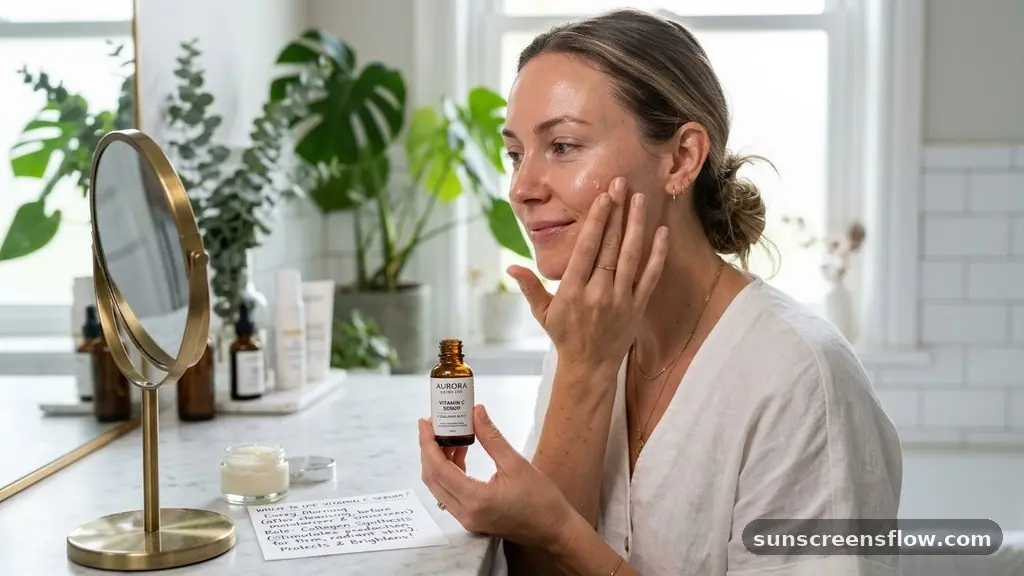
Beyond its role as a shield against the environment, vitamin C is a vital cofactor in collagen synthesis. Collagen is the structural protein that keeps skin firm, plump, and youthful.
As we age, our natural collagen production slows down, leading to sagging and volume loss. By using a vitamin C serum consistently, you are providing your fibroblasts—the cells responsible for producing collagen—with the necessary fuel to maintain structural integrity.
When you ask when do you use vitamin c serum, consider that consistency is the most important factor for anti-aging results. Because collagen production is a slow, ongoing biological process, sporadic use will not yield the firming benefits that daily application provides.
Integrating this step into your permanent morning routine ensures that your skin has a constant supply of the nutrient required for repair and maintenance. Over several months, this cumulative effect is what often leads to the visible improvement in skin texture and elasticity that many users report.
Managing Serum Oxidation and Stability
One of the most common reasons people stop using vitamin C is that they notice their product has turned orange or brown. This is a sign of serum oxidation.
Vitamin C is notoriously unstable and reacts quickly when exposed to light, heat, and oxygen. If your product has significantly changed color, it has likely lost its potency and may even cause mild irritation rather than benefits.
To prevent this, you must be diligent about storage and selection. Always look for products that utilize airtight packaging, such as opaque glass bottles or pump dispensers, rather than droppers that expose the product to air every time you open it. Store your serum in a cool, dark place, such as a skincare fridge or a cupboard away from the bathroom window.
If you are struggling with stability, look for derivatives like sodium ascorbyl phosphate or tetrahexyldecyl ascorbate, which are more stable versions of the molecule. While L-ascorbic acid is the gold standard for potency, these derivatives are excellent for those who find the traditional form too volatile or irritating.
Addressing Topical Gaps: Sensitivity and Concentration
A common issue that isn’t always addressed in standard guides is the concentration percentage of the serum. Many users assume that a 20% or 30% concentration will provide better results than a 10% or 15% serum. In reality, concentrations above 20% often lead to increased irritation without a corresponding increase in benefit, as the skin can only absorb a finite amount of the active ingredient.
If you are new to the ingredient, start with a lower concentration to see how your skin reacts. Perform a patch testing procedure by applying a small amount of the product to your inner forearm or behind your ear for 24 hours before applying it to your face.
If you experience redness, itching, or burning, it may be that your skin barrier is compromised or that the specific formulation is too harsh for your skin type. Remember, the goal is to achieve hyperpigmentation reduction and brightening, not to create inflammation, which can actually worsen dark spots over time.
The Synergy Between Vitamin C and Sun Protection
You might wonder why dermatologists emphasize using vitamin C alongside your sun protection factor (SPF). The answer lies in the synergistic relationship between the two.
While sunscreen is essential for blocking UV rays, no SPF is 100% effective at stopping all radiation from reaching the skin. There is always a small percentage of UV light that penetrates the filter, creating free radicals.
When you use vitamin C underneath your sunscreen, you are creating a “double defense” system. The vitamin C neutralizes the free radicals that manage to slip past the sunscreen, while the sunscreen continues to reflect and absorb the primary UV energy.
This combination is arguably the most powerful anti-aging strategy available in modern dermatology. If you skip the vitamin C in the morning, you are leaving your skin vulnerable to the very rays that your sunscreen is trying to block.
Practical Tips for a Seamless Routine
Integrating a new product into your routine shouldn’t feel like a chore. To make it seamless, keep your steps simple. Start by cleansing your face to remove any overnight debris.
Apply your vitamin C serum while your skin is clean and ready to absorb the product. Once it has dried, apply a facial moisturizer to lock in hydration. Finally, finish with your sunscreen.
- Cleanse your skin thoroughly to remove impurities.
- Apply 3-4 drops of serum to the face, neck, and chest.
- Allow the product to absorb completely for 3-5 minutes.
- Follow with a lightweight moisturizer if your skin is dry.
- Apply a broad-spectrum SPF 30 or higher as the final step.
- Store your serum in a cool, dark environment to prevent oxidation.
By following this order, you ensure that your active ingredients are applied closest to the skin, where they can do the most work, while your protective layers sit on top, sealing everything in and guarding against the elements. If you follow this routine consistently, you will begin to see a visible improvement in your skin’s radiance and overall health within 6 to 8 weeks.
Frequently Asked Questions
Can I use vitamin C serum every single day?
Yes, using vitamin C serum daily is highly recommended to maintain its protective benefits. Because it works to neutralize free radicals from daily UV and pollution exposure, consistent, daily morning application is the best way to support your skin’s health and prevent signs of premature aging.
Does it matter if I use vitamin C serum before or after moisturizer?
You should always apply your vitamin C serum before your moisturizer. Serums have a smaller molecular weight and are designed to penetrate the skin deeply. Applying a moisturizer first would create a barrier, preventing the serum from effectively absorbing into your skin and reducing its overall efficacy.
What should I do if my vitamin C serum turns yellow?
A slight yellow tint can sometimes be normal depending on the formulation, but a deep orange or brown color indicates that the serum has oxidized. Once oxidized, the vitamin C is likely ineffective and could potentially cause irritation, so it is best to discontinue use and discard the product.
Can I mix vitamin C with hyaluronic acid?
Yes, vitamin C and hyaluronic acid are excellent companions. Because vitamin C can sometimes be drying, layering a hydrating hyaluronic acid serum or a moisturizer containing hyaluronic acid afterward helps maintain your skin’s moisture levels, ensuring your complexion stays plump, hydrated, and protected throughout the day.
Conclusion
Understanding when do you use vitamin c serum is the key to unlocking its full potential for your skin. By prioritizing a morning application, you position this powerful topical antioxidant to do exactly what it was designed for: defending your complexion against the daily onslaught of oxidative stress and environmental damage. Whether you are aiming to correct hyperpigmentation, boost collagen synthesis, or simply brighten your overall appearance, the secret lies in the timing, the storage, and the consistency of your approach.
Remember that skincare is a marathon, not a sprint. While the immediate effects of a brightening serum can be satisfying, the true power of vitamin C is revealed over months of diligent use. By pairing it with a robust sun protection factor and maintaining a stable, air-free storage environment, you ensure that your investment in your skin pays dividends in long-term health and vitality.
Listen to your skin, start with the right concentration, and keep your routine simple to ensure that you stay consistent. With these practices in place, you can confidently navigate your skincare journey and achieve the vibrant, resilient complexion you desire.


