


Many skincare enthusiasts integrate potent antioxidants into their routines to brighten their complexion and fight environmental damage, yet a common question persists: can vitamin c serum cause breakouts? While this star ingredient is celebrated for its ability to fade hyperpigmentation and boost collagen production, it is not universally tolerated by every skin type. If you have noticed an uptick in blemishes after introducing a new bottle of serum, you are not alone.
Determining whether your skin is reacting to the formula, undergoing a period of adjustment, or simply struggling with an incompatible ingredient profile is essential for maintaining a healthy skin barrier. Understanding the nuances of formulation science is the first step in troubleshooting your reaction and deciding whether to stick with the product or pivot to a different solution.
The Chemistry of Vitamin C and Potential Irritation

At the heart of many popular serums lies L-ascorbic acid, the most well-researched and potent form of topical vitamin C. While highly effective, it is also notoriously unstable and requires a very low pH level—typically below 3.5—to penetrate the skin effectively. This high acidity is a primary culprit when users report redness, stinging, or the sensation of a breakout.
The skin’s natural pH is slightly acidic, hovering around 4.7 to 5.5, so applying a product that is significantly more acidic can disrupt the delicate skin microbiome and compromise the acid mantle. When this protective layer is weakened, the skin becomes more susceptible to external irritants and bacteria, which can manifest as inflammatory pimples or general irritation.
Furthermore, the stability of the formula plays a massive role in how your skin reacts. Oxidized vitamin C loses its efficacy and can actually become pro-oxidant, meaning it generates free radicals rather than neutralizing them. If your serum has turned a dark orange or brown color, it has likely oxidized. Using a degraded product can lead to contact dermatitis or a localized inflammatory response that mimics a breakout.
It is not necessarily that the vitamin C itself is causing the acne, but rather that the degraded chemical compounds are inducing a stress response in the skin. Always check the color and smell of your product to ensure it remains fresh and active.
Distinguishing Between Breakouts and Skin Purging
One of the most confusing aspects of starting a new skincare product is differentiating between a true reaction and skin purging. Purging occurs when an ingredient increases the rate of cell turnover, bringing underlying congestion to the surface faster than normal. While vitamin C is not a classic keratolytic like salicylic acid or retinoids, some high-potency formulations contain secondary ingredients or are paired with exfoliants that can trigger this process.
If you notice tiny whiteheads or small bumps appearing in areas where you typically get congested, it might be a sign of purging. This phase is temporary and usually subsides within a few weeks as the skin acclimates to the new routine.
In contrast, a genuine breakout caused by an ingredient reaction typically appears in areas where you do not usually experience acne. If you are seeing deep, painful cysts or widespread redness in places where your skin is normally clear, this is a red flag. Unlike purging, which eventually clears up to reveal healthier skin, an adverse reaction will continue to worsen the longer you use the product.
If the inflammation persists beyond the three-week mark, it is safe to assume that your skin is not reacting well to the specific formulation. Paying close attention to the timing and location of your blemishes is the best way to determine if you should cease application or persevere through the transition period.
The Role of Comedogenic Ingredients in Serums
Even if the primary active ingredient is beneficial, the delivery system—the carrier base—can be the real villain. Many serums are formulated with emollients, thickeners, or oils that may be comedogenic, meaning they have the potential to block follicles and lead to the formation of comedones. If you have naturally acne-prone skin, even a small amount of an oil-based thickener can cause a cluster of whiteheads.
It is crucial to look for labels that explicitly state the product is non-comedogenic. However, keep in mind that “non-comedogenic” is not a regulated term, so it is always wise to scan the ingredient list for common offenders like coconut oil, algae extract, or certain heavy silicones.
Another factor to consider is the inclusion of additives such as essential oils or synthetic fragrance. These are often added to mask the natural, somewhat metallic scent of L-ascorbic acid or to provide a “spa-like” sensory experience. Unfortunately, these ingredients are common triggers for allergic reaction and contact dermatitis.
If you have sensitive skin, your “breakout” might actually be an allergic reaction characterized by small, itchy bumps that look like acne but are actually a form of inflammatory dermatitis. Removing fragrances from your routine can often eliminate these reactions entirely, allowing you to enjoy the benefits of antioxidants without the unwanted side effects.
The Impact of Secondary Ingredients: Vitamin E and Ferulic Acid
Most modern, high-performance serums combine L-ascorbic acid with ferulic acid and vitamin E (often listed as tocopherol). This “triple-threat” combination is designed to stabilize the vitamin C and enhance its photoprotective properties. While this trio is gold-standard for many, it can be problematic for others.
Vitamin E is a heavy, oil-soluble antioxidant that can be too rich for oily or congested skin types. If you are prone to clogged pores, a serum with a high concentration of tocopherol might feel too heavy, leading to a greasy film that traps bacteria and causes breakouts.
Ferulic acid, on the other hand, is a powerful antioxidant that helps maintain the stability of the serum. While generally well-tolerated, any substance has the potential to cause sensitivity in specific individuals. When evaluating whether your serum is the root cause of your skin issues, consider the entire ingredient list rather than focusing solely on the vitamin C.
The synergistic effect of these ingredients is intended to be beneficial, but if your skin barrier is already compromised, the potent concentration of these actives might be too aggressive. Transitioning to a derivative like sodium ascorbyl phosphate—which is more stable and has a more skin-friendly pH—can often provide the benefits of vitamin C without the irritation associated with pure L-ascorbic acid.
How to Safely Introduce Vitamin C to Your Routine
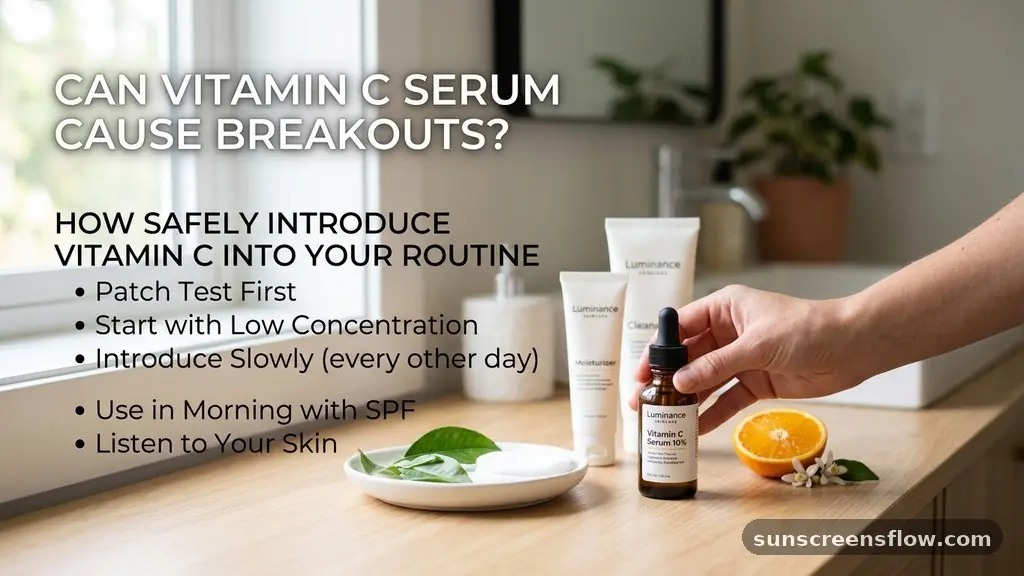
If you are determined to incorporate a vitamin C serum into your regimen, the method of introduction is just as important as the product choice itself. Many people make the mistake of applying it every morning immediately after cleansing, which can be an abrupt shock to the skin. Instead, start by using the product only every other day or even every third day.
This allows your skin to build tolerance to the acidity and the active ingredients. If your skin shows no signs of irritation after a week, you can slowly increase the frequency to daily use.
Additionally, patch testing is non-negotiable, especially for those with a history of sensitive skin or reactive acne. Apply a small amount of the serum to your inner forearm or behind your ear and observe the area for 24 to 48 hours.
If you notice any redness, itching, or swelling, do not apply it to your face. This simple practice can save you from a full-face breakout and help you identify if the product is fundamentally incompatible with your skin chemistry.
| Factor | Signs of Purging | Signs of Adverse Reaction |
|---|---|---|
| Location | Typical breakout areas | New, unusual areas |
| Duration | Short-term (2-4 weeks) | Persistent (4+ weeks) |
| Appearance | Small whiteheads/bumps | Red, inflamed, itchy, or cysts |
| Response | Improves with continued use | Worsens with continued use |
Addressing Topical Gaps: Why Some Serums Fail
Beyond the ingredients themselves, there is a significant gap in consumer awareness regarding product storage and shelf life. Many people believe that a bottle of serum should last for six months, but L-ascorbic acid is incredibly fickle. If a serum is exposed to light, heat, or oxygen, it will degrade, and as previously noted, oxidized vitamin C is a common cause of skin irritation.
If you are experiencing breakouts, check the expiration date and the storage conditions. Keeping your serum in a cool, dark place—or even the refrigerator—can significantly extend its stability and prevent it from turning into a formula that causes more harm than good.
Another often overlooked issue is the layering of products. If you are using a vitamin C serum alongside other potent active ingredients like AHAs, BHAs, or retinol, you may be over-exfoliating your skin. Chemical exfoliation combined with the naturally low pH of vitamin C can create a “perfect storm” for barrier damage. If your skin is over-exfoliated, it becomes inflamed and prone to acne because it can no longer regulate its oil production or defend against bacteria.
If you suspect your routine is too aggressive, try simplifying. Use your vitamin C in the morning and your other actives in the evening, or alternate nights to give your skin sufficient recovery time.
The Role of Skin Type and Microbiome Health
Your skin type is the ultimate arbiter of how well a product will perform. Those with oily or combination skin are more likely to struggle with the base of a serum, while those with dry or sensitive skin might struggle with the acidity. The skin microbiome—the ecosystem of bacteria, fungi, and viruses living on your skin—is also a major player.
When you introduce a highly acidic product, you alter the environment of this ecosystem. For some, this shift is manageable, but for others, it can lead to an overgrowth of acne-causing bacteria.
Maintaining a balanced microbiome is essential for clear skin. If you find that vitamin C is causing breakouts, consider supporting your skin barrier with products containing ceramides, hyaluronic acid, or niacinamide. These ingredients help soothe inflammation and strengthen the skin’s defense systems.
By pairing your vitamin C with a calming, hydrating moisturizer, you can mitigate the risk of irritation and help your skin tolerate the treatment better. Never underestimate the power of a gentle, supporting routine to counteract the potentially harsh effects of high-potency actives.
When to Consult a Professional
If you have tried adjusting your frequency, changing your storage methods, and ensuring your routine is balanced, but you are still experiencing persistent breakouts, it is time to consult a dermatologist. They can help identify whether your reaction is truly acne or if you are dealing with a contact allergy or rosacea flare-up. Sometimes, what we perceive as a simple breakout is actually a symptom of a larger skin concern that requires professional intervention or prescription-grade topicals.
A dermatologist can also perform a patch test with specific ingredients to see if you have a known sensitivity to common serum additives, such as specific preservatives or stabilizers. They can provide personalized recommendations for vitamin C derivatives that are less likely to cause irritation, such as sodium ascorbyl phosphate or tetrahexyldecyl ascorbate. These forms of vitamin C are often much gentler and more stable, making them excellent alternatives for those who simply cannot tolerate traditional L-ascorbic acid.
Summary and Best Practices for Success
Ultimately, the question of whether vitamin C causes breakouts is nuanced. It is rarely the vitamin C molecule itself that causes acne, but rather the formulation, the acidity, or the presence of secondary irritants. By understanding the importance of product stability, the role of comedogenic ingredients, and the necessity of a balanced routine, you can effectively navigate the world of antioxidants without compromising your skin’s health.
To minimize the risk of breakouts, follow these core principles:
- Always check for product oxidation (change in color or smell).
- Prioritize products with simple, fragrance-free formulations.
- Introduce new products slowly to monitor for adverse reactions.
- Ensure your serum is labeled non-comedogenic if you are acne-prone.
- Balance your routine by avoiding excessive use of other strong actives.
- Consider alternative, more stable vitamin C derivatives if L-ascorbic acid is too harsh.
By treating your skincare routine as a scientific process rather than a guessing game, you can harness the brightening and protective power of vitamin C while keeping your complexion clear and healthy. Remember, the goal of any skincare product is to improve your skin’s condition, not to create new problems. If a product consistently causes issues despite your best efforts, it is simply not the right fit for your unique skin chemistry.
Frequently Asked Questions
Why is my vitamin C serum making me break out?
It is likely due to the product’s low pH level, which can disrupt your skin barrier, or the presence of comedogenic ingredients like heavy oils or fragrance. Alternatively, your skin might be undergoing a brief period of purging if the serum contains exfoliating properties that increase cell turnover.
How long does vitamin C purging last?
If your skin is truly purging, the process typically lasts between two and four weeks. This is the time it takes for your skin cells to cycle through the adjustment period. If your breakouts persist beyond this window, the product is likely causing an adverse reaction rather than purging.
What happens if I apply vitamin C serum every day?
Applying vitamin C daily is generally the goal for maximum results, but it requires that your skin has built up a tolerance. If you start daily application too soon, the high acidity can damage your acid mantle, leading to redness, stinging, and inflammation that may manifest as a breakout.
What are the signs of a bad vitamin C serum?
A bad or degraded serum will often change color, shifting from clear or light straw-colored to a dark yellow, orange, or brown. It may also develop a strong, metallic, or “burnt” scent. If you notice these changes, the product has oxidized and should be discarded to avoid irritation.


