


Knowing exactly when to apply hair serum is the secret difference between hair that looks greasy or weighed down and hair that reflects light with a mirror-like sheen. While many people treat hair serum as an afterthought, it is actually a powerhouse tool in your beauty arsenal. When used at the right moment in your routine, it acts as a protective barrier, seals the hair cuticle, and provides essential frizz control.
Most users mistakenly apply it to their roots or at the wrong stage of the drying process, leading to flat, lackluster strands. By understanding the science of your hair’s needs, you can leverage serum to lock in hydration and ensure your style lasts from morning until night.
The Importance of Timing in Serum Application
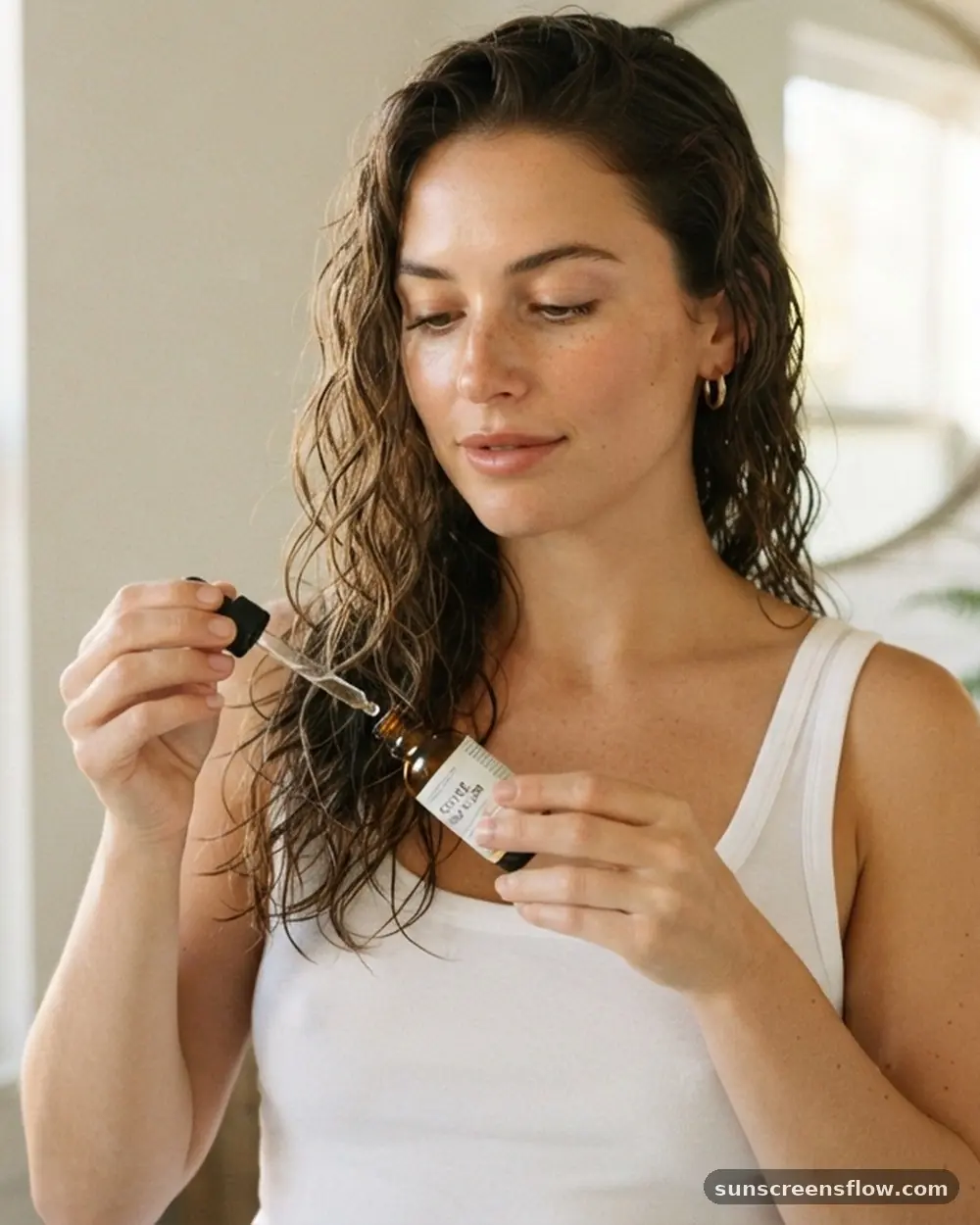
The effectiveness of a styling product depends almost entirely on the timing of its application. Serum is designed to coat the hair shaft rather than penetrate it deeply like a hair mask or a deep conditioner. Because its primary function is to smooth the surface and provide a protective layer, the state of your hair—whether it is soaking wet, damp hair, or completely dry—dictates how well the product will distribute.
If you apply serum to hair that is too wet, the product will slide off along with the excess water, wasting the formula and failing to provide the intended benefits. Conversely, applying it to overly dry, tangled hair can lead to uneven distribution, causing some sections to look oily while others remain frizzy.
For most hair types, the sweet spot is when the hair is towel-dried but still retains a significant amount of moisture. This allows the serum to emulsify with the lingering water on the strands, facilitating an even spread from the mid-lengths down to the hair ends.
When you apply the product at this stage, you are effectively trapping moisture within the shaft, which is crucial for moisture retention. This timing ensures that as your hair dries, the cuticle remains sealed, creating a smooth finish that resists humidity and environmental stressors throughout the day.
Differentiating Between Wet and Dry Application
There is often confusion regarding whether you should apply serum to wet or dry hair. The reality is that both methods serve distinct purposes, and mastering the difference is key to professional-looking results. Applying serum to damp hair is generally the best approach for those who intend to use thermal styling tools.
Because serum acts as a heat protectant, having it distributed evenly while the hair is damp ensures that every strand is shielded before you introduce the high temperatures of a blow-drying session or a flat iron. This layer of protection is vital to prevent heat damage, which often manifests as brittle textures and persistent split ends.
On the other hand, applying serum to dry hair is primarily for aesthetic finishing touches. If you have finished styling and notice a few stubborn flyaways or a lack of hair shine, a tiny amount of serum can be smoothed over the surface. This is a targeted approach meant to tame the outer layer of the hair.
While wet application is about preparation and internal health, dry application is about polish and visual perfection. Knowing when to switch between these two techniques allows you to customize your routine based on your specific daily hair goals.
The Role of Hair Porosity and Texture
Your hair porosity and natural hair texture are the most significant factors in determining how much serum you need and how often you should use it. High-porosity hair, which has gaps or tears in the cuticle, tends to absorb moisture quickly but loses it just as fast. For these individuals, applying a silicone-based or oil-based serum on damp hair is non-negotiable.
The serum fills in the gaps in the cuticle, creating a smooth surface that prevents the hair from becoming frizzy or tangled. Without this step, high-porosity hair often looks dull because the rough surface cannot reflect light effectively.
In contrast, those with fine, low-porosity hair must be extremely careful. Because their cuticles are tightly closed, products tend to sit on the surface rather than absorbing. For these users, applying serum to the scalp is a recipe for disaster, as it will quickly lead to product buildup and limp, greasy-looking hair.
Instead, they should focus only on the very tips of the hair, using a much smaller amount. If you have thick, coarse, or curly hair, you have more leeway in your application. Your hair can handle a more generous amount of product, and it will often thrive on the extra weight provided by the serum to keep curls defined and hydrated.
Understanding the Mechanics of Heat Protection
When you use a flat iron or a curling wand, you are essentially applying direct, intense heat to your strands. Without a barrier, this heat can evaporate the natural moisture inside the hair, leading to structural damage.
Many high-quality serums are formulated with ingredients that can withstand high temperatures, acting as a buffer between the metal plates of your styling tools and your delicate hair fibers. When you apply your serum to towel-dried hair, you are ensuring that the protective film is already in place before the heat is applied.
This is a critical step in daily maintenance for anyone who styles their hair regularly. If you wait until your hair is completely dry to apply the serum, you have missed the window to protect it during the drying phase. Furthermore, applying serum before using a flat iron helps the tool glide more smoothly over the hair, which reduces mechanical friction.
Friction is a silent killer of hair health, often causing breakage that goes unnoticed until you see a halo of short, broken hairs at the crown of your head. By using a serum correctly, you minimize both thermal and mechanical damage, keeping your hair resilient and glossy.
Strategic Application Technique for Maximum Shine

The way you apply your product is just as important as the timing. Many people make the mistake of rubbing the serum directly onto their hair, which can cause tangling and uneven saturation. Instead, you should dispense a small amount—usually a pea-sized drop—into your palms and rub your hands together to warm the product.
This warming process thins the consistency of the serum, making it easier to distribute evenly. Once your hands are coated, use a “raking” motion to pull your fingers through the mid-lengths and hair ends.
Avoid the roots at all costs. The scalp produces natural oils (sebum) that are meant to nourish the hair; adding extra serum to this area will only make your hair look unwashed and heavy. By focusing on the bottom two-thirds of your hair, you are treating the oldest, most vulnerable part of the strand.
The ends of your hair are the most prone to dryness and split ends, so they require the most attention. If you have extra product left on your hands after applying it to the ends, you can lightly skim over the surface of the hair to catch any remaining flyaways, but do not intentionally work the product into the root area.
Table: Comparing Serum Application Methods
| Application Context | Best Timing | Benefit | Focus Area |
|---|---|---|---|
| Thermal Styling | Damp Hair | Heat Protection | Mid-lengths to Ends |
| Frizz Control | Damp Hair | Moisture Retention | Mid-lengths to Ends |
| Finishing/Shine | Dry Hair | Smoothing Flyaways | Surface Only |
| Daily Maintenance | Dry Hair | Softness/Gloss | Ends Only |
Addressing Common Misconceptions and Topical Gaps
There is a pervasive myth that serum is a moisturizer. In reality, most serums are occlusives or sealants. They do not add water to the hair; they lock in the water that is already there.
This is why applying serum to bone-dry, dehydrated hair often yields disappointing results. If your hair feels brittle and dry, you should first apply a leave-in treatment or a water-based hydrating spray, then follow up with a serum to seal that moisture in.
Understanding this difference is a major topical gap that many beauty blogs fail to bridge. By using the serum as a “lock” rather than a “source” of moisture, you will see a massive improvement in the texture of your hair over time.
Another common gap involves the distinction between silicone-based and oil-based serums. Silicone-based products are excellent for creating a high-gloss finish and providing a strong barrier against humidity. They are the gold standard for frizz control.
However, they do not provide long-term nourishment. Oil-based serums, such as those containing argan or jojoba oil, can actually penetrate the hair slightly and provide ongoing health benefits.
If you are looking for long-term health, choose an oil-based product; if you are looking for an immediate red-carpet shine, choose a silicone-based formula. Mixing these up or using them at the wrong times can lead to lackluster results.
The Impact of Serum on Scalp Health
While we have established that serum should not be applied to the roots, it is worth discussing why scalp health is still relevant to the conversation. Some individuals mistakenly believe that applying serum to the scalp will help with dryness. However, the scalp has a completely different chemical requirement than the rest of the hair.
Applying heavy, smoothing serums to the scalp can clog hair follicles, leading to irritation, itching, or even stunted growth. If you suffer from a dry scalp, you need specialized treatments like tea tree oil or scalp-specific serums that are designed to be rinsed out or absorbed without leaving a heavy film.
Maintaining a clear scalp allows your natural oils to travel down the hair shaft effectively. When you use heavy styling products incorrectly, you disrupt this natural process. If you notice that your hair is getting oily faster than usual, evaluate your application technique.
You might be getting too close to the roots with your serum. By keeping the product restricted to the areas that need it—the lengths and ends—you allow your scalp to breathe and maintain its natural balance, which is the foundation of long-term hair health and growth.
Developing a Sustainable Daily Maintenance Routine
Consistency is the hallmark of healthy hair. Incorporating serum into your daily maintenance does not mean you need to apply it every time you touch your hair. In fact, over-application can lead to product buildup, which makes hair look dull and feel sticky.
The goal is to find a balance where you provide enough protection to prevent damage but not so much that you weigh down the hair fibers. For most people, a light application after every wash is sufficient. On non-wash days, you might only need a tiny drop to smooth out any morning bedhead or to refresh your style.
If you find that your hair feels “gunked up” after a few days, it is a sign that you are using too much product or that your serum is too heavy for your hair type. In this case, use a clarifying shampoo once a week to reset your hair and start fresh. Remember that the best hair care routines are adaptable.
If the weather is particularly humid, you might need a bit more serum for frizz control. If the air is dry and cold, your hair might need more hydration before the serum is applied. Listen to how your hair feels and looks, and adjust your application accordingly.
FAQ: Common Questions About Hair Serum
Do you put hair serum on wet or dry hair?
It is most effective to apply hair serum to damp, towel-dried hair. This allows the product to lock in moisture and prepare the hair for heat styling. However, a very small amount can be applied to dry hair as a finishing step to tame flyaways and add shine.
How do I use hair serum correctly without making my hair greasy?
The key is to focus exclusively on the mid-lengths and ends of your hair, avoiding the scalp entirely. Start with a pea-sized amount, warm it between your palms, and rake it through the ends. Using less product is always safer than using too much.
Can I leave hair serum in my hair overnight?
Yes, you can leave serum in your hair, but it is not a deep conditioning treatment. If your serum contains heavy silicones, leaving it in for multiple days may cause buildup. It is best to wash your hair regularly to remove styling products and keep your hair fresh.
Do you use hair serum daily?
You do not need to use hair serum daily unless your hair is extremely dry or prone to severe frizz. For most, applying it after every wash is sufficient. On non-wash days, you can use a tiny amount as a touch-up, but avoid heavy daily reapplication.
Conclusion
Mastering the art of when to apply hair serum is a transformative skill for anyone interested in improving the quality and appearance of their hair. By focusing on damp application for protection and dry application for finishing, you ensure that your hair remains hydrated, shiny, and free from the damaging effects of heat and humidity. Remember that your hair texture and porosity dictate the amount and frequency of use, and keeping the product away from your roots is essential for maintaining a clean, healthy scalp.
Whether you are aiming for sleek frizz control or a mirror-like hair shine, the secret lies in the precision of your application. When you treat serum as a strategic tool rather than a generic additive, you unlock the potential for truly professional results, ensuring that your hair stays protected, vibrant, and beautiful through every stage of your styling routine.


