


Navigating the complexities of a modern skincare routine sequence can feel like solving a chemistry puzzle, especially when you are trying to determine exactly when to apply your targeted treatments. The most common point of confusion for skincare enthusiasts is whether you use serum before or after moisturizer. The short answer, which is rooted in basic dermatological principles, is that you should always apply your serum before your moisturizer.
This order is not merely a suggestion; it is a functional necessity dictated by the physical properties of the products themselves. By placing your serum directly onto clean, slightly damp skin, you allow the potent, concentrated formulas to penetrate the epidermis without being blocked by the heavier, protective layers of a cream or lotion.
The Science of Molecular Weight and Absorption
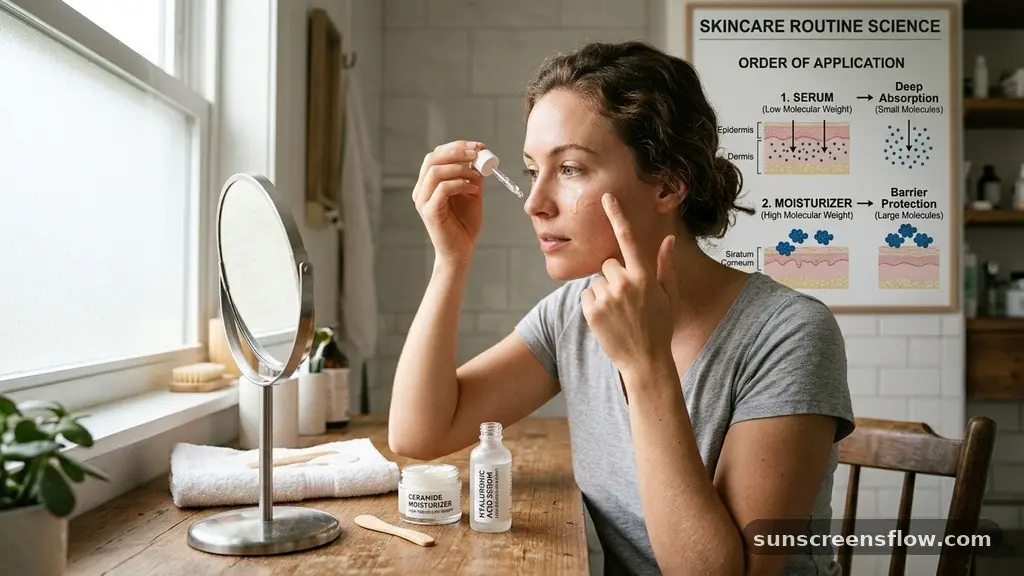
To truly understand why the sequence matters, we must look at the concept of molecular weight. Serums are specifically engineered to have a smaller molecular structure, allowing them to travel deeper into the skin’s layers. Because they are lightweight and usually water-based, they are designed to deliver active ingredients—such as vitamin c, niacinamide, or peptides—directly to where they are needed most.
If you were to apply a heavy moisturizer first, you would be creating a physical barrier on the surface of your skin. This barrier would effectively trap the moisturizer against the skin, making it nearly impossible for the smaller serum molecules to pass through.
Think of your skincare routine like building a wall: you want the mortar (the serum) to go in between the bricks (the skin cells) before you apply the sealant (the moisturizer). When you layer in the correct dermatological order, you ensure that the skin hydration levels are optimized.
The serum acts as the treatment phase, addressing specific concerns like dullness, fine lines, or uneven texture, while the moisturizer acts as the finishing phase. Ignoring this order doesn’t just make your products less effective; it essentially wastes the expensive, high-performance ingredients contained in your serum, as they end up sitting on top of a thick cream rather than sinking into your pores.
Understanding the Role of Humectants and Occlusives
The distinction between humectants and occlusives is the key to mastering product layering. Serums are typically packed with humectants, such as hyaluronic acid, which are ingredients that draw moisture from the environment into the skin.
If you apply a serum that relies on humectants without sealing it in, you might actually experience a temporary drying effect, as the humectants could pull moisture out of the deeper layers of your skin if the air is extremely dry. This is precisely why the moisturizer is the vital second step.
Moisturizers often contain emollients and occlusives, which serve a different purpose: they lock everything in. By applying an occlusive-rich cream after your serum, you create a protective seal that prevents trans-epidermal water loss. This process keeps your skin barrier intact and functioning at its peak.
Without this final step, the water-based serum would evaporate too quickly, leaving your skin feeling tight or dehydrated. Understanding this relationship helps you see that these two products are not competing for space; they are working in a symbiotic relationship where the serum feeds the skin and the moisturizer protects it.
Optimizing Your Skincare Routine Sequence
While the general rule is “thinnest to thickest,” there are nuances to consider when you have a multi-step routine. A typical, effective skincare routine sequence follows this logic: cleanser, toner, serum, moisturizer, and finally, SPF (during the day) or a face oil (at night).
If you use multiple serums, the rule of thumb is to apply them from the thinnest consistency to the thickest. For example, a watery vitamin c serum should always go on before a thicker, gel-like hyaluronic acid serum.
| Product Category | Typical Texture | Application Priority |
|---|---|---|
| Cleanser | Gel/Foam/Cream | First |
| Treatment Serums | Watery/Lightweight | Second |
| Targeted Serums | Gel/Viscous | Third |
| Moisturizer | Cream/Lotion | Fourth |
| Face Oil/SPF | Oily/Thick | Final |
This hierarchy ensures that each product has the best possible chance to exert its effect. If you have an oil-based serum, it should still go before your moisturizer, but it might feel slightly thicker than a water-based one. Always give your skin a few seconds between applications to allow the product to absorb; applying products while the skin is still slightly damp can actually enhance the absorption rate, especially for products containing humectants.
Addressing Specific Skin Concerns: Dry vs. Oily Skin
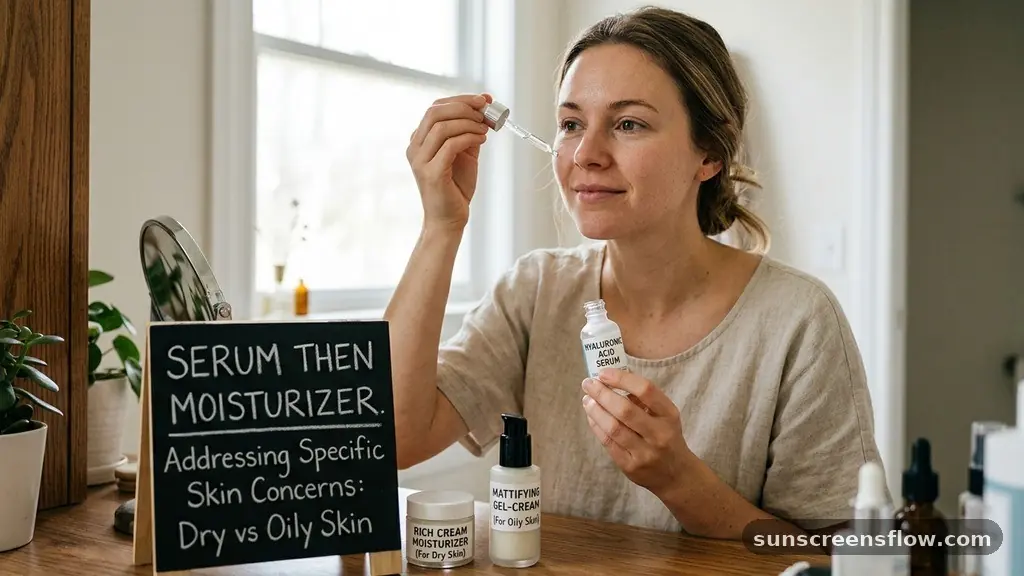
The “serum before moisturizer” rule applies to all skin types, but the types of products you choose will differ. If you have dry skin, you need a serum that focuses on deep hydration and a moisturizer that is rich in lipids to support the lipid barrier. You might even benefit from adding a drop of face oil on top of your moisturizer to provide an extra layer of protection against harsh environmental factors.
Conversely, those with oily skin often worry that layering products will lead to pore clogging or breakouts. The secret here is to choose a serum that is oil-free and a moisturizer that is labeled non-comedogenic. You do not need to skip the serum or the moisturizer; you just need to ensure you are using lightweight, water-based formulations that won’t overwhelm your pores.
Even oily skin needs hydration, and skipping the moisturizer can actually cause your skin to overproduce oil to compensate for the lack of moisture. By following the correct order, you keep your skin balanced rather than greasy.
Common Mistakes When Layering Serums and Moisturizers
One of the most frequent errors people make is applying their products too quickly, one right after another. If you layer a cream over a serum that hasn’t had time to “set,” you might experience pilling, where the products clump together and roll off the skin.
To avoid this, wait about 60 seconds after applying your serum before moving on to your moisturizer. This simple pause allows the active ingredients to anchor into the skin.
Another mistake is using too much product. Because serums are highly concentrated, you rarely need more than a few drops to cover your entire face. Applying too much serum can make it difficult for your moisturizer to absorb, leading to a sticky or tacky residue that stays on the surface of your skin all day.
Remember, the goal is effective delivery, not saturation. If you feel like your skin is constantly tacky, you are likely using too much product or not allowing enough time for absorption.
The Role of Retinol and Exfoliation
When incorporating stronger actives like retinol or chemical exfoliants, the application order becomes even more critical. Retinol is a powerhouse for anti-aging, but it can be irritating.
Many dermatologists suggest applying a lightweight moisturizer before or after your retinol serum, depending on your skin’s sensitivity. If you are a beginner, applying a thin layer of moisturizer first can act as a “buffer,” reducing the risk of redness and peeling while still allowing the retinol to work.
However, for most other actives, the standard order remains. Exfoliation should generally happen after cleansing and before your serum. Once you have removed dead skin cells, your skin is a blank canvas, making it the perfect time to apply a treatment serum.
Following this with a nourishing moisturizer is essential, as the skin is often more vulnerable after exfoliation and requires extra support to maintain its lipid barrier. Always ensure your moisturizer is free of harsh fragrances or irritants if you are using strong actives like acids or retinols.
Filling the Gaps: Does Order Change at Night?
A common question is whether your nighttime routine should differ from your morning routine regarding the skincare routine sequence. While the order—serum before moisturizer—remains the same, the types of products you use should shift. During the day, your focus is on protection (antioxidants like vitamin c and SPF).
At night, your focus is on repair. Your evening moisturizer can be significantly thicker and more nourishing than your daytime cream, as your skin does not need to worry about being exposed to sun or pollution while you sleep.
It is also worth noting that if you use a face oil, it should almost always be the final step in your routine. Oils have a high molecular weight and can penetrate many moisturizers, but they are also occlusive enough to block anything applied after them.
By applying your oil last, you seal in the humectants from your serum and the emollients from your moisturizer, creating a locked-in system that works throughout the night. This approach is highly effective for those dealing with chronic dryness or compromised skin barriers.
FAQ: Common Questions About Skincare Layering
Can I mix my serum into my moisturizer to save time?
While mixing them might seem efficient, it is generally discouraged. Most serums are formulated to be applied directly to the skin for maximum absorption. When you mix them into a cream, you alter the pH and the delivery system of the serum, which can reduce the effectiveness of the active ingredients.
Should I wait for my serum to dry completely before moisturizing?
You don’t need to wait until the skin feels bone-dry, but you should wait until the serum has absorbed and the skin feels slightly tacky rather than wet. This usually takes about 60 seconds. Applying moisturizer to slightly damp skin can actually help “trap” the hydration.
What if I use a serum that feels thicker than my moisturizer?
While rare, if you have a very thick, gel-like serum and an extremely thin, watery moisturizer, you should follow the “thinnest to thickest” rule. Always prioritize the texture of the product. However, this is the exception; in 99% of cases, the serum will be the thinner of the two.
Does the order change if I have sensitive skin?
For sensitive skin, the order remains the same, but the technique may change. You might choose to apply your moisturizer first as a buffer before applying a potent serum (like a high-strength retinol). This can help mitigate irritation while still allowing the active ingredients to provide their benefits.
Conclusion
Mastering the order of your skincare products is one of the simplest yet most effective ways to improve your skin’s health. By consistently applying your serum before your moisturizer, you honor the science of molecular weight and ensure that your active ingredients are reaching their intended targets. Whether you are dealing with dry skin or looking to maintain a healthy skin barrier, this fundamental skincare routine sequence serves as the backbone of an effective regimen.
Remember that your products are designed to work in tandem: the serum treats the skin from within, while the moisturizer protects the surface and prevents moisture loss. By respecting this order and giving your products the time they need to absorb, you will maximize the return on your investment and move closer to achieving your long-term skin goals. Stay consistent, observe how your skin reacts, and don’t be afraid to adjust your product choices based on the changing needs of your complexion throughout the seasons.


