


Navigating the complexities of a multi-step skincare routine often leads to confusion, particularly when deciding if you use toner before serum. To achieve the best results from your products, you must follow the correct skincare routine order, which is generally dictated by the consistency rule—applying products from the lightest, most water-like textures to the thickest, most oil-rich formulas. When you apply your facial cleanser and move into your treatment steps, the toner serves as a critical bridge.
Yes, you should almost always use toner before serum. This sequence ensures that your skin is adequately prepped, balanced, and primed to absorb the potent active ingredients found in your targeted serums. By understanding how these layers interact with your skin barrier, you can maximize the efficacy of your regimen and ensure every drop of product serves a purpose.
Why Toner Precedes Serum in Your Daily Regimen

The primary purpose of a toner is to finalize the cleansing process while restoring the skin’s natural pH balancing. After washing your face, the surface of your skin may have an altered pH level, which can disrupt the acid mantle.
A toner acts as a recalibration tool, lowering the pH to a level that supports healthy skin function. If you were to skip this step and apply a serum directly onto skin that hasn’t been properly prepped, you might find that the product doesn’t penetrate as effectively.
Toner also acts as a hydration primer. By dampening the skin, it creates a surface that is more receptive to subsequent products. Think of your skin like a sponge: a dry, hardened sponge struggles to absorb water, but a slightly damp one soaks it up instantly.
This is the logic behind hydration layering. When you apply a serum—which is often packed with concentrated hyaluronic acid or other humectants—onto skin that is already slightly moist from your toner, you facilitate better serum absorption. This synergy prevents the active ingredients from sitting on the surface, allowing them to penetrate deeper into the epidermis where they can perform their intended functions, whether that is brightening with vitamin C or providing deep moisture.
Understanding the Consistency Rule for Skincare Layers
The most reliable way to determine the sequence of your products is the consistency rule. This principle suggests that you should always move from the thinnest, most liquid products to the heaviest, thickest creams and oils. Because toners have a watery, low-viscosity consistency, they naturally come before serums, which are usually more viscous but still lighter than a heavy moisturizer.
If you were to apply a thicker serum or a rich oil before a toner, the toner would simply sit on top of that barrier, unable to reach the skin. Furthermore, applying a toner after a serum would essentially wash away or dilute the treatment you just applied, effectively undoing the work of your expensive serums. By following the standard order—cleanser, toner, serum, moisturizer—you ensure that each product has the best possible chance to interact with your skin.
This layering method also helps in managing trans-epidermal water loss by trapping moisture under the heavier occlusives that you apply as your final step. Following this order is a cornerstone of modern dermatology practices, ensuring that your routine is both logical and highly effective for long-term skin health.
The Role of pH Balancing and Skin Prep
Many people mistakenly believe that toners are strictly for removing leftover dirt, but modern formulations have evolved significantly. While older, alcohol-heavy astringent products were designed to strip the skin, today’s toners are often focused on providing immediate hydration and soothing the complexion. This pH balancing effect is vital because a neutral or slightly acidic skin environment is necessary for the skin’s enzymes to function correctly.
When your skin’s pH is off-balance, it can become susceptible to irritation, dryness, and sensitivity. A high-quality toner helps stabilize this environment, making it the perfect foundation for your active ingredients. For instance, if you are using a vitamin C serum, your skin’s pH plays a significant role in how well that vitamin C is converted and utilized.
By using a toner first, you ensure that the skin is in the optimal state to receive these specialized treatments. Furthermore, if you use chemical exfoliants like AHAs or BHAs, the toner can help neutralize the skin after the exfoliation process, preventing the irritation that often comes with high-potency treatments. This preparation step is not merely a formality; it is a functional necessity for anyone looking to see real, visible improvements in their skin texture and tone over time.
How Milky Toners Differ from Traditional Formulas
In recent years, the skincare market has seen a rise in milky toners, which offer a different experience than traditional liquid toners. Unlike clear, water-like toners that focus primarily on cleansing and pH balance, milky toners are formulated with lipids, oils, and humectants to provide a deeper layer of moisture. This makes them an excellent choice for those with dry or sensitive skin who might find traditional astringents too harsh.
Even with these richer textures, the answer to “do you use toner before serum” remains the same: yes, the toner still precedes the serum. Because these milky formulas are still lighter than a standard moisturizer, they serve as a pre-serum hydration boost. They excel at softening the skin and improving skin porosity, which in turn makes the skin more permeable to the water-based serums that follow.
When using a milky toner, you might notice that your skin feels plump and supple before you even touch your serum bottle. This is a sign that the hydration layering is working correctly. These toners are particularly beneficial in the winter months or for those living in dry climates, as they provide an extra buffer against the environment while ensuring your serum can still penetrate and do its job.
Optimizing Serum Absorption and Effectiveness
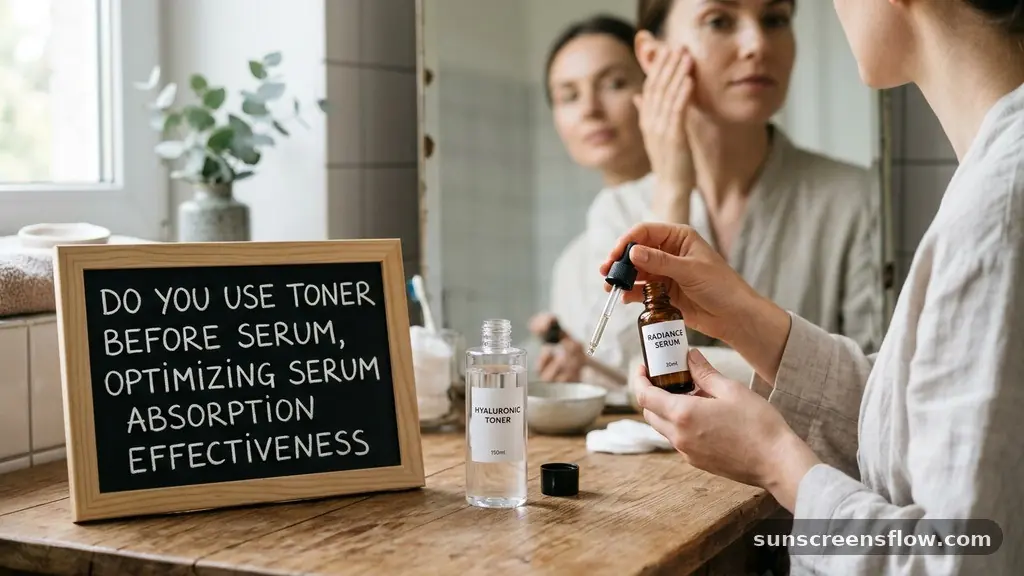
The primary reason to use a toner is to ensure maximum serum absorption. Serums are typically expensive, concentrated products designed to target specific concerns like dark spots, fine lines, or dehydration.
If you are applying them to dry, unprepared skin, you are essentially wasting a portion of the product. By using a toner, you create a “slip” on the skin that allows the serum to spread evenly and sink in without dragging or tugging.
Another factor to consider is the concentration of your serum. Many serums contain potent molecules that need to be delivered deep into the skin’s layers. A toner can act as a delivery vehicle, providing the necessary moisture that these humectants—like hyaluronic acid or glycerin—need to pull into the skin.
Without that initial layer of water from the toner, a hyaluronic acid serum might actually pull moisture out of your deeper skin layers to hydrate the surface, which is the opposite of what you want. By providing a base of hydration, the toner ensures the serum is working with your skin, not against it. This simple addition to your routine can significantly boost the visible results of your anti-aging or brightening treatments.
Common Mistakes When Layering Skincare Products
Even with the best intentions, it is easy to make mistakes in your skincare routine order. One of the most common errors is waiting too long between steps.
While you want to give each product a moment to set, waiting until your face is bone-dry can negate the benefits of the toner. The goal of hydration layering is to keep the skin slightly damp so that the next product can “lock in” that moisture.
Another mistake is misidentifying the product type. Not all serums are the same; some are water-based serums, while others are oil-based serums. If you are using an oil-based serum, the rules change slightly.
Oil-based products should generally be applied after water-based serums and before your heavier moisturizer. If you try to put a water-based toner over an oil-based serum, the toner will bead up and fail to absorb. Always check the texture of your products.
If a product feels like water, it is a toner or an essence. If it feels like a gel or a light lotion, it is likely a serum.
If it feels like a cream or a thick oil, it is a moisturizer or a face oil. Keeping this sequence in mind will prevent product pilling and ensure that your regimen is as effective as possible.
Table: Skincare Layering Guide by Consistency
| Order | Product Category | Purpose | Texture |
|---|---|---|---|
| 1 | Facial Cleanser | Removes impurities | Liquid/Gel |
| 2 | Toner/Essence | pH balance & hydration | Watery |
| 3 | Water-based Serum | Targeted treatment | Gel/Lightweight |
| 4 | Oil-based Serum | Deep nourishment | Viscous/Oily |
| 5 | Moisturizer | Seal in hydration | Cream/Lotion |
| 6 | SPF (Daytime) | Sun protection | Cream/Fluid |
The Relationship Between Exfoliation and Toner
The timing of your toner application becomes especially important when you introduce exfoliation into your routine. If you are using chemical exfoliants, such as glycolic acid or salicylic acid, you should generally use your toner after cleansing but before you apply your active treatment serums. Some people prefer to use their exfoliating toner as their primary toner, but if you are using a separate exfoliating product, the order should be: cleanse, exfoliate, tone (if the toner is hydrating), then serum.
The goal here is to ensure that your skin is balanced after the potentially disruptive process of exfoliation. Exfoliants can temporarily compromise the skin barrier, so using a soothing, hydrating toner immediately afterward helps to calm the skin and prepare it for the active ingredients in your serum. If you use a harsh toner after an exfoliant, you might experience unnecessary stinging or redness.
Always choose a gentle, alcohol-free toner if you are already using active acids in your routine. This careful sequencing allows you to reap the benefits of chemical peels and resurfacing treatments without causing long-term damage to your skin’s health.
Addressing Topical Gaps: Essence vs. Toner
A frequent point of confusion is the distinction between an essence and a toner. In many K-beauty routines, these are distinct steps, but in Western skincare, the lines are often blurred.
An essence is typically more concentrated than a toner but lighter than a serum. It acts as a middle ground, providing deep hydration and preparing the skin for the heavier treatments to follow.
So, where does it fit? If you are using both a toner and an essence, the rule of thumb is to apply the thinner product first. Usually, this means toner, then essence, then serum.
If your toner is very watery and your essence is slightly thicker, this order is perfect. If you have a very hydrating, viscous toner, you might find that you don’t even need an essence. The key takeaway is to prioritize the consistency rule.
If you have multiple liquid treatments, apply them from the most watery to the most viscous. This ensures that each layer is absorbed before the next one is applied. Don’t feel pressured to use every single product category; focus on what your skin needs, such as extra hydration or specific pore refinement, and build your routine around those goals.
How to Customize Your Routine for Skin Type
Your specific skin type should ultimately dictate how many steps you include in your routine. Those with oily skin may find that a simple toner followed by a lightweight, water-based serum is enough to keep them hydrated without clogging pores. In contrast, those with dry skin may need the full regimen, including a hydrating toner, an essence, a serum, and a rich moisturizer to prevent trans-epidermal water loss.
* Oily Skin: Focus on pore-refining toners and lightweight, oil-free serums.
* Dry Skin: Use hydrating milky toners and serums rich in hyaluronic acid or ceramides.
* Sensitive Skin: Choose alcohol-free, fragrance-free toners that focus on calming and soothing.
* Mature Skin: Prioritize antioxidant-rich serums and toners that support skin elasticity.
By tailoring your products to your skin’s unique needs, you ensure that you aren’t just following a trend, but creating a sustainable, effective routine. Always patch-test new products, and remember that consistency is more important than the number of steps.
Even the most elaborate routine will fail if you don’t use it regularly. Start with the basics—cleanser, toner, serum, moisturizer—and adjust as you learn how your skin responds to different textures and ingredients.
Frequently Asked Questions
Does the order of toner and serum change at night?
The fundamental order of your skincare routine, including using toner before serum, remains the same regardless of whether it is day or night. The goal is always to apply products from the thinnest consistency to the thickest, ensuring that your skin is prepped for the active treatments that follow.
Can I mix my serum and toner together?
It is generally not recommended to mix your products together in your palm before application. Each product is formulated with a specific pH and delivery system. Applying them in layers allows each to perform its specific function, such as pH balancing for the toner and targeted delivery for the serum.
How long should I wait between applying toner and serum?
You do not need to wait for your toner to dry completely. In fact, it is better to apply your serum while your skin is still slightly damp from the toner. This technique, known as hydration layering, helps your skin absorb the serum’s active ingredients more effectively and efficiently.
What if my toner is an exfoliating product?
If your toner contains active exfoliating acids, apply it after cleansing and before your serum. However, be cautious not to over-exfoliate. If you are using a strong exfoliating toner, you may want to skip other chemical exfoliants in the same session to avoid damaging your skin barrier.
Conclusion
The question of whether you use toner before serum is one of the most common inquiries in skincare, and the answer is a definitive yes. By placing your toner immediately after your facial cleanser and before your serum, you create a seamless transition that optimizes the performance of your entire routine. This sequence respects the consistency rule, ensures proper pH balancing, and leverages hydration layering to help your skin absorb the potent active ingredients you need.
Whether you are using a simple water-based toner or a nourishing milky toner, the goal remains the same: to prep, hydrate, and prime the skin for the targeted treatments that follow. Remember that your skincare journey is personal; while these rules provide a solid foundation, always pay attention to how your skin responds to different combinations.
By maintaining a logical order and focusing on high-quality ingredients, you can protect your skin barrier and achieve the healthy, radiant complexion you desire. Stay consistent, follow the steps, and enjoy the transformative power of a well-structured skincare regimen.


