


Achieving a radiant, healthy complexion often feels like solving a complex puzzle, especially when you are staring at a shelf full of bottles. A common point of confusion for many enthusiasts is the sequence of application: does toner come before serum? The short answer is yes, toner almost always precedes serum in your daily routine.
This specific sequence is rooted in the fundamental principles of skincare layering, which dictate that products should be applied from the thinnest, most water-like consistency to the thickest, most oil-rich formulations. By understanding the science of skin absorption and molecular weight, you can ensure that each potent ingredient has the best chance of penetrating the skin barrier effectively.
The Science of Skincare Layering and Sequence
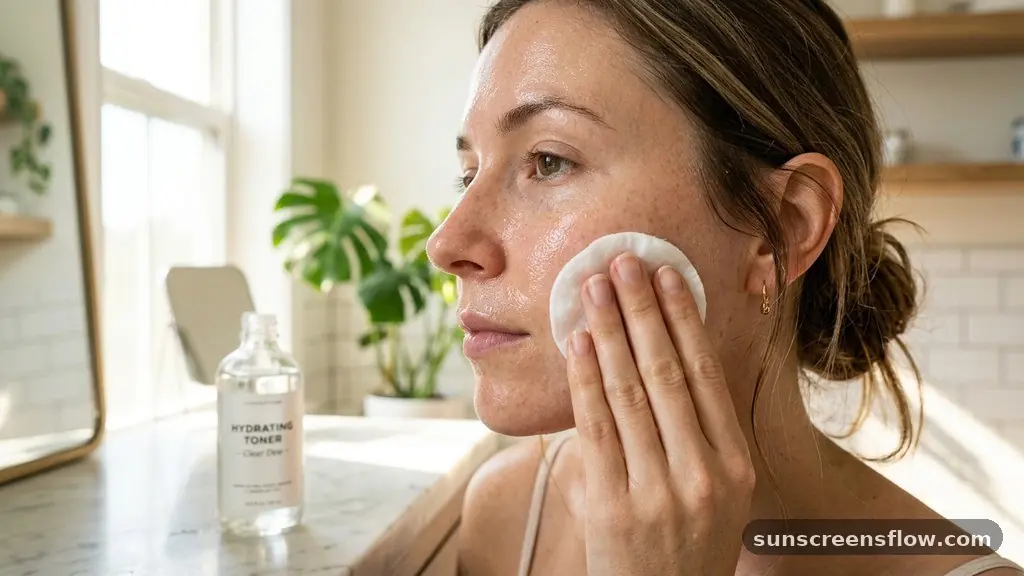
The primary rule governing your routine is to apply products based on their viscosity. Toner is designed to be the bridge between your cleansing step and your treatment phase. After you have finished cleansing, your skin’s natural pH might be slightly disrupted, depending on the harshness of your cleanser.
A quality toner works to restore pH balancing, creating an optimal environment for the subsequent steps. Because toners are almost exclusively water-based products, they have a very low molecular weight. This allows them to dampen the skin and provide a base level of hydration, which makes the skin more permeable for the more concentrated actives found in serums.
If you were to apply a serum first, you would be placing a thicker, often more expensive, treatment directly onto potentially dry skin. The serum might struggle to penetrate, or worse, it could be wiped away or neutralized by the toner applied afterward. Think of your skin like a sponge: a dry sponge is less effective at absorbing liquid than one that is already slightly damp.
By applying toner first, you are essentially pre-hydrating the skin, allowing the humectants in your toner to draw moisture into the upper layers of the epidermis. This creates a “slip” that helps the serum glide on more evenly and sink in more deeply.
Understanding the Role of Toner in Your Routine
Many people mistakenly believe that toner is just an astringent meant for stripping oil, a misconception stemming from the harsh formulas of the past. Modern toners have evolved into sophisticated delivery systems for hydration and skin conditioning.
While some toners do focus on pore tightening or gentle chemical exfoliation, the majority are formulated to calm the skin and provide a foundation of nutrients. When you apply your toner, you are removing any remaining trace impurities that the cleanser might have missed, while simultaneously depositing beneficial ingredients like glycerin, botanical extracts, or soothing floral waters.
The act of applying toner also prepares the skin to better accept active ingredients. If your goal is to brighten your skin with vitamin c or smooth fine lines with a peptide serum, you want those ingredients to reach their target cells without obstruction. A toner acts as a primer.
It softens the stratum corneum—the outermost layer of the skin—making it more receptive. Without this step, your high-performance serums might just sit on the surface, leading to product pilling or a sticky residue that feels unpleasant under makeup. Always remember that the goal of a well-structured routine is not just to use many products, but to use them in a way that maximizes their individual efficacy.
Molecular Weight and Product Penetration
The concept of molecular weight is the most reliable guide for determining the order of your products. Skincare ingredients vary in size; smaller molecules can penetrate deeper into the skin, while larger molecules are designed to sit on the surface to protect and seal in moisture. Because toners are composed primarily of water, their molecules are small and move quickly into the skin.
Serums, while also thin, often contain a higher concentration of active ingredients and sometimes thicker thickening agents to provide a luxurious feel. If you reverse this order, the larger or more concentrated molecules in the serum could potentially block the smaller molecules in the toner from reaching their intended destination.
It is helpful to visualize your skin as a series of channels. The toner opens these channels and provides the initial surge of water. When you follow up with a serum, those channels are already primed.
If you use a niacinamide serum, for instance, you want that ingredient to interact directly with your skin cells to regulate sebum production or improve skin texture. By having the toner underneath, you ensure that the niacinamide isn’t just sitting in a pool of tap water or leftover cleanser residue. This systematic approach ensures that you get the most value out of every drop of your skincare products, which is particularly important given that serums are often the most expensive items in a beauty regimen.
The Interaction Between Toners and Active Ingredients
The relationship between your toner and your serums depends heavily on the specific actives involved. If you are using a toner that contains chemical exfoliation agents like AHAs or BHAs, it is essentially acting as a mild treatment itself. In this case, you must be careful not to “over-layer” actives that might cause irritation.
For example, if your toner has glycolic acid, following it immediately with a high-strength retinol serum might cause redness or stinging. The dermatological order suggests that you should give each layer a moment to settle.
This is known as toner absorption time. Waiting about 30 to 60 seconds after applying your toner allows the liquid to be fully absorbed, ensuring your skin is not “wet” when you apply your next product.
Consider the following table to help visualize how different product categories fit into the layering process:
| Step | Product Category | Primary Function |
|---|---|---|
| 1 | Cleanser | Removes debris and surface oils |
| 2 | Toner | Balances pH and prepares the skin |
| 3 | Serum | Delivers high-potency active ingredients |
| 4 | Moisturizer | Locks in hydration and seals with occlusives |
This progression ensures that your skin remains balanced throughout the entire application process. By adhering to this structure, you minimize the risk of ingredient conflict and maximize the benefits provided by your targeted treatments.
Addressing Topical Gaps: Milky Toners and Essences
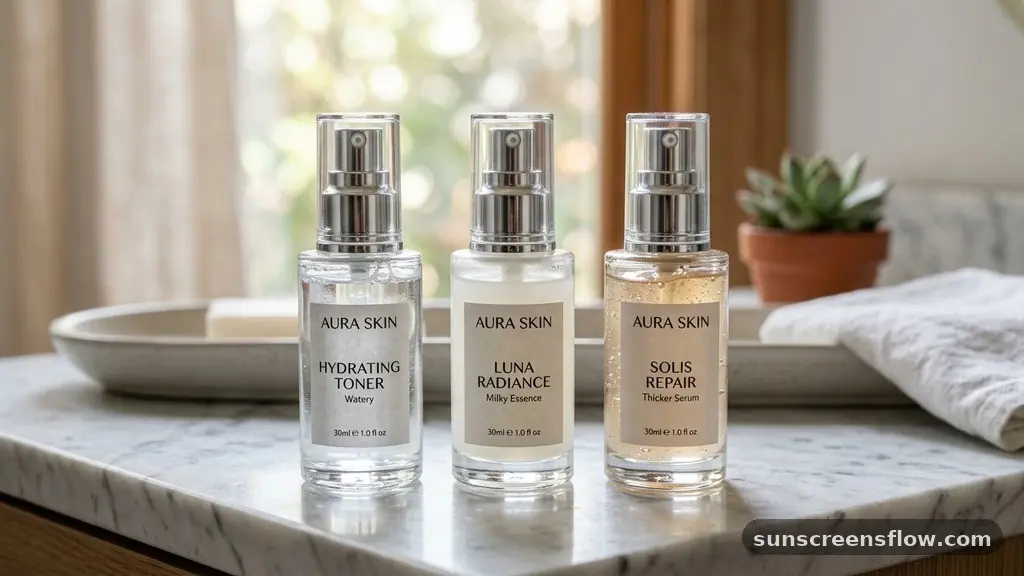
A frequent point of confusion arises with the introduction of essence and “milky” toners. Where do these fit if they seem thicker than traditional toners but thinner than serums? An essence is essentially a hybrid; it is a more concentrated version of a toner that focuses on deep hydration.
If you are using both a watery toner and an essence, apply the watery toner first, followed by the essence, and then your serum. This “thinnest to thickest” rule remains the absolute gold standard. Milky toners often contain light oils or emulsion-like textures that provide more nourishment than a standard astringent toner.
If your “toner” feels more like a light lotion, it might actually be an essence or a hydrating emulsion. In this case, treat it as the final step before your serum. The rule is simple: if you are unsure, look at the texture.
If it pours like water, it is a toner. If it has a slight viscosity or “bounce” to it, it is likely an essence.
Applying these in the correct sequence ensures that you aren’t applying a heavy, oil-based toner that might create a barrier, preventing your water-based serum from reaching the skin. Always prioritize the texture and the sensation on your skin to determine the order if you are combining multiple liquid-based products.
The Role of Humectants and Occlusives
Understanding the difference between humectants and occlusives is vital for effective layering. Humectants, which are commonly found in toners and serums, are ingredients like hyaluronic acid that pull water into the skin. Occlusives, usually found in your final moisturizing step, are ingredients like ceramides or oils that sit on top to prevent that water from evaporating.
When you apply your toner, you are saturating the skin with humectants. Following this with a serum allows those humectants to work in tandem with the actives in the serum.
If you skip the toner and go straight to a serum, you might find that your serum doesn’t feel as hydrating as expected. This is because the serum may not have enough water-binding capacity on its own to keep the skin plump. By layering, you are creating a “moisture sandwich.”
The toner provides the water, the serum provides the treatment, and the moisturizer provides the seal. This layering technique is the secret to achieving a “glass skin” effect, where the skin looks hydrated, firm, and incredibly smooth. It is a process of building up layers of beneficial ingredients rather than just piling them on in a random fashion.
Optimizing Your Routine for Day and Night
Your routine should ideally shift slightly between morning and evening. In the morning, your focus is on protection and preparation for the day ahead. Using a refreshing, antioxidant-rich toner followed by a vitamin c serum is a classic combination.
The toner balances the skin, and the serum provides the protection against environmental stressors. At night, your focus shifts to repair. You might use a more soothing toner—perhaps one with centella asiatica or aloe—followed by a treatment serum containing retinol or peptides.
Regardless of the time of day, the rule of “toner first” remains constant. The only exception is if your dermatologist has prescribed a specific medication that must be applied to completely clean, dry skin. In that case, your prescription treatment would come before any toner or serum.
However, for standard over-the-counter skincare, the toner-serum-moisturizer sequence is the gold standard. Consistency is the key to seeing results; by following this order every day, you train your skin to expect the hydration and treatment it needs, which leads to long-term improvements in your skin texture and overall health.
Common Mistakes to Avoid in Skincare Layering
One of the most common mistakes is rushing the process. Many people apply their toner and immediately follow it with their serum without waiting. This can lead to “product drag,” where the serum doesn’t absorb properly.
Another mistake is using too many products. You do not need five different serums and three different toners. A simplified, effective routine is often far better for your skin barrier than a complicated one that leads to irritation.
Remember that your skin has a limited capacity for absorption. If you overload it with too many layers, the products will simply sit on the surface, potentially leading to breakouts or clogged pores.
* Avoid using harsh, alcohol-based toners that strip your natural oils.
* Do not mix too many different types of active ingredients at once, such as using multiple strong acids.
* Always ensure your hands are clean before applying any product to your face.
* Pay attention to how your skin feels; if it feels tight or uncomfortable, you may be over-exfoliating.
* Keep a record of how your skin reacts to new products to identify any sensitivities.
By avoiding these pitfalls, you can create a routine that is both sustainable and highly effective, ensuring that your skin looks its absolute best every single day.
Conclusion: The Path to Better Skin
The question of whether toner comes before serum is a fundamental aspect of building an effective skincare regimen. As we have explored, the answer is a definitive yes—toner is the essential first step that prepares your skin for the more potent treatments to follow. By acting as a pH-balancing and hydrating foundation, toner ensures that your serums can penetrate the skin barrier and deliver their active ingredients where they are needed most.
By following the principle of applying products from the thinnest consistency to the thickest, and by being mindful of the unique properties of your products, you can elevate your skincare game significantly. Remember that the ultimate goal is to support your skin’s health, protect its barrier, and address your specific concerns with precision. Whether you are focusing on hydration, anti-aging, or brightening, the correct layering order is your most valuable tool for achieving the radiant, healthy results you desire.
Frequently Asked Questions
Do I really need to use a toner if my cleanser is gentle?
Yes, even with a gentle cleanser, a toner is beneficial. It helps restore the skin’s natural pH, which can be altered by tap water and cleansing, and it provides an immediate base of hydration that prepares the skin to better absorb your subsequent serums and treatments.
Can I apply serum while my face is still wet from the toner?
It is generally better to wait about 30 to 60 seconds after applying toner before using your serum. This allows the toner to be absorbed into the skin. If your skin is too wet, the serum may slide off or dilute, preventing it from penetrating as effectively as it should.
Is it possible to skip the toner and go straight to the serum?
While you can skip toner, you may miss out on the benefits of pH balancing and the “primer” effect it provides. If you have a very simple routine, you might not notice a difference, but for those using targeted treatments, the toner acts as a necessary bridge for better absorption.
Does the order change if I am using an essence?
Yes, if you are incorporating an essence, the order is toner, then essence, then serum. Think of the essence as a bridge between the watery toner and the more concentrated serum. Always layer your products from the thinnest, most water-like consistency to the thickest, most oil-rich formulas.


