


Many people find themselves staring at a sparse arch in the mirror, wondering if the bottle of lash serum sitting on their vanity might double as a solution for their brows. The short answer is yes: in many cases, eyelash serum can indeed work on eyebrows, provided the formulation is compatible with the skin around your eyes and the hair follicles of your brow.
Because both eyelashes and eyebrows are hair follicles that follow a similar biological growth cycle, the active ingredients designed to stimulate growth in one area often translate well to the other. However, the skin chemistry of your eyelids differs significantly from that of your brow bone, and the density of the hair varies as well, making it important to understand the mechanics behind these products before you start a new routine.
Biological Similarities Between Eyelashes and Eyebrows
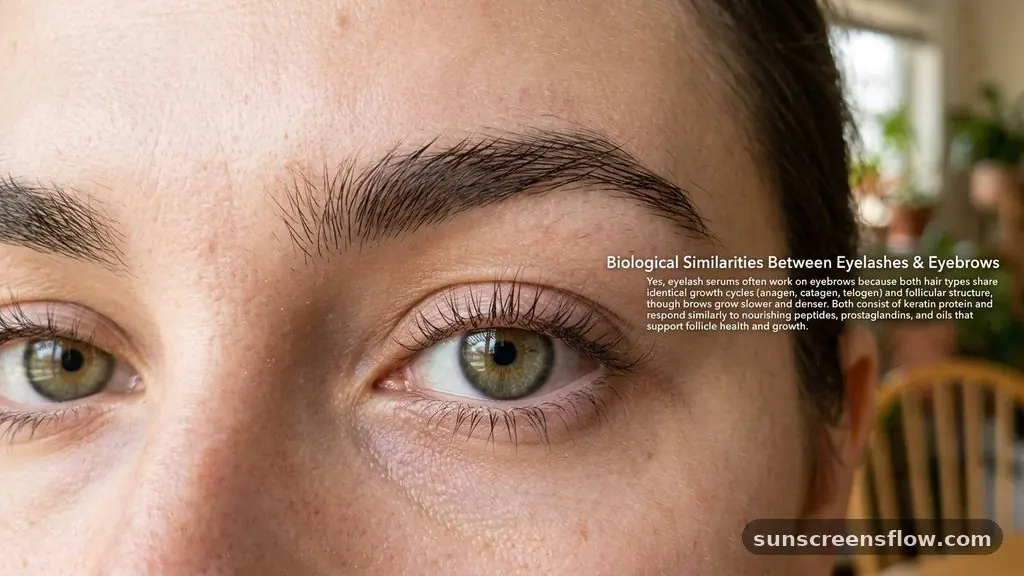
To understand why these products often cross over, we must first look at the hair growth cycle. Both eyelashes and eyebrows grow through three distinct stages: the anagen (growth) phase, the catagen (transitional) phase, and the telogen (resting) phase. The primary difference lies in the duration of these phases.
Eyebrows have a much shorter anagen phase compared to the hair on your scalp, which explains why they do not grow as long. Eyelashes also have a relatively short growth phase, which is why they tend to shed and replace themselves frequently.
Because both sets of hairs are essentially keratinized protein structures emerging from follicles, they respond to similar stimuli. When you apply a serum that contains growth-promoting agents, you are effectively trying to extend the anagen phase or increase the blood flow to the hair follicle.
By lengthening the time the hair stays in its active growth period, you can theoretically achieve greater brow density and length. While the physiological structure is nearly identical, the skin surrounding the brow is thicker and less sensitive than the delicate eyelid skin, which often means that formulations designed for lashes are generally safe—though perhaps not always optimized—for the brow area.
Analyzing Active Ingredients in Growth Serums
The effectiveness of any serum depends entirely on its chemical composition. Most high-performance serums rely on specific compounds to achieve results. One of the most common, yet controversial, groups of ingredients are prostaglandin analogs, such as isopropyl cloprostenate.
These compounds were originally developed to treat glaucoma, with increased hair growth observed as a side effect. They work by forcing the follicle into the growth phase and keeping it there longer. While highly effective, they are also associated with potential side effects that users should be aware of.
Beyond synthetic analogs, many modern cosmetic formulations utilize a peptide complex. Peptides are chains of amino acids that support the structural integrity of the hair, helping to nourish it and prevent premature breakage. Other ingredients like biotin and panthenol are frequently included to condition the hair shaft, making the brows appear thicker and healthier by improving their moisture retention.
While these ingredients don’t necessarily “grow” hair in the same way a prostaglandin analog might, they prevent the shedding that often makes brows look sparse. Understanding these active ingredients in growth serums is the first step in determining whether a specific product will yield the results you are looking for.
Safety and Efficacy Considerations
Before applying a product intended for your lids to your face, you must consider these factors: the concentration of the ingredients and the sensitivity of your skin. The skin on your brow bone is more resilient than your eyelids, but it is still prone to reactions. Dermatological safety is paramount, especially when dealing with products that alter the biological functions of your hair follicles.
Some users may experience contact dermatitis or localized redness when switching products. If you have sensitive skin, you should perform a patch test on your inner forearm before applying the serum to your brows. Furthermore, because the brow area is larger than the lash line, you might be tempted to use more product.
This is a common mistake. Avoid over-application, as excess serum can lead to buildup, clogged pores, or even unwanted hair growth outside of your desired brow shape. If a formula is specifically potent, the skin around the brow might absorb it differently than the lash line, potentially leading to irritation if the product wasn’t formulated for that specific skin density.
The Role of Natural Oils and Conditioners
Not all serums rely on synthetic chemicals. Many people prefer natural alternatives like castor oil, which has long been touted for its ability to soften hair and provide a protective barrier. While castor oil does not technically contain the same growth-triggering compounds as pharmaceutical-grade serums, its ability to coat the hair in fatty acids can make existing brows look fuller and darker.
When comparing natural oils to scientific formulations, it is important to manage expectations. Natural oils are excellent for hair health and preventing breakage, but they do not typically influence the hair growth cycle at a molecular level.
If your goal is to repair damaged, brittle brows, natural oils are a fantastic, low-risk addition to your routine. However, if you are looking to grow hair in areas where it has ceased to grow entirely, you will likely need a product containing active growth stimulants.
| Ingredient Type | Primary Function | Best For |
|---|---|---|
| Prostaglandin Analogs | Extends Anagen Phase | Maximum Growth |
| Peptide Complexes | Strengthens Hair Structure | Preventing Breakage |
| Natural Oils (e.g., Castor) | Conditions and Softens | Brow Health & Shine |
| Biotin/Panthenol | Hydration & Support | Overall Hair Resilience |
Comparing Application Techniques and Absorption
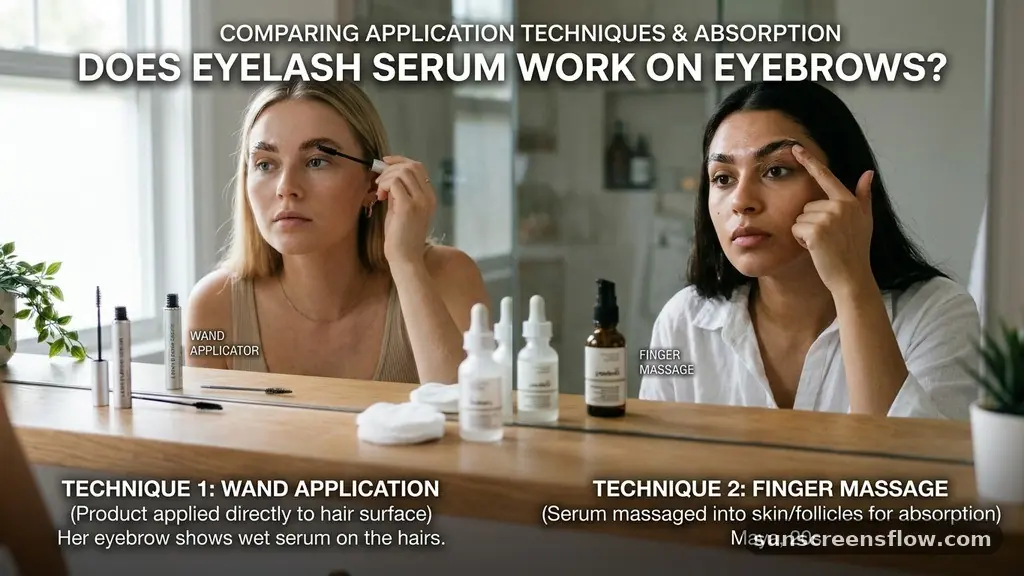
The way you apply the product significantly impacts the outcome. Eyelash serums usually come with a fine-tipped brush designed to reach the base of the lash line.
When using this on your brows, the brush may feel inadequate for the larger surface area. You might find yourself dipping the wand into the tube multiple times, which can lead to contamination of the remaining serum.
Concentration and absorption are key. Since the brow area is larger, you need to ensure the serum reaches the skin, not just the hair. The active ingredients must penetrate the follicle to have any effect.
Using a spoolie brush to distribute the serum evenly through the brow hair can help ensure the product reaches the skin surface. However, be mindful that using a spoolie can pick up makeup or oil from your skin and transfer it back into the bottle, which can degrade the formula over time. If you plan on using your lash serum for your brows, consider using a disposable applicator to maintain the integrity of the product.
Addressing Potential Side Effects
While the allure of thick, full brows is strong, you must remain vigilant regarding potential side effects. While rare, irritation is the most common complaint. This can manifest as itching, flaking, or a mild burning sensation. If you notice any of these signs, you should discontinue use immediately.
One of the more specific side effects associated with prostaglandin-based serums is hyperpigmentation of the skin. While this is most commonly noted on the eyelid, it can theoretically occur on the brow bone if the serum is applied too liberally or if it runs into the surrounding skin. This darkening is usually reversible once you stop using the product, but it can be frustrating to manage.
Furthermore, if you wear contact lenses, you must be careful to avoid getting the serum in your eyes, as the ingredients can be absorbed by the lens material, leading to persistent irritation. Always ensure the serum has fully dried before touching your face or applying other products.
Topical Gaps: What Most Guides Miss
There is a significant gap in the conversation regarding the “hairline” effect. Many people ask, “Does lash serum work on the hairline?” and the answer is generally that it is not cost-effective or practical. Using a small, expensive tube of lash serum on your scalp or a large area of your forehead is inefficient and will likely lead to running out of product within days.
Another often-overlooked aspect is the difference between “growth” and “perceived density.” Many serums work primarily by conditioning existing hairs. If you have very thin, brittle brows, a good conditioning serum will make them look thicker simply because they are no longer breaking off.
This is a vital distinction. Many consumers believe they are growing “new” hair, when in reality, they are simply retaining the hair they already have. If you are looking for new hair growth in areas that have been bald for years due to over-plucking or scarring, a topical serum may have limited efficacy, as the follicle itself may be damaged beyond the point of stimulation.
Best Practices for a Successful Routine
If you decide to proceed with using an eyelash serum on your brows, follow these best practices for application to maximize results and minimize risk:
- Cleanse your face thoroughly: Apply the serum to clean, dry skin to ensure maximum absorption without interference from oils or makeup.
- Consistency is key: Most growth serums require daily application for 8 to 12 weeks before visible results appear. Do not expect overnight miracles.
- Use a precise amount: A little goes a long way. If the serum is dripping, you have used too much.
- Monitor your skin: Keep a close watch for any signs of redness or discomfort, especially in the first week of use.
- Check the expiry: Eye-area products have a shorter shelf life than other cosmetics. Dispose of the product after three months to prevent bacterial growth.
- Layering: Allow the serum to dry completely before applying brow gels, pencils, or moisturizers to avoid smearing or product interaction.
By following these steps, you create an environment where your hair follicles can thrive. Remember that the goal is to support the natural biological process, not to force it into submission. Patience is the most important ingredient in any hair growth journey.
FAQ
Is it safe to use the same serum for both lashes and brows?
It is generally safe, provided you maintain hygiene. However, do not use the same wand for both areas if you are prone to eye infections, as transferring bacteria from the brow area to the eye can cause issues. Use separate applicators to ensure maximum cleanliness.
How long does it take to see results on my eyebrows?
Because the hair growth cycle is slow, you should expect to wait at least 8 to 12 weeks of consistent daily application. Some users may see minor improvements in hair texture sooner, but significant changes in density usually require patience and a full cycle of growth.
Will the hair fall out if I stop using the serum?
If the serum was purely conditioning, you might notice your brows returning to their previous state as the hair goes through its natural shedding process. If the serum was stimulating growth through active ingredients, those hairs may shed once you stop the stimulus, as the growth cycle returns to normal.
Can I use natural oils instead of a medicated serum?
You certainly can. Natural oils like castor or rosemary oil are excellent for nourishing the hair shaft and keeping the skin hydrated. While they may not trigger the same rapid growth as pharmaceutical-grade serums, they are a safer, more affordable option for maintaining overall brow health and preventing breakage.
Conclusion
Ultimately, the question of whether eyelash serum works on eyebrows is answered with a qualified “yes.” While the biological mechanisms for hair growth are similar, the success of your efforts will depend on the specific ingredients in your chosen product, your skin’s sensitivity, and your commitment to a consistent routine. By understanding the role of peptides, prostaglandin analogs, and conditioning agents, you can make an informed decision that aligns with your beauty goals.
Whether you choose a high-performance clinical serum or a natural conditioning oil, the key is to prioritize the health of your hair follicles and the safety of the delicate skin surrounding your eyes. With patience and the right approach, you can achieve the fuller, healthier-looking brows you desire, effectively bridging the gap between your lash care and your brow maintenance routine.


