

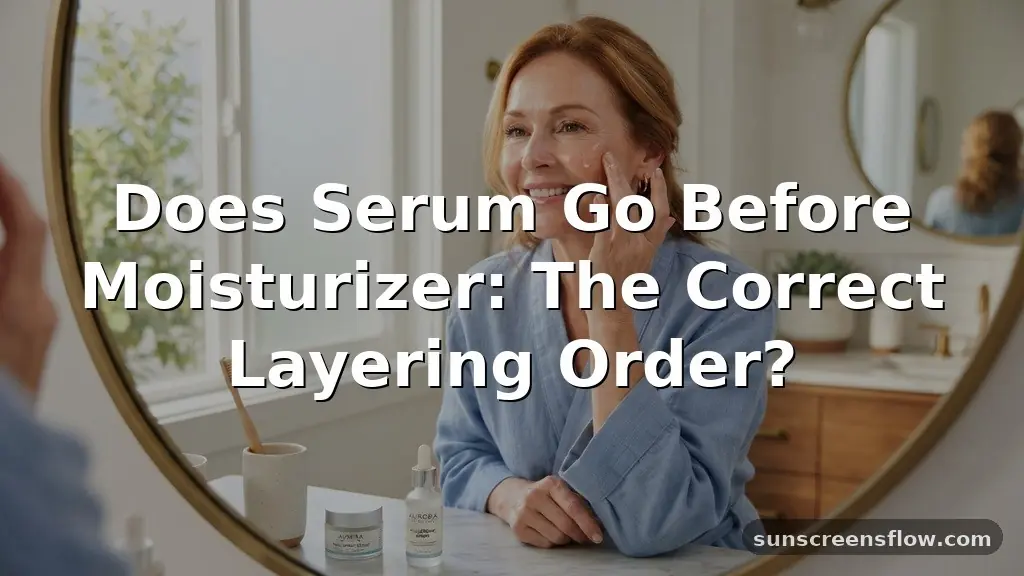
Achieving a healthy, radiant complexion often feels like solving a complex puzzle, especially when it comes to the specific sequence of your daily products. If you have ever stared at your bathroom counter wondering does serum go before moisturizer, you are certainly not alone. The general rule of thumb in professional dermatology and aesthetic skincare is that you should always apply products from the thinnest, most lightweight consistency to the thickest, most emollient one.
Because serums are designed to deliver concentrated doses of active ingredients directly into the skin, they must be applied first to ensure maximum efficacy. By prioritizing the order of application, you allow these potent formulas to penetrate the epidermis before you seal everything in with a heavier cream.
The Science Behind Product Layering and Absorption
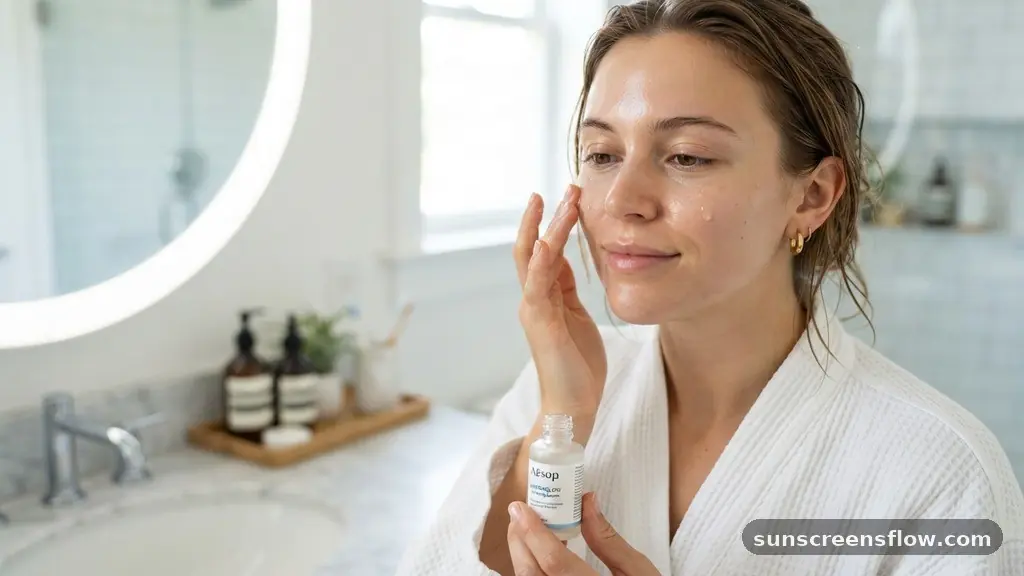
The primary reason for the “serum first” rule lies in the concept of molecular weight and skin permeability. Serums are formulated with smaller molecules that are engineered to travel deeper into the skin layers, whereas moisturizers are typically composed of larger molecules designed to sit on the surface to create a protective seal.
If you were to apply a thick, butter-like moisturizer first, its film-forming agents would effectively create a physical barrier on your skin. This barrier would prevent the high-performance ingredients in your serum from reaching their intended destination, essentially rendering your expensive treatment products useless.
Understanding dermal absorption is key to optimizing your skincare routine. When you cleanse your face, your pores are clear and your skin is primed to drink in nutrients. A water-based serum, such as one containing hyaluronic acid, works by drawing moisture into the skin.
If you apply this after a thick cream, the humectant properties of the serum cannot pull moisture from the environment or your products effectively. By placing the serum directly onto clean, slightly damp skin, you facilitate a faster and deeper delivery system. This scientific approach ensures that your skin receives the full benefit of concentrated antioxidants, peptides, or exfoliating acids before you lock them in with an occlusive layer.
The Role of Humectants and Occlusives in Skincare
To truly master the order of operations, you must distinguish between the functions of your products. Ingredients like hyaluronic acid or glycerin act as humectants, which means they attract water molecules to the surface of the skin.
Moisturizers, on the other hand, often contain occlusives—ingredients like petrolatum, shea butter, or certain silicones—that sit on top of the skin to prevent transepidermal water loss. If you apply an occlusive product before a humectant-rich serum, you are blocking the very mechanism that allows the humectant to function.
Think of your skin like a sponge. If you coat a sponge in wax (the occlusive moisturizer), water (the serum) will simply bead off the surface rather than soaking in. However, if you apply the water first and then apply the wax, the water stays trapped inside the pores of the sponge, keeping it hydrated for longer.
This is why the sequence of application is non-negotiable for those dealing with dry skin or those looking to improve their skin’s overall texture. When you respect the chemical hierarchy of your products, you are essentially creating an environment where your skincare can perform at its peak potential, leading to more visible results in a shorter amount of time.
How to Identify Your Skincare Product Consistency
If you are ever unsure about the order of a new product, look at the texture and the label. A water-based serum will feel thin, fluid, and often slightly tacky upon initial application. An oil-based serum might feel slightly more viscous, but it will still be thinner than a standard face cream or lotion.
Moisturizers are almost always thicker, creamier, or waxier because they are designed to provide a structural barrier. When in doubt, perform a simple “viscosity test” on the back of your hand.
If the product runs or spreads like water, it is a serum or essence. If it holds its shape or feels dense, it is a moisturizer.
| Product Category | Typical Texture | Primary Function |
|---|---|---|
| Cleanser | Gel, foam, or cream | Remove debris and pH balancing |
| Toner | Water-like | Refining and prep |
| Serum | Lightweight fluid | Targeted treatment |
| Moisturizer | Cream, lotion, or balm | Hydration and sealing |
| Sunscreen | Varies | UV protection |
This table provides a generalized guide for your daily morning and evening regimens. Always remember that while some specialty products might blur the lines, following the “thinnest to thickest” rule remains the most reliable method for ensuring your products work harmoniously.
The Impact of Active Ingredients on Skin Health
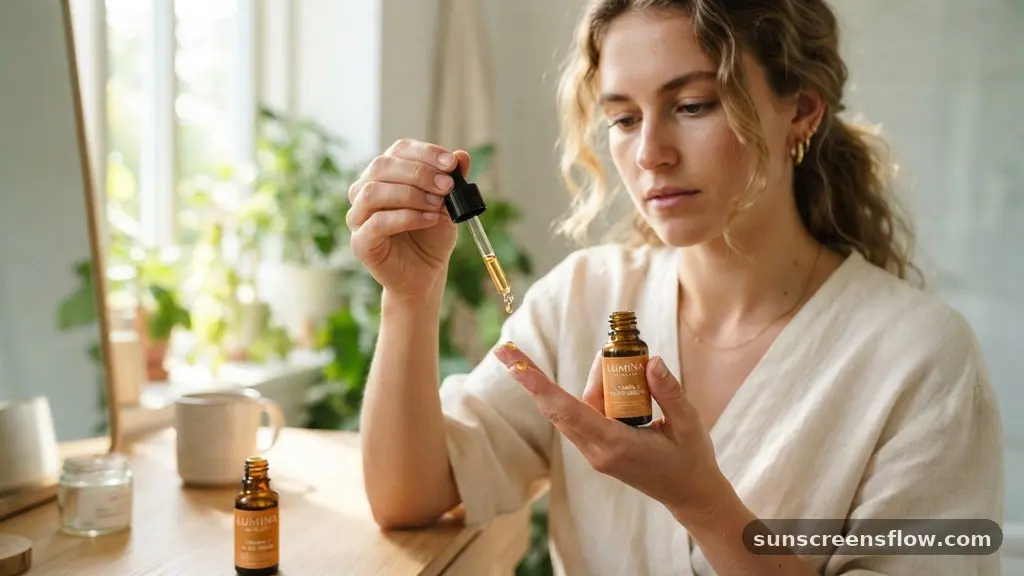
Serums are the heavy lifters of a skincare regimen, often packed with potent active ingredients like vitamin C, retinol, or niacinamide. These ingredients are highly reactive and sensitive to the environment. Applying them directly to the skin allows for a more controlled absorption rate.
For instance, vitamin C is an unstable antioxidant that works best when it can interact directly with the skin’s surface to neutralize free radicals. If it is buried beneath a thick layer of moisturizer, its efficacy may be diminished.
Similarly, retinol is a powerhouse for cell turnover but can be irritating if the skin barrier is compromised. By applying a pea-sized amount of a retinol serum to clean, dry skin, you ensure that the active molecules can reach the deeper layers of the epidermis where collagen production is stimulated. Following up with a gentle, non-comedogenic moisturizer helps mitigate the potential dryness or flaking associated with active treatments.
This layering technique—treating first, then protecting—is the gold standard for achieving professional-level results at home. It allows you to tailor your routine to address specific concerns like hyperpigmentation, fine lines, or acne without disrupting your skin’s natural pH balance.
Addressing Common Misconceptions About Layering
A common myth circulating in beauty communities is that using multiple serums or a serum and a moisturizer will cause pore-clogging. In reality, whether a product clogs your pores depends on its specific formulation, not necessarily on the fact that you layered it. If you have oily skin or combination skin, you might be tempted to skip moisturizer because you fear it will make you look greasy.
However, skipping this step can actually lead your skin to overproduce oil to compensate for dehydration. The key is to choose a lightweight, oil-free moisturizer that complements your serum.
Another misconception is that you need to wait long periods between applications. While it is beneficial to let a serum “set” for about 30 to 60 seconds before applying your moisturizer, you do not need to wait ten minutes. Waiting for the serum to become slightly tacky to the touch is often enough to signal that it has absorbed sufficiently into the upper layers of the dermis.
If you rush and apply your moisturizer immediately, you might inadvertently rub the serum off or push it around the face, leading to uneven distribution. Patience, even in small amounts, is a virtue when it comes to skincare layering.
The Importance of Skin Type in Your Routine
Your skin type dictates not just the products you choose, but how they behave on your face. Those with dry skin will find that applying a humectant-rich serum followed by a rich, occlusive cream is essential to prevent water loss throughout the day.
Conversely, individuals with oily skin might find that a water-based serum provides enough hydration on its own, especially in humid climates. However, even those with oily skin should consider a lightweight moisturizer to ensure the skin barrier remains healthy and functional.
Barrier repair is a critical aspect of any long-term skincare strategy. If your barrier is damaged, no amount of expensive serum will fix the issue. Using a moisturizer with ceramides or fatty acids after your serum helps reinforce the lipid barrier, preventing irritants from entering and moisture from leaving.
For those with combination skin, you might find that you need more hydration in certain areas, like the cheeks, while keeping the T-zone lighter. In this case, apply your serum all over, but adjust the amount of moisturizer you use based on the needs of specific zones of the face.
Navigating Sunscreen Application and Daytime Routines
The order of operations becomes slightly more critical during the day because of the addition of SPF. Sunscreen application should always be the final step of your morning skincare routine. Because sunscreens are formulated to sit on top of the skin to reflect or absorb UV rays, applying anything on top of them would disturb the protective film and significantly reduce their SPF rating. Therefore, the sequence is always: cleanser, toner, serum, moisturizer, and finally, sunscreen.
If you are using a chemical sunscreen, it needs to interact with the skin to be effective, which is why some people prefer to apply it directly after a light serum. However, most dermatologists agree that applying your moisturizer first creates a smooth canvas for the sunscreen, ensuring an even layer of protection. If you are using a physical (mineral) sunscreen, it is even more important to apply it last.
Never mix your sunscreen into your moisturizer or serum before applying, as this can dilute the active ingredients and create gaps in your protection. Always wait a few minutes after your moisturizer to let it absorb before applying your SPF to ensure it stays in place.
Filling the Gaps: Advanced Layering Questions
Many users wonder if they can use multiple serums at once. The answer is yes, but you must still follow the thinnest-to-thickest rule. For example, if you are using a watery niacinamide serum and a slightly thicker, gel-like peptide serum, apply the niacinamide first.
The goal is to keep the textures moving from fluid to viscous. If you use too many serums, you might experience “pilling,” where the product balls up on the skin. This usually happens when you use too much product or when the formulas are incompatible.
Another concern is whether you can apply serum after moisturizer. While the general rule says no, there is an exception for certain oil-based finishing serums. If you have a very lightweight, facial oil-based serum, some people prefer to pat it on as the very last step to provide a final glow and lock in the moisture.
However, for treatment serums containing active ingredients like retinol or AHAs, applying them after a moisturizer is generally discouraged because the moisturizer will block their penetration, rendering the treatment ineffective. Stick to the traditional order for active treatments to see the best results.
FAQ Section
Should I apply serum to damp or dry skin?
Applying serum to slightly damp skin can actually enhance the absorption of humectants like hyaluronic acid. The water on your skin helps the serum penetrate more effectively and traps that extra moisture, leading to a plumper, more hydrated appearance throughout the day.
Can I mix my serum and moisturizer together in my palm?
While it might seem like a time-saver, it is generally better to apply them separately. Mixing them can alter the pH balance of the serum and dilute the concentration of active ingredients, potentially making them less effective than if they were applied in their intended order.
How long should I wait between applying serum and moisturizer?
You do not need to wait long; about 30 to 60 seconds is usually sufficient. You want the serum to feel slightly tacky or dry to the touch, which indicates that it has been absorbed into the skin, ensuring your moisturizer won’t just push the serum around.
Do I really need a serum if I use a good moisturizer?
While a high-quality moisturizer is essential for barrier health, serums are designed to deliver higher concentrations of specific actives that moisturizers cannot provide. If you have specific skin concerns like dark spots, fine lines, or acne, a serum is the most effective way to address them.
Conclusion
Understanding does serum go before moisturizer is a fundamental step in building an effective skincare regimen. By adhering to the principle of applying products from the lightest, most fluid consistency to the heaviest, most emollient, you ensure that your skin receives the maximum benefit from your chosen treatments. Serums are designed to deliver powerful active ingredients deep into the epidermis, while moisturizers serve the vital role of sealing that hydration in and protecting the skin barrier from environmental stressors.
Remember that your skin is a dynamic organ, and its needs may change with the seasons or as you age. Always prioritize a gentle facial cleanser to start, follow with your targeted serums, lock in the benefits with a suitable moisturizer, and never skip your sunscreen application during the day. By consistently following this logical order, you create the optimal conditions for your skin to thrive.
Whether you are dealing with dry skin, oiliness, or specific concerns, respecting the hierarchy of your skincare products will help you achieve a healthier, more radiant complexion over time. Stick to these core principles, be patient with your results, and enjoy the process of nurturing your skin with the right care.


