

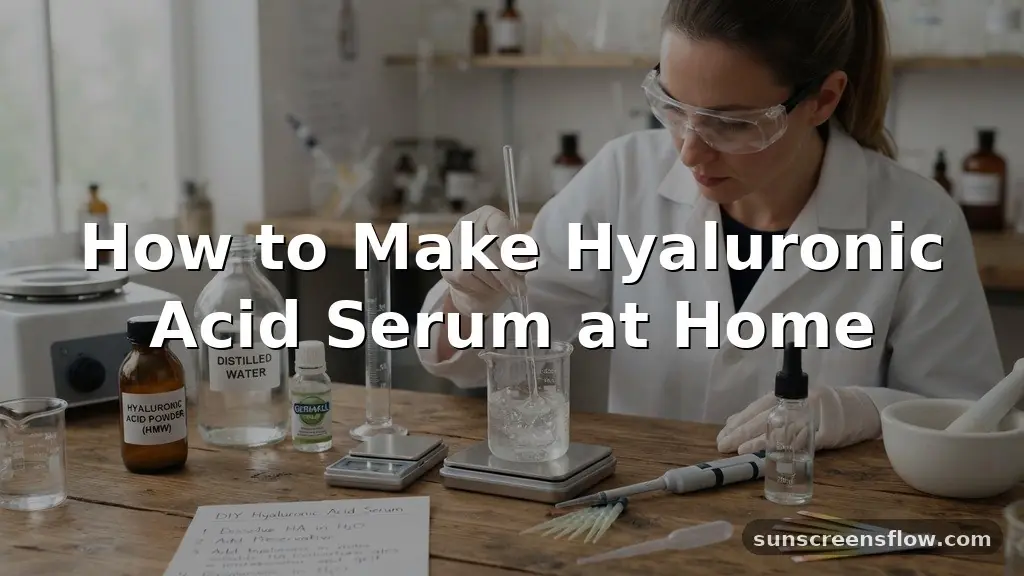
Creating your own skincare products allows for total control over the ingredients, concentration, and purity of the formulas you apply to your face. Learning how to make hyaluronic acid serum is a rewarding project for skincare enthusiasts because it demystifies the process of creating a high-performance humectant product.
By understanding the chemistry behind skin hydration barrier support, you can craft a professional-grade serum that rivals expensive commercial alternatives. This process involves dissolving a powdered form of hyaluronic acid—most commonly sodium hyaluronate—into a base of distilled water to create an aqueous solution that deeply hydrates the skin.
The Science of Hyaluronic Acid and Skin Hydration
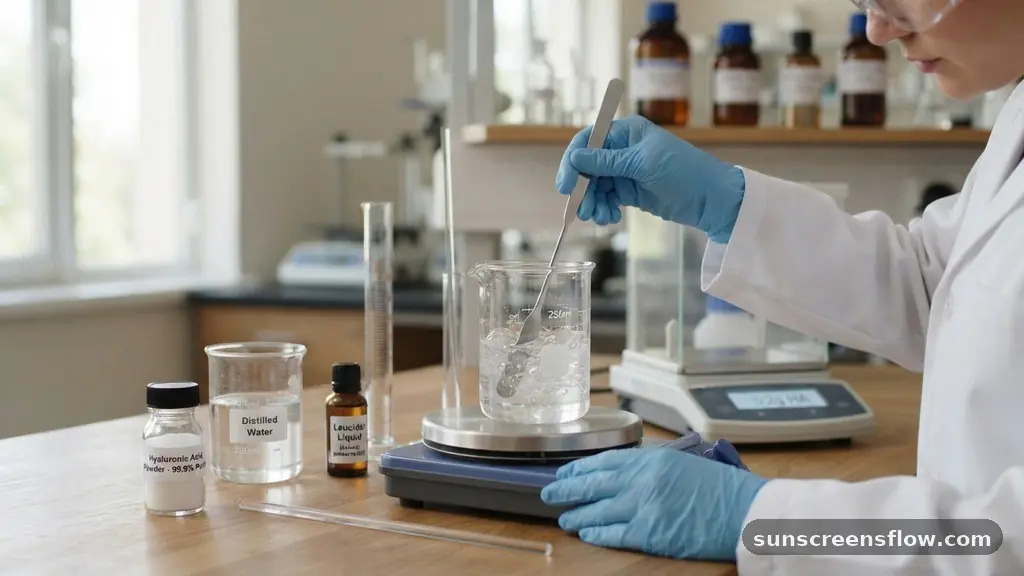
At its core, hyaluronic acid is a glycosaminoglycan, a naturally occurring substance in the human body that acts as a powerful magnet for moisture. When applied topically, it functions as a humectant, meaning it draws moisture from the environment and the deeper layers of the dermis into the surface of the skin. This mechanism is essential for reducing trans-epidermal water loss, a process where water evaporates from the skin, leading to dehydration and the appearance of fine lines.
The efficacy of your serum depends heavily on the molecular weight of the ingredient you purchase. High molecular weight hyaluronic acid stays on the surface to provide an immediate plumping effect, while lower molecular weight variants can penetrate slightly deeper.
Most DIY enthusiasts use a medium-to-high weight sodium hyaluronate because it is easier to handle and provides the most significant “glow” and surface-level hydration. When you prepare this at home, you are creating a base that can be customized with other active ingredients to target specific skin concerns, such as redness, dullness, or texture issues.
Essential Ingredients and Equipment for Success
Before you begin, you must source high-quality cosmetic grade ingredients. Do not attempt to use low-purity powders found in non-skincare contexts. You will need a digital scale that measures to 0.01 grams, as the concentration of hyaluronic acid is extremely potent; even a small variation in weight can change the serum viscosity from a light gel to a thick, unspreadable paste.
Required Supplies
- Sodium hyaluronate powder (high or medium molecular weight)
- Distilled water (for maximum purity and to prevent microbial growth)
- Preservative Eco or a similar broad-spectrum preservative
- Vegetable glycerin (optional, for added slip and humectant properties)
- Vitamin B5 panthenol (to soothe and repair the skin barrier)
- Sterilized glassware (beakers, stirring rods, and storage bottles)
- pH strips or a digital pH meter to ensure the final product is skin-safe
Ensuring the distilled water purity is non-negotiable. Tap or even filtered water contains minerals and impurities that can destabilize your formula and provide a breeding ground for bacteria. Using sterilized glassware is equally important to maintain the integrity of your cosmetic formulation.
Step-by-Step Formulation Process
The process of making the serum involves creating a stable suspension. Start by calculating your percentages.
A standard, effective concentration for hyaluronic acid is between 1% and 2%. Anything higher than 2% often becomes too thick and sticky to apply comfortably.
First, weigh your distilled water into a sanitized beaker. Slowly sprinkle the sodium hyaluronate powder over the surface of the water. Do not stir immediately, as this can cause the powder to clump.
Instead, cover the beaker and let it sit for several hours or overnight. The powder will naturally hydrate and turn into a clear, viscous gel. Once the mixture is fully hydrated, you can add your water-soluble additives like niacinamide or vitamin B5 panthenol.
After the base is formed, add your preservative eco. This is a critical step; without a broad-spectrum antimicrobial agent, your serum will become a petri dish for mold and bacteria within days. Finally, use a pH strip to check the acidity of your serum.
Your target pH should be between 5.0 and 5.5, which mimics the natural mantle of the skin microbiome. If the pH is too high or low, you may need a buffer or a simple pH adjuster to bring it into the safe range for topical application.
Understanding the Role of Preservatives and Stability
One of the biggest mistakes beginners make is underestimating the importance of shelf life preservation. Because you are working with an aqueous solution, you are creating an environment where water-loving microbes thrive. A broad-spectrum antimicrobial is not optional; it is a safety requirement for any product containing water.
Facial serum stability is also influenced by how you store your final product. Keep your serum in an opaque, airtight container, ideally a pump bottle that prevents air and fingers from contaminating the formula. While some people believe natural products don’t need preservatives, any product containing water requires a robust preservation system.
If you choose not to use a preservative, you must make a single-use batch and store it in the refrigerator for no more than 48 hours. However, for a standard routine, formulating with a professional-grade preservative is the only way to ensure the product remains safe for the duration of its intended use.
Comparing Additives for Your Serum
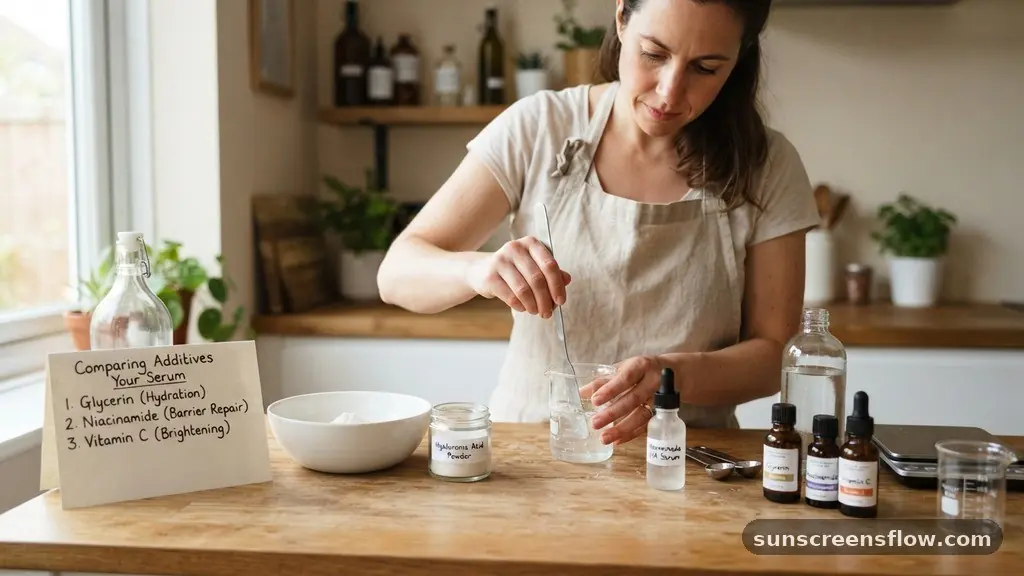
When you learn how to make hyaluronic acid serum, you realize that the base is just a vehicle for other beneficial compounds. You can customize your formula based on your skin type. The table below outlines common additives and their primary functions in a DIY serum.
| Additive | Primary Benefit | Concentration Range |
|---|---|---|
| Vitamin B5 (Panthenol) | Soothing and barrier repair | 1% – 5% |
| Niacinamide | Brightening and pore reduction | 2% – 5% |
| Vegetable Glycerin | Enhanced humectant/slip | 1% – 3% |
| Allantoin | Anti-irritant/healing | 0.1% – 0.5% |
By incorporating these ingredients, you shift your serum from a simple hydrator to a multi-functional treatment. For example, adding niacinamide makes the serum excellent for oily or acne-prone skin, while adding panthenol makes it ideal for those with compromised or sensitive skin barriers. Always remember to adjust your water percentage to account for the total volume of your additives so that your final formula always adds up to 100%.
Common Mistakes and How to Avoid Them
The most frequent issue encountered when making this serum is the “clumping” of the powder. If you stir too quickly, the sodium hyaluronate will form a gel skin around the dry powder, making it impossible to dissolve.
The patience required to let the powder hydrate naturally is the secret to a professional texture. Another common error is failing to incorporate a chelating agent, such as disodium EDTA, which helps neutralize metal ions in the water that can interfere with the preservative’s efficacy.
Additionally, many DIYers fail to test the pH. A serum that is too alkaline can disrupt the skin microbiome, leading to irritation or breakouts. Always have pH strips on hand.
If your formula is too basic, a tiny drop of citric acid solution can lower the pH to the desired range. Conversely, if it is too acidic, a small amount of a sodium bicarbonate solution can raise it. Always work in tiny increments, as the pH can shift rapidly.
Optimizing Skin Absorption and Efficacy
Even a perfectly formulated serum will not work if the skin is not prepped correctly. Because hyaluronic acid is a humectant, it needs water to function. If you apply a high-concentration serum to bone-dry skin in a dry climate, the HA may actually pull moisture out of your skin rather than into it.
To maximize skin absorption, always apply your serum to damp skin. After cleansing, gently pat your face with a towel but leave it slightly moist. Apply your serum while the skin is still damp, then follow immediately with an occlusive moisturizer.
This creates a seal that traps the water provided by the serum, maximizing the hydration benefits and preventing trans-epidermal water loss throughout the day. This simple technique transforms the serum from a basic product into a high-performance hydration layer that supports the overall health of your face.
Addressing Topical Gaps in DIY Skincare
One gap in current DIY tutorials is the lack of focus on raw material quality. Many tutorials suggest using “food grade” ingredients, which is a dangerous practice. Cosmetic grade ingredients are processed in facilities that ensure the absence of heavy metals and biological contaminants. When you source ingredients, ensure they come from a reputable cosmetic supplier that provides a Certificate of Analysis (CoA).
Another gap is the lack of discussion regarding the chelating agent. Many people assume that water and HA are enough, but trace minerals in water can oxidize your active ingredients, causing the serum to lose its efficacy over time. Adding a chelator improves facial serum stability significantly.
Finally, there is often a misunderstanding about “natural” preservatives. Many natural preservatives are not broad-spectrum, meaning they might kill bacteria but fail against mold or yeast. Always use a proven, lab-tested, broad-spectrum preservative to ensure your homemade products are as safe as anything you would buy in a store.
FAQ
What should I never mix with hyaluronic acid?
Generally, hyaluronic acid is highly compatible with most skincare ingredients. However, you should avoid mixing it with high concentrations of acids that would significantly drop the pH below 4.0, as this can degrade the hyaluronic acid molecule and reduce its effectiveness as a humectant.
Does homemade hyaluronic acid need to be refrigerated?
If your serum contains a proper broad-spectrum preservative, it does not strictly need to be refrigerated. However, keeping it in a cool, dark place away from direct sunlight will help maintain the chemical stability of the active ingredients and extend the shelf life of the formula.
Which is better for older skin, retinol or hyaluronic acid?
These serve different purposes. Retinol is a vitamin A derivative used for cellular turnover and collagen production, while hyaluronic acid focuses on immediate hydration. They are not mutually exclusive; in fact, using both—hyaluronic acid to hydrate and retinol to treat—is a common and highly effective anti-aging strategy.
What are the ingredients of hyaluronic acid serum?
A basic serum consists of distilled water, sodium hyaluronate powder, and a broad-spectrum preservative. Advanced versions may include humectants like vegetable glycerin, soothing agents like vitamin B5 panthenol, and active ingredients like niacinamide, all balanced to a skin-friendly pH of 5.0 to 5.5.
Conclusion
Learning how to make hyaluronic acid serum is an empowering way to take command of your skincare routine. By focusing on distilled water purity, using the correct molecular weight of sodium hyaluronate, and ensuring your product is stable through the use of a broad-spectrum antimicrobial, you can create a professional-grade product that provides exceptional results. Remember that the key to success lies in the balance: proper hydration of the powder, accurate weighing of ingredients, and strict adherence to hygiene protocols.
By following these steps, you not only save money but also gain a deeper appreciation for the chemistry that keeps your skin hydration barrier healthy and resilient. With your own custom serum, you can ensure that every drop applied to your face is optimized for absorption and safety, providing the deep, lasting moisture your skin deserves.


