

Deciding whether or not is vitamin C serum good for rosacea requires a nuanced look at how your skin reacts to active ingredients. While many people turn to this antioxidant to brighten their complexion or fight signs of aging, those with chronic redness often wonder if the acidity will trigger a reaction.
Because rosacea involves a compromised skin barrier and heightened sensitivity, introducing potent actives can be a delicate balancing act. Understanding your specific skin type and the form of the ingredient you choose is the key to determining if a product will help calm your face or inadvertently cause a flare-up.
The Relationship Between Topical Antioxidants and Sensitive Skin
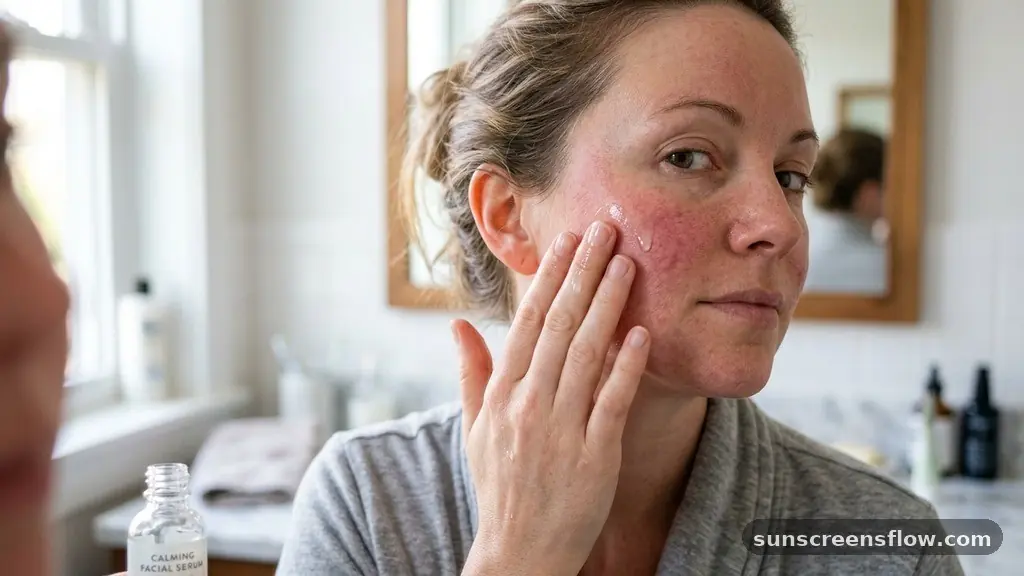
When you live with persistent facial redness, your primary goal is usually to minimize irritation. Topical antioxidants play a vital role in protecting the skin from environmental damage, which is a major contributor to oxidative stress. For a person with rosacea, however, the challenge lies in the delivery system.
Many high-potency serums are formulated with L-ascorbic acid, which is the most researched form of vitamin C. While it is highly effective at neutralizing free radicals, its low pH level can be quite aggressive on reactive skin.
The acidity required for L-ascorbic acid to penetrate effectively often leads to stinging, burning, or increased erythema in individuals whose capillary walls are already fragile. This doesn’t mean you must avoid antioxidants entirely; rather, it suggests that the standard approach to brightening might not be suitable for your specific needs.
Instead of rushing into high-concentration formulas, look for products that prioritize skin barrier function. Strengthening the lipid bilayer helps the skin become more resilient against external triggers, allowing you to eventually incorporate more active ingredients without experiencing the dreaded sting of a flare-up.
Understanding Different Forms of Vitamin C
Not all vitamin C is created equal, and the specific derivative you choose makes a massive difference for someone with sensitive skin. If you are asking yourself if is vitamin C serum good for rosacea, the answer often depends on whether the product uses a stable, gentle derivative or a harsh, acidic one. L-ascorbic acid is the “gold standard” for healthy skin, but it is frequently too harsh for those dealing with capillary dilation and chronic inflammation.
Alternative forms, such as sodium ascorbyl phosphate or magnesium ascorbyl phosphate, are much friendlier to sensitive complexions. These derivatives are more stable and operate at a pH closer to that of your natural skin, which significantly lowers the risk of irritation.
They are less likely to cause the stinging sensation associated with pure vitamin C, making them excellent candidates for those who want the brightening and protective benefits without the side effects. Magnesium ascorbyl phosphate, in particular, is often noted for its soothing properties and ability to remain effective without compromising the integrity of your skin barrier.
| Vitamin C Form | pH Level | Suitability for Rosacea |
|---|---|---|
| L-Ascorbic Acid | Low (Very Acidic) | Poor (High Irritation Risk) |
| Sodium Ascorbyl Phosphate | Neutral/Mild | Good (Gentle & Stable) |
| Magnesium Ascorbyl Phosphate | Neutral/Mild | Excellent (Soothing & Stable) |
Why the Skin Barrier Matters for Rosacea Patients
The health of your skin barrier is essentially the foundation of your entire skincare routine. When you have rosacea, your barrier is often permeable and weakened, which allows irritants to penetrate deeper than they would on normal skin.
This is why you might experience a burning sensation when applying products that wouldn’t bother others. Vitamin C can actually support the skin by stimulating collagen production and improving the overall texture of the epidermis, but only if the formulation is gentle enough to avoid triggering further inflammation.
Focusing on ingredients that repair the barrier is essential before you even consider adding an active serum. Ceramides, for instance, are lipid molecules that act like mortar between your skin cells, keeping the barrier intact and hydrated. When you combine a gentle form of vitamin C with ceramides, you create a protective environment where the antioxidant can perform its job of reducing oxidative stress without causing a reaction.
If your face feels tight, itchy, or constantly red, skip the actives for a few weeks and focus strictly on barrier-repairing moisturizers. Once the skin feels calm and hydrated, you can cautiously introduce a vitamin C product.
Identifying Soothing Ingredients to Pair with Serums
If you want to know if is vitamin C serum good for rosacea, you must look at the rest of the ingredient list. A standalone vitamin C serum might be intense, but a formula that includes calming agents can mitigate those effects.
Look for labels that highlight soothing ingredients designed to counteract the potential for redness. Niacinamide is a fantastic partner for vitamin C, as it helps strengthen the skin barrier and provides its own anti-inflammatory benefits, which can help manage the symptoms of rosacea.
Hyaluronic acid is another staple to look for, as it provides deep hydration without adding weight or clogging pores. Because rosacea-prone skin often struggles with transepidermal water loss, keeping the skin plump and hydrated is crucial for reducing the appearance of redness.
You should also ensure that any product you select is fragrance-free, as synthetic fragrances are one of the most common culprits behind unexpected flare-ups. By choosing a serum that combines a gentle vitamin C derivative with humectants and anti-inflammatory compounds, you transform a potentially irritating product into a nourishing treatment for your complexion.
The Importance of Patch Testing and Gradual Introduction
Never apply a new product to your entire face immediately, especially if you have reactive skin. Patch testing is not just a suggestion; it is a critical step for anyone wondering if is vitamin C serum good for rosacea.
Apply a small amount of the serum to a discreet area, such as the side of your neck or behind your ear, and observe it for 24 to 48 hours. If you notice any itching, redness, or heat, you know that the specific formula is not a good match for your skin.
Even if you pass the patch test, don’t dive in by using the product twice a day. Start by applying it every other day or even twice a week. This “slow and steady” approach allows your skin to adapt to the new ingredient without becoming overwhelmed.
If you notice an increase in erythema or if your skin feels sensitive to other products in your routine, stop using the serum immediately. Your skin will tell you what it likes; listening to those signals is far more important than following a popular trend or a specific skincare regimen you saw online.
Addressing Topical Gaps: Common Misconceptions
Many people assume that because vitamin C is an antioxidant, it must be universally beneficial for all skin concerns, including redness. However, the gap between “antioxidant benefit” and “rosacea-friendly” is significant.
A major misconception is that all vitamin C serums are inherently anti-inflammatory. While the vitamin itself has anti-inflammatory properties, the formulation—specifically the pH balance and the presence of alcohol or fragrance—often dictates whether it will calm the skin or exacerbate it.
Another common gap in knowledge is the role of vasoconstriction. Some assume that because vitamin C can brighten the skin, it will also reduce the appearance of dilated capillaries. In reality, while it can help with hyperpigmentation caused by sun damage, it does not necessarily shrink blood vessels.
If your redness is primarily due to visible capillaries, you need to manage your expectations. Vitamin C is great for long-term skin health and evening out tone, but it is not a cure for the vascular components of rosacea. Always consult with a professional to understand the root cause of your redness before assuming an OTC serum will be the solution.
Creating a Non-Comedogenic Skincare Routine
Your daily routine should be built around consistency and simplicity. When you are dealing with rosacea, layering too many products can lead to irritation. A minimalist routine is usually the safest bet.
Start with a gentle, non-comedogenic cleanser that doesn’t strip your skin of its natural oils. Follow this with a toner or essence if you feel you need extra hydration, then apply your vitamin C serum if you have confirmed it is tolerated by your skin.
* Morning: Gentle cleanser, vitamin C derivative serum, soothing moisturizer, and broad-spectrum sunscreen.
* Evening: Gentle cleanser, barrier-repairing cream with ceramides, and a light moisturizer to seal everything in.
* Weekly: Avoid harsh physical scrubs or high-strength chemical peels that might trigger a flare-up.
Sunscreen is non-negotiable. Ultraviolet light is one of the most common triggers for rosacea flare-ups, and it also contributes to the oxidative stress that vitamin C is meant to fight. If you aren’t wearing a high-SPF, physical-based sunscreen (like those containing zinc oxide or titanium dioxide), a vitamin C serum will be fighting an uphill battle against the sun’s damage.
Dermatological Consultation and Professional Guidance
While reading about skincare is helpful, there is no substitute for a dermatological consultation. If your rosacea is persistent or painful, a professional can help you distinguish between simple sensitivity and a more complex condition that requires prescription-strength intervention.
Sometimes, what looks like rosacea might actually be contact dermatitis or an allergy to a specific ingredient in your current routine. A doctor can provide a formal diagnosis and help you navigate the sea of products to find what truly works for your unique physiology.
Furthermore, if you are struggling with significant capillary dilation, a dermatologist might suggest laser therapy or other in-office treatments that provide results beyond what any topical serum can achieve. These procedures can effectively address the redness that vitamin C cannot reach.
Think of your at-home skincare as the maintenance phase, and professional care as the corrective phase. By working with an expert, you can build a comprehensive plan that keeps your skin calm, protected, and healthy for the long term.
Understanding Potential Triggers and Lifestyle Factors
The health of your skin is influenced by more than just what you put on it. Stress, diet, temperature changes, and alcohol consumption are all known to impact rosacea flare-ups. Even if you find the perfect vitamin C serum, a high-stress week or a spicy meal can still trigger a reaction.
It is helpful to keep a journal of your flare-ups to see if there is a pattern. Do you notice more redness after using the serum, or is it linked to something else?
Many people find that keeping their skin cool is a major help. Avoiding hot showers and extreme weather exposure can keep your capillaries from dilating. When your skin is feeling particularly reactive, you might even consider storing your skincare products in a cool, dry place.
The cooling sensation of a refrigerated serum can be incredibly soothing for a hot, flushed face. Remember that managing rosacea is a holistic process. By addressing your environment and your internal health alongside your topical routine, you give your skin the best possible chance to remain clear and comfortable.
Frequently Asked Questions
Should I use a vitamin C serum if I have rosacea?
You can use a vitamin C serum if you have rosacea, but you must be careful. Opt for stable, gentle derivatives like magnesium ascorbyl phosphate rather than harsh L-ascorbic acid. Always patch test first and ensure the formula is free from fragrance and alcohol to avoid irritation.
What serums should I avoid with rosacea?
Avoid serums that contain high concentrations of L-ascorbic acid, denatured alcohol, essential oils, or synthetic fragrances. These ingredients are notorious for disrupting the skin barrier and triggering inflammation in sensitive, rosacea-prone skin. Always prioritize formulas labeled as non-comedogenic and fragrance-free to minimize the risk of a flare-up.
Which vitamin C serum is best for treating rosacea?
The best serum is one that focuses on skin barrier health rather than just potency. Look for products that combine gentle vitamin C derivatives with soothing ingredients like ceramides, niacinamide, or hyaluronic acid. These additions help buffer the antioxidant’s effects, providing skin-brightening benefits while maintaining the integrity of your delicate complexion.
Does vitamin C help with rosacea redness?
Vitamin C can help with general skin health and hyperpigmentation, but it is not a direct treatment for the vascular redness or capillary dilation caused by rosacea. While its anti-inflammatory properties may provide some relief, it should be used as a supplementary product alongside a gentle, barrier-focused skincare routine.
Final Takeaways on Vitamin C and Rosacea
Determining if is vitamin C serum good for rosacea ultimately comes down to your personal tolerance and the quality of the formula. Because your skin barrier is often compromised, you must prioritize stability and soothing ingredients over raw potency. Start slowly, choose gentle derivatives, and always pair your serum with a robust, barrier-supporting routine.
If you approach this with caution and listen to how your skin responds, you can safely enjoy the antioxidant benefits of vitamin C without compromising your comfort. Remember that consistency and patience are your best tools in managing sensitive, reactive skin.
If you find that a product causes even minor discomfort, do not hesitate to pivot to a gentler alternative; your skin’s health is always the top priority. Feel free to reach out to a professional to tailor your approach even further.
Meta Description: Is vitamin C serum good for rosacea? Discover how to choose the right, gentle formulas to brighten your skin without triggering redness or irritation.


