
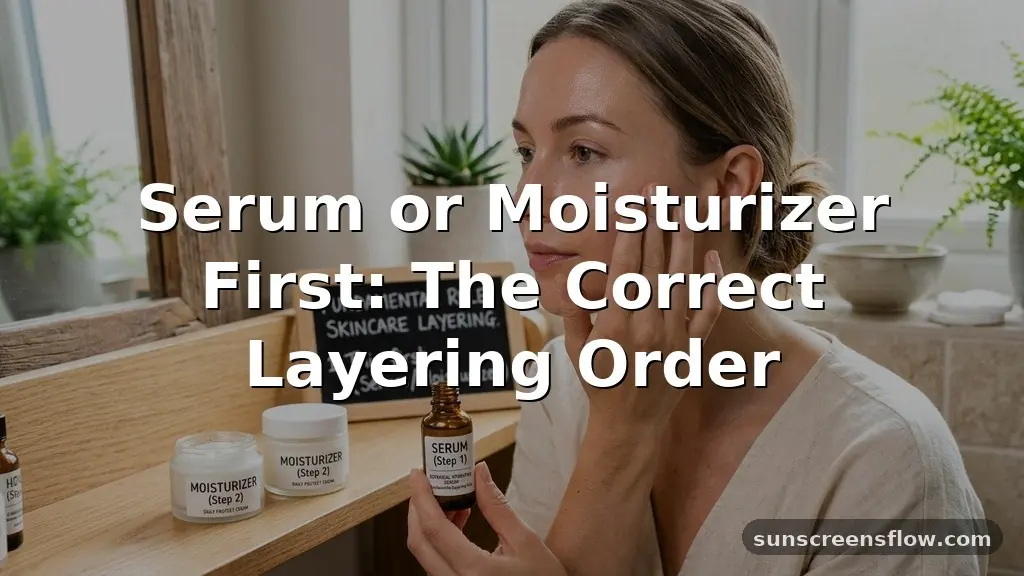
Achieving a radiant, healthy complexion requires more than just buying high-end products; it demands a strategic approach to your skincare routine. One of the most frequent points of confusion for beauty enthusiasts is whether to apply a serum or moisturizer first.
Understanding the science behind product texture, molecular weight, and absorption rate is essential for ensuring that your active ingredients actually reach the deeper layers of the epidermis. When you apply products in the incorrect sequence, you may inadvertently create a physical barrier that prevents beneficial compounds from doing their job, effectively wasting your time and money.
The Fundamental Rule of Skincare Layering
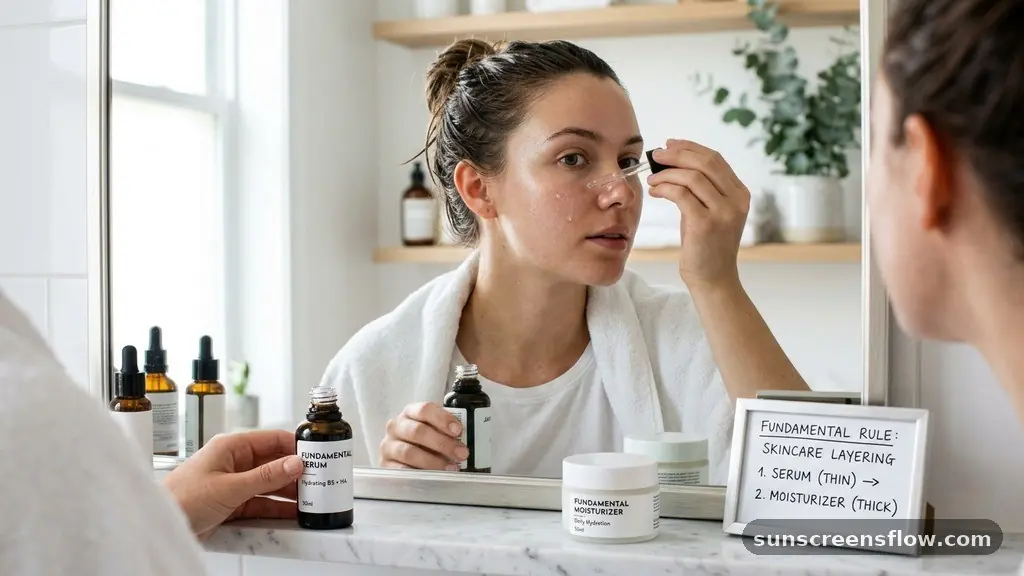
The golden rule of layering is to apply products from the thinnest, most lightweight consistency to the thickest, most emollient one. Because serums are typically water-based and have a low molecular weight, they are designed to penetrate the skin quickly and deliver potent concentrations of active ingredients. In contrast, moisturizers are generally formulated as an emulsion or a cream with heavier lipids, designed to lock in moisture and protect the skin’s outer layer.
If you were to apply a heavy cream before a light serum, the lipids in the moisturizer would likely block the serum’s path, preventing it from sinking into the skin. This principle of “thinnest to thickest” ensures that each product has the best possible chance to perform its intended function.
By prioritizing the serum, you allow the topical treatment to interact directly with your skin cells, while the subsequent moisturizer provides the necessary seal to prevent evaporation. This simple shift in your daily habit can drastically improve the efficacy of your hyaluronic acid or vitamin c treatments.
Understanding Molecular Weight and Absorption
The reason we prioritize serums comes down to the physics of penetration. A serum is formulated with smaller molecules that can bypass the stratum corneum with ease.
When you apply a serum to clean, dry, or slightly damp skin, it acts as a delivery vehicle for concentrated actives like niacinamide or retinol. Once these ingredients have been absorbed, you need a follow-up product that can stabilize the surface.
If you reverse this order, the larger molecules in your moisturizer—often containing waxes, silicones, or heavy plant oils—sit on the surface of the skin. They create a physical film that is excellent for preventing transepidermal water loss, but it is entirely counterproductive when applied before a serum.
Think of your skin like a sponge; if you coat the sponge in a thick layer of wax, it can no longer absorb the water-based nutrients you apply afterward. Always check the texture: if it drips or feels like a light liquid, it is almost certainly a serum that should go on first.
The Role of Humectants and Occlusives
In the world of dermatology, we distinguish between humectants and occlusives. A humectant, such as hyaluronic acid, pulls moisture from the air or deeper skin layers into the surface of the skin. A serum is almost always a humectant-heavy product.
An occlusive, on the other hand, is designed to create a seal over the skin, effectively trapping that hydration inside. Moisturizers are typically formulated with a balance of both, but they lean heavily on the occlusive side.
By applying your serum first, you are applying your humectants directly to the skin. If your skin is slightly damp, the serum can pull that extra water into your cells. When you follow up with a moisturizer, you are applying an occlusive that acts like a lid on a pot.
If you skip the serum or apply it after the moisturizer, the humectant properties are largely neutralized because the occlusive layer has already been established. This is why the sequence is not just a suggestion; it is a chemical necessity for optimal skin hydration.
Addressing Transepidermal Water Loss
Transepidermal water loss (TEWL) is the passive movement of water from the dermis, through the epidermis, and into the atmosphere. Maintaining a healthy lipid barrier is the primary defense against this process. When your barrier is compromised, your skin loses moisture rapidly, leading to irritation, flakiness, and premature aging.
Your layering routine is a defensive strategy against TEWL. The serum provides the boost of hydration and actives, while the moisturizer provides the fortification.
If you apply a moisturizer first, you might feel like your skin is hydrated, but you have missed the opportunity to treat underlying issues like hyperpigmentation or uneven skin texture. By following the correct order, you ensure that the hydration provided by the serum is locked in by the moisturizer’s occlusives, creating a long-lasting, plump, and healthy appearance throughout the day.
How to Integrate Actives Like Vitamin C and Retinol
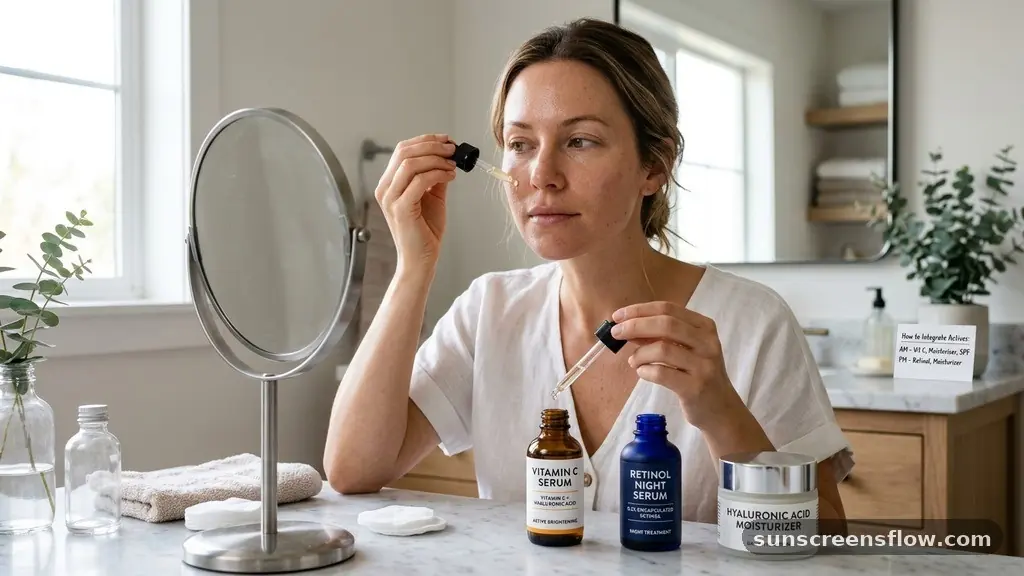
When dealing with high-performance active ingredients like vitamin c or retinol, the “serum or moisturizer first” debate becomes even more critical. Vitamin C is notoriously unstable and requires specific pH balance conditions to work effectively. It should always be applied to clean skin to ensure it doesn’t react with other ingredients in your moisturizer, which could degrade its potency.
Retinol, meanwhile, works by accelerating cell turnover. It is a powerful ingredient that can sometimes cause dryness or sensitivity. While some people choose to “buffer” their retinol by applying a light moisturizer underneath it, the general rule remains: apply your treatment serum first.
If you find that a particular serum is too harsh, it is better to look for a lower concentration rather than applying it over a thick cream, which might render the treatment ineffective. Always allow your serum to dry or “set” for about 60 seconds before applying your moisturizer to ensure the product has fully absorbed.
The Importance of Skin pH Balance
The skin’s natural pH balance is slightly acidic, generally hovering around 4.7 to 5.75. This acidity is crucial for maintaining the integrity of the lipid barrier and keeping the microbiome healthy.
Many serums are formulated to work within this specific pH range. When you apply a moisturizer first, you might be introducing ingredients with a different pH level that could alter the surface environment of your skin, potentially interfering with the efficacy of the serum you apply afterward.
Furthermore, some active ingredients are pH-dependent. Vitamin C, for instance, requires a low pH to penetrate the skin effectively.
If you apply a moisturizer first—especially one that is more alkaline or contains heavy oils—you may neutralize the pH environment required for the Vitamin C to function. By sticking to the serum-first rule, you respect the delicate chemical balance of your skin, ensuring that your products work in harmony rather than in competition with one another.
Layering Tips for Different Skin Types
While the “serum first” rule is universal, the way you execute it can vary depending on your skin type. For those with oily or acne-prone skin, you might find that a lightweight serum is enough to provide sufficient hydration, and you may only need a very light, non-comedogenic moisturizer. For those with dry or mature skin, you might layer multiple serums before finishing with a rich, emollient cream.
Strategic Layering Considerations
- Oily Skin: Focus on water-based serums containing niacinamide or salicylic acid. Use a gel-based moisturizer that won’t clog pores.
- Dry Skin: Incorporate hydrating serums with hyaluronic acid or glycerin. Follow with a cream-based moisturizer rich in ceramides to repair the barrier.
- Sensitive Skin: Avoid layering too many actives at once. Apply your soothing, calming serum first, and give it extra time to absorb before applying a gentle, fragrance-free moisturizer.
- Mature Skin: Prioritize peptide or growth factor serums. Ensure your moisturizer contains antioxidants to protect against environmental stressors.
Common Mistakes to Avoid in Your Routine
One of the biggest mistakes people make is applying too many products at once without allowing for proper absorption. If you apply your serum and immediately follow it with a moisturizer, you risk “pilling,” where the products ball up and rub off the skin. This is usually a sign that the products are incompatible or that you haven’t given the first layer enough time to sink in.
Another mistake is neglecting the neck and décolletage. Many people apply serums and moisturizers only to their faces, ignoring the areas that often show the first signs of aging. Whatever you apply to your face should be applied to your neck in the same order.
If you are using a facial oil, remember that this is almost always the very last step in a routine. Oils are occlusive and will block any other product from penetrating, so they should never be applied before a water-based serum.
Comparing Product Categories for Better Results
Understanding the difference between these product categories can help you make better purchasing decisions. The following table highlights the primary characteristics of common skincare layers to help you decide their place in your routine.
| Product Type | Consistency | Primary Function | Layering Order |
|---|---|---|---|
| Toner/Essence | Watery | Prep and Hydrate | 1st |
| Treatment Serum | Lightweight/Gel | Targeted Actives | 2nd |
| Moisturizer | Cream/Lotion | Barrier Protection | 3rd |
| Facial Oil | Oily/Viscous | Sealant/Nourishment | 4th |
Addressing Topical Gaps
A common gap in consumer knowledge is how to handle “multi-step” routines that involve several serums. If you are using multiple serums, apply them from the thinnest consistency to the thickest. For example, if you have a very watery Vitamin C serum and a slightly thicker Hyaluronic Acid serum, apply the Vitamin C first.
Furthermore, people often wonder if they can mix products in their palm before applying. While this is time-saving, it is generally discouraged because it can change the concentration and pH of the products, potentially leading to irritation or reduced efficacy.
It is always better to apply one layer, wait for it to be absorbed, and then move to the next. This ensures that the absorption rate of each individual ingredient is maximized, allowing your skincare routine to deliver the professional results you expect from your investment.
FAQ
Is it ever okay to apply moisturizer before serum?
Generally, no. Applying a moisturizer first creates a barrier that prevents the serum’s concentrated actives from penetrating the skin. The only exception is if you have extremely sensitive skin and your dermatologist has instructed you to “buffer” a strong treatment like retinol with a thin layer of moisturizer.
How long should I wait between applying serum and moisturizer?
You should wait until the serum feels fully absorbed into your skin, which usually takes about 60 seconds. The skin should feel slightly tacky but not wet. If the product is still sliding around on your face, it needs more time before you apply your next layer.
Does the order change at night versus in the morning?
The fundamental rule of “thinnest to thickest” remains the same regardless of the time of day. However, your morning routine should prioritize protective antioxidants like Vitamin C, while your evening routine is the ideal time for repairing actives like retinol or AHAs, followed by a more nourishing moisturizer.
Can I skip the moisturizer if my serum is hydrating enough?
While some hydrating serums are quite potent, most dermatologists recommend using a moisturizer. Serums are designed to treat, while moisturizers are designed to protect. Even if your skin feels hydrated, a moisturizer helps seal in the hydration and protects your skin’s barrier from environmental damage throughout the day.
Conclusion
Mastering the order of your skincare application is a simple yet transformative step in your self-care journey. By consistently applying your serum before your moisturizer, you honor the science of penetration and ensure that your skin receives the full benefit of your chosen active ingredients. Remember that your skincare routine is a personalized experience; observe how your skin reacts to different textures and layering techniques, and adjust accordingly.
By following the “thinnest to thickest” rule, you prevent transepidermal water loss, support your lipid barrier, and create the perfect foundation for a glowing, resilient complexion. Consistency is the final ingredient—keep your routine steady, and the long-term health of your skin will follow.