

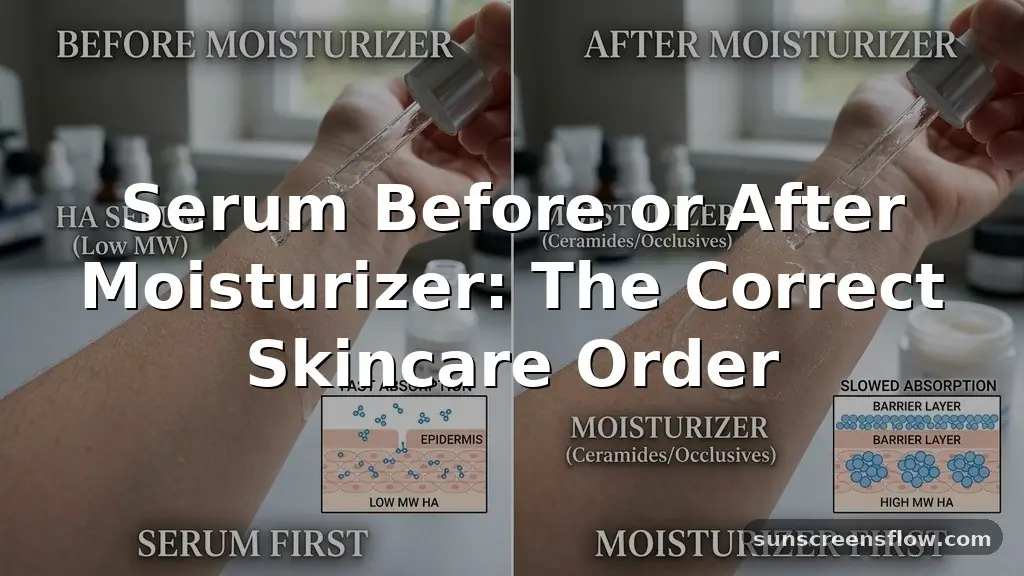
Achieving a radiant, healthy complexion often feels like solving a complex puzzle, especially when you are trying to determine the correct skincare routine order. One of the most frequent points of confusion for beauty enthusiasts is whether to apply serum before or after moisturizer. The short answer, rooted in fundamental dermatological principles, is that you should almost always apply your serum first.
Because serums are formulated with a lower molecular weight, they are designed to penetrate the skin deeply and deliver potent active ingredients where they are needed most. Moisturizers, by contrast, are typically thicker emulsions designed to lock that hydration in and protect the surface of the skin.
The Science of Molecular Weight and Skin Absorption
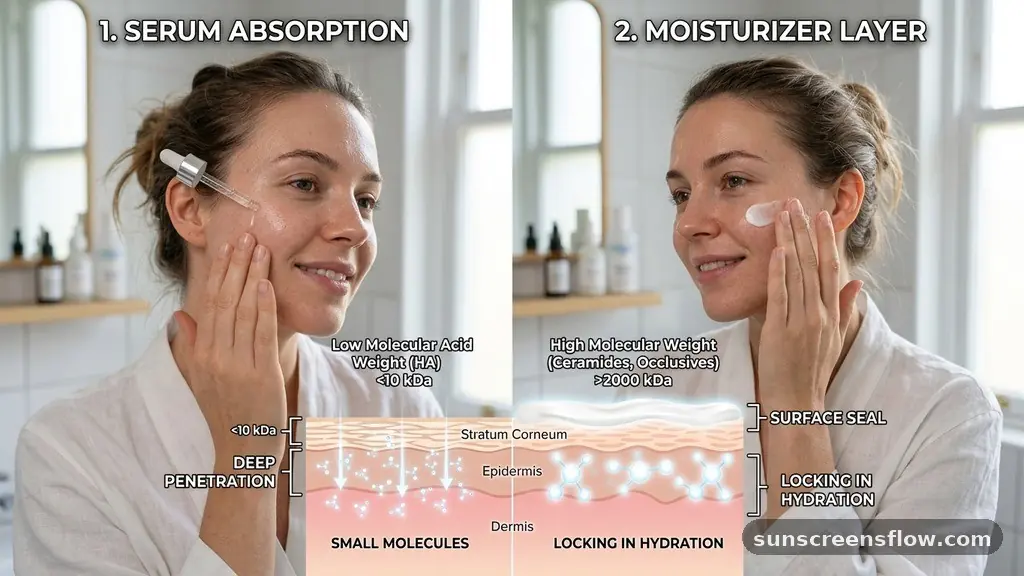
To truly understand why the sequence of your products matters, you must first look at the science of skin absorption. Your skin acts as a protective barrier, which is excellent for keeping out pollutants but challenging when you want to deliver specialized treatments like vitamin c or retinol. The key to successful delivery is molecular weight.
Serums are engineered with smaller, lighter molecules that can bypass the outer layers of the epidermis. If you were to apply a heavy cream first, the smaller molecules in your serum would struggle to navigate through the thick, emollient-rich formula of the moisturizer.
Think of your skin like a sponge. If you coat a sponge in a thick layer of wax or heavy oil, it will struggle to soak up water. Similarly, applying a heavy moisturizer before a serum creates a physical barrier that prevents the more delicate actives from doing their job.
By applying the serum to clean, slightly damp skin, you ensure that the active penetration is maximized. Once these active ingredients have had a moment to absorb—usually about sixty seconds—you can then proceed with your moisturizer to seal everything in. This layering strategy is not just a suggestion; it is a core tenet of modern dermatological guidelines for effective topical treatment.
Understanding the Role of Humectants and Occlusives
The distinction between humectants and occlusives is vital when deciding how to structure your regimen. Most serums contain humectants, such as hyaluronic acid, which work by drawing moisture from the air or deeper layers of the skin to the surface. If you do not seal these humectants in with a moisturizer, they can sometimes have a paradoxical effect, drawing moisture out of the skin in dry environments, leading to increased transepidermal water loss.
Moisturizers, on the other hand, often function as occlusives or emollients. They provide a protective film that prevents evaporation. When you apply a moisturizer after a serum, you are essentially creating a lid for the active ingredients you just applied.
This synergy protects the lipid barrier of your skin, ensuring that your hydration levels remain stable throughout the day or night. If you reverse this order, you risk the serum sitting on top of the occlusive layer, where it will eventually evaporate or rub off onto your pillowcase, rendering your expensive products ineffective and wasting your hard-earned money.
Customizing Your Routine for Different Skin Types
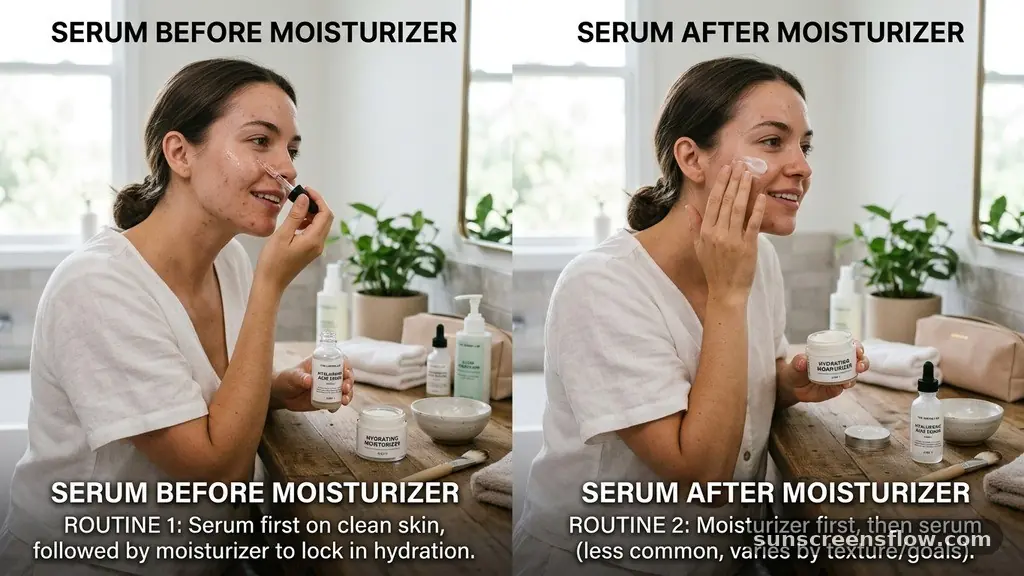
While the general rule of “thinnest to thickest” holds true for most people, your specific skin type might require slight adjustments to your layering skincare strategy. For those with oily skin, the challenge is finding a balance between hydration and pore occlusion.
You might find that a lightweight, water-based serum is sufficient on its own during the day, perhaps followed by a gel-based moisturizer. Using heavy creams can lead to breakouts, so focusing on lightweight, non-comedogenic formulas is essential to maintaining a clear complexion.
Conversely, those with dry skin often require a more robust approach. You might layer a hydrating serum, followed by a cream-based moisturizer, and finish with a facial oil to provide an extra layer of protection.
The oil acts as the final sealant, ensuring that no moisture escapes. Regardless of your skin type, the serum remains the primary vehicle for targeted treatment, while the moisturizer serves as the supporting actor that keeps the skin barrier healthy and resilient against environmental stressors.
| Product Type | Primary Function | Consistency | Application Order |
|---|---|---|---|
| Serum | Targeted treatment/actives | Thin/Water-based | First (after cleansing) |
| Moisturizer | Hydration/Barrier repair | Cream/Lotion | Second |
| Facial Oil | Sealing/Nourishment | Viscous/Lipid-based | Last |
The Importance of pH Balance and Active Ingredients
When you are layering multiple products, you must consider the pH balance of your skin. Many active ingredients, such as L-ascorbic acid (the most potent form of vitamin C), require a low pH environment to be effective.
If you apply a heavy, alkaline moisturizer first, you might alter the pH of your skin, effectively neutralizing the serum before it has a chance to work. This is why many experts recommend applying your most “active” or low-pH products immediately after cleansing.
Furthermore, some ingredients can interact negatively if layered incorrectly. For example, using a high-strength niacinamide serum alongside a highly acidic vitamin C product can sometimes cause irritation for sensitive individuals. By applying your serum first and allowing it to fully absorb, you give the skin a chance to stabilize.
This careful sequencing ensures that your products work in harmony rather than competing for space or creating irritation. Always check the instructions on your specific products, as some brands formulate their lines to work in very specific sequences that may vary slightly from standard practices.
Addressing Common Topical Gaps in Skincare Knowledge
Many people struggle with the “wait time” between steps. A common question is whether you need to let your serum dry completely before applying moisturizer. While it is helpful to wait until the product feels “tacky” or nearly dry, you do not need to wait until the skin feels bone-dry.
In fact, applying moisturizer to slightly damp skin can actually help lock in even more hydration. This is particularly true if you are using a water-based serum that contains humectants, as these molecules thrive in a hydrated environment.
Another gap in understanding involves the “active penetration” of products. Some individuals believe that if they apply their serum after a moisturizer, it will somehow be more “gentle” on the skin. While it is true that buffering an active ingredient with a moisturizer can reduce irritation, it also significantly reduces the skincare efficacy.
If you are using a potent treatment like a retinoid and find it too irritating, the better approach is to apply a thin layer of moisturizer first, wait twenty minutes, and then apply the serum, or simply choose a lower concentration of the active ingredient. Do not simply rely on the order of application to fix a product that is too strong for your current skin tolerance.
The Role of Facial Oils in Your Routine
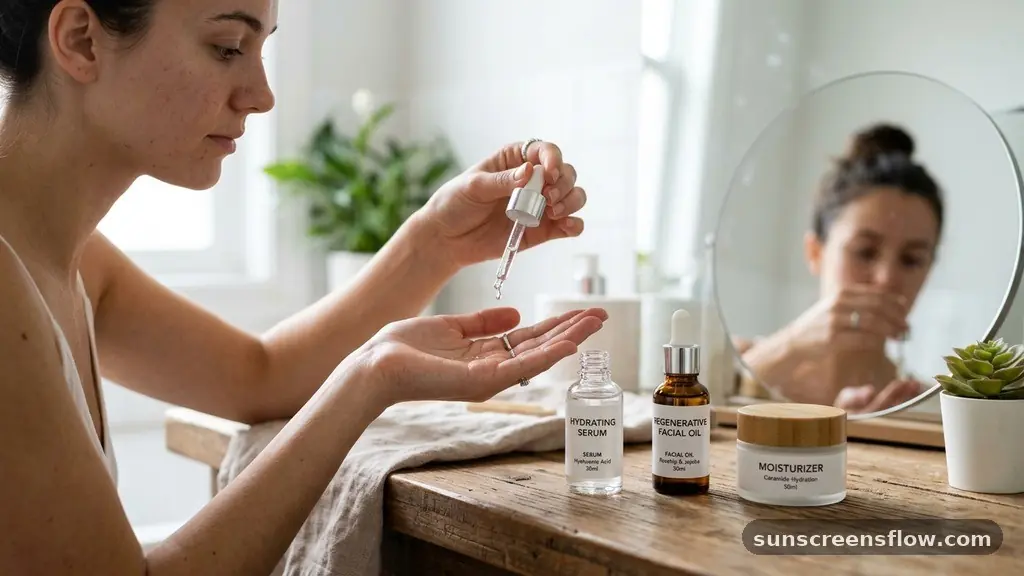
Facial oil is often the final step in a skincare routine, and it is frequently confused with serums. The primary difference is the molecular structure; oils are lipids and generally have a larger molecular weight than water-based serums.
Because they are hydrophobic, they act as an incredible seal against transepidermal water loss. If you are wondering where oil fits into the serum-moisturizer debate, remember that it almost always goes last.
If you apply an oil before your water-based serum, the oil will create a barrier that prevents the water-soluble ingredients in the serum from penetrating the skin. Think of it as trying to pour water through a layer of grease; it simply will not work.
By saving your facial oil for the final step, you create a protective, breathable shield that locks in the hydration provided by your serum and the nourishment provided by your moisturizer. This creates an optimal environment for your skin to repair itself overnight, which is why many night-time routines incorporate this three-step approach: serum, moisturizer, and then a light facial oil.
Common Mistakes When Layering Skincare
One of the most frequent mistakes is using too many products at once. We live in an era of “skincare maximalism,” where social media trends encourage ten-step routines that may actually be counterproductive.
When you layer too many products, you increase the risk of pilling—that annoying phenomenon where your products ball up on your skin. Pilling is often a sign that your skin has reached its saturation point, or that the textures of your products are incompatible (e.g., mixing a silicone-based serum with a water-based moisturizer).
- Over-layering: Using too many products can overwhelm the skin and lead to pilling.
- Ignoring texture: Always apply products from the thinnest, most liquid consistency to the thickest, most cream-like consistency.
- Rushing the process: Not allowing enough time for each product to sink in can result in uneven application and reduced absorption.
- Misidentifying products: Ensure you know whether your product is a serum, an emulsion, or an oil, as this dictates its place in the routine.
- Neglecting your neck and chest: Your face does not end at your jawline; extend your skincare routine to these areas for consistent results.
By streamlining your routine and focusing on high-quality, targeted serums rather than a dozen different products, you will likely see better results. Focus on the core needs of your skin—hydration, protection, and active treatment—and you will find that the order of application becomes second nature. Remember that the goal of your routine is to support the lipid barrier, not to force it to absorb more than it can handle.
Refining Your Routine for Long-Term Efficacy
Consistency is the final piece of the puzzle. Even if you have the perfect order of operations, you will not see results if you only follow your routine sporadically.
The skin’s cell turnover cycle is roughly 28 days, meaning it can take at least a month of consistent use to see significant changes in texture, tone, or clarity. When you apply your serum, moisturizer, and oil in the correct order daily, you are creating a predictable environment that allows your skin to optimize its own healing processes.
As you age, your skin’s needs will evolve. What worked for you in your twenties may not be sufficient in your forties. You may need to incorporate more nourishing, lipid-rich moisturizers or switch to more potent serums to address specific concerns like hyperpigmentation or loss of elasticity.
Always listen to your skin; if it feels tight, you may need more hydration. If it feels greasy or prone to congestion, you may need to scale back the amount of product you are using. The serum-before-moisturizer rule is a foundation, not a rigid law that ignores the changing nature of your skin’s health.
Frequently Asked Questions
Does it ever make sense to apply moisturizer before serum?
In very rare cases, such as when using extremely harsh prescription retinoids, a dermatologist might recommend “buffering” by applying a thin layer of moisturizer first to reduce irritation. However, for standard cosmetic serums, applying them before your moisturizer is always the best way to ensure maximum absorption.
What happens if I apply my serum after my moisturizer?
If you apply a serum over a heavy moisturizer, the larger molecules of the cream will act as a barrier, preventing the smaller active molecules in the serum from penetrating the skin. This significantly lowers the effectiveness of your product, essentially wasting the active ingredients it contains.
How long should I wait between applying serum and moisturizer?
You do not need a stopwatch, but waiting about 30 to 60 seconds is ideal. This allows the serum to become slightly tacky or “set” on your skin. Applying the next product while the skin is still slightly damp is perfectly fine and can even help with moisture retention.
Can I mix my serum into my moisturizer to save time?
While this might seem convenient, it is generally not recommended. Serums are formulated with specific pH levels and delivery systems designed to work on bare skin. Mixing them into a moisturizer can alter their pH or dilute them, potentially making them less effective or disrupting the intended delivery of the actives.
In summary, the debate regarding serum before or after moisturizer is settled by the science of skin absorption. By consistently applying your serums first, you honor the molecular weight of your products, allowing the active ingredients to do the heavy lifting before the moisturizer seals them in.
Whether you are dealing with dry skin or seeking to maintain a healthy lipid barrier, following the “thinnest to thickest” rule will ensure that your skincare routine order is optimized for the best possible results. Keep your routine simple, be consistent, and always prioritize the health of your skin barrier above the latest trends.


