


Deciding whether to incorporate a vitamin c serum at night or morning often creates confusion for skincare enthusiasts trying to maximize the efficacy of their daily regimen. While many people gravitate toward a morning application to leverage the protective benefits of this potent antioxidant, others wonder if an evening routine might offer deeper restorative properties.
Understanding the chemical nature of ascorbic acid and how it interacts with environmental stressors is the first step toward building a high-performance routine. By learning how this ingredient functions on the skin, you can strategically place it in your sequence of products to target specific concerns like fine lines and hyperpigmentation.
Why Morning Application is Preferred

The most common recommendation from dermatologists is to use your vitamin c serum during your morning routine. This is largely because vitamin c acts as a powerful shield against oxidative stress caused by environmental factors.
Throughout the day, your skin is bombarded by ultraviolet radiation, pollution, and blue light, all of which generate free radicals. These unstable molecules damage cellular DNA and accelerate the breakdown of collagen, leading to premature aging.
When you apply a high-quality l-ascorbic acid serum in the morning, you are essentially “loading” your skin with antioxidants. These compounds neutralize free radicals before they have the chance to penetrate the skin barrier and cause lasting damage.
Furthermore, when combined with a broad-spectrum sunscreen, vitamin c is believed to provide a synergistic effect that boosts the overall photoprotection of your skin. Because hyperpigmentation is often triggered or worsened by sun exposure, using this serum during the day helps keep melanin production in check, ensuring that your skin tone remains even and radiant despite the daily environmental onslaught.
Is Nighttime Application Effective?
While morning application is the standard, is nighttime application effective? The answer is a qualified yes, though the primary benefit shifts from protection to repair. At night, your body enters a natural recovery mode where cellular turnover and repair processes are at their peak. Applying an antioxidant-rich serum during this time can support these internal processes, potentially aiding in the reduction of dark spots and the improvement of skin texture.
However, there is a catch regarding the potency of the product. Ascorbic acid is notoriously unstable and can oxidize when exposed to air and light. If your serum is already prone to degradation, applying it at night might mean it loses its efficacy before you even wake up.
Additionally, if you are using other active ingredients at night, such as retinoids (retinol, tretinoin, retinaldehyde), layering too many actives can lead to irritation. If you choose to use your serum at night, ensure it is formulated with stable derivatives like sodium ascorbyl phosphate or tetrahexyldecyl ascorbate, which are less likely to cause irritation when paired with potent cell-communicating ingredients like retinol.
Optimizing Your Skincare Routine
To get the most out of your investment, you must focus on optimizing your skincare routine through careful product placement. The general rule of thumb in dermatology is to apply products from the thinnest consistency to the thickest. Because most vitamin c serums are water-based or lightweight emulsions, they should typically be applied immediately after cleansing and toning, but before heavier moisturizers or oil-based products.
If you apply a thick cream or an oil before your serum, the serum will struggle to penetrate the lipid barrier of the skin, rendering it largely ineffective. Furthermore, layering and order of operations matters because of pH levels. L-ascorbic acid is most effective in a low-pH environment. If you apply a high-pH product immediately before your serum, you may neutralize the active ingredient, preventing it from working as intended.
A good strategy is to wait about 60 seconds for the serum to fully absorb into the skin before moving on to your next product. This brief pause allows the active ingredients to lock into the epidermis, ensuring that your subsequent steps do not interfere with the serum’s performance.
Synergistic Ingredients for Enhanced Results
The effectiveness of your vitamin c serum can be significantly amplified when combined with the right companion ingredients. Many formulators include specific compounds that stabilize the vitamin while simultaneously boosting its anti-aging capabilities.
For instance, pairing vitamin c with ferulic acid and vitamin E is a classic “gold standard” combination. Ferulic acid not only stabilizes the vitamin C but also doubles its photoprotective capacity.
When you are looking for products to pair with your serum, consider the following application tips:
- Always apply your serum to clean, dry skin to avoid potential stinging or irritation.
- Look for serums that contain Vitamin E, as it regenerates oxidized vitamin C, extending its life on your skin.
- Ensure your sunscreen is applied as the final step in your morning routine to seal in the antioxidants.
- If you have sensitive skin, start with a lower concentration (5-10%) before moving to higher percentages (15-20%).
- Avoid using alpha hydroxy acids (AHAs) or beta hydroxy acids (BHAs) at the exact same time as your serum if you have reactive skin to prevent redness.
By choosing products that work in harmony, you create a comprehensive defense system that addresses multiple skin concerns simultaneously, from dullness and fine lines to uneven skin texture.
Storage and Stability Concerns
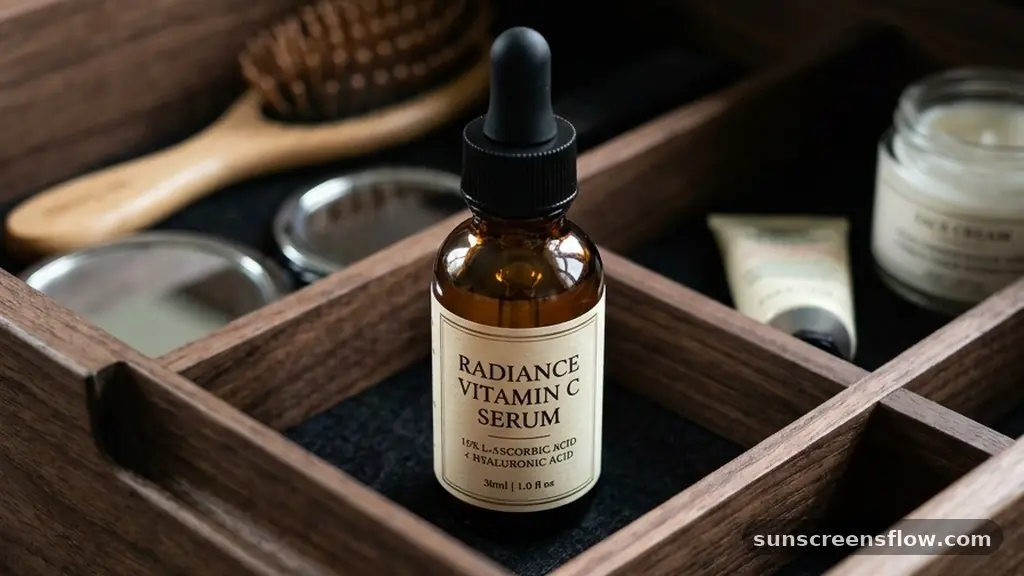
One of the most overlooked aspects of using vitamin c is how you care for the bottle. Because this ingredient is highly sensitive to environmental factors, proper storage is essential to maintain its efficacy. You should always store it in a cool, dark place, such as a vanity drawer or a cupboard, rather than on a bathroom windowsill where it will be exposed to fluctuating temperatures and direct sunlight.
Heat is the primary enemy of ascorbic acid, as it accelerates the degradation process, turning the serum from a clear or light straw color to a dark orange or brown. If you notice a significant change in the color of your product, it is a sign that the formula has oxidized and is no longer potent. You should also monitor the color of your serum regularly.
While a slight darkening is normal over several months, a rapid change indicates that the product has spoiled. Keeping the cap tightly sealed after every use is another simple way to minimize air exposure, which is the secondary cause of oxidation. If you live in a particularly hot climate, some users find that keeping their serum in the refrigerator helps maintain its stability for longer, though this is usually only necessary if the product is not being used daily.
Addressing Topical Gaps and Common Misconceptions
Many users believe that they must choose between a morning or night application, but the reality is more nuanced. Some skin types benefit from a split approach. For example, if you have significant hyperpigmentation, you might use a vitamin c serum in the morning for protection and a niacinamide or kojic acid serum at night for targeted brightening.
Another common gap in knowledge is the assumption that a higher percentage of l-ascorbic acid is always better. In reality, concentrations above 20% often lead to irritation without providing additional benefits.
Another point of confusion is the interaction between vitamin c and retinoids. It is a persistent myth that these two cannot be used in the same routine at all.
While applying them simultaneously can cause irritation for some, there is no biological reason they cannot be used in the same 24-hour cycle. Using vitamin c in the morning and a retinoid at night is considered the gold standard for anti-aging, as it gives you the best of both worlds: daytime protection and nighttime cell regeneration.
| Feature | Morning Application | Nighttime Application |
|---|---|---|
| Primary Goal | Environmental Protection | Cellular Repair |
| Key Benefit | Neutralizes Free Radicals | Supports Collagen Synthesis |
| Ideal Pairings | Sunscreen, Ferulic Acid | Retinoids, Peptides |
| Stability Risk | Low (if used immediately) | Moderate (longer exposure to air) |
Managing Potential Irritation
Even though vitamin c is a powerhouse for the skin barrier, it can be quite acidic, which may cause a tingling sensation or redness for those with sensitive skin. This is particularly common when using l-ascorbic acid, which requires a low pH to effectively penetrate the skin.
If you experience persistent stinging, you may be applying the product to damp skin, which increases penetration and the likelihood of irritation. Always ensure your face is completely dry before application.
If you find that your skin is reacting negatively, you don’t necessarily have to stop using the product. Instead, consider buffering the application. You can mix a drop of your serum into a light moisturizer or apply the moisturizer first, let it sink in, and then apply the serum.
This reduces the concentration of the acid on the surface of the skin while still allowing the active ingredients to perform their job. Over time, your skin will build tolerance, and you can gradually move toward applying the serum directly to clean skin. Always listen to your skin; if it feels tight, itchy, or develops a rash, it is a sign that you need to either lower the frequency of application or switch to a more stable, less acidic derivative of vitamin c.
The Importance of Long-term Consistency
Regardless of whether you choose a vitamin c serum at night or morning, the most important factor for success is consistency. Antioxidants do not provide overnight miracles; they work by cumulatively improving the health of your skin over weeks and months. It takes time for the skin to cycle through its natural regeneration process, and it takes even longer to see a visible reduction in stubborn hyperpigmentation or the softening of deep fine lines.
If you are inconsistent with your application, you are essentially hitting the “reset” button on your skin’s protective capabilities every time you skip a day. By committing to a daily schedule, you maintain a reservoir of antioxidants in the skin, which allows your body to better handle the daily stressors it encounters. Think of your serum as a daily supplement for your face; just as you wouldn’t expect to get fit after a single workout, you shouldn’t expect to see major changes in your complexion after a few days of use.
Stick with your chosen time of day, ensure your storage conditions are optimal, and be patient. Over the course of three to six months, you will likely notice a brighter, more even-toned, and resilient complexion that reflects the dedicated care you have invested in your skincare routine.
Frequently Asked Questions
Can I use vitamin c serum every single day?
Yes, most skin types can tolerate daily use of a vitamin c serum. If you are new to the ingredient, start by using it every other day to allow your skin to adjust. Once your skin builds tolerance, you can safely move to a daily morning application.
Does vitamin c react poorly with other skincare ingredients?
Vitamin c is generally safe, but it can be unstable. It is best to avoid using it at the exact same time as strong exfoliating acids like AHAs or BHAs, as this can lead to irritation. Using vitamin c in the morning and acids at night is a common, effective strategy.
What should I do if my vitamin c serum turns dark?
If your serum has turned a deep orange or brown, it has likely oxidized and lost its potency. While it is not necessarily dangerous to use, it will no longer provide the antioxidant benefits you are looking for. It is best to discard it and purchase a fresh bottle.
Can I apply moisturizer immediately after my vitamin c serum?
It is recommended to wait about 60 seconds after applying your serum to allow it to fully absorb into the skin. Once it feels dry to the touch, you can safely apply your moisturizer, sunscreen, or any other products in your routine without interfering with the serum.
Conclusion
Choosing between using a vitamin c serum at night or morning ultimately depends on your specific skin goals and how your complexion reacts to the formula. For most individuals, the morning is the ideal time to apply this serum, as it provides the essential antioxidant protection needed to combat oxidative stress, free radicals, and environmental damage throughout the day. By integrating this step into your morning routine, you leverage the product’s ability to prevent hyperpigmentation and protect the skin barrier.
However, if you prefer nighttime use to focus on repair and choose to pair it with retinoids, ensure your product is stable and your routine is well-balanced. Regardless of the time of day, remember that consistency, proper storage, and the correct layering and order of operations are the true keys to achieving glowing, healthy skin. Focus on high-quality formulations, protect your serum from heat and light, and remain patient as your skin reaps the long-term benefits of this essential skincare staple.


