

When we ask what does serum mean, we are often met with two vastly different contexts: the life-saving fluid circulating in our bodies and the concentrated elixir found in a bathroom cabinet. While the term shares a common linguistic root—referring to a clear or thin liquid—its application in clinical pathology and dermatology involves entirely different substances and functions.
Understanding these distinctions is essential for anyone navigating either a blood test result or a skincare routine. At its core, serum describes a liquid fraction of a substance that remains after specific components have been removed or processed, acting as a carrier for vital elements that sustain biological life or improve skin health.
The Biological Foundation: Blood Serum vs. Plasma
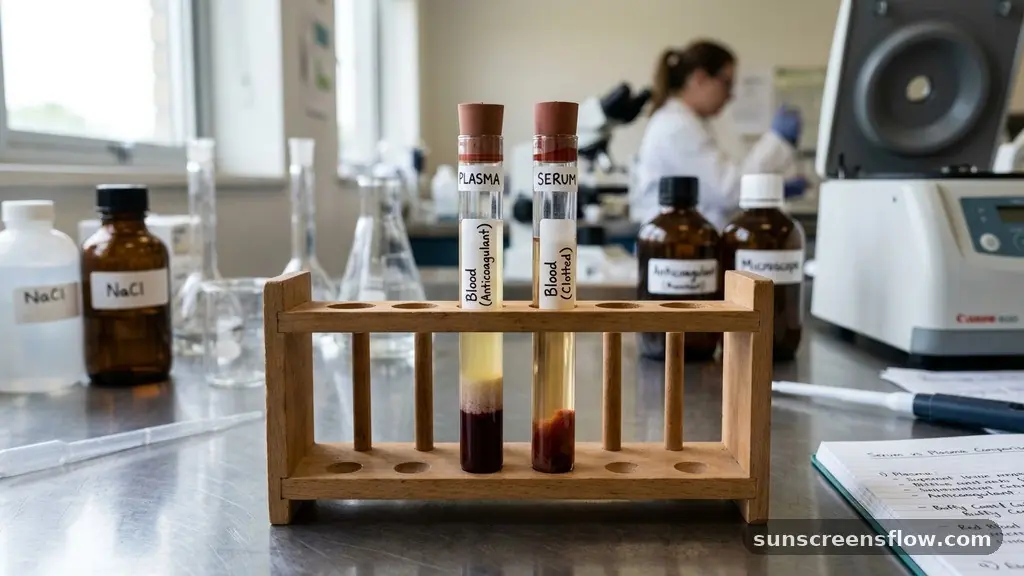
In the realm of clinical biology, the question of what does serum mean is best answered by looking at the composition of human blood. When a medical professional performs a phlebotomy, they are often extracting blood to isolate its liquid components. Many people confuse blood serum with blood plasma, yet they are distinct in their relationship to the coagulation process.
Plasma is the liquid portion of blood that contains clotting factors, including fibrinogen. When blood is allowed to clot, these factors are consumed, leaving behind the serum.
This process is critical for diagnostic testing. By using a centrifuge, laboratory technicians can effectively separate the cellular components—red blood cells, white blood cells, and platelets—from the liquid. If the sample is collected in a standard tube without anticoagulants, the blood undergoes natural coagulation.
The resulting straw-colored liquid is the serum. Because it lacks fibrinogen, it remains stable for various analytical procedures.
This liquid is rich in proteins, electrolytes, and hormones, making it a gold mine for doctors looking to understand a patient’s internal health. By analyzing this fluid, clinicians can identify imbalances that indicate underlying pathologies, ranging from metabolic disorders to viral infections.
Clinical Pathology and Diagnostic Testing
The utility of serum in a medical setting cannot be overstated. When a physician orders a blood panel, they are almost certainly looking at the results derived from the patient’s serum. This fluid serves as a primary medium for transporting essential molecules throughout the body.
Within this medium, diagnostic testing detects the presence of specific biomarkers that reveal how well our organs are functioning. For instance, the concentration of albumin and globulin provides insight into liver and kidney health, while the presence of specific enzymes can signal cardiac stress or tissue damage.
Furthermore, serum is the standard specimen for serological testing, which is used to detect antibodies. When the body encounters a pathogen, the immune system produces immunoglobulins, which circulate in the blood. By testing the serum, labs can determine if a patient has been exposed to a virus or bacteria, or if a vaccine has successfully triggered an immune response.
This makes serum essential for public health surveillance and the diagnosis of autoimmune conditions. The consistency of this fluid allows for highly reproducible results, ensuring that doctors can rely on the data to make life-altering treatment decisions.
The Mechanics of Serum Separation Tubes
To achieve the clear separation required for accurate diagnostics, medical facilities utilize a specialized device known as a serum separation tube (SST). These tubes are more than just glass or plastic containers; they are engineered with specific chemical additives and mechanical barriers to expedite the clotting process and ensure the integrity of the sample.
Inside an SST, a gel-like substance often sits at the bottom. As the tube is spun in a centrifuge, the density of this gel causes it to move upward, eventually settling between the clot and the serum.
This barrier is vital. It prevents the serum from coming into contact with the cellular debris trapped in the clot, which could otherwise leach chemicals into the sample and skew the test results. This technology is a cornerstone of modern phlebotomy.
Without it, the time required to manually separate the liquid from the clot would be prohibitive, and the risk of contamination would be significantly higher. By isolating the serum efficiently, labs can process hundreds of samples per hour, providing rapid turnaround times for critical diagnostic data. This efficiency is the backbone of modern hospital operations.
Skincare Formulation: Concentrated Efficacy
Shifting our focus to the beauty industry, what does serum mean in the context of skincare? Unlike its biological counterpart, a cosmetic serum is a purposeful skincare formulation designed to deliver high concentrations of active ingredients directly into the skin. While a moisturizer typically focuses on hydration and barrier protection, a serum focuses on targeted treatment.
These products are usually thinner in viscosity, allowing them to be applied before heavier creams or oils. Because they are designed for rapid absorption, they are often the most potent part of a daily regimen.
The efficacy of a serum lies in its molecular weight. Manufacturers formulate these products to ensure that the active ingredients—whether they are peptides, antioxidants, or acids—are small enough to penetrate the outer layers of the epidermis. This process is known as transdermal absorption.
By removing the thick occlusives found in heavy creams, serum manufacturers allow the skin to drink in the nutrients more efficiently. Whether you are addressing hyperpigmentation, fine lines, or acne, the serum acts as the delivery vehicle, ensuring that the specific active ingredients reach the cellular level where they can do the most work.
Key Components in Modern Skincare
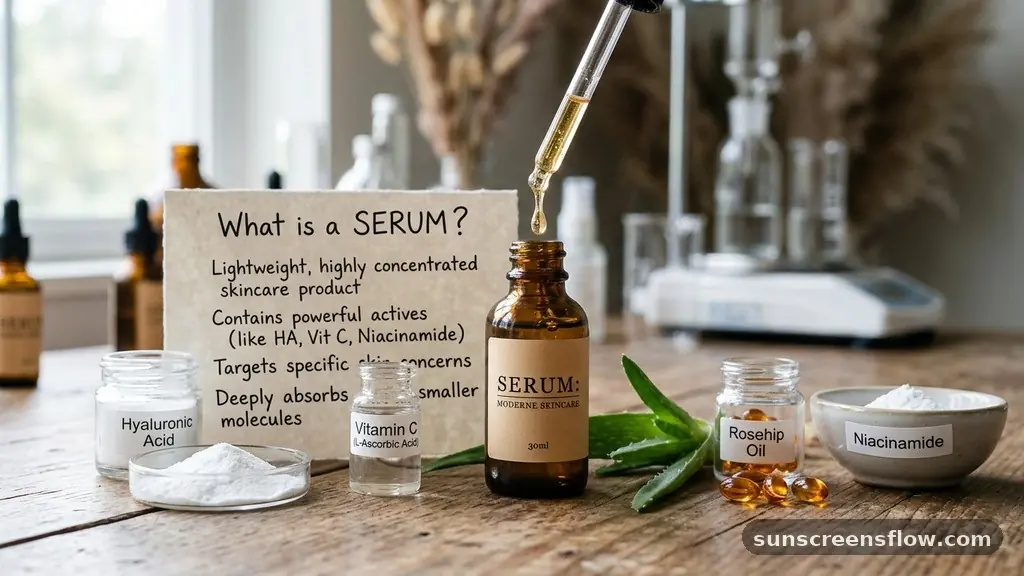
The world of skincare is dominated by a few heavy-hitting ingredients that have become synonymous with the term serum. Understanding what these ingredients do is the best way to determine which product fits your specific needs. The most common active ingredients are selected based on their proven ability to alter skin function or appearance.
- Hyaluronic Acid: A humectant capable of holding 1,000 times its weight in water, providing immediate plumping effects.
- Vitamin C: A powerful antioxidant that brightens the complexion and protects against environmental free radical damage.
- Retinol: A derivative of Vitamin A that accelerates cell turnover, effectively reducing the appearance of wrinkles and acne.
- Niacinamide: A form of Vitamin B3 that regulates oil production and minimizes the appearance of pores.
- Alpha Hydroxy Acids (AHAs): Chemical exfoliants that dissolve dead skin cells to reveal a smoother, brighter texture.
These ingredients are rarely found in isolation. Instead, they are blended into a base that ensures stability and proper pH levels.
Because these actives can be unstable—particularly Vitamin C—the packaging and formulation of the serum are just as important as the concentration of the ingredients themselves. Airless pumps and opaque bottles are frequently used to prevent degradation from light and oxygen, preserving the potency of the formula until the moment it is applied to the skin.
Comparing Biological Serum and Cosmetic Serum
To clarify the confusion between these two distinct uses of the word, it is helpful to look at how they compare across several key functional categories. While they share a name, they serve entirely different purposes in the human experience.
| Feature | Biological Serum | Cosmetic Serum |
|---|---|---|
| Origin | Derived from human/animal blood | Laboratory-synthesized formula |
| Function | Diagnostic, immune support | Targeted skin treatment |
| Key Components | Proteins, electrolytes, antibodies | Active ingredients, humectants |
| Application | Intravenous or laboratory test | Topical application |
This comparison highlights that while both “serums” are essentially refined, concentrated versions of a parent substance, their roles are fundamentally different. Biological serum is a byproduct of a natural process, whereas cosmetic serum is an engineered product meant to modify an existing state.
Understanding this distinction prevents the common misconception that one is related to the other in a physical sense. When a dermatologist recommends a serum, they are suggesting a chemical solution; when a doctor tests your serum, they are examining the state of your internal physiology.
The Role of Proteins and Antibodies
In the biological sense, the composition of serum is dominated by proteins. Albumin is the most abundant, serving as a transport protein for various substances, while globulins play a critical role in immune function. These immunoglobulins are the body’s primary defense against foreign invaders.
When an infection occurs, the body ramps up the production of these proteins, which can then be detected in the serum. This is why serum analysis is so effective for identifying active infections or long-term immune memory.
Beyond these defensive proteins, serum also contains a wide array of hormones and electrolytes. These substances are constantly fluctuating based on diet, activity level, and circadian rhythms. By measuring the levels of these components in the serum, pathologists can build a comprehensive picture of a person’s metabolic health.
For example, a lipid profile—which measures fats in the blood—is conducted using serum to assess the risk of cardiovascular disease. The presence of these proteins and lipids makes the serum a high-resolution map of the body’s internal workings.
Addressing Topical Absorption Challenges
A major challenge in the development of high-quality skincare serums is the skin’s natural barrier function. The stratum corneum, the outermost layer of the skin, is designed to keep external substances out. This is where the science of formulation becomes truly impressive.
To ensure that a serum doesn’t just sit on the surface, chemists manipulate the molecular weight of the active ingredients. Smaller molecules have a much easier time navigating the intercellular spaces of the skin barrier.
Beyond molecular size, delivery systems are used to enhance penetration. Liposomes, for example, are microscopic lipid bubbles that encapsulate active ingredients, protecting them from degradation and helping them fuse with skin cell membranes.
By using these advanced delivery mechanisms, a serum can provide significantly better results than a generic cream. This explains why serums are often more expensive than other skincare products; the technology required to stabilize the ingredients and ensure they penetrate the skin is vastly more complex than simply mixing oils and waxes.
The Future of Serum Technology
As we look toward the future, the definition of what does serum mean will continue to evolve, particularly in the fields of personalized medicine and biotechnology. In the medical field, we are moving toward “liquid biopsies,” where serum is analyzed for genetic markers that could indicate the earliest stages of cancer.
This shift toward early detection relies on the high-sensitivity analysis of serum proteins and DNA fragments. The ability to detect diseases before symptoms appear is the next frontier of diagnostic pathology.
In the skincare industry, the trend is moving toward “smart” serums that adapt to the individual’s skin microbiome. By utilizing biotechnology, companies are developing serums that contain prebiotics and postbiotics designed to balance the bacteria living on the skin’s surface.
These products go beyond simple chemical treatment to actively support the skin’s ecosystem. As our understanding of the skin barrier and the human blood profile continues to deepen, the term serum will remain a vital descriptor for the concentrated, potent, and essential fluids that define both our health and our outward appearance.
Frequently Asked Questions
What does serum mean in medical terms?
In medicine, serum refers to the clear, straw-colored liquid that remains after blood has been allowed to clot. It is essentially blood plasma with the clotting factors, such as fibrinogen, removed. It is widely used in laboratory settings for diagnostic testing and analyzing health markers.
Is there a difference between serum and plasma?
Yes, the primary difference is the presence of clotting factors. Plasma is the liquid component of blood that still contains fibrinogen, which allows it to clot. Serum is the liquid that remains after the blood has already clotted, meaning it lacks these specific proteins.
Why are serums used in skincare routines?
Skincare serums are used because they contain a high concentration of active ingredients with a small molecular weight. This formulation allows the product to penetrate the skin more deeply and effectively than heavier moisturizers, making them ideal for targeting specific concerns like aging or discoloration.
Can I use a serum instead of a moisturizer?
While serums are highly effective at delivering active ingredients, they are often not enough on their own. Most serums lack the occlusive properties of a moisturizer, which are necessary to lock in hydration. Therefore, it is generally recommended to apply a moisturizer over your serum.
Conclusion
The term serum serves as a fascinating linguistic bridge between the clinical precision of a hospital laboratory and the aesthetic goals of a modern skincare routine. In the medical context, it represents the vital, protein-rich fluid that allows doctors to peer inside the human body and diagnose complex conditions through the analysis of electrolytes, hormones, and antibodies. In the cosmetic context, it represents a sophisticated, high-potency delivery system designed to nourish and transform the skin through advanced chemical formulation.
Whether you are deciphering a blood test result or selecting a new face treatment, understanding the underlying meaning of serum provides clarity. It is a substance that has been refined, processed, or specifically formulated to isolate the most essential components for a given goal.
From the life-sustaining transport of nutrients in our veins to the targeted rejuvenation of our skin, the concept of serum remains a cornerstone of both health and beauty. By recognizing the specialized roles this fluid plays in our lives, we can better appreciate the science that keeps our bodies functioning and our skin healthy.


