


Navigating the complexities of a modern skincare routine often feels like solving a chemistry puzzle. Among the most frequent points of confusion for beauty enthusiasts is the order of application: what goes first moisturizer or serum? The short, scientifically backed answer is that you should always apply your serum before your moisturizer.
This sequence is rooted in the fundamental principles of dermatology and chemistry, specifically regarding how different textures and chemical compositions interact with your skin’s biology. By understanding why this order matters, you can significantly enhance the dermatological efficacy of your products and ensure your skin receives the maximum benefit from every drop.
The Science of Molecular Weight and Absorption
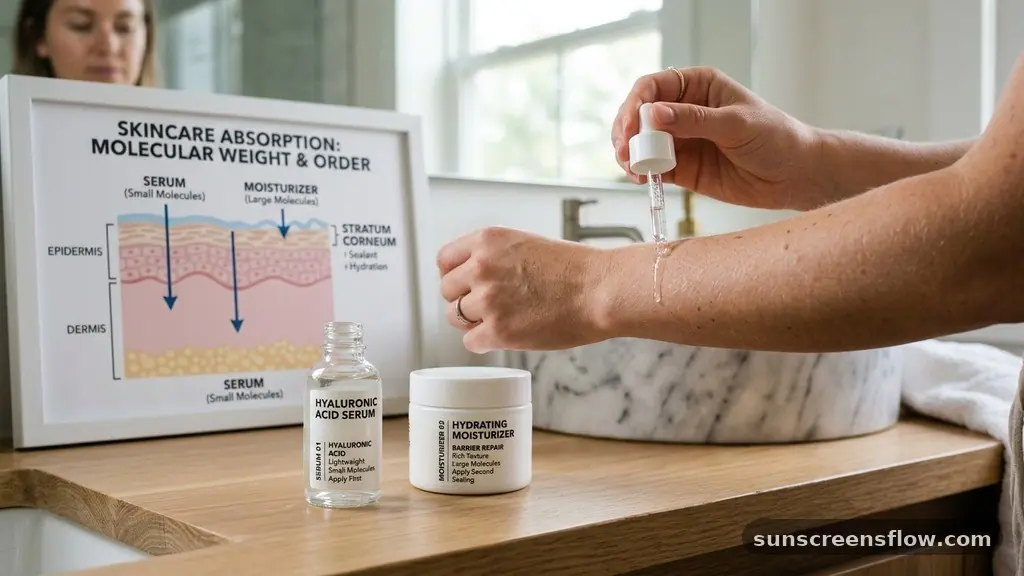
The primary reason for applying serums before moisturizers lies in the concept of molecular weight. Serums are meticulously engineered to be lightweight, high-potency formulations that contain a concentrated dose of active ingredients. Because these molecules are smaller, they possess a higher absorption rate, allowing them to penetrate the deeper layers of the epidermis quickly.
If you were to apply a heavy, thick cream first, you would essentially be creating a physical barrier on the surface of your skin. This barrier would prevent the delicate, smaller molecules in your serum from reaching their intended destination.
Think of your skin like a sponge. If you coat a sponge in a thick layer of oil or wax, water-based solutions will simply bead up and roll off. When you apply your serum directly to clean, slightly damp skin, you are allowing those active ingredients—such as vitamin c or hyaluronic acid—to get to work without any interference.
Once the serum has had a moment to absorb or “set” into the skin, you can then move on to your moisturizer. This layering process ensures that you aren’t wasting expensive products by trapping them on the outermost layer of dead skin cells where they cannot perform their intended functions.
Understanding the Role of Humectants and Occlusives
To master your layering skincare technique, you must understand the distinction between humectants and occlusives. Most serums are formulated as water-based serums, which rely heavily on humectants.
Humectants are ingredients that attract moisture from the environment or deeper layers of the skin to the surface, effectively providing hydration. Because these products are designed to draw moisture in, they need to be sealed in by an occlusive agent.
Moisturizers, on the other hand, are typically formulated with a balance of emollients and occlusives. Occlusives are substances that form a physical seal over the skin, effectively preventing transepidermal water loss. By applying your moisturizer after your serum, you are essentially “locking in” the hydration provided by the serum.
If you reversed this order, the occlusive nature of the moisturizer would block the serum from ever touching your skin, rendering your targeted treatment useless. This synergy between humectants (in the serum) and occlusives (in the moisturizer) is the cornerstone of maintaining a healthy skin barrier.
The Importance of Skin Permeability and Prep
Before you even reach for your serum, the state of your skin matters. A proper facial cleanser is the first step in preparing your face for product absorption. Cleansing removes excess sebum, environmental pollutants, and debris that can impede skin permeability.
When your skin is clean and slightly moist, it is at its most receptive state. Some experts even suggest using a toner to adjust the pH balance of the skin, which can further prepare the surface for the active ingredients that follow.
It is a common misconception that more is always better. In reality, the effectiveness of your skincare is determined by how well the products can reach their target cells. If your skin is congested or has a buildup of dead skin cells, the efficacy of even the most expensive serum will be diminished.
Regular exfoliation can help improve skin texture, making it easier for your products to penetrate effectively. By maintaining a clean, balanced canvas, you ensure that the order of application—serum first, moisturizer second—is as effective as possible.
Categorizing Your Products for Effective Layering
When building a routine, it helps to think in terms of consistency. A general rule of thumb in the beauty industry is to apply products from the thinnest consistency to the thickest.
This usually aligns perfectly with the serum-before-moisturizer rule, as serums are almost always thinner than creams or lotions. However, when you introduce oil-based products into the mix, the order can become slightly more nuanced.
| Product Category | Consistency | Application Order |
|---|---|---|
| Water-based Serums | Thin/Liquid | First (after cleansing/toning) |
| Active Serums (Retinol/Vitamin C) | Medium | Second |
| Moisturizer/Cream | Thick/Emollient | Third |
| Facial Oils | Viscous | Last |
As seen in the table above, the progression moves from the most fluid formulations to the most occlusive ones. While active serums like retinol are potent, they still generally require the support of a moisturizer to prevent irritation and provide the necessary barrier protection. Always check the texture of your product; if it feels like a gel or a liquid, it likely belongs in the serum phase.
Addressing Topical Gaps: When Order Gets Complicated
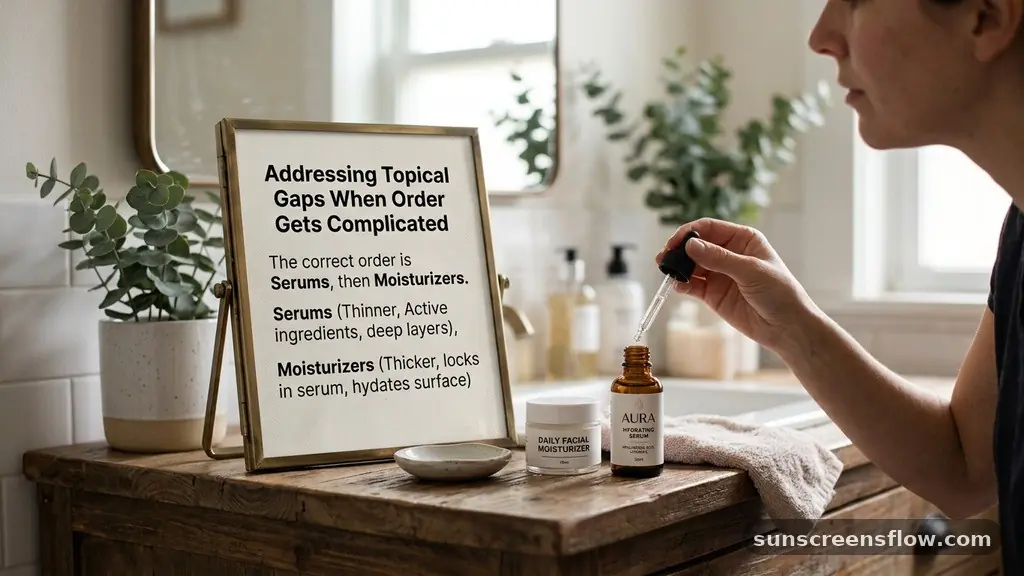
One common gap in skincare advice is what to do when you have multiple serums or specialized treatments. Many users find themselves paralyzed when they have a vitamin c serum for the morning and a retinol treatment for the evening.
When using multiple serums, apply them from thinnest to thickest. If you have two serums of similar consistency, apply the one that addresses your most pressing skin concern first.
Another critical consideration is the wait time. While many people believe they must wait 10 to 15 minutes between each product, modern formulations are often designed to be layered more efficiently. A good rule of thumb is to wait until the product feels “tacky” or fully absorbed before moving to the next step.
If you are using non-comedogenic products, the risk of clogging pores is significantly reduced, allowing for a more seamless transition between layers. Always ensure that your final layer—your broad-spectrum sunscreen—is applied last in your morning routine, as it is designed to sit on the surface to protect against UV damage.
The Role of Active Ingredients in Your Routine
Active ingredients are the “workhorses” of your skincare regimen. Whether you are targeting hyperpigmentation with Vitamin C or fine lines with Retinol, these ingredients are highly concentrated and often sensitive to environmental factors. By placing your serum—which holds these actives—closest to the skin, you ensure that they are not diluted by the emollients found in your moisturizer.
However, be mindful of ingredient compatibility. For example, some people experience irritation when applying certain acids alongside retinoids. In these cases, the order of application becomes less about molecular weight and more about mitigating potential sensitivity.
Applying a light, hydrating serum first can sometimes act as a buffer, making the subsequent application of a harsh active ingredient more tolerable. Always prioritize the stability of your ingredients; for instance, Vitamin C is best applied in the morning to fight free radical damage, while Retinol should be reserved for the evening to avoid light-induced degradation.
Common Mistakes to Avoid During Application
Even when you know the correct order, improper technique can undermine your efforts. One frequent mistake is rubbing the product aggressively into the skin. Instead, consider pressing or patting the serum into your face and neck.
This technique encourages better absorption and is gentler on the delicate skin barrier. Another mistake is applying products to bone-dry skin. While some actives, like retinoids, are best applied to dry skin to reduce irritation, many hydrating serums containing hyaluronic acid perform significantly better when applied to slightly damp skin, as they can “grab” that surface water and pull it deeper into the dermis.
Avoid mixing your products in your palm before application unless they are specifically designed to be used that way. When you mix a serum and a moisturizer in your hand, you are essentially diluting the serum’s potency and altering the pH of the formulation.
By applying them in layers, you allow each product to function as it was intended by the chemists who formulated it. Consistency is key; applying your products in the correct order daily is far more impactful than using a high-end product sporadically or in the wrong sequence.
Creating a Sustainable Routine for Long-Term Health
Ultimately, your skincare routine should be a sustainable habit, not a chore. The “serum first, moisturizer second” rule is a foundational principle that simplifies your life and optimizes your results. By focusing on products that support your specific skin type—whether you are dealing with acne, dryness, or signs of aging—you can tailor this sequence to meet your unique needs.
Remember that skincare is a marathon, not a sprint. The benefits of consistent layering, proper ingredient selection, and respecting the order of application will manifest over weeks and months rather than days. Stay patient, observe how your skin reacts to new products, and don’t be afraid to adjust your routine as the seasons change.
In the winter, you may need a heavier moisturizer to combat dry air, while in the summer, a lighter lotion might suffice. Regardless of the season, the order of operations remains the same: serum for treatment, moisturizer for protection.
Frequently Asked Questions
Can I apply moisturizer before serum if my skin is very dry?
Applying moisturizer before serum is generally discouraged because the thick, occlusive nature of the moisturizer will block the serum from penetrating the skin. Even with dry skin, apply the serum first to deliver hydration, then follow with a thicker, cream-based moisturizer to lock everything in.
Does the order change if I use a facial oil?
Yes, facial oils should almost always be the final step in your routine. Because oils are highly occlusive and have a large molecular size, they can prevent anything applied after them from absorbing. Apply your water-based serums first, followed by your moisturizer, and finish with a few drops of oil.
How long should I wait between applying serum and moisturizer?
You do not need to wait a long time. Simply wait until the serum feels absorbed into the skin or no longer feels “tacky” to the touch, which usually takes about 30 to 60 seconds. This ensures you aren’t mixing the products together on the surface of your skin.
Should I use different serums in the morning and at night?
It is highly recommended to use different serums based on your goals. Use antioxidant-rich serums like Vitamin C in the morning to protect against environmental damage. In the evening, focus on repair and renewal with ingredients like Retinol or exfoliating acids, which are better suited for overnight recovery.
Conclusion
Understanding the sequence of your skincare products is a vital step toward achieving your skin goals. By consistently applying your serum before your moisturizer, you respect the science of molecular weight, allow for optimal absorption of active ingredients, and properly maintain your skin barrier. Remember that the serum provides the targeted treatment, while the moisturizer provides the essential seal to prevent water loss.
Keep your routine simple, observe how your skin responds, and always finish with your broad-spectrum sunscreen in the morning. By mastering these basics, you ensure that every product in your arsenal is working as effectively as possible to keep your skin healthy, hydrated, and resilient.


