


Have you ever wondered What Is Horse Serum? Horse serum is a complex biological fluid derived from the blood of equines, serving as a critical component in scientific research, diagnostic testing, and medical therapy. By definition, it is the liquid fraction of blood that remains after the cells and clotting factors have been removed through the natural process of coagulation.
Unlike whole blood, which contains red blood cells, white blood cells, and platelets, this straw-colored fluid is rich in essential nutrients, growth factors, and specific proteins that support the survival and development of various biological systems. In the context of modern biotechnology, it functions as a versatile medium for cell maintenance and a source of therapeutic molecules.
The significance of this substance lies in its unique biochemical profile. It provides a stable environment for delicate cells, offering a balance of hormones, vitamins, and minerals that mimic the internal conditions of a living organism.
Because it is harvested from horses—animals that are relatively easy to manage and have well-documented immunological profiles—it has become a standard tool in both academic and industrial laboratory settings. Understanding the role of this fluid requires a deep dive into its composition, the methods used for its collection, and the rigorous processing steps that ensure it remains a reliable reagent for high-stakes experimentation.
Biological Composition and Key Components
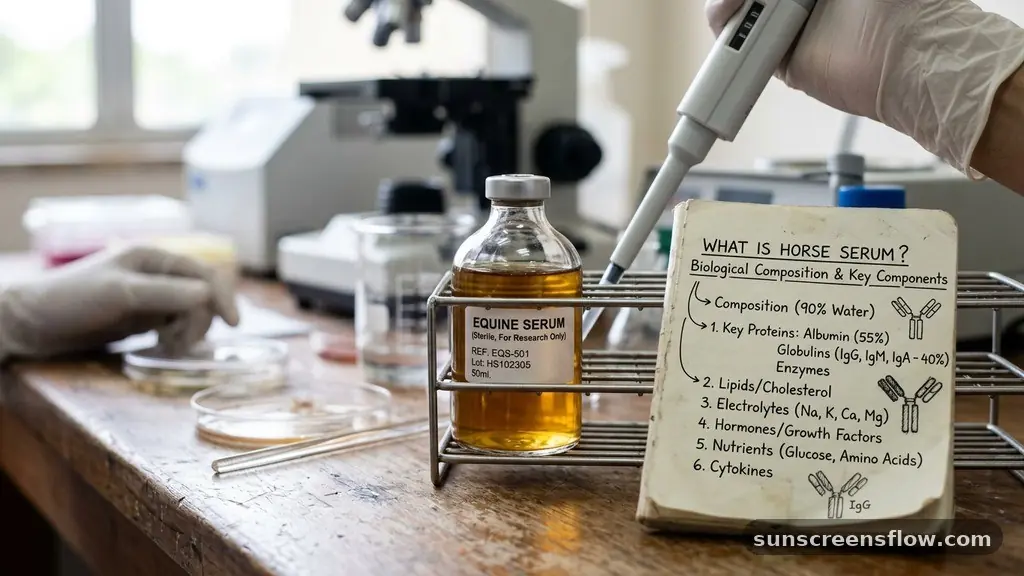
At the molecular level, the fluid is a sophisticated cocktail of biochemical entities that sustain life and regulate cellular processes. The most abundant components are serum proteins, specifically albumin and various globulins. Albumin acts as a primary carrier molecule, helping to transport fatty acids, hormones, and other lipophilic substances through the bloodstream.
Meanwhile, the globulins include critical immunoglobulins, which are the building blocks of the immune response. These proteins are essential for maintaining osmotic pressure and ensuring that the fluid can support the metabolic needs of cells in a controlled environment.
Beyond these structural proteins, the fluid is packed with growth factors, cytokines, and trace elements. These molecules act as signaling agents that instruct cells on when to divide, differentiate, or undergo apoptosis. In the laboratory, these factors are what make the substance so effective as a supplement for cell culture media.
Without these naturally occurring additives, many fastidious mammalian cell lines would fail to thrive. The mixture also contains electrolytes, glucose, and amino acids, which together create an isotonic environment that prevents osmotic stress during the growth phase of delicate cultures.
The specific concentration of these components can vary based on the age, diet, and health status of the donor horse. This is why standardized collection practices are vital.
Researchers rely on the consistency of these chemical profiles to ensure that their experiments remain reproducible. When compared to other biological fluids, the equine-derived variant offers a distinct hormonal balance that may be preferable for specific types of cells that do not respond optimally to bovine-derived alternatives.
Comparison Between Equine Serum and Fetal Bovine Serum
In the world of in vitro research, the choice of supplement is paramount. While fetal bovine serum (FBS) is the gold standard for many applications due to its exceptionally high growth-promoting potential, equine serum (often referred to as horse serum) is frequently chosen for its specific properties and the reduced risk of certain bovine-specific viruses. The two are often compared based on their ability to facilitate cell proliferation and their overall cost-effectiveness in large-scale production.
One of the primary reasons researchers might pivot toward the equine variant is the presence of specific inhibitors or growth factors that are absent in fetal bovine alternatives. For instance, in certain neural or stem cell cultures, the equine version provides a more conducive environment for differentiation.
Additionally, because it is derived from adult animals rather than fetal sources, there are different ethical and availability considerations. The following table highlights the key differences between these two common laboratory additives.
| Feature | Fetal Bovine Serum (FBS) | Equine Serum |
|---|---|---|
| Source | Bovine fetus | Adult horse |
| Growth Factor Concentration | Exceptionally high | Moderate |
| Primary Application | General cell culture | Specific cell lines, diagnostic reagents |
| Viral Risk Profile | Bovine-specific viruses | Equine-specific viruses |
| Consistency | Variable (batch-dependent) | Relatively consistent |
The decision to utilize one over the other often comes down to the metabolic requirements of the specific cell line being studied. In cases where high-speed cell proliferation is the goal, FBS remains dominant. However, for applications requiring specific cell maturation or for use in diagnostic assays where bovine proteins might interfere with the results, the equine alternative is the superior choice.
The Role of Heat Inactivation in Serum Processing
Serum processing is a highly regulated procedure designed to ensure the quality, safety, and stability of the final product. One of the most important steps in this workflow is heat inactivation.
During this process, the fluid is typically heated to 56°C for approximately 30 minutes. The primary objective of this thermal treatment is to deactivate the complement system—a series of proteins in the blood that can cause cell lysis or interfere with the outcomes of immunological assays.
By heating the fluid, researchers effectively “silence” these active complement components. This is particularly important when the serum is used in clinical diagnostics or for sensitive cell culture experiments where the uncontrolled activation of the complement cascade could compromise the health of the cells or the accuracy of the diagnostic readout.
However, heat inactivation is not without its trade-offs. While it solves the problem of complement interference, the heat can also denature some of the heat-labile growth factors and proteins that are beneficial for cell growth.
Therefore, the decision to heat-inactivate must be made with the specific application in mind. If the goal is to maintain maximum growth potential for a fast-dividing cell line, some labs choose to bypass this step or use alternative methods to mitigate complement activity. For those who do proceed, the process must be strictly monitored to prevent over-heating, which can lead to the formation of precipitates—the visible cloudiness that indicates protein denaturation and degradation.
Applications in Vaccine Production and Antitoxin Therapy
Historically and currently, the horse has played a pivotal role in the development of life-saving medical treatments, most notably in vaccine production and antitoxin therapy. Because horses possess a robust immune system, they can be immunized against specific toxins or pathogens to produce high titers of antibodies. This process is the foundation for creating tetanus antitoxin, a critical medical intervention used to neutralize the toxins produced by Clostridium tetani.
When a horse is hyper-immunized with a specific antigen, its body produces a massive quantity of immunoglobulins (antibodies) directed specifically at that target. The blood plasma is then collected, and the serum is refined to isolate these antibodies.
This purified serum serves as a passive immunotherapy agent. Unlike a vaccine, which trains the recipient’s immune system to build its own defenses, the antitoxin provides immediate, temporary immunity by directly neutralizing the threat.
This technology remains a cornerstone of emergency medicine. While modern biotechnology has introduced monoclonal antibodies, equine-derived antitoxins remain cost-effective and highly effective for treating various envenomations (like snake bites) and bacterial infections. The manufacturing of these products requires rigorous standards to ensure that the serum is free from contaminants and that the protein concentration is optimized for therapeutic efficacy.
Laboratory Reagents and Cell Culture Media
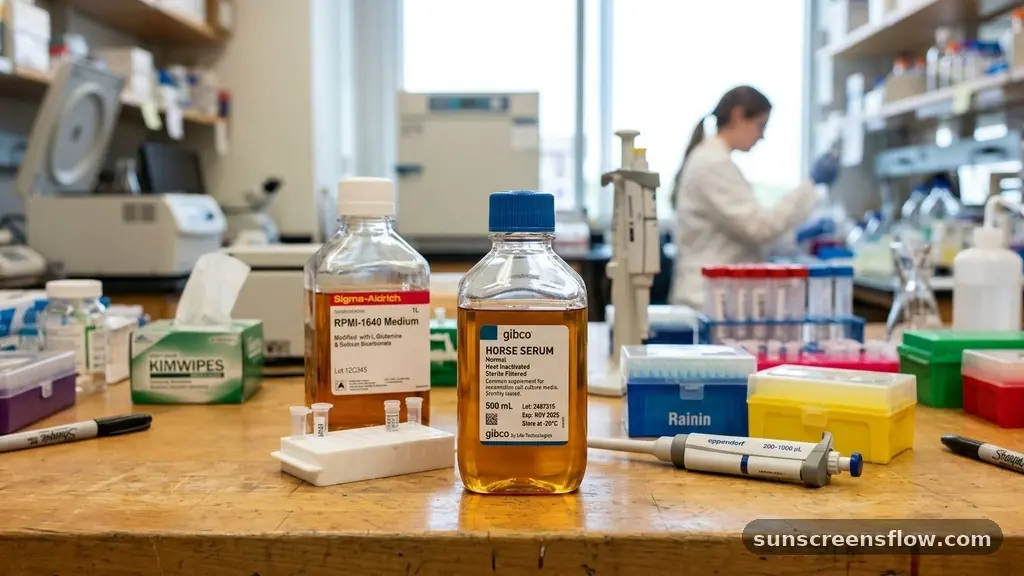
In the realm of in vitro research, this substance is often classified as one of the essential biological additives. When added to basal media, it provides the necessary “spark” to initiate and sustain the life cycle of mammalian cell lines.
Without the complex mixture of hormones, lipids, and vitamins found in the serum, cells in a petri dish would struggle to survive beyond a few divisions. It essentially acts as a substitute for the complex homeostatic environment of an animal’s body.
The preparation of these media often involves sterile filtration. Because the fluid is a nutrient-rich environment, it is highly susceptible to bacterial and fungal contamination.
Manufacturers use membrane filters with extremely small pore sizes (typically 0.1 to 0.2 micrometers) to remove any potential microbes without damaging the heat-sensitive proteins. This level of filtration is essential for the commercial success of products like those branded by Gibco, which are widely used in laboratories globally.
To optimize the use of these reagents, researchers often follow specific protocols:
- Thawing the serum slowly at 4°C to prevent protein aggregation.
- Aliquotting the serum into smaller volumes to avoid repeated freeze-thaw cycles.
- Testing the batch-specific growth performance against a control before scaling up experiments.
- Storing the product at -20°C or lower to maintain the integrity of growth factors.
- Ensuring the pH of the final media is adjusted to mimic physiological conditions.
These steps ensure that the protein supplementation remains effective throughout the duration of the experiment, preventing the “drift” in cell behavior that can occur when components degrade.
Addressing Topical Gaps: Safety and Ethical Considerations
A common question in the scientific community concerns the safety and ethics of using equine-derived products. One major topical gap is the concern regarding the potential for zoonotic disease transmission. Because the serum is a biological product, it carries a theoretical risk of transmitting pathogens.
However, modern industrial-scale blood collection and processing facilities employ stringent screening protocols. Donors are regularly tested for equine infectious anemia and other common viruses, and the serum undergoes multiple rounds of viral testing and inactivation to ensure it meets international safety standards.
Another gap involves the ethical treatment of the donor animals. Modern standards for the production of these biologicals emphasize the welfare of the horses.
This includes veterinary oversight, appropriate housing, and nutritional support, ensuring that the blood collection process does not negatively impact the health of the animal. Transparency in the supply chain has become a significant factor for research institutions, which now prioritize suppliers that adhere to high animal welfare standards.
Finally, there is the question of whether “serum-free” alternatives will eventually render the equine-derived product obsolete. While chemically defined, serum-free media are advancing rapidly, they often struggle to replicate the sheer complexity of the natural fluid. For many specialized applications, the “unknown” factors present in the natural serum still provide a superior growth advantage that synthetic alternatives cannot yet match.
The Mechanics of Blood Coagulation and Serum Separation
Understanding what the substance is requires a fundamental grasp of blood coagulation. When blood is drawn from a horse, the process of clotting begins almost immediately. This is a complex cascade involving platelets and clotting factors like fibrinogen.
As the blood clots, it forms a solid matrix, trapping the red and white blood cells inside. The remaining liquid—the serum—is what is left behind.
In contrast, if an anticoagulant were added to the blood, the resulting product would be plasma, which still contains the clotting factors. The absence of these factors is what differentiates serum from plasma.
This distinction is crucial for laboratory work. If an experiment requires the fluid to be free of fibrinogen (which can form unwanted clots in culture vessels or interfere with diagnostic binding assays), serum is the required material.
The separation process usually involves centrifugation. After the blood is allowed to clot at room temperature or in a refrigerated environment, the sample is spun at high speeds.
This forces the heavy, clotted mass to the bottom of the collection vessel, while the clear, straw-colored serum remains at the top. This supernatant is then carefully harvested, pooled, and processed through the filtration steps mentioned earlier to ensure a uniform, high-quality product.
Clinical Diagnostics and Future Outlook
The utility of equine serum extends well beyond the research bench and into the world of clinical diagnostics. It is frequently used in serological tests to detect the presence of antibodies or antigens in a patient’s sample.
Because the equine proteins are well-characterized, they serve as excellent controls in assays like ELISA (Enzyme-Linked Immunosorbent Assay). They provide a stable baseline that allows clinicians to accurately measure the results of patient tests.
Looking toward the future, the role of this fluid is likely to evolve alongside the growth of personalized medicine and advanced cell therapies. While the reliance on animal-derived products is being challenged by the move toward synthetic media, the specific properties of the equine-derived fluid ensure its continued relevance. As we gain a deeper understanding of the proteomics of the serum, we may see the development of “designer” serum additives—fractions of the natural fluid that are enriched with specific growth factors, providing the benefits of natural serum without the variability of a biological donor.
This evolution will likely focus on increasing the purity and consistency of the product. By leveraging advanced analytical techniques, manufacturers can offer more refined versions of the fluid, tailored to the specific needs of modern biotechnology. Whether in the production of vaccines or the maintenance of stem cells, this remarkable biological resource continues to support the frontiers of medical and scientific discovery.
Frequently Asked Questions
What is the primary difference between horse serum and blood plasma?
The primary difference is the presence of clotting factors. Blood plasma is obtained by preventing blood from clotting, so it retains fibrinogen and other coagulation proteins. Horse serum is the liquid remaining after the blood has been allowed to clot, meaning it is depleted of these specific clotting factors.
Is it safe for humans to take horse serum supplements?
No, horse serum is not intended for human consumption or as a dietary supplement. It is a highly specialized laboratory reagent used for in vitro research and diagnostic testing. Using it as a supplement could lead to severe allergic reactions or the transmission of zoonotic pathogens.
Why is heat inactivation necessary for this serum?
Heat inactivation is used to deactivate the complement system within the serum. The complement system consists of proteins that can cause cell lysis or interfere with experimental results. Heating the serum to 56°C for 30 minutes renders these proteins inactive, making the serum safer for sensitive cell culture applications.
How is the quality of the serum maintained during production?
Quality is maintained through strict donor screening, standardized collection practices, and rigorous processing. This includes sterile filtration through membranes that remove contaminants and rigorous batch testing for growth-promoting properties. These steps ensure that the final product is consistent, free of microbes, and stable for long-term storage in laboratory settings.
Conclusion
Horse serum stands as a vital pillar in the infrastructure of modern biological science. From its essential role in cell culture media to its life-saving applications in antitoxin therapy, this complex fluid offers a level of biochemical support that remains difficult to replicate entirely with synthetic alternatives.
By understanding its composition, the importance of processing steps like heat inactivation, and the distinction between serum and plasma, researchers can better utilize this reagent to advance their work. As the field of biotechnology continues to mature, the focus will remain on refining these products for greater consistency and safety, ensuring that this natural resource continues to facilitate breakthroughs in medicine, diagnostics, and fundamental research for years to come.


