


Navigating the complexities of a modern skincare routine can often feel like solving a chemistry puzzle. With countless bottles on the vanity, determining the correct Step-by-Step Layering Order is essential to ensure your products actually penetrate the epidermis and deliver their promised benefits. One of the most common questions beauty enthusiasts ask is does toner or serum come first?
The short answer, rooted in the fundamental rule of skincare application—from thinnest to thickest consistency—is that you should apply your toner before your serum. However, understanding the why behind this sequence is just as important as the order itself to maximize your results.
The Fundamental Rule: Consistency and Absorption
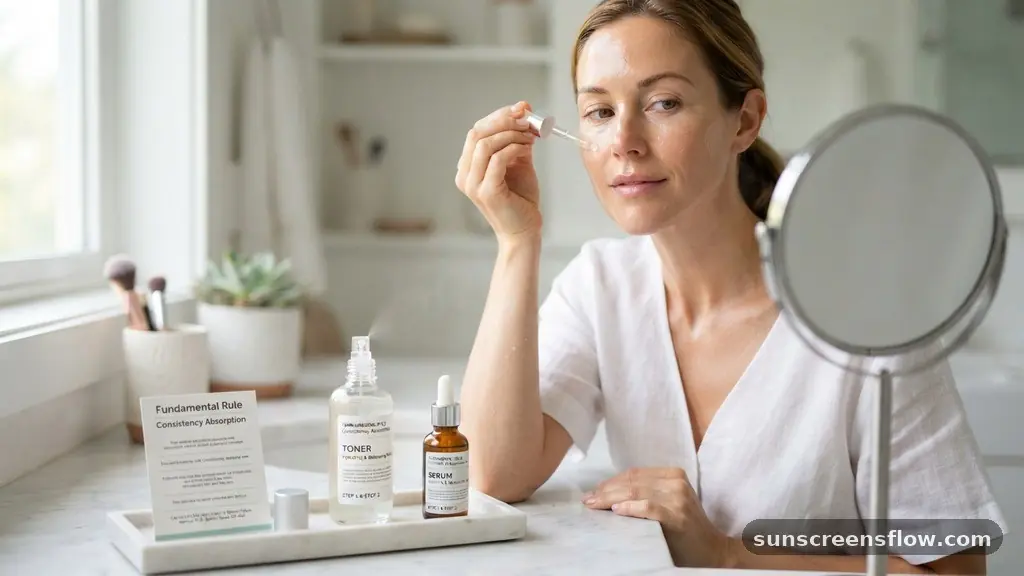
The primary reason why toner precedes serum is the viscosity of the products. Toners are traditionally designed to be lightweight, often resembling water in their consistency. Because of this, they are engineered to be the first layer of moisture after cleansing.
When you cleanse your face, you strip away not only impurities but also a portion of the skin’s natural oils. A quality toner acts as a bridge, rehydrating the skin and preparing the surface to receive more potent treatments.
If you were to apply a thicker, more viscous serum first, it would create a barrier that prevents the watery toner from reaching the skin. By applying a toner first, you create a damp, receptive canvas. Think of your skin like a sponge: a dry sponge is often stiff and resistant to absorbing liquid, but a slightly damp sponge will soak up moisture much faster.
Toners provide that initial hydration boost, ensuring that the active ingredients in your subsequent serums can be absorbed more efficiently. Furthermore, toners often contain humectants that draw moisture into the skin, which is the perfect environment for a serum to work its magic.
The Role of pH Balance in Product Efficacy
Historically, toners were used solely to restore the pH balance of the skin after the use of harsh, alkaline soaps. While modern cleansers are much gentler and often pH-balanced themselves, the secondary function of toners remains vital. When your skin’s pH is slightly acidic, it maintains a healthy moisture barrier and is better equipped to defend against environmental stressors.
When you apply a toner, you are essentially “resetting” the skin’s surface. This is particularly important if your next step involves active ingredients like retinol or vitamin C, which often function best within specific pH ranges. If your skin is too alkaline from a harsh wash, the efficacy of these actives can be compromised.
By integrating a toner into your ritual, you ensure that the pH of your skin is optimized for the penetration of the serums that follow. It is a subtle step that significantly improves the overall performance of your entire regimen, ensuring that you aren’t wasting expensive products on skin that isn’t primed to utilize them.
Why Serums Follow Toners
Serums are the powerhouses of any skincare routine. They are formulated with a high concentration of active ingredients designed to target specific concerns, such as hyperpigmentation, dehydration, or fine lines. Because these products are expensive and concentrated, you want to ensure they reach the deepest layers of the skin possible.
Why Serums Follow Toners is a matter of molecular weight and delivery. Most serums are designed to penetrate the skin quickly. If you apply them over a layer of toner, the toner acts as a delivery vehicle.
The water-based nature of most toners helps to “pull” the serum deeper into the skin. If you were to skip the toner, you might find that your serum sits on the surface of the skin, potentially leading to issues such as balling or pilling when you later apply moisturizer or sunscreen. By layering correctly, you allow the serum to settle into the skin without interference, ensuring that your investment in targeted treatments actually pays off in visible skin improvements.
Understanding Product Textures and Layering
To master the art of layering, you must pay close attention to the texture of your products. In the world of dermatology and aesthetics, the golden rule is always to start with the thinnest, most water-based formulas and move toward the heaviest, most oil-based products. This hierarchy ensures that each layer can be absorbed without being blocked by a thicker substance.
| Product Type | Consistency | Placement in Routine |
|---|---|---|
| Cleanser | Varies | First |
| Toner | Watery | Second |
| Serum | Gel/Light Lotion | Third |
| Moisturizer | Cream/Lotion | Fourth |
| Sunscreen/Occlusives | Thick/Oily | Last |
As indicated in the table above, the progression from thin to thick is not just a suggestion; it is a functional requirement for product efficacy. If you have a watery serum, you might be tempted to apply it immediately after cleansing, but even a thin serum is generally more concentrated than a toner. Sticking to the established order prevents the “pilling” effect where products clump together on the skin, which is a common complaint among those who haphazardly apply their skincare products.
Common Exceptions and Considerations
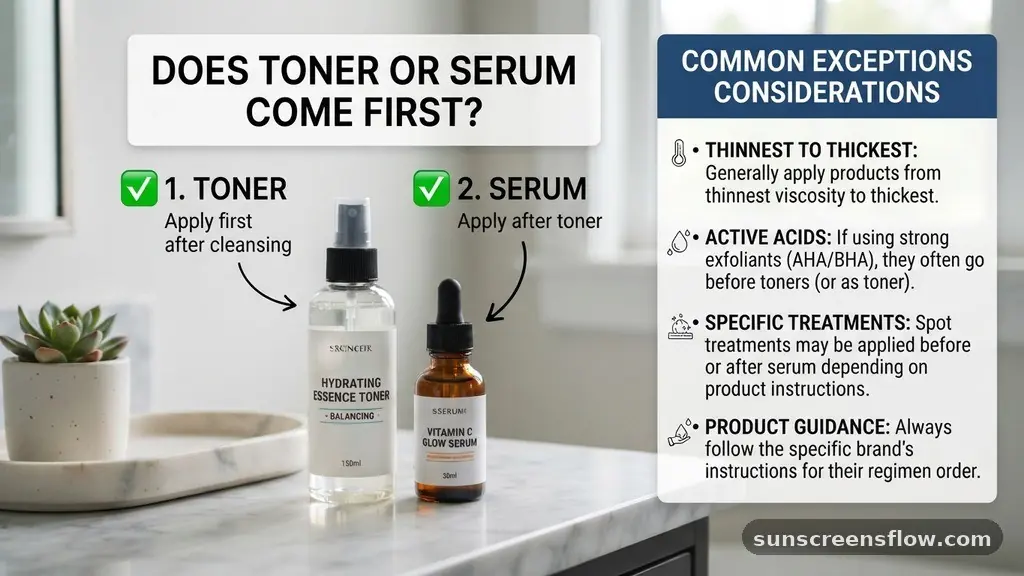
While the “toner then serum” rule is standard, there are Common Exceptions and Considerations that experienced skincare users should keep in mind. For instance, some specialized treatment toners—such as those containing high concentrations of exfoliating acids (AHAs or BHAs)—might be treated differently than hydrating toners. If you are using a strong chemical exfoliant toner, you might need to wait a few minutes for it to fully neutralize and dry before applying your serum.
Additionally, some modern, innovative skincare brands are creating “hybrid” products that blur the line between toner and serum. In these cases, it is best to follow the manufacturer’s specific instructions. If a product is labeled as a “serum-toner,” look at the primary ingredients.
If it features heavy humectants like hyaluronic acid or soothing agents like niacinamide, it likely functions as a toner. If the product is marketed as a treatment for specific issues like acne or dark spots, treat it as a serum regardless of its texture. Always prioritize the product that addresses your most pressing skin concern when deciding which to apply first if the labels are ambiguous.
Optimizing Results with Key Ingredients
When building your routine, the synergy between your toner and serum is crucial. For example, if you are struggling with dehydration, using a toner rich in glycerin followed by a serum containing hyaluronic acid is a powerhouse combination. The toner provides the initial hydration, and the hyaluronic acid serum acts like a magnet, locking that moisture into the skin cells.
Similarly, if you are targeting hyperpigmentation, you might choose a brightening toner containing licorice root or vitamin C, followed by a concentrated serum containing niacinamide or tranexamic acid. This layering strategy ensures that the skin is being treated at multiple levels.
- Always cleanse first: Cleanser: Removes dirt, oil, and makeup.
- Apply toner while the skin is slightly damp to enhance absorption.
- Allow the toner to soak in for 30-60 seconds before applying your serum.
- Layer serums from thinnest to thickest if using multiple treatments.
- Finish with a moisturizer to seal everything in.
By following these simple steps, you minimize the risk of product incompatibility and maximize the efficacy of your active ingredients.
Troubleshooting Common Layering Issues
One of the most frustrating aspects of a multi-step routine is product pilling—that annoying phenomenon where your skincare rolls off your face in little balls. This usually happens when you apply too many layers too quickly, or when you combine products with conflicting textures (like a silicone-heavy serum over a water-based toner that hasn’t fully dried).
If you notice pilling, the first culprit to investigate is your waiting time. Many people try to rush through their routine. Give your toner at least one minute to absorb.
If the skin still feels tacky, wait a little longer. Another cause is the use of too many products. You do not need five different serums.
Focus on high-quality formulas that contain multi-tasking ingredients like niacinamide, which can address multiple concerns at once without requiring you to pile on extra layers. If you continue to experience pilling, try switching to a lighter toner or applying your serum by pressing it into the skin with your palms rather than rubbing it in circles.
Addressing Topical Gaps: Toners vs. Essences
A frequent point of confusion in the skincare world is the difference between toners and essences. Many people wonder if they need both, and if so, how they fit into the sequence.
Generally, an essence is slightly thicker than a toner but thinner than a serum. If you are using both, the order is: Cleanser, Toner, Essence, Serum.
Essences are often concentrated with fermented ingredients designed to encourage cell turnover and hydration. If you are trying to simplify your routine, you can often pick one or the other. If your skin is very dry, a hydrating toner is essential.
If your skin is dull, an essence might provide more visible radiance. The important takeaway is that neither should displace your targeted serum, as the serum contains the highest concentration of actives for your specific skin goals. By understanding the functional difference between these categories, you can build a streamlined routine that doesn’t feel like a chore but still delivers professional-grade results.
FAQ: Common Questions About Skincare Layering
Can I apply serum directly to dry skin?
Technically, yes, but it is not recommended. Applying serum to slightly damp skin—often achieved by using a toner first—significantly improves absorption. Dry skin can act as a barrier, causing the serum to sit on the surface rather than penetrating where it is needed most.
What happens if I apply a heavy serum before a toner?
Applying a thick serum before a toner can block the toner from absorbing. Because toners are typically water-based and thin, they cannot penetrate through the thicker, often occlusive-heavy formula of a serum. This results in wasted product and reduced efficacy for your toner’s benefits.
Do I really need a toner if my cleanser is gentle?
While not strictly mandatory for everyone, a toner is highly beneficial for restoring pH balance and providing an initial layer of hydration. If you live in an area with hard water, a toner can also help remove mineral deposits left behind, which can irritate the skin over time.
Is it okay to use a retinol serum after a toner?
Yes, using a retinol serum after a toner is standard practice. Ensure the toner has fully dried before applying the retinol, as applying actives to damp skin can sometimes increase sensitivity or irritation. Always follow up with a moisturizer to buffer the potential drying effects of retinol.
Conclusion
Mastering your skincare routine is all about understanding the science of product delivery. When considering does toner or serum come first, the answer is clear: the toner must always come first to prepare the skin, balance the pH, and provide the necessary hydration for the subsequent application of your potent, active-rich serums. By adhering to the principle of applying products from the thinnest consistency to the thickest, you ensure that every drop of your skincare investment is utilized effectively.
Whether you are addressing hyperpigmentation, dehydration, or fine lines, the correct sequence of application is the foundation upon which all visible results are built. By taking the extra time to layer thoughtfully, you turn your daily routine into a highly effective treatment ritual that keeps your skin healthy, hydrated, and resilient.


