

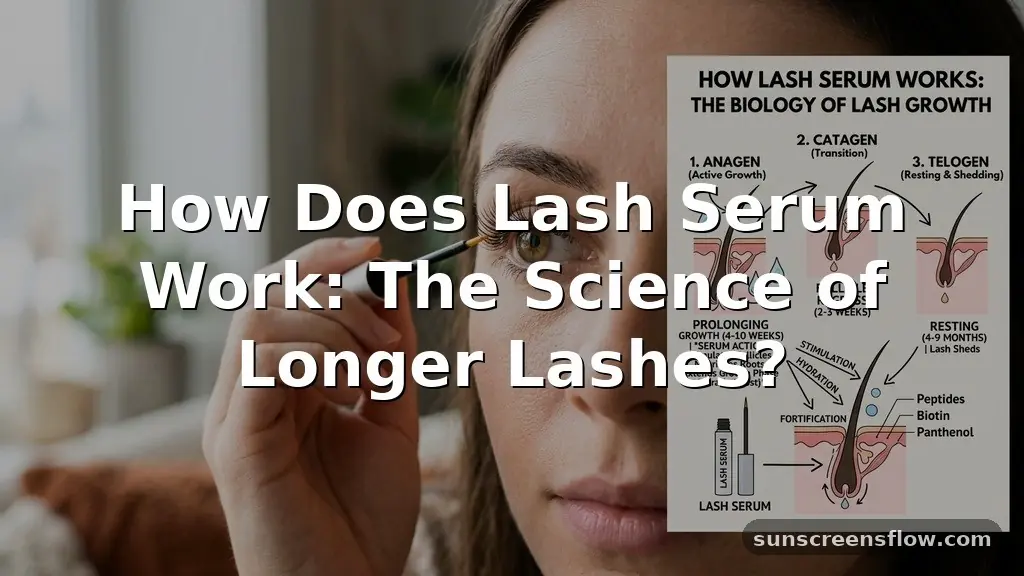
Achieving longer, fuller, and more dramatic eyelashes is a goal for many beauty enthusiasts, but understanding exactly how does lash serum work requires looking beyond marketing claims and into the biology of hair growth. Eyelash serums are specialized formulations designed to interact with the hair follicle, either by extending the growth duration of individual lashes or by reinforcing the hair shaft to prevent premature shedding. By manipulating the biological clock of your lashes, these products aim to provide a more voluminous appearance over several weeks of consistent use.
The Biology of the Lash Growth Cycle
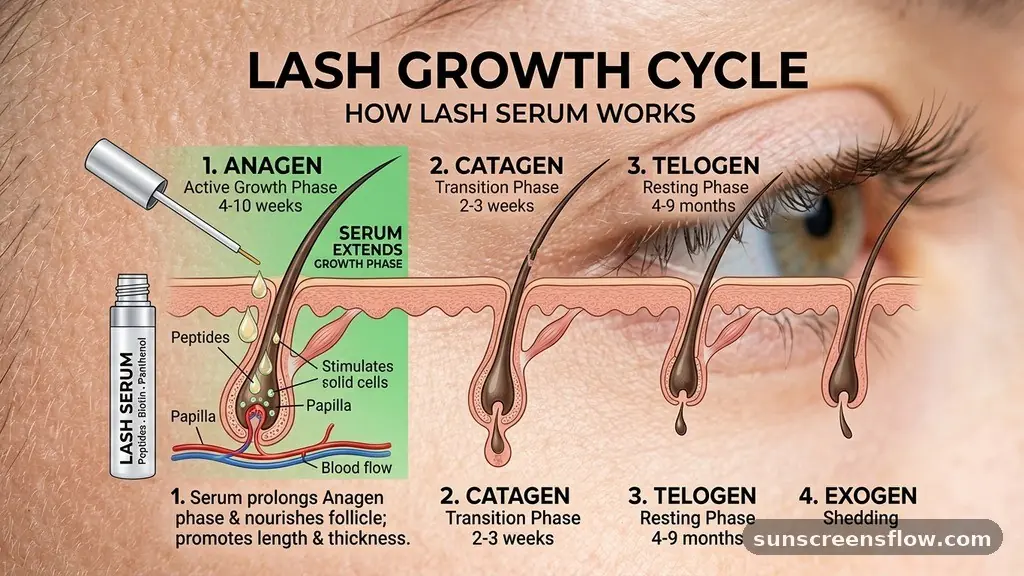
To comprehend how a lash serum functions, one must first understand the natural lash cycle. Like the hair on your head, eyelashes are constantly growing, resting, and falling out. This cycle consists of three distinct phases: the anagen phase, the catagen phase, and the telogen phase.
The anagen phase is the active growth period where the follicle is most productive. For eyelashes, this phase is relatively short compared to scalp hair, which is why lashes do not grow to extreme lengths naturally.
During the catagen phase, the follicle transitions into a resting state, and the hair stops growing as the root shrinks. Finally, the telogen phase is the shedding period, where the old lash falls out to make room for a new one. Growth cycle regulation is the primary mechanism through which effective serums operate.
By extending the duration of the anagen phase, the serum allows the lash to stay in the growth mode for a longer period, resulting in a longer hair shaft before it inevitably enters the catagen phase. When a serum successfully delays the transition to the catagen phase, the cumulative effect is a thicker, longer, and more noticeable lash line.
Prostaglandin Analogs and Their Mechanism
The most potent category of lash-enhancing products relies on prostaglandin analogs. These compounds, such as bimatoprost or isopropyl cloprostenate, were originally developed for medical treatments related to ocular pressure.
Researchers noted that patients using these medications experienced a significant side effect: increased lash length and density. This discovery revolutionized the cosmetic lash industry.
Prostaglandin analogs work by mimicking natural fatty acid compounds that signal the body to increase blood flow and metabolic activity at the site of the hair follicle. This hair follicle stimulation creates an environment where the lash can grow longer and thicker than it would under normal physiological conditions. However, because these ingredients are biologically active, they are also associated with specific ocular side effects.
Users must be aware that while these compounds are highly effective at promoting growth, they can sometimes lead to unintended consequences if they come into direct contact with the sensitive tissues of the eye. Understanding the potency of these ingredients is essential for anyone considering a high-performance serum.
Peptide Complexes and Nutritional Support
For those looking for an alternative to prostaglandin-based formulas, many brands utilize peptide complexes to achieve results. Peptides are short chains of amino acids that act as building blocks for proteins like keratin, which is the structural component of your eyelashes. Instead of forcing the follicle to stay in the growth phase, these serums focus on follicular nourishment and hair shaft conditioning.
Peptides communicate with the follicle cells to encourage a healthier, more robust environment for growth. When combined with ingredients like biotin, which is known for its role in supporting hair health, and panthenol, which acts as a humectant to retain moisture, these serums help fortify the lashes from the root to the tip.
This approach is generally considered gentler, focusing on the overall health of the lash rather than just the length. By providing the follicle with the necessary nutrients, these serums ensure that the lashes that do grow are resilient, less prone to lash breakage, and appear naturally thicker due to improved structural integrity.
Hydration and Protection with Hyaluronic Acid
Beyond stimulating growth, a critical component of how a lash serum works is the inclusion of moisturizing agents such as hyaluronic acid. The hair shaft of an eyelash is susceptible to environmental damage, dehydration, and brittleness from daily use of mascara or mechanical curlers. Hyaluronic acid is a powerful hydrator that draws moisture into the lash, keeping it supple and flexible.
When the lash is properly hydrated, it is significantly less likely to break during the telogen phase or while being cleaned. This creates an optical illusion of increased lash density; when fewer lashes break off prematurely, the lash line appears fuller.
Furthermore, hydrated lashes hold a curl better and look shinier, contributing to an overall aesthetic improvement. By maintaining the moisture balance of the follicle and the surrounding skin, these serums provide a protective barrier that shields the hair from the harsh conditions of daily life, ensuring that each lash reaches its maximum potential length before falling out.
Safety Considerations and Side Effects
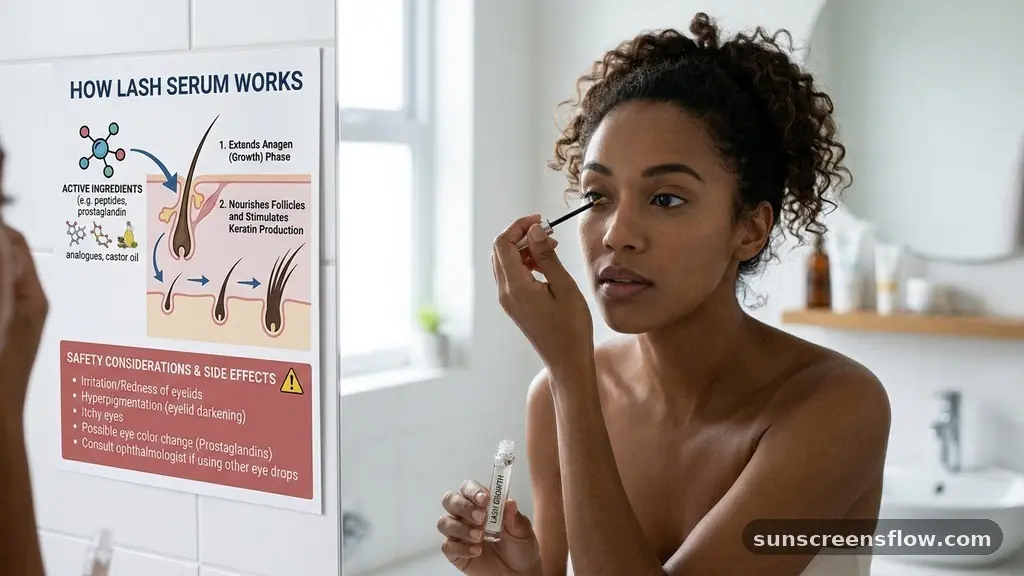
When investigating how does lash serum work, it is impossible to ignore the potential risks involved with topical applications near the eye. Because the skin around the eye is thin and the ocular surface is delicate, users may experience eyelid hyperpigmentation, where the skin near the lash line darkens slightly. This is usually a reversible effect that occurs when the serum pigment or active ingredient interacts with the skin cells over time.
More serious concerns include iris darkening, which can occur if the product leaches into the eye and affects the melanin in the iris, and meibomian gland dysfunction, which can disrupt the oil production necessary for healthy tear film. To mitigate these risks, it is paramount to prioritize products that have undergone rigorous dermatological testing and are clearly labeled as ophthalmologist-tested. Proper serum application technique is equally important.
Always apply the product to the skin of the upper lash line rather than directly onto the lashes themselves, as the serum will naturally migrate to the roots when you blink. Using only the recommended amount prevents excess product from running into the eye.
Comparing Different Serum Formulations
Not all lash serums are created equal, and the mechanism of action varies significantly between brands. Some focus purely on conditioning, while others aim for aggressive growth. The following table highlights the common differences between types of lash serums.
| Category | Primary Mechanism | Key Ingredients | Expected Result |
|---|---|---|---|
| Prostaglandin-based | Follicular stimulation | Bimatoprost, Isopropyl cloprostenate | Maximum length and density |
| Peptide-based | Nutritional support | Peptides, Biotin, Panthenol | Improved resilience and health |
| Conditioning-only | Structural hydration | Hyaluronic acid, natural oils | Reduced breakage and shine |
Common Mistakes in Lash Serum Application
Even the most expensive, scientifically backed serum will fail if the application is inconsistent or incorrect. One of the most frequent mistakes is “over-applying” the product. Many users believe that applying more serum will result in faster growth, but this is a misconception.
Excess serum is more likely to cause irritation or run into the eyes, increasing the risk of side effects, rather than boosting the efficacy. A thin, precise line along the upper lash base is all that is required.
Another common error is failing to maintain consistency. Because the lash cycle takes several weeks to complete, users often give up too soon. You must use the serum daily for at least 8 to 12 weeks to see a noticeable difference.
If you stop using the product, the lashes will eventually revert to their original growth cycle. Once the desired length is achieved, many people switch to a maintenance schedule of 2-3 times per week, but complete cessation will eventually result in a return to your natural lash baseline. Cleanliness is also vital; always ensure your eyelids are free of makeup and oil before application to ensure the ingredients can penetrate the follicle effectively.
Addressing Topical Gaps: Do Natural Remedies Work?
A common question often overlooked in professional discussions is whether natural oils like castor oil actually work like a clinical serum. While castor oil is excellent for hair shaft conditioning due to its fatty acid content, it does not possess the biological mechanism to alter the anagen phase of the lash cycle. It can make lashes appear thicker and healthier by coating the hair and preventing breakage, but it does not technically “grow” new hair or extend the growth cycle the way prostaglandin analogs or specific peptide complexes do.
Furthermore, there is a lack of rigorous dermatological testing for many DIY natural remedies. While they are generally safe, they lack the precision engineering of laboratory-formulated serums that are designed to penetrate the follicle without causing follicular clogging or irritation.
If your goal is simply to have softer, more hydrated lashes, natural oils are a fantastic, cost-effective option. However, if you are seeking a measurable increase in length and density, clinical serums are scientifically designed to interact with the hormonal and structural pathways of hair growth, whereas oils simply provide a topical, protective benefit.
Common Questions About Lash Serums
Do lashes go back to normal after I stop using a lash serum?
Yes, if you stop using a lash serum, your lashes will eventually return to their natural growth cycle. Because the serum works by extending the anagen phase, the effect is not permanent. Once you stop providing the active ingredients that regulate this cycle, your lashes will shed and grow at their original, pre-serum rate over the course of several weeks.
Is it safe to use lash serum with eyelash extensions?
Generally, it is safe to use water-based lash serums with extensions, but you should avoid oil-based formulas, as these can dissolve the adhesive used to attach the extensions. Always check with your lash technician before starting a new serum, as some active ingredients may cause sensitivities or premature shedding of the extensions.
Can I use the same serum on my eyebrows?
Many lash serums are formulated to be safe for eyebrows, and some brands market them for both. However, you should check the product label specifically. Eyebrows have a different growth cycle than eyelashes, so while the ingredients may stimulate hair growth in both areas, the application technique will differ due to the larger surface area of the brow.
What should I do if the serum gets in my eyes?
If a small amount of serum accidentally enters your eye, flush it immediately with cool, clean water or an eye wash solution. While most serums are designed to be non-irritating, they can cause temporary redness, stinging, or blurred vision. If you experience persistent irritation or discomfort, discontinue use immediately and consult an eye care professional.
Conclusion
In summary, the effectiveness of lash serums is rooted in their ability to manipulate the natural biological processes of the hair follicle. Whether through the potent stimulation of prostaglandin analogs or the nourishing support of peptide complexes, these products aim to extend the anagen phase and reinforce the structural integrity of each lash. By understanding how the lash cycle works, choosing a formula that aligns with your sensitivity levels, and maintaining a consistent application routine, you can effectively enhance the appearance of your lashes.
While these products offer significant cosmetic benefits, they must be used with an awareness of potential side effects and a commitment to proper, clean application techniques. Ultimately, the best results come from a combination of patience, product quality, and adherence to safe dermatological practices, ensuring that your journey to longer lashes is both effective and healthy.


