


Navigating the world of active skincare ingredients can feel like walking a tightrope, especially when you are trying to address hyperpigmentation or dullness while managing sensitive or breakout-prone skin. A common concern among enthusiasts is whether vitamin C serum causes acne.
While this potent antioxidant is widely celebrated for its ability to brighten the complexion and neutralize free radicals, some users report a sudden onset of pimples shortly after introducing it into their skincare routine. Understanding whether this reaction is a genuine breakout caused by the formula or a temporary phase of skin adjustment is essential for maintaining a healthy skin barrier.
Understanding the Relationship Between Vitamin C and Breakouts

When you ask, “does vitamin C serum cause acne,” the answer is rarely a simple yes or no. In most cases, pure L-ascorbic acid—the most common and potent form of topical vitamin C—is not inherently acne-causing.
In fact, its anti-inflammatory properties can often help soothe inflammation associated with active lesions. However, the delivery vehicle, the surrounding ingredients, and the individual’s skin chemistry play massive roles in how the product behaves on the surface of your face.
If you notice breakouts after applying a new serum, it is rarely the vitamin C itself that is the culprit. Instead, the issue often lies in the secondary ingredients used to stabilize the formula. Many serums incorporate oils, silicones, or thickeners to ensure the topical application remains stable and effective.
If those additives are comedogenic ingredients, they can physically block your follicles, leading to clogged pores. This is particularly problematic for those who already have acne-prone skin, as their follicles are more reactive to occlusive substances. Furthermore, the high acidity required for L-ascorbic acid to penetrate the skin—often necessitating a pH level below 3.5—can irritate the mantle of the skin, potentially leading to a compromised barrier that is more susceptible to bacterial infiltration.
The Phenomenon of Skin Purging vs. True Breakouts
One of the most confusing aspects of starting a new serum is distinguishing between a genuine adverse reaction and skin purging. Purging is essentially a process where your skin accelerates its turnover cycle.
Because vitamin C can have mild exfoliating properties depending on the formulation, it may push micro-comedones—tiny, invisible clogs—to the surface faster than your skin would naturally shed them. When this happens, it looks like you are experiencing a fresh wave of acne, but it is actually just clearing out what was already lurking beneath the surface.
To tell the difference, look at the location and timeline. Purging typically occurs in areas where you usually experience breakouts and usually resolves within two to four weeks. If the “breakouts” are appearing in areas where you never typically get pimples, or if they are accompanied by intense redness, itching, or burning, it is likely not purging.
That kind of reaction is more indicative of contact dermatitis or a sensitivity to a specific ingredient. If you find your skin texture becoming increasingly rough or inflamed, it is a clear signal that the product is not agreeing with your specific biology, and you should consider discontinuing use immediately to allow your skin time to recover.
Analyzing Potential Comedogenic Ingredients in Serums
Not all serums are created equal, and the formulation is the single biggest factor in determining whether a product will trigger a reaction. When you are shopping for a new bottle, take a moment to look at the ingredient list beyond the primary active. If the product contains heavy oils like coconut oil, algae extract, or certain silicones, these are notorious for causing clogged pores in susceptible individuals.
| Ingredient Category | Potential Effect | Suitability for Acne-Prone Skin |
|---|---|---|
| Pure L-Ascorbic Acid | High potency, acidic, antioxidant | Generally safe but can be irritating |
| Tocopherol (Vitamin E) | Stabilizer, moisturizing | Can be comedogenic for some |
| Ferulic Acid | Stabilizer, boosts efficacy | Usually non-comedogenic |
| Plant-based oils/Butters | Emollient, carrier | Often highly comedogenic |
The table above illustrates how common additives can change the profile of your serum. Vitamin C is frequently paired with vitamin E and ferulic acid to enhance its stability and effectiveness. While this combination is the gold standard for anti-aging, the vitamin E component, while beneficial for some, can be heavy and clogging for others.
Always look for labels that explicitly state “non-comedogenic” or “oil-free” if you have a history of acne. These labels suggest that the manufacturer has formulated the product with ingredients that are less likely to block your pores, providing a safer starting point for your routine.
The Role of Serum Oxidation and Stability
One often overlooked reason for skin irritation is serum oxidation. Vitamin C is notoriously unstable. When exposed to light, heat, or air, it oxidizes, turning from a clear or straw-colored liquid to a dark orange or brown hue.
Oxidized vitamin C creates free radicals rather than neutralizing them. When you apply an oxidized product to your skin, you are essentially applying a substance that can cause oxidative stress, which might trigger inflammation and, by extension, lead to breakouts.
If your serum has changed color, it has lost its potency and potentially gained the ability to irritate your skin. Proper storage is crucial to prevent this. Keep your vitamin C in a cool, dark place, and ensure the cap is screwed on tightly after every use.
Some users find that even with proper storage, a bottle might go bad before they finish it. If you have sensitive skin, it is even more important to monitor the integrity of your product.
If you notice a strange smell or a shift in color, stop using the product immediately. Applying degraded ingredients is a common, avoidable mistake that leads many people to incorrectly conclude that vitamin C itself is the problem.
How Concentration Levels Influence Skin Reactions
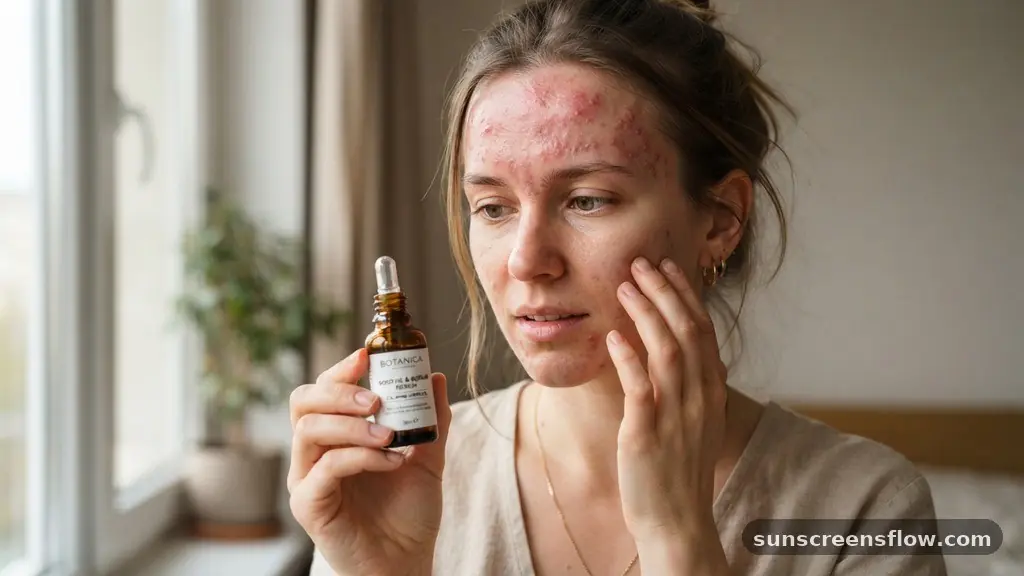
The concentration of vitamin C in your serum can also be a deciding factor in how your skin reacts. Market trends often push for higher percentages, such as 20% or 25% L-ascorbic acid, under the assumption that more is better.
However, for many people, especially those with sensitive skin, these high concentrations are far too aggressive. They can strip the skin of its natural moisture and disrupt the delicate skin barrier, leaving it vulnerable to bacteria.
When the barrier is compromised, the skin loses its ability to protect itself, leading to increased trans-epidermal water loss and heightened reactivity. This often manifests as redness, flaking, or a stinging sensation, which can easily be mistaken for an acne flare-up. If you are new to vitamin C, it is generally recommended to start with a lower concentration, perhaps around 5% to 10%.
This allows your skin to build a tolerance to the acidity without overwhelming it. Once your skin is comfortable with a lower dose, you can gradually work your way up if your aesthetic goals require it. Remember, consistency with a lower, well-tolerated concentration is far more effective than an occasional, high-intensity application that causes you to break out.
Strategic Patch Testing to Avoid Breakouts
Before applying a new serum to your entire face, a patch test is non-negotiable. This simple step can save you from a week of dealing with unnecessary breakouts.
To perform a proper patch test, apply a small amount of the serum to a discreet area, such as the inside of your wrist or behind your ear. Leave it for at least 24 hours to observe any adverse reaction.
However, for those concerned about acne, a patch test on the neck or behind the ear might not be enough, as the skin in these areas is different from the skin on your face. You might consider performing a “mini-test” on a small, acne-prone area of your cheek or jawline for a few days. If the area remains clear and does not show signs of increased redness or texture, you can cautiously proceed with full-face application.
This methodical approach is the most effective way to determine if a specific product is compatible with your skin type. If you have a history of contact dermatitis or extreme sensitivity, consulting with a dermatologist before trying a new active is always the smartest route. They can review the ingredient list for you and steer you toward formulations that are specifically designed for your skin profile.
Managing Your Skincare Routine for Maximum Compatibility
Integrating a new product into your existing skincare routine requires balance. Vitamin C is a powerful active, and it should not necessarily be layered with other harsh ingredients.
For example, using a high-strength chemical exfoliant, such as an AHA or BHA, at the same time as a high-concentration vitamin C serum can be a recipe for disaster. This combination can lead to severe irritation and a shattered skin barrier, which frequently results in acne-like symptoms as the skin tries to repair itself.
* Start with a gentle cleanser to remove debris without stripping natural oils.
* Apply your vitamin C serum on dry skin to minimize the potential for stinging.
* Wait for the serum to fully absorb before applying your moisturizer.
* Ensure your moisturizer is non-comedogenic and supports the skin barrier.
* Always finish with sunscreen, as vitamin C can make the skin slightly more sensitive to UV light.
If you are currently using prescription acne treatments, such as retinoids or benzoyl peroxide, talk to your provider about when to use your vitamin C. Generally, it is best to alternate them—perhaps vitamin C in the morning and your acne treatment in the evening—to prevent the ingredients from interacting negatively on your skin. This spacing out of products allows each one to perform its function without overwhelming the surface.
Addressing Topical Gaps: Why Some People React Differently
There is a significant gap in the general understanding of why some individuals experience reactions while others do not. Much of this comes down to individual skin micro-biomes and the specific formulation of the product. While many articles focus on the vitamin C itself, they often ignore the role of the product’s base.
For example, some serums are water-based, while others are oil-based or silicone-based. An oil-based serum, even if it uses high-quality oils, might be perfectly fine for someone with dry skin but could be disastrous for someone who is prone to clogged pores.
Furthermore, the pH levels are critical. Vitamin C, specifically L-ascorbic acid, requires a low pH to be effective. However, the skin’s natural pH is slightly acidic, around 5.5.
When you apply a product with a pH of 3.0, you are temporarily shifting the skin’s balance. For most people, the skin recovers quickly. For those with a weakened barrier, this shift can be enough to trigger an inflammatory response.
Understanding this helps explain why some people can use a 20% vitamin C serum without issue, while others break out with a 5% concentration. It is not just the active ingredient; it is the entire chemical environment of the product interacting with your unique skin physiology.
Conclusion: Finding the Right Balance for Your Skin
Ultimately, the question “does vitamin C serum cause acne” is nuanced. While pure vitamin C is generally not an acne trigger, the way it is formulated and how your skin reacts to the acidic environment or the secondary ingredients can certainly lead to breakouts in some individuals. The key to successful use lies in choosing high-quality, stable formulations, starting with lower concentrations, and being diligent about watching for signs of irritation versus purging.
By understanding the importance of non-comedogenic labels, monitoring for serum oxidation, and integrating the product slowly into your routine, you can enjoy the brightening and antioxidant benefits of vitamin C without sacrificing the clarity of your complexion. If you remain unsure, a dermatologist can provide personalized advice that takes into account your specific skin history and needs. Remember, skincare is a marathon, not a sprint; patience and careful observation are your best tools for achieving that healthy, glowing skin you are aiming for.
Frequently Asked Questions
Can I use vitamin C serum if I have active acne?
Yes, you can, but look for non-comedogenic, oil-free formulations. Vitamin C’s anti-inflammatory properties can actually assist in healing. However, if your skin is currently very inflamed or irritated, it is best to wait until the active lesions have calmed down before introducing a new, acidic active ingredient.
How long should I wait to see if a serum is causing acne?
Give your skin about four weeks to adjust to a new product. If you are experiencing a purge, it should start to clear up within this window. If the breakouts are worsening, spreading to new areas, or accompanied by significant redness, discontinue the product after one or two weeks.
Is it normal for vitamin C serum to sting when applied?
A very mild, fleeting tingle can occur due to the low pH of L-ascorbic acid, especially when you first start using it. However, if the stinging is persistent, burning, or causes visible redness, it is a sign that the concentration is too high or your skin barrier is compromised.
Should I stop using vitamin C if I get a few pimples?
Not necessarily. If the pimples are isolated and you have just started, it could be a brief adjustment or a purge. However, if you notice a clear pattern of breakouts every time you apply the serum, it is likely that one of the ingredients in that specific formula is clogging your pores.


