


Navigating the complexities of a modern skincare routine often leaves enthusiasts questioning the precise order of application. If you have ever stood before your mirror wondering, “do you put serum or moisturizer on first,” you are certainly not alone. The short answer, based on the principles of dermatological science, is that you should always apply your serum before your moisturizer.
This sequence is dictated by the molecular weight of the products and the specific goal of maximizing skin absorption for your chosen active ingredients. By applying lighter, more concentrated formulas first, you ensure that these potent treatments reach the deeper layers of the epidermis without being hindered by the heavy protective barrier created by creams or lotions.
The Science of Product Layering and Molecular Weight
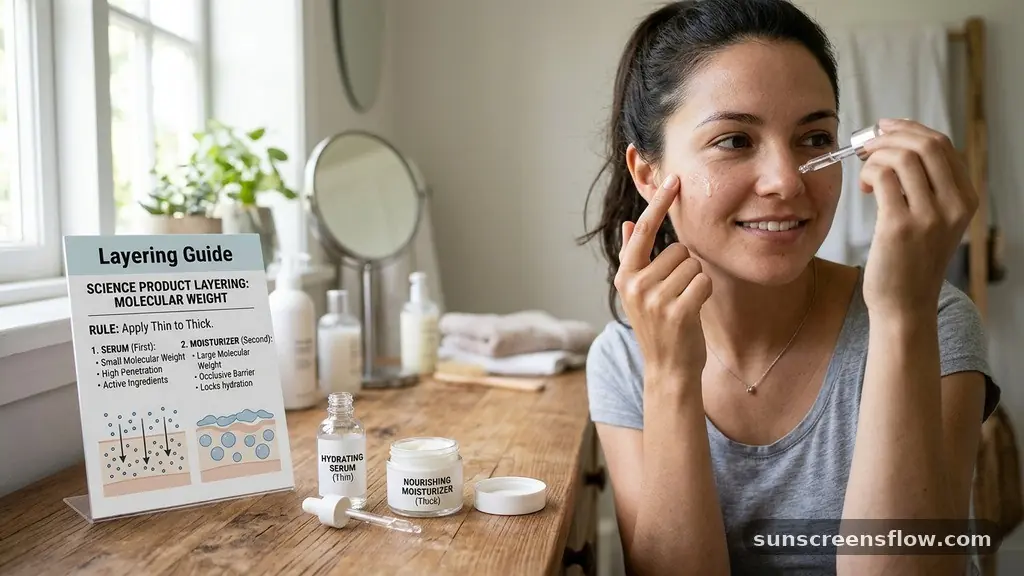
The primary reason we follow a specific order in skincare is to work with, rather than against, the natural physiology of our skin. Products are generally formulated with different textures and consistencies that dictate how they interact with the skin barrier.
Serums are typically designed as water-based formulas with a lower molecular weight, allowing them to penetrate the skin’s surface more effectively. Because they are lightweight, they can easily bypass the surface layer to deliver concentrated doses of vitamins, peptides, or antioxidants directly to the cells that need them most.
In contrast, moisturizers are often formulated as an emulsion or cream. These products are specifically engineered to provide a seal over the skin. They often contain occlusives, which are ingredients designed to prevent transepidermal water loss—the process by which water evaporates from the skin throughout the day.
If you were to apply a heavy moisturizer first, its occlusive properties would create a physical shield on the surface of your skin. Applying a serum afterward would mean the serum sits on top of that barrier, unable to penetrate, essentially rendering the expensive active ingredients ineffective. By prioritizing the serum, you create a “treatment” layer that is then locked into the skin by the subsequent application of a moisturizer.
Why Serums Must Come Before Moisturizers
To understand why the order matters, think of your skin as a sponge. If the sponge is already coated in a thick layer of wax (the occlusive moisturizer), it cannot absorb the water (the serum) you pour onto it.
Serums are the workhorses of a skincare routine; they contain high concentrations of active ingredients like vitamin c, niacinamide, or retinol. These substances are meant to address specific concerns like hyperpigmentation, fine lines, or acne.
When you apply your serum to clean, slightly damp skin after using a facial cleanser and toner, the product can move into the skin’s interstitial spaces without obstruction. Once the serum has had a moment to absorb—usually about 30 to 60 seconds—it is ready for the next step.
The moisturizer then acts as the “cap” that traps the serum against the skin while simultaneously providing the lipids necessary to support the lipid layer of the skin. This synergy prevents the active ingredients from evaporating or rubbing off, ensuring they remain in contact with your skin for the duration of the day or night.
Understanding the Role of Humectants and Occlusives
Understanding the chemical composition of your products is key to mastering your routine. Humectants and occlusives play opposing but complementary roles. Humectants, such as hyaluronic acid or glycerin, are substances that attract water molecules from the environment or deeper skin layers to the surface.
Most serums are packed with humectants because they provide an immediate plumping effect. However, if humectants are left exposed to dry air without an occlusive layer over them, they can actually pull moisture out of the skin, leading to dehydration.
This is where the moisturizer becomes essential. A good moisturizer contains occlusives like ceramides, shea butter, or plant oils. These ingredients create a breathable, protective film that prevents the moisture pulled in by your serum from escaping.
When you follow the rule of applying serum first, you are essentially setting up a moisture-retention system: the serum pulls the hydration in, and the moisturizer locks it there. This delicate balance is vital for maintaining healthy hydration levels throughout the day. If you skip the moisturizer, your serum’s humectants might be doing more harm than good in arid environments.
The Impact of Ingredients on Skin Absorption
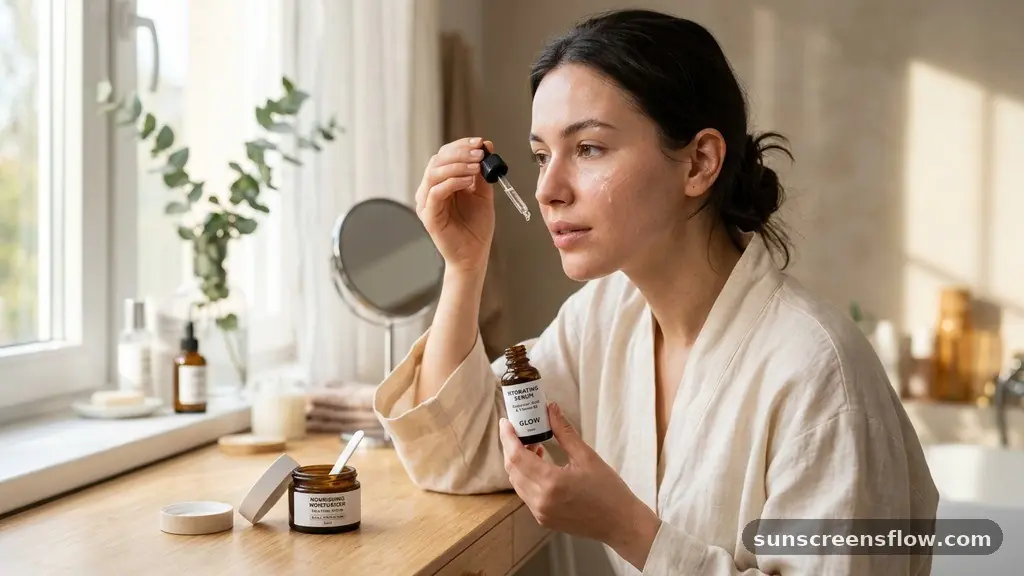
Not all serums are created equal, and their ingredients can influence how they interact with your overall routine. For instance, a peptide serum is often designed to signal the skin to produce more collagen, while a serum containing botanical extracts might be intended to soothe inflammation. Because these products are formulated with small, targeted molecules, they require a clear path to the stratum corneum.
When you introduce heavy, oil-based products too early in the process, you disrupt the absorption pathway. Oil-based products have a much larger molecular size than water-based serums. If you apply an oil or a thick cream before a water-based serum, the oil will sit on the skin and physically block the water-based serum from entering the pores.
This is why the industry standard for skincare layering is always from the thinnest consistency to the thickest consistency. By following this rule, you naturally respect the molecular weight of the ingredients, ensuring that the most potent treatments reach their destination without being blocked by the heavier, protective layers of your routine.
Navigating Pore Clogging and Comedogenic Ingredients
One common fear among those building a skincare regimen is the potential for breakouts. Many people worry that layering too many products will lead to pore clogging. The term “comedogenic” refers to the likelihood of an ingredient causing comedones, or clogged pores.
Generally, serums are formulated to be non-comedogenic, as they are meant to be absorbed quickly. Moisturizers, however, can vary significantly in their potential to clog pores depending on the oils and waxes used in their formulation.
If you are prone to acne, the order of application is even more critical. You want your treatment products (serums) to be the ones in closest contact with your skin. If you apply a heavy, comedogenic moisturizer first, you might be trapping bacteria or debris inside your pores.
By applying your serum first, you allow those active ingredients—some of which might be anti-inflammatory or exfoliating—to work on the skin surface and within the pores before you seal everything off with a moisturizer. It is also important to choose a moisturizer that matches your skin type; if you have oily skin, look for water-based, oil-free moisturizers that won’t exacerbate pore issues.
Comparing Product Categories for Optimal Layering
To help visualize the correct order, it is useful to categorize the products in your cabinet based on their primary function and texture. The following table illustrates the standard hierarchy of product application.
| Order of Application | Product Category | Primary Function |
|---|---|---|
| 1 | Facial Cleanser | Remove debris and prepare skin surface |
| 2 | Toner | Balance pH and remove residual impurities |
| 3 | Serum | Deliver concentrated active ingredients |
| 4 | Moisturizer | Hydrate and lock in nutrients |
| 5 | Sunscreen/Oil | Protect from UV/Seal moisture (final step) |
This hierarchy is designed to ensure that every product performs at its maximum potential. By moving from the most aqueous (watery) products to the most lipid-rich (oily) products, you prevent the “barrier effect” from occurring too early. If you were to use a facial oil, it should always be the very last step in your evening routine, as oils are the heaviest products and will easily block anything applied after them.
Common Mistakes in Skincare Layering
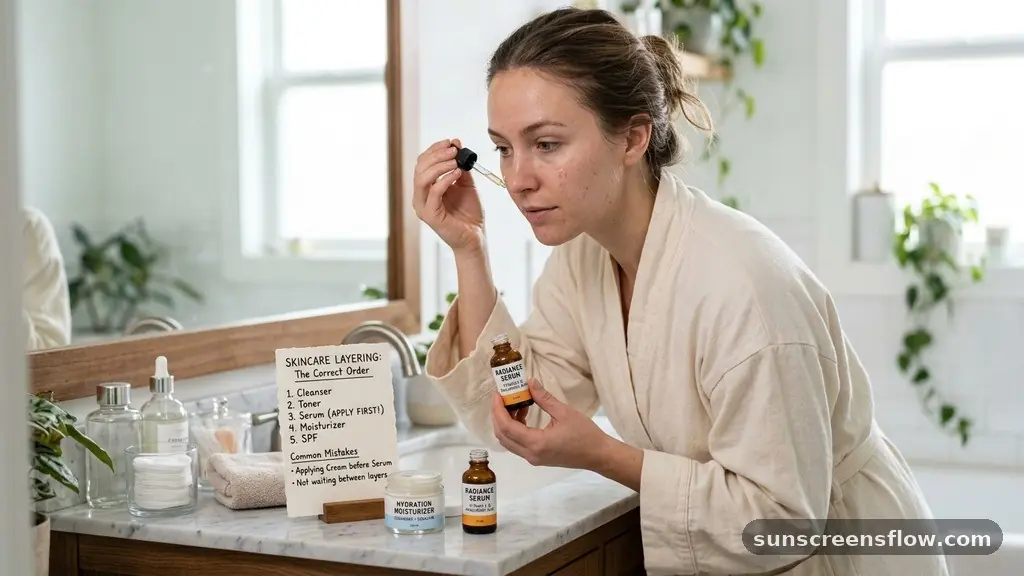
Even with the best intentions, many people fall into traps that compromise their results. One of the most common errors is failing to allow enough “dry time” between products.
When you apply a moisturizer immediately after a serum without waiting for the serum to sink in, you are essentially mixing the two products on the surface of your skin. This can lead to pilling—where the product rolls off the skin in little balls—and prevents the serum from being fully absorbed.
Another mistake is applying products in the wrong order based on perceived potency rather than texture. Just because a product is expensive or powerful does not mean it should go first. Always look at the viscosity.
If a product is thin and watery, it goes first. If it is thick and creamy, it goes later. Additionally, some people skip the toner, which is a missed opportunity.
A good toner helps remove the last traces of cleanser and prepares the skin to be more receptive to the serum. By skipping this step, your serum has to work harder to penetrate the skin, potentially leading to less effective results over time.
When to Adjust Your Routine for Specific Ingredients
While the general rule is “serum before moisturizer,” there are exceptions based on the specific needs of your skin. For example, if you are using a very strong retinol product, your dermatologist might suggest a “sandwich method.”
This involves applying a thin layer of moisturizer, then the retinol, and then another layer of moisturizer. This technique is designed to buffer the harsh effects of the retinol, reducing irritation for sensitive skin while still allowing the active ingredient to work.
Similarly, if you are using products with hyaluronic acid, it is highly recommended to apply them to damp skin. Because hyaluronic acid is a powerful humectant, it thrives in the presence of water. Applying it to dry skin can actually cause it to pull moisture from your skin cells rather than the air.
In this case, you might apply a hydrating mist or toner, then the hyaluronic acid serum, and then immediately follow with a moisturizer to seal that water in. Always assess your skin’s reaction and adjust your layering strategy accordingly, but keep the core principle of “light to heavy” as your guiding foundation.
Addressing Topical Gaps: The Role of pH and Wait Times
A frequently overlooked aspect of layering is the pH level of your products. Your skin has a natural acidic mantle that helps protect against bacteria. Some serums, particularly those with L-ascorbic acid (a form of vitamin C), require a low pH to be effective.
If you apply a high-pH moisturizer or a toner that neutralizes the skin’s pH too quickly, you may deactivate the vitamin C. This is why many skin experts recommend waiting 10 to 15 minutes after applying a vitamin C serum before applying your moisturizer.
Furthermore, there is the question of whether to apply products on damp or dry skin. Most experts agree that applying serums on slightly damp skin enhances penetration, but this does not apply to all ingredients. Retinol, for instance, is best applied to completely dry skin to minimize the risk of irritation.
Understanding these subtle nuances can bridge the gap between a “standard” routine and a truly professional-grade regimen. By paying attention to how your skin feels and reacts after each step, you can fine-tune your layering process to achieve the best possible results for your specific skin type and goals.
FAQ
Can I mix my serum and moisturizer in my hand before applying?
While it might seem like a time-saver, mixing products is generally discouraged. Most serums are formulated to be absorbed individually, and mixing them with a thick moisturizer can alter the pH and viscosity, potentially preventing the active ingredients from penetrating the skin effectively. It is better to layer them separately.
How long should I wait between applying serum and moisturizer?
You should wait until the serum feels mostly absorbed into the skin, which usually takes between 30 and 60 seconds. You do not need to wait until the skin is bone-dry, but the product should no longer feel tacky or wet to the touch before you apply your moisturizer.
What if my serum is oil-based?
If your serum is oil-based, it should be applied after any water-based serums but before your heavy moisturizer. Because oils have a larger molecular weight than water-based formulas, they act as a secondary barrier and should generally be used toward the end of your routine to ensure proper penetration of lighter products.
Do I need a serum if I already have a good moisturizer?
You do not strictly need a serum, but it is highly beneficial if you want to target specific concerns. A moisturizer is primarily for hydration and barrier protection, whereas a serum is designed to deliver high concentrations of active ingredients that a moisturizer alone cannot provide.
Conclusion
Mastering the order of your skincare products is one of the most effective ways to improve the health and appearance of your complexion. By consistently applying your serum before your moisturizer, you ensure that your skin receives the full benefit of your active ingredients while maintaining a healthy, hydrated barrier. Remember that the golden rule of layering is to progress from the thinnest, most water-based formulas to the thickest, most occlusive creams.
By respecting the molecular weight of your products, managing the interaction between humectants and occlusives, and being mindful of your skin’s unique needs, you can transform your daily routine into a powerful tool for long-term skin health. Whether you are addressing signs of aging, managing acne, or simply seeking a radiant glow, the correct sequence of application is the foundation upon which all other skincare success is built.


