

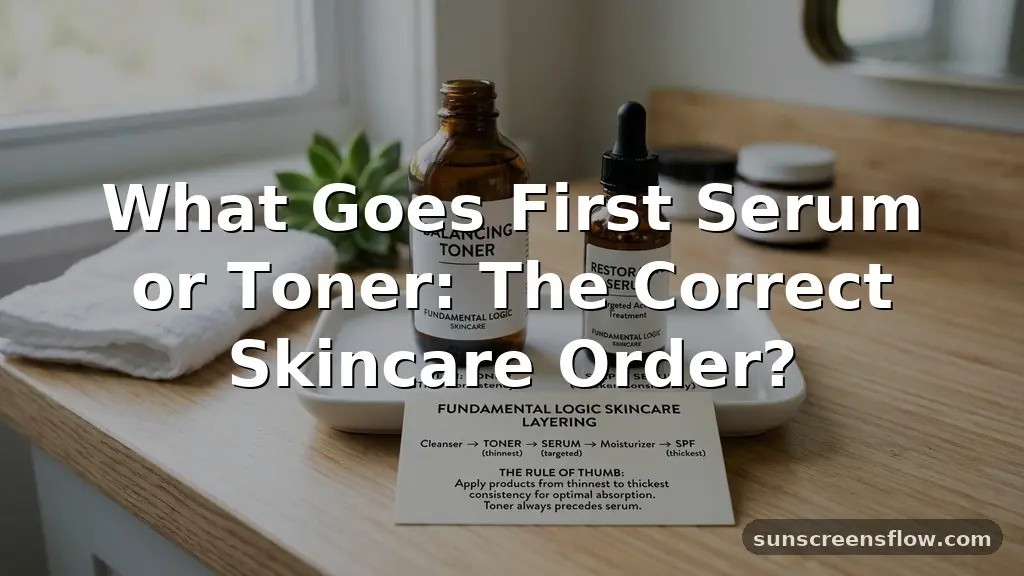
Navigating the landscape of modern skincare can feel like solving a complex puzzle, especially when it comes to the specific sequence of product application. If you have ever stared at your bathroom counter wondering what goes first serum or toner, you are certainly not alone.
The general rule of thumb in professional aesthetics is to apply products from the thinnest consistency to the thickest, but understanding the chemical and physiological reasons behind this sequence is vital for achieving optimal results. By layering your products correctly, you ensure that each formulation performs its intended function without being blocked by a heavier, occlusive barrier.
The Fundamental Logic of Skincare Layering
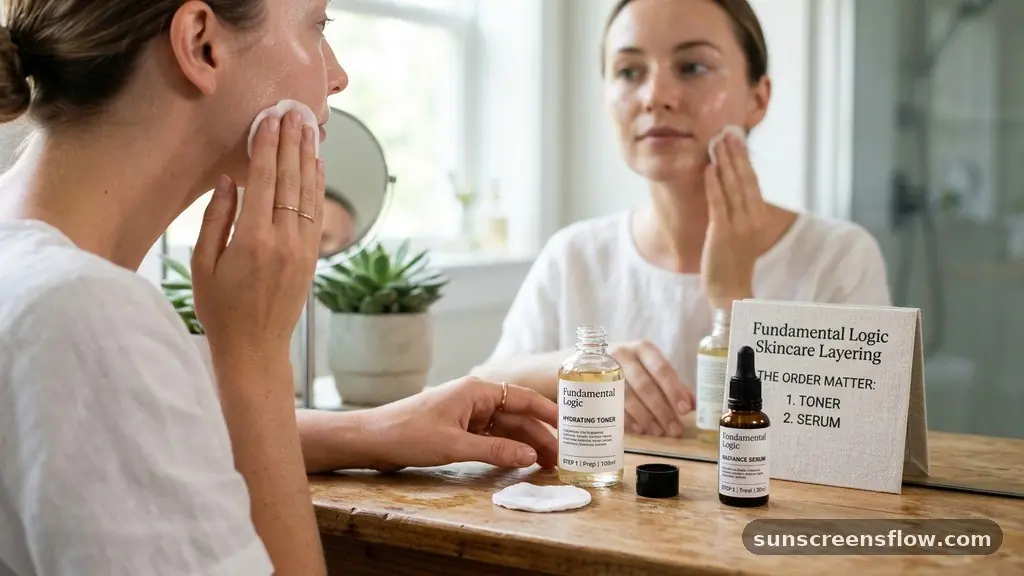
At the heart of the debate regarding what goes first serum or toner lies the scientific principle of skin absorption. Your skin acts as a protective shield, designed to keep external pathogens out, which means it is naturally resistant to absorbing topical formulations.
To bypass this, skincare products are engineered with specific molecular weights and delivery systems. Toners are typically aqueous, low-viscosity liquids designed to prep the skin, while serums are concentrated treatments containing high levels of active ingredients.
When you apply a product, the goal is to allow those active components to penetrate the epidermis before applying heavier layers like creams or oils. If you were to apply a heavy moisturizer or a thick oil-based serum before a toner, the barrier created by those lipids would prevent the toner’s humectants from reaching the skin. Therefore, the sequence is always determined by product consistency.
By starting with the most liquid, water-like formulas, you create a pathway for subsequent, more potent treatments to sink in effectively. This systematic approach ensures that you get the maximum value out of your expensive skincare investments, as you are not wasting active ingredients by leaving them sitting on the surface of your face.
The Role of Toners in Your Daily Routine
Toners have evolved significantly from the harsh, alcohol-laden astringents of the past. Today, a high-quality toner is often a multi-purpose tool used to restore pH balance after cleansing.
When you wash your face, the surfactants in your cleanser can sometimes disrupt the natural acid mantle of your skin, leaving it feeling tight or stripped. A gentle, hydrating toner helps to recalibrate this pH level, which is essential for maintaining a healthy skin barrier.
Beyond pH regulation, toners act as a “primer” for the rest of your routine. By dampening the skin, they increase the absorption rate of the products that follow. Think of your skin like a dry sponge; it is much harder for a sponge to soak up liquid if it is bone-dry and stiff.
A slightly damp surface, achieved through the application of a toner, allows hyaluronic acid and other humectants to pull moisture deeper into the skin layers. Many modern toners also offer pore refinement and mild exfoliation, making them an essential intermediary step between cleaning your face and applying your treatment serums.
Understanding Serum Concentration and Potency
Serums are the workhorses of any effective regimen. They are formulated with a high concentration of specific molecules designed to address targeted concerns like hyperpigmentation, fine lines, or dehydration.
Because they are designed for deep penetration, they must be applied when the skin is most receptive. When considering what goes first serum or toner, the answer is almost always to use the toner to prepare the skin first, then apply the serum to take advantage of that prepared, hydrated state.
Common actives found in serums include Vitamin C for brightening, niacinamide for oil control and texture, and various peptides for collagen support. These ingredients require direct contact with the skin to function correctly. If you apply these after a thick moisturizer, their skin penetration will be significantly hindered.
Furthermore, serums are often water-based products, which means they pair perfectly with the hydration provided by a toner. By layering them in this order—toner, then serum—you are essentially building a hydration sandwich that keeps the skin plump and receptive to the therapeutic benefits of your chosen actives.
The Impact of Molecular Weight on Absorption
The concept of molecular weight is perhaps the most critical technical factor when deciding the order of operations. Large molecules, such as those found in heavy occlusive moisturizers, take longer to break down and sit on the surface of the skin to prevent transepidermal water loss. Smaller molecules, like those found in toners and lightweight serums, are designed to travel through the stratum corneum with ease.
If you reverse this order, you are essentially trying to force a small molecule through a brick wall of large molecules. This is why you will often see pilling—that annoying little balling up of product on your skin—when you apply your routine in the wrong order. Pilling occurs when a layer of product cannot absorb and is instead pushed around by the next layer.
By respecting the physics of product consistency, you ensure that each layer is allowed to settle. A good rule of thumb is to wait about 30 to 60 seconds between steps. This allows the toner to sink in, followed by the serum, ensuring that the active ingredients are working within the skin rather than just sitting on top of it.
Comparing Application Sequences
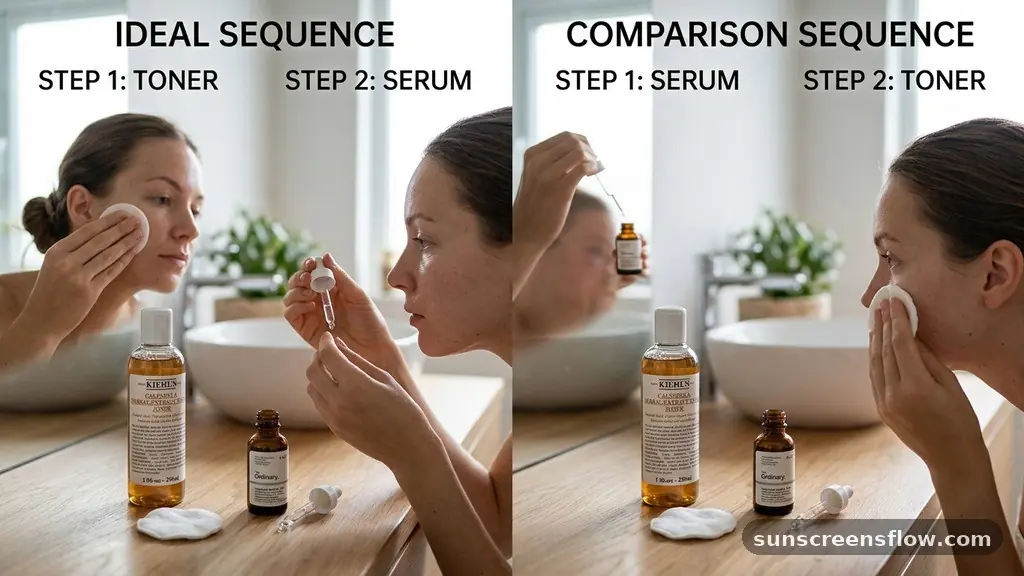
To provide clarity on how these products interact, it is helpful to look at how they fit into the broader context of your routine. The table below outlines the ideal hierarchy for a standard application, focusing on the transition from low-viscosity to high-viscosity formulations.
| Step | Product Category | Primary Function |
|---|---|---|
| 1 | Cleanser | Removes debris and impurities |
| 2 | Toner | pH balance and initial hydration |
| 3 | Serum | Targeted treatment and active delivery |
| 4 | Moisturizer | Seals in hydration and protects barrier |
| 5 | Sunscreen | UV protection (Morning only) |
This table demonstrates that the toner serves as the bridge between cleansing and treatment. By placing the toner immediately after the cleanser, you ensure the skin is clean and primed, allowing the serum to reach its destination effectively. Skipping the toner step can sometimes mean that your serum is trying to penetrate a skin surface that is still slightly out of balance or dehydrated, which can diminish the overall effectiveness of your dermatological application.
Addressing Topical Gaps: When to Break the Rules
While the general rule is to apply from thinnest to thickest, there are specific scenarios where you might deviate. For example, if you are using a very potent chemical exfoliation treatment, the rules shift slightly.
Some dermatologists recommend applying certain exfoliating toners directly to dry skin to maximize their potency, as water can sometimes buffer the acid and reduce its intensity. In this specific case, the “toner” is actually an active treatment, which changes its position in the queue.
Another gap in common knowledge involves the use of essence. An essence is essentially a hybrid between a toner and a serum. It is typically more concentrated than a toner but less viscous than a targeted treatment serum.
In a routine that includes all three, the order would be: cleanser, toner, essence, serum, then moisturizer. Understanding the texture is your best guide here. If a product feels like water, it goes first.
If it has a slightly thicker, gel-like consistency, it moves further back in the sequence. Always evaluate the product based on its weight and feel rather than its marketing name.
The Importance of Skin Barrier Integrity
Your skin barrier is the most important component of your complexion. When this barrier is compromised, you may experience redness, sensitivity, or breakouts.
The correct layering of products—starting with a pH-balancing toner and following with a soothing, hydrating serum—is a form of barrier support. Toners that contain ingredients like rose water, green tea, or chamomile help to calm the skin, while serums containing hyaluronic acid or ceramides help to reinforce the lipid layer.
If you apply your products in the wrong order, you risk irritation. For instance, applying a highly active serum directly to a freshly cleansed, un-toned face can sometimes be too intense for sensitive skin.
The toner acts as a buffer, smoothing out the transition and ensuring that the active ingredients are distributed evenly across the surface. This is particularly important for individuals dealing with chronic dryness or conditions like rosacea, where the skin’s threshold for irritation is significantly lower than that of a standard skin type.
Integration of Active Ingredients: Vitamin C and Niacinamide
When incorporating specific actives like Vitamin C or niacinamide, the order of operations remains consistent but requires a bit more patience. Vitamin C is notoriously unstable and acidic; it prefers a lower pH to penetrate the skin effectively.
If you use a toner with a very high pH, it could theoretically impact the efficacy of a L-ascorbic acid serum. However, most modern toners are formulated to be pH-balanced, meaning they will not interfere with these delicate actives.
Niacinamide, on the other hand, is quite versatile and plays well with almost everything. Because it is often found in water-based serums, it follows the toner perfectly. The key to successful integration is ensuring that the toner has fully absorbed before you apply the serum.
If you apply a serum while the toner is still dripping wet on your face, you are diluting the serum and potentially causing it to run off or become less effective. Allow the toner to settle into a “tacky” finish; this is the optimal state for skin absorption of your serum.
Consistency and Long-Term Results
Achieving healthy, glowing skin is a marathon, not a sprint. The question of what goes first serum or toner is really about creating a sustainable, effective habit.
When you follow a consistent sequence, you allow your skin to adapt to the products. Irregular application or guessing the order of your products can lead to inconsistent results, making it difficult to determine which products are actually working for you.
By adhering to the rule of product consistency—toner (water-like) before serum (gel-like) before moisturizer (cream-like)—you minimize the risk of product incompatibility. This structured approach also simplifies your routine, taking the guesswork out of your morning and evening rituals.
Over time, this consistency allows your skin to stabilize, leading to better texture, improved hydration levels, and a more resilient barrier. Remember that skincare is highly personal; while these rules provide a solid foundation, you should always listen to your skin and adjust based on how it reacts to specific formulations.
Frequently Asked Questions
Can I skip the toner step if my serum is already hydrating?
While many serums are highly hydrating, a toner serves a specific purpose beyond moisture. It helps to rebalance your skin’s pH after cleansing and removes any residual impurities or hard water minerals. Skipping it is fine if you are in a rush, but including it provides a better foundation for your serum.
What happens if I accidentally apply my serum before my toner?
If you apply your serum first, you aren’t necessarily harming your skin, but you are likely compromising the efficacy of the products. Because the serum is thicker, it may block the toner from penetrating, and the serum itself might not absorb as deeply as it would on a prepped, toned surface.
Should I wait for the toner to dry completely before applying serum?
It is actually better to apply your serum while your skin is still slightly damp from the toner. This provides a “slip” that makes the serum easier to spread and helps the active ingredients penetrate more effectively. You want the skin to feel hydrated, not soaking wet.
Is it necessary to use a toner if I have oily skin?
Yes, toners can be particularly beneficial for oily skin. Many toners designed for oily skin contain ingredients that help with pore refinement and oil control. By using a toner, you can remove excess sebum and prep the skin so that your treatment serums can work more efficiently without being blocked by surface oil.
Conclusion
Understanding the sequence of your skincare routine is essential for maximizing the benefits of your products. By consistently applying your toner before your serum, you respect the laws of skin absorption and molecular weight, ensuring that each product can penetrate the skin effectively. The toner acts as the foundational step, balancing your pH balance and prepping the skin, while the serum provides the targeted active ingredients necessary for your specific concerns.
Whether you are aiming for deep hydration or focused exfoliation, keeping this order in mind will help you build a more effective, professional-grade routine. Always remember that your skin is unique; while these guidelines provide the scientific standard for skincare routine order, paying attention to how your specific products feel and perform will ultimately lead you to the best results for your complexion. Consistent, thoughtful application is the secret to a healthy, radiant, and resilient skin barrier.


