


Many skincare enthusiasts view vitamin C as the holy grail for brightening and collagen production, yet a common point of confusion arises when users experience unexpected breakouts. The question of can vitamin C cause acne is one that dermatologists encounter frequently, as the line between a beneficial treatment and a reactive trigger can be surprisingly thin. While vitamin C is generally celebrated for its ability to combat oxidative stress and fade hyperpigmentation, its introduction into a daily regimen does not always result in a clear, glowing complexion.
For some individuals, the initial excitement of starting a new serum is quickly dampened by the emergence of whiteheads, redness, or painful cysts. Understanding whether this is a genuine breakout or a temporary adjustment phase is critical for maintaining long-term skin health.
The Chemistry of Vitamin C and Potential Breakouts
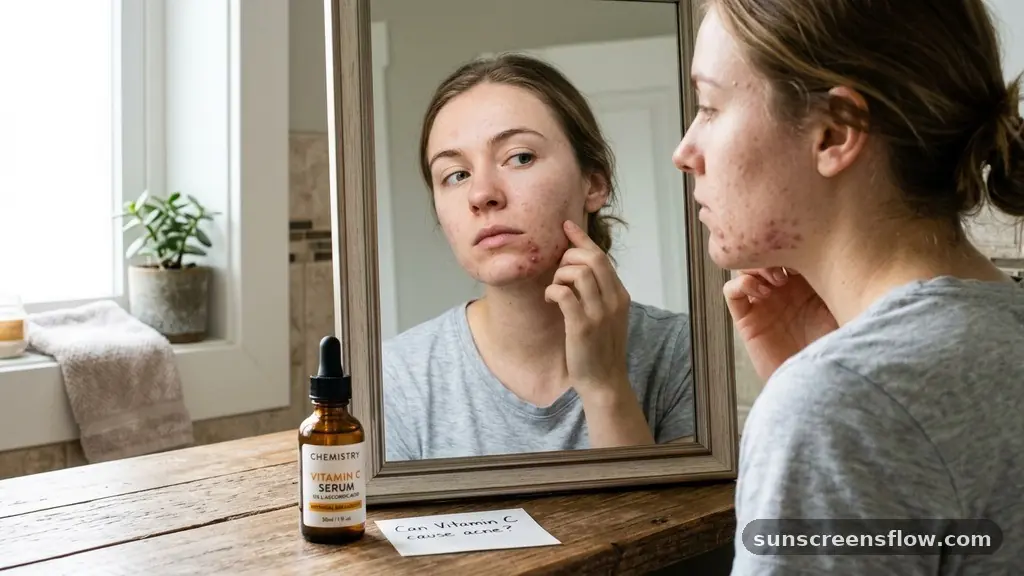
At its core, pure vitamin C, known as L-ascorbic acid, is an acidic compound. To remain stable and effective, most high-quality serums are formulated at a very low pH level, typically below 3.5.
This acidity is necessary for the molecule to penetrate the skin barrier effectively, but it can also be a source of significant irritation for those with compromised or sensitive skin. When the skin barrier is disrupted, it becomes more vulnerable to external bacteria and environmental stressors, which can lead to inflammation and, subsequently, the formation of acne.
Furthermore, the vehicle in which the vitamin C is delivered matters immensely. Many serums are formulated with additional oils, emollients, or silicones that may be comedogenic ingredients for certain skin types. If you have naturally oily or acne-prone skin, a serum that is too heavy or contains pore-clogging additives can lead to pore congestion.
It is rarely the vitamin C molecule itself that causes the acne; rather, it is often the supporting ingredients in the formula that interact negatively with your specific skin chemistry. Identifying the difference between an allergic reaction and a comedogenic reaction is the first step in troubleshooting your skincare routine.
Distinguishing Between Skin Purging and Actual Breakouts
A major point of contention when discussing if vitamin C can trigger acne is the concept of skin purging. Purging occurs when a product increases the rate of cell turnover, bringing underlying micro-comedones to the surface faster than usual.
While active ingredients like retinol or salicylic acid are well-known for causing a purge, vitamin C is technically an antioxidant and does not typically increase cell turnover in the same way. However, if your vitamin C serum also contains exfoliating acids—a common pairing to boost brightening effects—it may indeed trigger a purge.
A true purge usually happens in areas where you typically experience breakouts and clears up relatively quickly, often within two to four weeks. If your “breakout” persists longer than this, or if you are experiencing acne in areas where you never usually get pimples, it is likely that the product is causing a negative dermatological reaction rather than a purge. If the irritation leads to a compromised barrier, the skin may produce excess sebum as a protective mechanism, inadvertently feeding the breakout cycle and leading to more acne.
The Role of Serum Oxidation and Formulation Stability
One of the most overlooked factors is the stability of the product. L-ascorbic acid is notoriously unstable and prone to serum oxidation when exposed to light, heat, or air. As the serum oxidizes, it changes color—often turning from clear or light straw to a dark orange or brown.
Applying oxidized vitamin C to your face can introduce unstable free radicals rather than neutralizing them. These oxidized compounds can act as irritants, causing contact dermatitis or inflammatory responses that mimic acne.
When a serum has degraded, the chemical structure of the ingredients changes. This degradation can alter the pH balance of the product, making it significantly more irritating than it was when it was fresh.
Users who keep their bottles on a sunny bathroom shelf or fail to screw the cap on tightly are at a higher risk of applying degraded, potentially acne-triggering substances. Always check the color and scent of your serum; if it smells metallic or has significantly darkened, it is time to discard it.
| Vitamin C Form | Stability | Acne Risk Level |
|---|---|---|
| L-ascorbic acid | Low (Unstable) | Moderate (Due to low pH) |
| Sodium ascorbyl phosphate | High (Stable) | Low (Non-comedogenic) |
| Magnesium ascorbyl phosphate | High (Stable) | Low (Gentle) |
| Tetrahexyldecyl ascorbate | Very High | Low (Oil-soluble) |
Choosing the Right Vitamin C Derivatives
If you suspect that your current product is the culprit, you may want to look into vitamin C derivatives. These are modified versions of the molecule designed to be more stable and less irritating than pure L-ascorbic acid. For individuals with highly reactive or acne-prone skin, these derivatives offer a safer path to achieving the benefits of topical antioxidants without the risk of severe irritation.
* Sodium ascorbyl phosphate: This derivative is water-soluble and has been shown to have antimicrobial properties that can actually help reduce acne vulgaris lesions.
* Magnesium ascorbyl phosphate: A highly stable, water-soluble form that is much gentler on the skin, making it an excellent choice for those who cannot tolerate the acidity of traditional serums.
* Tetrahexyldecyl ascorbate: An oil-soluble derivative that penetrates the skin deeply and is generally considered non-comedogenic, making it suitable for those who worry about pore clogging.
By switching to a more stable derivative, you remove the element of pH-induced irritation and significantly lower the chance of an adverse reaction. Many users find that while these derivatives may work slightly slower than pure L-ascorbic acid, the lack of irritation allows them to use the product consistently, which ultimately leads to better results over time.
Impact of Concentration Levels and Frequency
The concentration levels of vitamin C in your serum can also dictate how your skin reacts. It is a common misconception that higher is always better. Many market-leading serums contain 15% to 20% L-ascorbic acid.
While these high concentrations are effective for rapid brightening, they are also significantly more likely to cause inflammation in the skin barrier. For someone with skin sensitivity, a 20% concentration might be too aggressive, causing redness and inflammation that looks like a breakout.
Starting with a lower concentration (around 5% to 10%) allows the skin to acclimate. If you jump straight into a high-potency product, you are essentially shocking your skin. Furthermore, applying the product twice daily is often unnecessary and can be counterproductive.
Once a day, preferably in the morning to leverage the antioxidant protection against UV rays, is usually sufficient. If you notice your skin becoming tight, shiny, or prone to breakouts, reduce your frequency to every other day to give your skin barrier time to recover.
Common Ingredients That Accompany Vitamin C
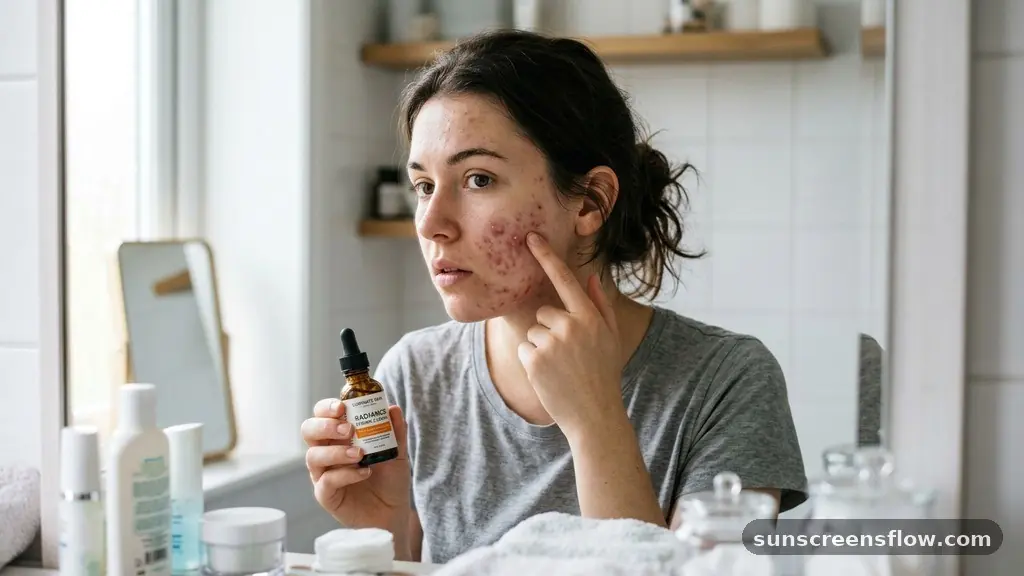
When evaluating if a product is causing acne, you must look at the entire ingredient list, not just the active vitamin C. Many manufacturers include vitamin E and ferulic acid in their formulations.
These are excellent additions because they stabilize the vitamin C and increase its efficacy. However, some base formulations rely on heavy oils like coconut oil, algae extract, or certain fatty acids that are known to be highly comedogenic.
If you are prone to acne vulgaris, you should look for “oil-free” or “non-comedogenic” labels on your vitamin C products. Pay close attention to ingredients like isopropyl myristate, lanolin, or certain algae extracts, as these are frequent triggers for breakouts. By analyzing the complete ingredient list, you can determine if the acne is a result of the vitamin C itself or if it is a classic case of pore congestion caused by the carrier ingredients.
The Importance of Patch Testing
Before incorporating any new serum into your daily routine, patch testing is non-negotiable. Many users skip this step in their excitement to see results, but it is the most effective way to determine if a product will cause a reaction. Apply a small amount of the serum to a discreet area, such as behind the ear or on the inner forearm, for several days.
If you experience itching, redness, or bumps in the patch-tested area, it is a clear sign that your skin does not agree with the formulation. This simple step can save you weeks of dealing with a full-face breakout.
Remember that a reaction can take time to manifest; do not assume that because you didn’t break out after one hour, the product is safe. Give it at least 48 to 72 hours of consistent application on the patch area before deciding to apply it to your entire face.
Managing Skin Sensitivity and Barrier Health
Your skin barrier is your first line of defense against both bacteria and irritation. When you use products that are too harsh, you strip away the natural lipids that keep your skin healthy. A damaged barrier manifests as flakiness, stinging upon application, and, paradoxically, acne.
If your skin feels sensitive, it is likely that it is also inflamed. Inflammation is a key driver of acne, as it can cause the pores to swell and trap sebum and debris.
If you find that your vitamin C serum is making your skin feel raw or sensitive, stop using it immediately. Focus on barrier repair by using gentle, fragrance-free cleansers and moisturizers containing ceramides or hyaluronic acid.
Once your skin feels resilient and calm, you can attempt to reintroduce the vitamin C at a lower frequency or a lower concentration. Never force your skin to tolerate a product that is clearly causing discomfort, as this will only exacerbate the cycle of inflammation.
Addressing Topical Gaps: Why Some Users Experience Breakouts
A common question is whether oral vitamin C supplements cause acne. While there is less evidence linking oral intake to skin breakouts, some individuals report that high-dose supplements can influence their skin.
However, the primary focus for most users is the topical application. The “topical gap” exists because many skincare companies market vitamin C as a universal solution, ignoring the fact that everyone’s microbiome and skin composition are unique.
Some users report that they get whiteheads specifically after using vitamin C, which is often a sign of pore congestion. This occurs when the serum’s base is too thick or when the user is not properly cleansing the skin before application. If you apply a serum over skin that has not been thoroughly cleaned, you are effectively sealing in dirt and oil.
Additionally, if the product is not absorbed properly, it sits on the surface of the skin, where it can interact with sweat and bacteria, creating a breeding ground for acne. Always ensure your skin is clean and slightly damp before applying your serum to aid in absorption and prevent surface buildup.
Refining Your Skincare Routine for Success
To avoid the pitfalls of acne while using vitamin C, your overall skincare routine must be balanced. If you are using a potent vitamin C serum, you might need to adjust the other steps in your regimen. For example, if you are also using a strong retinol or BHA exfoliant, your skin may be overwhelmed, leading to the barrier damage that triggers acne.
* Use your vitamin C in the morning and reserve exfoliating acids or retinoids for the evening.
* Ensure your moisturizer is compatible with your serum; a thick, occlusive cream might be necessary for some, but for others, it might be the reason their pores are getting clogged.
* Always use a broad-spectrum sunscreen. Vitamin C can make the skin slightly more photosensitive, and sun damage leads to inflammation, which is a major factor in the development of acne and acne scars.
* Cleanse your face thoroughly at night to remove all traces of the serum, as leaving active ingredients on the skin for too long can sometimes lead to irritation.
FAQ: Common Concerns About Vitamin C and Acne
Does vitamin C help with acne scars?
Yes, vitamin C is highly effective for reducing the appearance of post-inflammatory hyperpigmentation, which are the dark spots left behind by acne. It works by inhibiting the enzyme tyrosinase, which is responsible for melanin production, helping to even out skin tone over time.
Can I use vitamin C if I have active acne?
You can, but you should proceed with caution. If your acne is severe, cystic, or very inflamed, it is best to consult with a dermatologist before adding new actives. If you have mild acne, choose a gentle, stable derivative like sodium ascorbyl phosphate, which is less likely to cause further irritation.
Why does my skin feel greasy after using vitamin C?
If your skin feels greasy, the serum might be formulated with a heavy base or you might be using too much product. Try using only 3-4 drops for your entire face and neck. If the greasiness persists, consider switching to a serum with a thinner, water-based consistency that absorbs more quickly.
How do I know if my vitamin C serum has gone bad?
The most reliable sign is a change in color. If your previously clear serum has turned yellow, orange, or brown, it has oxidized. Oxidized vitamin C is less effective and more likely to cause irritation or breakouts, so it should be discarded immediately to protect your skin.
Conclusion
The relationship between vitamin C and acne is nuanced, primarily because the result often depends on the formulation, your specific skin type, and how you integrate the product into your routine. While vitamin C itself is not a direct cause of acne, the acidity of L-ascorbic acid, the potential for serum oxidation, and the use of comedogenic ingredients in certain products can certainly trigger breakouts in sensitive individuals. By opting for stable vitamin C derivatives, ensuring your skin barrier remains healthy, and patch-testing new products, you can reap the brightening and anti-aging benefits of this powerful antioxidant without compromising your skin’s clarity.
Remember that skincare is a journey of trial and error; listening to your skin’s reactions is far more important than following trends or high-concentration marketing claims. When managed correctly, vitamin C remains one of the most effective tools for maintaining a radiant, even, and healthy-looking complexion.