


Deciding whether you should use toner before serum is one of the most common points of confusion in modern skincare routines. Many people find themselves staring at a shelf of bottles, unsure of the correct sequence to ensure their products actually work.
The short answer is that you generally apply your toner first, as it acts as a foundational step to prepare your skin for the more potent ingredients found in your serums. By following this simple sequence, you allow your skin to benefit from the specific properties of each product without creating a barrier that prevents absorption.
Understanding the Role of Toner in Your Routine
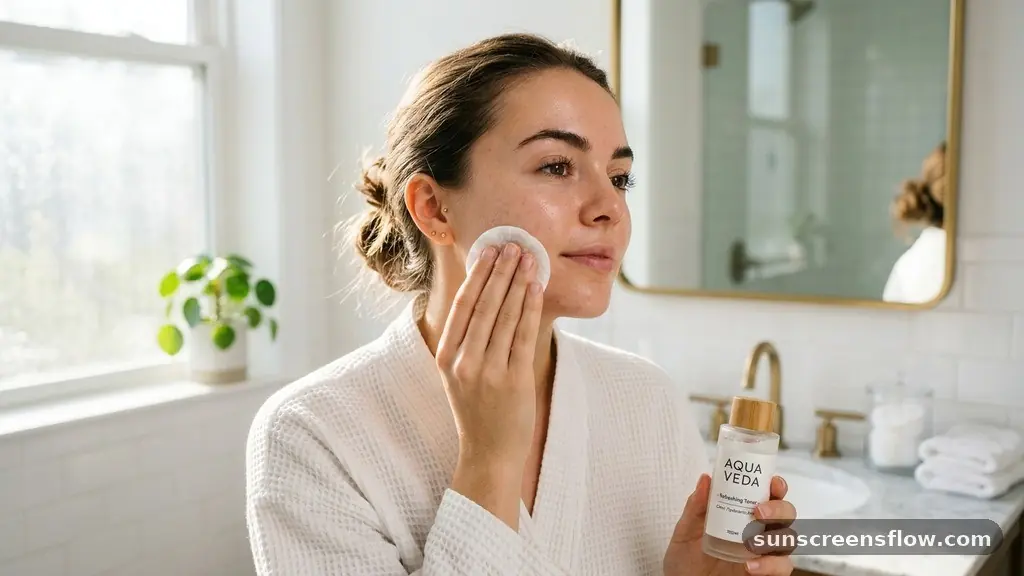
Toner has evolved significantly from the harsh, alcohol-based astringents of the past. Today, most toners are designed to balance your skin’s pH levels and remove any remaining impurities that your cleanser might have missed.
Because toners typically have a water-like consistency, they are the ideal first step after cleansing. They penetrate the skin quickly, providing a base layer of hydration that makes the surface more receptive to subsequent treatments.
When you apply a toner, you are essentially “priming” the skin. If your face is slightly damp from the toner, it can actually help the active ingredients in your serum glide on more smoothly and absorb more deeply.
Think of it like dampening a sponge; a dry sponge takes longer to soak up water, while a damp one absorbs liquid almost instantly. Your skin functions in a similar way, making the transition from toner to serum a logical and effective progression.
Why Serums Follow Toner
Serums are concentrated powerhouses packed with active ingredients meant to target specific concerns such as fine lines, hyperpigmentation, or dehydration. Because these formulas are often more viscous or contain specialized delivery systems, they need to be applied as close to the skin as possible to be effective. If you were to apply a thicker cream or oil before your serum, you would essentially be creating a barrier that blocks the serum from reaching the deeper layers of the epidermis where it needs to work.
By placing the serum after the toner, you ensure that the high-potency ingredients are not competing with other layers. The toner has already done the heavy lifting of cleansing and initial hydration, leaving the skin clean and ready for the targeted treatment. This layer-by-layer approach is the foundation of The Standard Application Order, which prioritizes products based on their weight and purpose, moving from the thinnest formulas to the heaviest creams.
The Standard Application Order Explained
Following a consistent sequence is the best way to maximize the efficacy of your skincare investment. While individual needs vary, the general rule is to apply products from the lightest consistency to the heaviest. This prevents the “pilling” effect, where products clump up on the skin, and ensures that each layer can perform its intended function without being hindered by the one before it.
- Cleanser: Removes dirt, oil, and makeup.
- Toner: Balances pH and removes residual impurities.
- Serum: Delivers concentrated active ingredients.
- Moisturizer: Locks in hydration and creates a protective barrier.
- SPF (Morning): Protects against UV damage.
Distinguishing Between Milky Toners and Essences
The modern beauty market is flooded with products that blur the lines between categories, such as milky toners versus hydrating essences. While these terms are often used interchangeably, understanding their nuances can help you refine your routine. A traditional toner is often watery and focused on pH balancing, whereas a milky toner or essence is designed to provide a deeper level of moisture.
Despite their thicker, more luxurious texture, these products still belong in the same slot as a standard toner. You should still apply them before your serum.
Even if a product feels slightly creamy, it is usually formulated with a smaller molecular structure than a heavy moisturizer or face oil. If you are using both a watery toner and a milky essence, apply the thinnest one first, wait a few seconds for it to settle, and then proceed with your serum.
Handling Multiple Serums and Active Ingredients

When you incorporate several treatments into your routine, the question of order becomes even more important. If you are using multiple serums, the rule of thumb is to apply the one with the most liquid consistency first. For example, if you are using a vitamin C serum for brightening and a hyaluronic acid serum for hydration, you would typically apply the thinner, water-based vitamin C product first, followed by the slightly thicker hyaluronic acid.
On the other hand, some people prefer to use specific actives at different times of the day to avoid interactions. Vitamin C is a classic morning staple due to its antioxidant properties, while exfoliating acids or retinoids are best saved for the evening.
Regardless of the timing, always ensure your toner has been allowed to absorb for at least 30 to 60 seconds before layering your serums on top. This prevents the pH of your toner from potentially neutralizing the active ingredients in your serum.
Exceptions and Special Considerations
Are there ever times when you shouldn’t follow the “toner first” rule? Occasionally, a specific product might come with unique instructions.
For instance, some medicated toners or prescription-strength treatments might be designed to be applied after a serum or even after a moisturizer to reduce the risk of irritation. Always check the specific recommendations provided by the manufacturer if you are using high-strength actives.
Another exception involves the use of facial oils. If you are using an oil-based serum, it should always be applied after your water-based serums. Oils are occlusive, meaning they trap moisture in the skin.
If you apply an oil before your toner or a water-based serum, you effectively seal the skin, preventing any water-based products from penetrating. In this scenario, the oil acts as the final step before your moisturizer or as a replacement for it.
| Product Type | Consistency | Application Order |
|---|---|---|
| Toner | Watery/Light | 1st |
| Water-based Serum | Medium | 2nd |
| Oil-based Serum | Heavy/Viscous | 3rd |
| Moisturizer | Creamy/Thick | 4th |
Addressing Common Topical Gaps
One question that often arises is whether you can skip toner entirely. While toner is a beneficial step, it is not strictly necessary for everyone. If your cleanser is pH-balanced and gentle, you might not feel the need to use a toner to “reset” your skin.
In this case, you can move directly from cleansing to your serum. However, for those with oily or acne-prone skin, a toner can be instrumental in removing excess oil that a cleanser might leave behind.
Another gap in common knowledge is the “wait time” between steps. Many people rush through their routine, applying one product immediately after the other.
While you don’t need to wait ten minutes between steps, giving each product a brief moment—perhaps 30 seconds—to sink in can significantly improve results. This is especially true if you are using a toner to prep the skin for a vitamin C serum, as it allows the pH to stabilize, ensuring the vitamin C remains active and effective.
The Impact of Ingredients on Absorption
The chemical makeup of your products dictates how they interact with your skin barrier. Ingredients like niacinamide or hyaluronic acid are water-loving, which is why they are often formulated in serums that benefit from the moisture provided by a toner. By using a toner first, you are essentially creating a hydration reservoir that these ingredients can draw from, which helps them work more efficiently.
Conversely, products containing oil or heavy silicones are designed to sit on top of the skin to provide a barrier. If you apply these too early, you prevent the water-loving ingredients in your serum from accessing the skin’s surface.
This is why paying attention to the texture and the label is so vital. If you are ever unsure, look for the word “water” or “aqua” at the top of the ingredient list; if it is the first ingredient, it likely belongs in the earlier, lighter stages of your routine.
Consistency and Patience in Your Routine
Ultimately, the goal of your skincare routine is to create a sustainable habit that addresses your specific skin concerns. Whether you are dealing with fine lines, hyperpigmentation, or general dehydration, the order of application is a tool to help you achieve your goals, not a rigid set of laws that must never be broken. If you find that a particular order works better for your skin’s unique reaction, feel free to adjust it slightly.
However, for most people, sticking to the standard sequence of toner followed by serum is the most effective way to see real improvements. It ensures that you are getting the most out of your products, preventing wastage, and allowing your skin to reap the full benefits of the active ingredients you have chosen. Keep it simple, stay consistent, and watch how your skin transforms over time with this structured approach.
Frequently Asked Questions
Do I have to wait for my toner to dry before applying serum?
You don’t need to wait for it to dry completely. In fact, applying serum while your skin is still slightly damp from the toner can actually help the serum absorb better and lock in more hydration. A quick 30-second pause is usually sufficient.
Can I use toner after my serum?
Generally, no. Toners are formulated to be the first step after cleansing to prep the skin. Applying a toner over a serum would likely disrupt the absorption of the serum and potentially wash away the active ingredients you just applied to your face.
Is it possible to use too much toner?
Using too much toner can sometimes lead to dryness or irritation, especially if the product contains alcohol or strong exfoliating acids. A little goes a long way; a few drops on a cotton pad or pressed directly into the skin with your hands is plenty.
What if my serum feels sticky after the toner?
If your skin feels sticky, it might mean you are using too much product or that the specific combination of toner and serum isn’t a perfect match. Try using less toner or waiting an extra minute to allow the toner to fully sink in before applying the serum.
Conclusion
Integrating toner and serum into your daily routine doesn’t have to be a complicated puzzle. By remembering that toner acts as a prep step to remove impurities and balance the skin, while serum serves as a targeted treatment, the order becomes intuitive. You apply the toner first to create a clean, hydrated canvas, and then follow up with your serum to deliver those essential, potent ingredients directly to your skin.
This simple sequence ensures that every product you use is given the best chance to perform as intended. If you have been questioning your current routine, try this order for a few weeks and observe how your skin responds to the consistent, layered care. Feel free to adjust the specific products based on your needs, but keep the core sequence in mind for the best results.
Meta Description: Do you use toner before serum? Learn the correct order for your skincare routine to ensure maximum absorption and better results for your skin.


