


Achieving a radiant, even complexion often leads skincare enthusiasts to the most popular topical antioxidant on the market: Vitamin C. Determining how often should I use vitamin C serum is a common point of confusion, as the answer depends heavily on your unique skin profile, the specific formulation of the product, and your personal goals for skin health.
While it is a powerhouse for collagen synthesis and combating free radical damage, improper usage can lead to unnecessary skin irritation or diminished efficacy. Navigating the balance between active ingredient potency and your skin’s epidermal tolerance is the key to unlocking the full benefits of this brightening agent.
The Science of Frequency: Daily Application vs. Intermittent Use
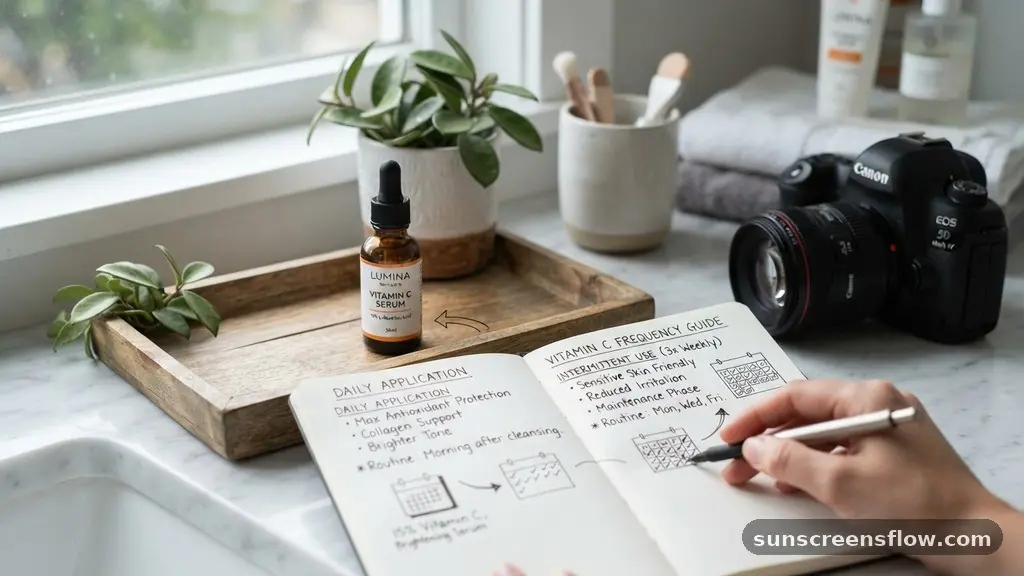
For the vast majority of users, incorporating a high-quality serum into a morning skincare routine is the gold standard. Because Vitamin C acts as a shield against environmental stressors like pollution and UV radiation, applying it before you step out for the day provides a protective boost that lasts throughout your waking hours. This does not mean, however, that every person can jump straight into daily application.
If your skin is resilient, you can comfortably use a stable serum every single morning. However, if you are new to active ingredients or have a history of skin sensitivity, jumping into daily use can compromise your dermatological barrier. Start by applying the serum every other day or even every three days.
This “start low and go slow” approach allows you to gauge how your skin reacts to the concentration percentage of the formula. Once your skin demonstrates that it can handle the product without signs of stinging or flaking, you can gradually increase the frequency to daily use.
Consistency is the primary driver of results; Vitamin C is not a quick fix but a long-term investment in skin health. By maintaining a steady presence of the antioxidant on your face, you ensure that your skin is constantly equipped to neutralize oxidative stress.
Morning Versus Evening: Timing Your Antioxidant Boost
While many people wonder if they should use their serum at night, the consensus among dermatologists is that the morning is the ideal time. This is primarily because Vitamin C is designed to neutralize the free radical damage caused by UV rays and environmental pollutants that you encounter during the day. While it does not replace sunscreen application, it acts as a secondary layer of defense that makes your SPF work more effectively.
That said, there is no biological rule against using Vitamin C at night. Some individuals prefer evening application if they find that their specific serum leaves a sticky residue or if they are layering it with other potent actives that require specific timing. If you do choose to use it at night, ensure that your product is not competing with other ingredients that might cause instability.
For example, some experts suggest avoiding the concurrent use of high-strength retinol and Vitamin C to prevent potential irritation, though modern, stable formulations have made this less of a concern than it was in the past. If you have a busy morning schedule, using your serum at night is still a valid way to ensure you receive the benefits of skin brightening and collagen support, even if you miss out on the daytime environmental protection.
Understanding Concentration and Skin Tolerance
The concentration percentage of your serum plays a massive role in how often you can safely apply it. Formulas containing 5% to 10% L-ascorbic acid are generally considered more accessible for beginners.
These lower concentrations are less likely to overwhelm the skin, making them suitable for daily use from the start. Conversely, serums with 15% to 20% concentrations are highly potent and can be quite acidic.
If you are using a high-potency serum, you must be hyper-aware of your epidermal tolerance. Signs that you are overdoing it include persistent redness, a tingling sensation that doesn’t subside after a few seconds, or an increase in dry skin patches. If you notice these symptoms, pull back immediately.
You might find that your skin only needs a 20% serum three times a week, while a 10% serum could be used daily. It is also worth noting that the pH level of the formula is critical. Vitamin C, particularly L-ascorbic acid, requires a low pH to penetrate the skin effectively.
If a formula is poorly buffered, it may sting regardless of the concentration. Always look for brands that prioritize a stable, skin-friendly pH, as this drastically reduces the likelihood of irritation and allows for more frequent, comfortable usage.
Strategic Layering: What to Avoid and What to Pair
One of the most common mistakes people make is layering too many active ingredients at once. While serums are designed to be part of a multi-step routine, they are not always compatible with every other product.
For instance, while some argue that niacinamide and Vitamin C can cause issues, modern research suggests that if both ingredients are formulated correctly, they can actually be used together quite effectively. The concern usually stems from older, less stable forms of both ingredients.
To keep your routine safe, follow these general guidelines for integration:
- Patch testing: Always apply a small amount of the serum to your inner forearm for 24 hours before applying it to your face to check for allergic reactions.
- Wait times: If you are layering, wait 2-3 minutes between applying your serum and your next product to ensure the serum has been absorbed.
- Exfoliation caution: Avoid using chemical exfoliants (like AHAs or BHAs) at the same time as your Vitamin C to prevent over-exfoliation and barrier damage.
- Sunscreen priority: Always finish your morning routine with broad-spectrum SPF, as Vitamin C can sometimes make skin slightly more sensitive to sun exposure.
By being mindful of how your products interact, you can safely use your serum daily without compromising the health of your skin barrier.
Managing Oxidation and Product Shelf Life

A factor that is often overlooked when discussing how often to use Vitamin C is the shelf life of the product itself. Vitamin C, particularly in the form of L-ascorbic acid, is notoriously unstable.
It is highly susceptible to oxidation, which occurs when the serum is exposed to light, heat, or air. Once a serum has oxidized, it turns a dark yellow or brownish color and loses its efficacy.
If you are using your serum only once a week, you might find that the product expires or oxidizes before you finish the bottle. This is a practical reason to move toward daily usage: you want to use the product while it is fresh and potent. To maximize the life of your serum, store it in a cool, dark place—the refrigerator is often cited as a great option.
Always ensure the cap is screwed on tightly immediately after use. If you notice a significant change in color or an “off” smell, the product has likely degraded. Using oxidized Vitamin C is not necessarily dangerous, but it is ineffective and may introduce unwanted free radicals to your skin, which is the exact opposite of what you want to achieve.
Addressing Topical Gaps: Why Some Users Experience Irritation
Many users report that they “cannot” use Vitamin C serum because it irritates their skin. Often, this is not a reaction to the Vitamin C itself, but a reaction to the vehicle in which it is delivered. The serum consistency can vary from water-like to oily, and the presence of fragrance, alcohol, or other preservatives can trigger sensitivity.
If you have oily skin, you might prefer a lightweight, water-based serum that absorbs quickly without adding extra shine. If you have dry skin, a more emollient-based formula may be better, as it won’t strip your skin of its natural oils. Another common gap in knowledge is the relationship between Vitamin C and hyperpigmentation.
Many people expect their dark spots to vanish in days. However, Vitamin C works by inhibiting melanin production and brightening existing spots over time.
If you stop using it because you don’t see immediate results, you lose the opportunity to build the cumulative benefits that lead to a more even skin tone. Use it consistently for at least 8 to 12 weeks before deciding if the frequency or the concentration is right for you.
Comparative Guide to Vitamin C Usage
The following table summarizes how different skin types and experience levels should approach the frequency of their Vitamin C application.
| Skin Profile | Initial Frequency | Goal Frequency | Recommended Concentration |
|---|---|---|---|
| Sensitive Skin | 2-3 times per week | Every other day | 5% – 10% |
| Normal / Combination | Every other day | Once daily (Morning) | 10% – 15% |
| Resilient / Oily Skin | Once daily | Once daily (Morning) | 15% – 20% |
| Beginner (All types) | 2 times per week | Daily (as tolerated) | Under 10% |
This table serves as a baseline, but always listen to your skin. If you feel any stinging or notice excessive dryness, drop back to a lower frequency immediately.
The Long-Term Benefits of Consistent Usage
Why go through the trouble of fine-tuning your frequency? The payoff is substantial. Regular use of a well-formulated Vitamin C serum leads to visible improvements in skin texture and tone.
By promoting collagen synthesis, it helps to maintain skin elasticity and firmness, which naturally declines with age. Furthermore, its ability to tackle hyperpigmentation means that over time, you will see a reduction in sun spots and a more uniform complexion.
Beyond the visible results, you are creating a healthier environment for your skin cells. By neutralizing the free radical damage that occurs daily, you are effectively slowing down the visible signs of aging. It is important to remember that skin turnover takes time.
The cells you are treating today are the ones that will be on the surface of your skin in a few weeks. By maintaining a consistent application schedule, you are providing your skin with the necessary building blocks to repair and protect itself on an ongoing basis. This is why daily use is the ultimate goal for most skincare routines, provided your skin is comfortable and supported by a solid barrier-repair moisturizer and consistent sun protection.
Frequently Asked Questions
Can I use Vitamin C serum every single day?
Yes, most people can use Vitamin C serum daily once their skin has built up tolerance. If you are a beginner, start with 2-3 times per week and gradually increase frequency as your skin adjusts to the active ingredient without showing signs of irritation or redness.
What ingredients should I avoid mixing with Vitamin C?
It is generally recommended to avoid using high-strength alpha hydroxy acids (AHAs), beta hydroxy acids (BHAs), or concentrated retinol at the exact same time as your Vitamin C. These can lower the pH or potentially cause irritation, so consider alternating them between your morning and evening routines.
Should I apply Vitamin C before or after my moisturizer?
You should apply your Vitamin C serum after cleansing and toning but before your moisturizer. Serums are thinner and more potent, so they need to be applied to clean, dry skin to penetrate effectively. Your moisturizer then seals in the serum and provides a protective barrier.
How do I know if my Vitamin C serum has oxidized?
If your serum changes from a clear or light straw color to a dark yellow, orange, or brown hue, it has likely oxidized. Additionally, if the product develops an unusual, metallic, or sour smell, it is a sign that the active ingredients have degraded and the product should be replaced.
Conclusion
Determining how often you should use Vitamin C serum is a journey of understanding your skin’s specific needs and limits. By starting slowly, choosing the right concentration for your skin type, and ensuring your product is stored properly to prevent oxidation, you can safely incorporate this potent antioxidant into your daily routine. Whether you are aiming to treat hyperpigmentation, boost collagen synthesis, or simply protect your skin from daily free radical damage, consistency remains the most important factor.
Remember that your morning skincare routine is the best time to leverage the brightening and protective benefits of Vitamin C, especially when paired with diligent sunscreen application. As you become more familiar with how your skin responds to different formulations, you will be able to optimize your frequency to achieve the radiant, healthy complexion you desire. Stay patient, observe your skin’s cues, and enjoy the long-term rewards of a well-managed, science-backed skincare regimen.


