


Achieving a healthy, glowing complexion often comes down to the precise timing and sequence of your products. If you have been wondering when to apply hyaluronic acid serum, you are already on the right path toward better skin health. This powerful ingredient, known scientifically as a humectant, acts like a sponge, pulling moisture from the environment and binding it to your skin cells.
However, its effectiveness is entirely dependent on how and when you incorporate it into your daily regimen. Understanding the chemistry behind this molecule and its interaction with your skin barrier is the secret to unlocking its full potential.
The Science of Hyaluronic Acid and Its Humectant Properties
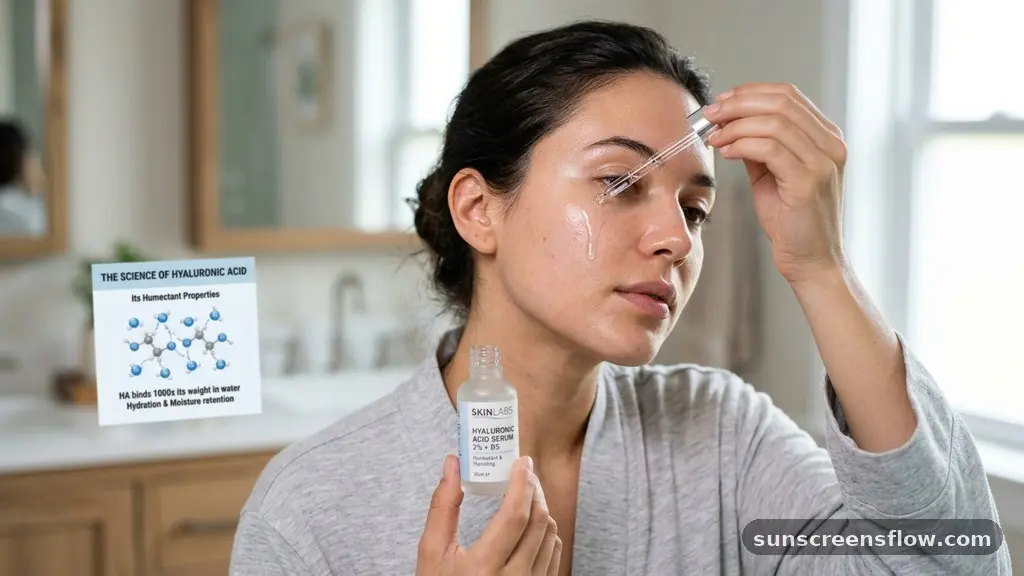
To understand the best timing for application, you must first grasp what hyaluronic acid serum actually does. At its core, it is a sugar molecule found naturally in the skin that can hold up to 1,000 times its weight in water.
Because it is a potent humectant, it does not provide moisture itself; rather, it reaches out to grab existing water molecules. If your environment is extremely dry or your skin is completely parched, a humectant can sometimes pull moisture from the deeper layers of the skin (the dermis) toward the surface, which might ironically lead to more dehydration if you don’t seal it in.
The molecular weight of the hyaluronic acid used in your specific serum also dictates how it behaves. High-molecular-weight versions sit on the surface, providing an instant plumping effect, while lower-molecular-weight versions penetrate deeper to provide long-term hydration.
Regardless of the weight, the fundamental rule remains: you need to provide the serum with a water source to pull from. This is why the state of your skin at the moment of application is the most critical variable in your entire skincare routine order.
Why Damp Skin Is the Secret to Application
The most common mistake users make is applying their serum to bone-dry skin. When you apply a water-based serum to skin that has been patted completely dry with a towel, the humectant has nowhere to pull moisture from other than your own internal hydration reserves.
By applying the serum to damp skin, you provide an immediate reservoir of water for the molecules to bind to. This simple change in your routine can prevent trans-epidermal evaporation, a process where your skin loses its natural hydration to the atmosphere.
Think of your skin like a sponge. A dry sponge is brittle and struggles to absorb new liquid, but a slightly damp sponge is porous and ready to soak up whatever you put on it.
After cleansing, gently pat your face so it is still moist, or use a facial mist to bridge the gap between cleansing and application. This creates a micro-environment of hydration that the serum can lock into the surface layers of your epidermis, ensuring that your skin feels supple rather than tight.
The Importance of Sealing with an Occlusive Moisturizer
Once you have applied your serum to damp skin, you have effectively boosted your hydration levels. However, if you leave it at that, the water you’ve just attracted will slowly evaporate into the air, especially in low-humidity environments.
This is where an occlusive moisturizer becomes mandatory. An occlusive acts as a physical lid on a boiling pot, trapping the moisture you have just introduced and preventing transepidermal water loss.
The distinction between hyaluronic acid vs moisturizer is vital: the serum provides the water, while the moisturizer provides the barrier. If you have oily skin, you might prefer a lightweight gel-cream, whereas those with dry or mature skin should opt for a richer cream containing ceramides or fatty acids to reinforce the skin barrier. By layering these products correctly, you create a system that works in harmony: the serum draws water in, and the moisturizer locks it tight, keeping your skin hydrated for the entire day.
Layering Skincare: Order of Operations
The general rule of thumb in dermatology is to apply products from the thinnest consistency to the thickest. Since most hyaluronic acid formulas are water-based serums, they should be applied after your cleanser and toner but before heavier lotions, oils, or creams. If you use multiple serums, place the hyaluronic acid first to ensure it has direct contact with the skin.
Common Skincare Sequencing
- Cleanser: Removes impurities and prepares the canvas.
- Toner or Facial Mist: Adds the initial layer of moisture.
- Hyaluronic Acid Serum: Attracts and binds water to the surface.
- Treatment Serums: Vitamin C or Retinol (depending on the time of day).
- Moisturizer: The occlusive layer that seals everything in.
- SPF (Morning Only): The final shield against UV damage.
Following this structure prevents pilling—that annoying phenomenon where product flakes off your face—and ensures that each active ingredient is effectively absorbed by the skin. If you apply a heavy oil before your serum, the serum will simply sit on top of the oil, unable to reach the skin to do its job.
Integrating Hyaluronic Acid with Other Actives
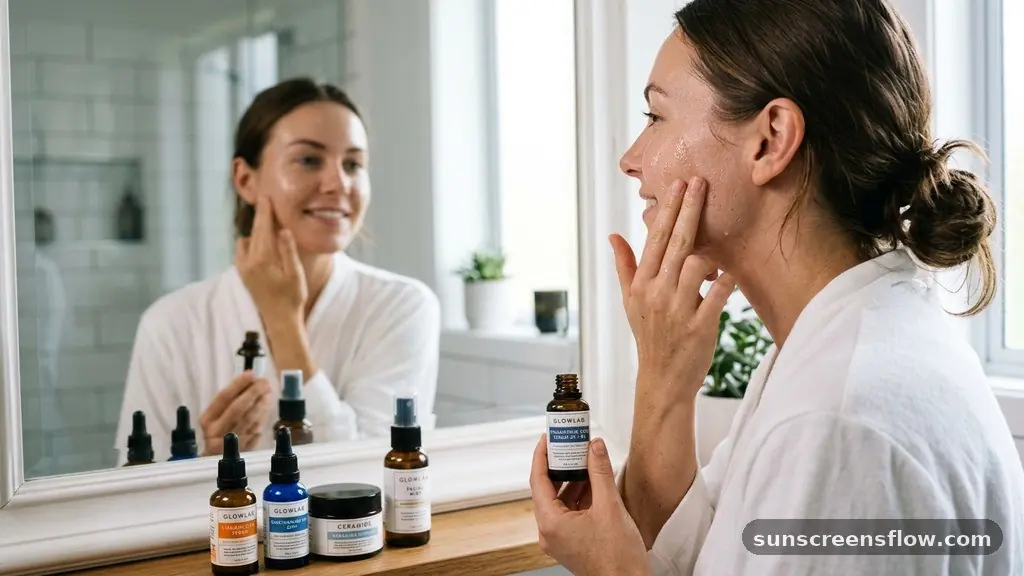
One of the most frequent questions is whether you can mix hyaluronic acid with other heavy hitters like Vitamin C, niacinamide, or retinol. The good news is that hyaluronic acid is incredibly versatile and generally plays well with almost every other skincare ingredient. Because it is non-irritating and focuses primarily on hydration, it serves as a perfect buffer for more aggressive treatments.
For example, when using retinol or chemical exfoliant products like AHAs or BHAs, your skin can sometimes become sensitized or dry. Applying a layer of hyaluronic acid before your active treatment can help mitigate irritation by strengthening the skin barrier. Similarly, using it alongside niacinamide can create a synergistic effect, as niacinamide works to calm the skin while the serum keeps it plump and hydrated.
| Active Ingredient | Compatibility | Best Practice |
|---|---|---|
| Vitamin C | High | Apply Vitamin C first for absorption, then follow with HA. |
| Retinol | High | Use HA to buffer the skin and reduce potential dryness. |
| AHAs/BHAs | High | Apply after exfoliating to soothe the surface. |
| Niacinamide | High | Can be mixed or layered; both support the skin barrier. |
Addressing Topical Gaps: Why Some Users Fail
Many people report that their serum makes their skin feel drier. This is a common “gap” in public knowledge.
If you live in an arid climate or an environment with high indoor heating, the air is essentially a vacuum for moisture. If you apply a humectant in these conditions without an occlusive moisturizer, the serum may pull moisture out of your skin rather than from the air.
To bridge this gap, focus on the environment you are in. If you are in a dry office or climate, consider using a humidifier in your bedroom or office.
Additionally, look for serums that contain sodium hyaluronate, a salt derivative of hyaluronic acid that has a smaller molecular size and is more easily absorbed by the skin. By being mindful of your climate and the specific formulation you choose, you can troubleshoot the most common reasons why this product might not seem to be working for you.
Morning vs. Night: Does Timing Matter?
Can you use it twice a day? Absolutely. In the morning, it provides a plump, smooth base for your makeup, preventing foundation from settling into fine lines.
At night, it works with your skin’s natural repair cycle to maintain hydration while you sleep. Because it is non-comedogenic and lightweight, it rarely causes breakouts, making it suitable for all skin types, including those prone to acne.
If you are only going to use it once, the morning is often preferred by those who want that dewy, “glass skin” look throughout the day. However, if you are using strong peptides or restorative treatments at night, adding the serum then can help those heavier ingredients absorb more effectively. There is no biological rule against twice-daily application, provided you are consistent with your occlusive moisturizer to seal it all in.
The Role of pH Balance and Barrier Health
The pH balance of your skin is roughly 4.7 to 5.75, which is slightly acidic. Most high-quality serums are formulated to match this pH, ensuring they do not disrupt the acid mantle. If your skin barrier is compromised—perhaps from over-exfoliation—you may notice a slight tingling sensation when applying products.
If this happens, simplify your routine. Remove all acids and retinol, and stick to a gentle cleanser, a basic hyaluronic acid serum, and a fragrance-free moisturizer.
Hyaluronic acid is exceptionally beneficial for a damaged barrier because it provides a cooling, soothing effect. It allows the skin to focus on healing rather than fighting off environmental stressors. By keeping your routine consistent and respecting the pH of your products, you allow your skin to maintain its integrity, which is the ultimate goal of any effective skincare regimen.
Frequently Asked Questions
What should I never mix with hyaluronic acid?
Hyaluronic acid is exceptionally safe and does not have any major contraindications. It is compatible with almost all ingredients, including acids, retinoids, and vitamins. The only thing to avoid is applying it to completely dry skin in an arid climate, as this can lead to temporary dehydration.
Do I really need to put moisturizer on top of it?
Yes. Because hyaluronic acid is a humectant, it draws water into the skin. If you do not seal that moisture in with an occlusive moisturizer, the water will evaporate into the air, potentially leaving your skin feeling tighter and drier than it was before you started.
Can I use vitamin C and hyaluronic acid together?
Absolutely. Using them together is a common and effective practice. It is generally recommended to apply your vitamin C serum first, as it is often thinner and requires direct contact with the skin, and then follow it with your hyaluronic acid to lock in hydration and provide a soothing finish.
What happens if I use it every day?
Using hyaluronic acid daily is highly recommended for maintaining optimal hydration levels. It is a non-irritating, naturally occurring substance that supports the skin barrier. Consistent daily use helps keep the skin plump, reduces the appearance of fine lines caused by dehydration, and improves overall skin texture over time.
Conclusion
Mastering the application of your serum is a small adjustment that yields significant results. By ensuring your skin is damp, layering your products from thinnest to thickest, and always following up with an occlusive moisturizer, you can effectively harness the power of this humectant.
Whether you are aiming to reduce the appearance of fine lines or simply want a more radiant, hydrated complexion, the timing and sequence of your skincare routine order are just as important as the ingredients you choose. With a consistent approach, you can maintain a healthy skin barrier and enjoy the long-term benefits of deeply hydrated, resilient skin.


